REVIEW · PARIS
Skip-the-line Les Invalides World War Museum Guided Tour – Semi-Private 8ppl Max
Book on Viator →Operated by Babylon Tours Paris · Bookable on Viator
Invalides makes WWI and WWII click. With skip-the-line entry you dodge a big chunk of the front-door hassle, and a max eight-person semi-private group helps the guide keep the storyline tight, object by object. The tour is built around the kind of museum details you’d miss on your own—uniforms, equipment, original footage, and key artifacts tied to major turning points, with excellent guides like Romain and Florian showing up in the mix. The one real drawback: it is not available for wheelchair users or people with walking disabilities.
I like that it stays practical. You get a guided museum visit in English for about 2 hours, with all entrance fees included and the tour ending right back at Hôtel des Invalides. You’ll also need a mobile phone number (with country code) for the mobile ticket flow.
Before you go, know the museum rules and small annoyances that can still pop up. No large bags or suitcases are allowed inside—think handbag or a small thin pack for security—and some rooms keep noise low with restricted speaking rules (your guide will cue you before those areas). Dress appropriately for entry at some sites, and occasional closures of the Invalides dome or museum can happen without prior notice.
Key highlights and why they matter
- Skip-the-line entrance so you start seeing the goods faster
- Semi-private, max 8 people for a more focused, adjustable pace
- WWI-to-WWII narrative that uses specific objects, not just dates
- Original footage + landmark artifacts (like the Marne-era moments and the armistice train car)
- All entrance fees included for one clear, simpler cost
- Moderate walking required and limited luggage allowed through security
In This Review
- Les Invalides in two hours: the skip-the-line advantage that really pays off
- Meeting at Hôtel des Invalides: what to expect before you even start
- The one-stop plan: how the WWI-to-WWII storyline is built inside Les Invalides
- Franco-Prussian War context and WWI setup: the “why” before the “what”
- Key WWI moments: uniforms, equipment, original footage, and the armistice scene
- From Versailles to Hitler’s rise: how WWII takes shape in the same building
- Normandy and Liberation: the wrap-up that helps you leave with closure
- Price and value: is $143.27 for two hours actually fair?
- Small rules inside the museum: bags, speaking limits, and occasional closures
- Who this tour suits best (and who should look elsewhere)
- Should you book this Les Invalides guided tour?
- FAQ
- How many people are in the semi-private group?
- Is admission included in the tour price?
- Does the tour really skip the lines?
- How long is the guided tour?
- What language is the tour offered in?
- Where does the tour start and end?
- Are hotel pickup or drop-off included?
- Are temporary exhibitions included?
- Is the tour suitable for wheelchair users?
- What if I need to cancel?
Les Invalides in two hours: the skip-the-line advantage that really pays off

If you only have a short window in Paris, Les Invalides can feel like a lot. It’s a big complex, security can slow things down, and you’re going to want context fast. This tour’s main selling point is simple: you get skip-the-line entry and a tight group size that keeps your guide from reciting the whole museum on autopilot.
I like how the experience is paced around decisions you actually need to make in the building. Instead of wandering until you find the famous rooms, you’re guided through the logic of the wars—how events link together, why certain battles mattered, and how political outcomes changed what came next. That makes the museum feel more like a story than a pile of exhibits.
There’s also a human factor. In a group capped at eight, you’re less likely to get stuck in “tour-assembly-line mode.” The guide can answer quick questions and adjust if your group wants to slow down for a detail. In the real world, that’s a big deal in a museum with lots of visitors and lots of rooms.
One more note: your tour language is English, and the tour is designed to be about 2 hours. That length is long enough to connect WWI and WWII themes, but short enough that you can still keep the rest of your day fluid.
Meeting at Hôtel des Invalides: what to expect before you even start
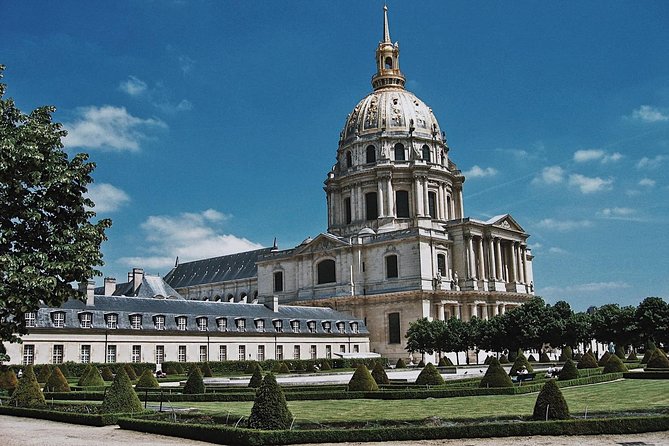
Your start point is Hôtel des Invalides, 75007 Paris, and the tour ends back at the same meeting point. That’s helpful. You don’t need to plan a complicated hop across town after a museum visit—your legs are already doing the walking.
Plan on using public transportation, since the location is near transit. You’ll likely want to arrive a bit early anyway, even with skip-the-line access. Some lines can still form due to security measures at attractions. That’s not a flaw in the tour; it’s just how modern museum entry works.
Also, bring the basics correctly:
- You’ll need to provide a mobile phone number (including country code) so the mobile ticket can work.
- Expect moderate physical fitness requirements. The tour covers multiple rooms, and you’ll be moving through museum spaces at a steady pace.
- Some sites require appropriate dress, so skip the beach shorts and the overly casual stuff.
If you’re the kind of traveler who overpacks bags, cut back. Large bags and suitcases don’t belong inside the museum. Security allows handbags or only small thin bag packs. It’s the kind of rule that can slow you down if you show up with the wrong bag.
You can also read our reviews of more guided tours in Paris



The one-stop plan: how the WWI-to-WWII storyline is built inside Les Invalides
This tour stays in one main location: the museum at Les Invalides (Musée de l’Armée). The itinerary is essentially one guided circuit that moves through French military history and the chain of events that leads into the World Wars.
What makes it feel efficient is the way the guide ties objects to timeline milestones. You’re not just looking at uniforms and equipment. You’re seeing how those things connect to decisions and consequences—war turning points, political shifts, and the human cost behind the headlines.
The tour starts with the 19th-century roots that set up later conflict. You’ll hear about the kind of political and military buildup that fed into the Franco-Prussian War era, including a mention of Bismarck. That early context matters, because it makes the World War story less random and more inevitable.
From there, the guide builds toward the moment that sparks WWI—leading into the assassination of Franz Ferdinand. The pacing is designed so you understand the “what happened” and then the “why it mattered,” using artifacts and visuals as anchors.
If you’re the sort of person who normally reads museum labels, this tour still works. If you’re not, it works even better. The guide’s job is to point you to the labels and objects worth your attention, so you don’t burn your limited time scanning text.
Franco-Prussian War context and WWI setup: the “why” before the “what”
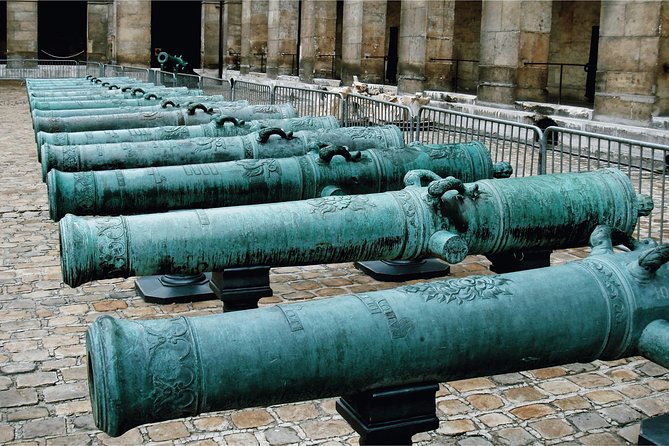
The early part of the tour is where you build context. It’s easy to step into a World War museum and feel like you’re starting in the middle. This tour helps you avoid that.
As you move through the opening segment, you’ll get a clearer sense of how 19th-century tensions and alliances fed into later crises. When a guide brings up figures like Bismarck, it isn’t for trivia points—it helps explain the kind of European power game that shaped what leaders believed was possible.
Then you shift toward the WWI spark. The guide doesn’t treat the assassination of Franz Ferdinand as a lone event. You’ll get the sense of a chain reaction: rising tensions, competing interests, then the moment things break open.
Why that helps you: WWI exhibits are full of names, dates, and far-off places. Without a storyline, it’s easy to feel lost. With a storyline, the museum becomes easier to remember. Even if you don’t memorize everything, you’ll keep a map in your head for the big turning points.
Key WWI moments: uniforms, equipment, original footage, and the armistice scene
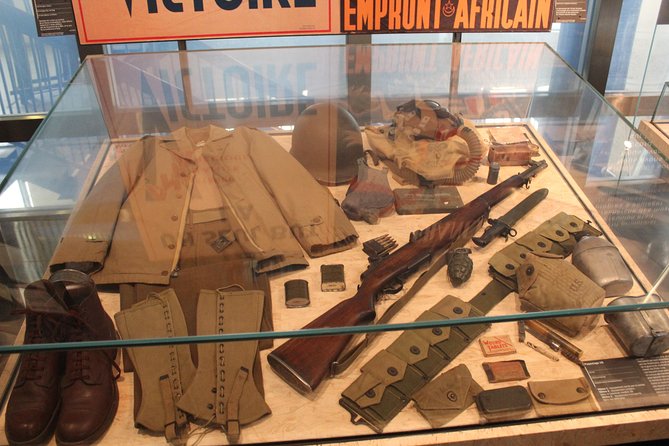
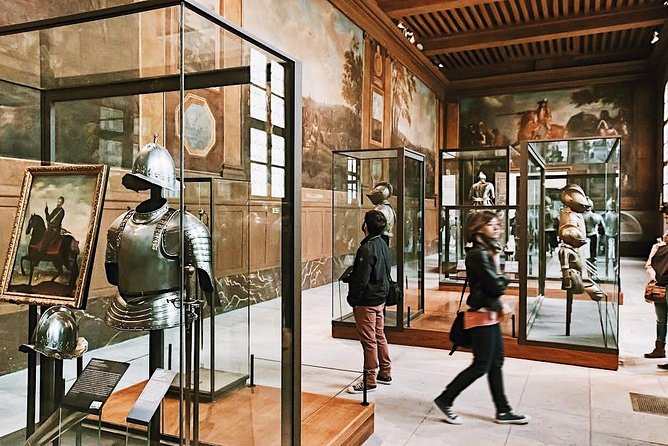
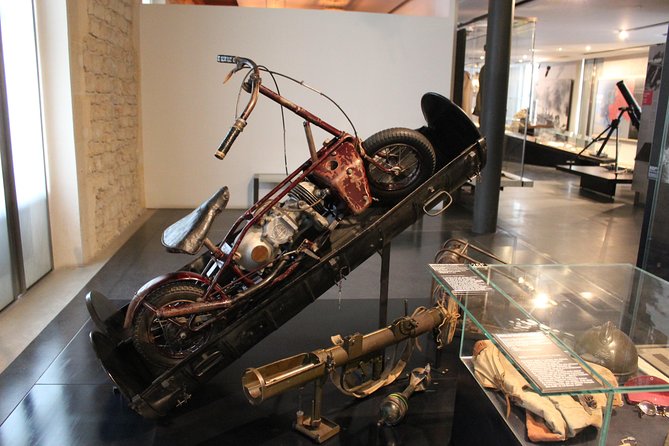
In the WWI portion, you’ll get the museum details that make Les Invalides special. You’re promised time with equipment, uniforms, weapons, and battle-linked artifacts. That’s the part that feels most “real,” because it stops the war from being abstract.
The tour also references original footage tied to the war’s atrocities. That’s not a light visit. But it’s also a reason the experience can feel serious and respectful, rather than like a costume parade. If you want the human reality behind the objects, this is where you’ll notice the difference between a guided path and free wandering.
Some of the most memorable parts are the recognizable turning-point elements. You’ll hear about the Battle of the Marne and see an iconic taxi associated with its moment in history. That kind of object hits a sweet spot: it’s specific, it’s visual, and it helps you connect war with real-world details people would remember.
And then there’s the end of WWI. The tour includes seeing the train car where the armistice was signed. That’s one of those artifacts that makes history feel sudden. Instead of thinking of WWI as a long blur of campaigns, you get a physical marker for the moment the fighting ended.
By the time you hit that part of the story, you’re ready for the next question the guide raises: what happens after the armistice, and why the peace didn’t last.
From Versailles to Hitler’s rise: how WWII takes shape in the same building
After WWI closes, the tour pivots toward the post-war consequences. You’ll learn how the Treaty of Versailles ended the war and set the stage for the next phase of conflict.
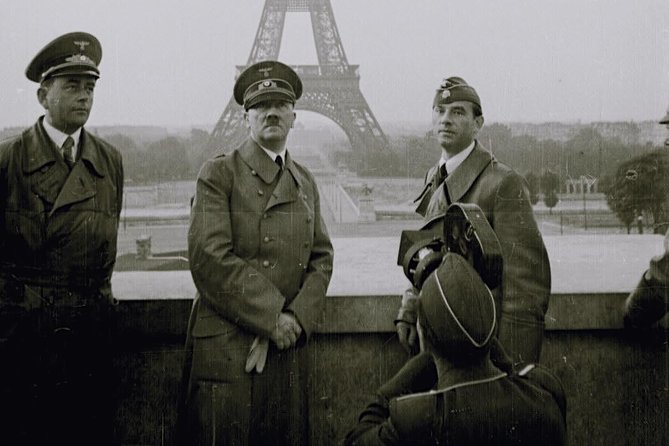
Then the story turns toward Adolf Hitler’s rise and the growing threat that led to WWII. The guide uses major historical events tied to France’s experience—so you’re not only tracking Germany and the general war map, but also the pressure felt in French history.
You’ll also go through major WWII landmarks connected to France:
- The Ligne Maginot
- Dunkerque
- The Occupation of Paris
This section matters because it keeps the museum from becoming a generic “Europe-wide” story. It’s still international, but it stays anchored in France, which is what makes Les Invalides feel like it belongs in Paris rather than just being another World War museum.
There’s also room for the personalities who guided the country through these years. The guide covers figures like Pétain and De Gaulle, tied to the events as they unfolded. That helps you see leadership and ideology not as footnotes, but as forces shaping decisions on the ground.
You can also read our reviews of more private tours in Paris





Normandy and Liberation: the wrap-up that helps you leave with closure
Toward the end, the tour brings you through the later-war turning points: Normandy and the Liberation of Paris. This part is where a guided narrative really earns its keep.
Once you’ve seen how WWI ends, how WWII starts, and how France gets pushed into the hardest years, you can finally understand why the end matters so much to the city. The guide connects those later events to the preservation of Paris that you can still feel when you walk around today.
If you like the feeling of closing the loop—war leads to outcomes, outcomes lead to a shaped present—this is the section you’ll probably remember most. Museums are often stuck on the past. This one gives you a route back to what you’re standing in now.
Price and value: is $143.27 for two hours actually fair?
At $143.27 per person for around 2 hours, this isn’t a budget add-on. But it can still be a good value depending on how you travel.
Here’s what you’re paying for, in plain terms:
- Skip-the-line entry
- A professional guide
- All entrance fees included
- A semi-private group capped at eight
- A focused WWI-to-WWII storyline rather than self-guided wandering
If you’d otherwise spend time reading labels and piecing together the timeline on your own, the guide saves you energy and time. In Paris, time is usually the expensive part.
Also, the group cap matters. A 2-hour museum tour for eight people or fewer tends to feel less chaotic than bigger groups. And you’re more likely to get individualized context—especially if you want explanations tied to specific artifacts.
Where the math can feel tougher:
- If you’re mostly into quick photos and you’re comfortable reading everything yourself, a guide may feel like extra cost.
- Temporary exhibitions are not included. If a special exhibit is your main goal, you might need extra time or another ticket.
Still, for first-timers or history-focused travelers with limited time, this price can make sense. Les Invalides is one of those places where “doing it right” is mostly about context.
Small rules inside the museum: bags, speaking limits, and occasional closures
The tour includes practical museum constraints that you should plan around.
What you’re allowed to bring: no large bags or suitcases. Expect bag checks at security. Bring a handbag or a small thin pack.
Quiet rooms: some specific rooms have very quiet or restricted rules about speaking. Your guide will tell you about this before you enter those areas, so you won’t be caught off guard.
Occasional closures: the Invalides dome and museum can have closures sometimes, without advance warning from the museum. If that delay pushes opening time by more than 1 hour from the tour start, the provider states they’ll offer an appropriate alternative. In those cases, refunds or discounts aren’t provided.
None of these points are meant to scare you. They’re meant to help you pack and plan realistically. The best way to keep your day smooth is to travel light and arrive ready to follow museum rules.
Who this tour suits best (and who should look elsewhere)
This is a strong match if you want:
- A guided path that connects WWI to WWII in one visit
- A manageable group size (max eight)
- English explanations that turn exhibits into a timeline you can remember
- You care about artifacts, not just the broad outline
It’s not a great match if:
- You need wheelchair access or have limited walking ability, since the tour isn’t available for those with walking disabilities or wheelchair use
- You want to spend your time purely on temporary exhibitions (those aren’t included)
- You prefer flexible, unscripted museum browsing over a planned storyline
One more good-to-know from the experience format: the tour can end up smaller than expected in some cases. If you value a calmer conversation level, that’s a plus to consider when booking.
Should you book this Les Invalides guided tour?
I’d book it if your goal is to make Les Invalides feel coherent in a short time. The tour’s biggest strengths are the combo of skip-the-line entry, a semi-private max eight-person group, and a guide-led narrative that uses major artifacts and footage to connect the whole arc from WWI to WWII.
I’d hold off if you’re on a tight budget, you hate structured pacing, or you specifically want temporary exhibitions. Also, if mobility is an issue, this tour isn’t designed for wheelchair access.
One final decision tip: if you’re choosing between a do-it-yourself museum visit and a guided timeline, go guided here. Les Invalides is too meaningful to treat like a random stop. With a good guide like Romain or Florian leading the story, you’re more likely to leave with the kind of understanding that follows you into the rest of Paris.
FAQ
How many people are in the semi-private group?
The group is capped at a maximum of eight people.
Is admission included in the tour price?
Yes. All entrance fees are included.
Does the tour really skip the lines?
Yes, it includes skip-the-line entrance to the museum.
How long is the guided tour?
It runs for about 2 hours.
What language is the tour offered in?
The tour is offered in English.
Where does the tour start and end?
It starts at Hôtel des Invalides, 75007 Paris, and ends back at the same meeting point.
Are hotel pickup or drop-off included?
No. Hotel pickup and drop-off are not included. Using Uber or a taxi is recommended.
Are temporary exhibitions included?
No. Temporary exhibitions are not included.
Is the tour suitable for wheelchair users?
No. The tour is not available for those with walking disabilities or using a wheelchair.
What if I need to cancel?
You can cancel for a full refund if you cancel at least 24 hours before the experience’s start time. If you cancel less than 24 hours before, the amount you paid is not refunded.