REVIEW · PARIS
Skip-the-line Centre Pompidou Guided Museum Tour – Exclusive Guided Tour
Book on Viator →Operated by Babylon Tours Paris · Bookable on Viator
Paris gets a serious modern-art makeover. This skip-the-line guided tour takes you through the Centre Pompidou, where Renzo Piano’s inside-out design is treated like part of the show, not a backdrop. I love that the guide ties the building’s odd, color-coded logic to the art inside, so everything starts to click fast.
Second, I really like how the tour walks you through major modern art shifts in plain language. You’ll connect the dots between artists like Picasso and Matisse, then move through World War-era creativity and on to pop culture names like Andy Warhol and American modernism like Georgia O’Keeffe.
One thing to plan for: even with skip-the-line access, security and some room rules can still slow you down a bit, and the museum can occasionally close without notice, with limited options if it delays the start by more than an hour.
In This Review
- Key things to know before you go
- Why the Centre Pompidou feels different from every other Paris museum
- Meeting at Centre Georges Pompidou and how the 2.5 hours usually feel
- Renzo Piano’s inside-out architecture: the guide’s best trick
- The modern masters walk: Picasso and Matisse to Cubism and Fauvism
- World Wars to Dada: when art turns into a protest
- The mid-century and Pop Art stretch: Warhol, the 50s, and the swinging 60s
- How the skip-the-line part really helps (and where it may not)
- What you’ll miss if you come without this guide
- Who this tour is best for
- Quick practical notes that can save you time
- Should you book this Centre Pompidou guided museum tour?
- FAQ
- How long is the Centre Pompidou skip-the-line guided tour?
- What does the tour cost, and what’s included?
- Is the guide private?
- Where do I meet, and where does the tour end?
- What time does the tour start?
- Are temporary exhibitions included?
- Is the tour wheelchair friendly?
- What are the bag rules inside the museum?
- Does skip-the-line mean there will never be lines?
- What if the Centre Pompidou is closed?
Key things to know before you go
- Skip-the-line access plus a guide who explains what you’re seeing, not just where to look
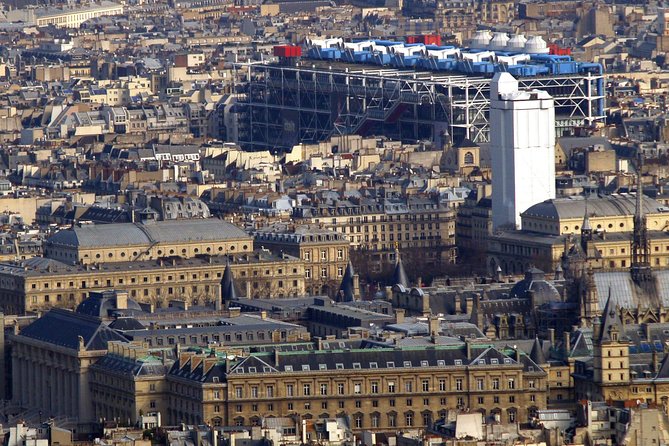
- Renzo Piano’s inside-out design is part of the tour story, from the outside look to the experience inside
- Modern art movements in context, including Cubism, Dada, Futurism, and Bauhaus
- A focused highlights route through major artists such as Picasso, Matisse, Warhol, and O’Keeffe
- Security and bag rules apply, so come light to keep your time moving
- Private, exclusively for your group (with wheelchair-friendliness tied to the option you choose)
Why the Centre Pompidou feels different from every other Paris museum

Most Paris museums make you feel like you’re walking through a timeline. The Centre Pompidou does that too, but in a more confrontational way. The building itself is part of the argument. With its inside-out concept and color-coded architecture, it looks like the museum is showing you how it works instead of trying to look “noble.”
That’s a big reason I like coming here with a guide. If you show up cold, modern art can feel like it’s speaking a different language. With the right framing, it stops feeling random. The tour helps you treat the art like a response to its time, and the building like the perfect setting for that kind of thinking.
The other charm is the contrast. This is your break from the usual Impressionism loop. Instead of soft light and familiar scenes, you get bold styles, experimental ideas, and major movements that shifted how people understood art.
You can also read our reviews of more guided tours in Paris



Meeting at Centre Georges Pompidou and how the 2.5 hours usually feel
This tour meets at Centre Georges Pompidou (75004 Paris) and runs for about 2 hours 30 minutes, starting at 5:00 pm. It ends back at the same meeting point, which makes planning the rest of your evening easier.
Because it’s a private tour for your group, the pace tends to be more human. You’re not constantly asking yourself when the next checkpoint is. You can spend a little more time where your curiosity kicks in—especially helpful for a museum where the hardest part is often knowing where to focus.
Also, come in knowing there are security rules. The museum does not allow large bags or suitcases inside. You’ll want a handbag or small thin bag pack ready for inspection. That simple choice can save you stress and keep your “skip-the-line” time feeling real.
Renzo Piano’s inside-out architecture: the guide’s best trick
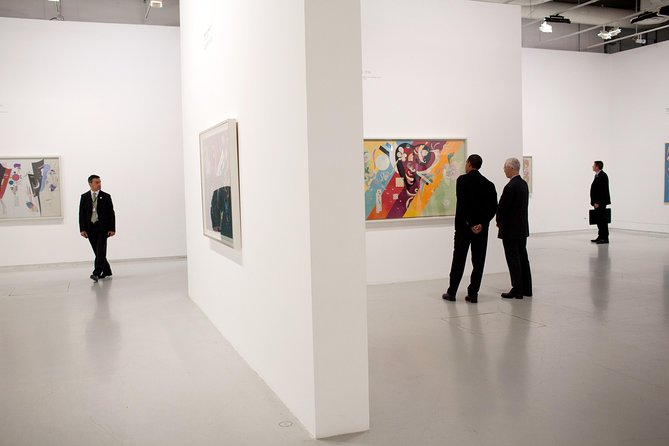
The Pompidou’s design can feel strange even before you enter. That’s the point. The tour starts by explaining the backstory of the Renzo Piano design and the inside-out idea—why the museum looks the way it does, with its color-coded structure and a sense that the building is being read like a diagram.
What I love about this part is that the guide doesn’t treat architecture like a trivia section. They connect it to how the museum works as a modern space. You’re not just visiting art objects—you’re inside a concept.
Once you’re in, that setup changes how you interpret the galleries. Your brain stops trying to force the museum to feel like classic Paris. Instead, you start noticing the museum’s logic: conceptual layout, modern sensibility, and how the space itself encourages a more curious, less formal viewing style.
The modern masters walk: Picasso and Matisse to Cubism and Fauvism
After the building framing, you move into the galleries where modern art takes the lead. The tour is built around key figures and movements, so you get an ordered path through a collection that could otherwise feel overwhelming.
You’ll spend time with major names, including Picasso and Matisse, and link them to big style breakthroughs like Cubism and Fauvism. The value here isn’t just learning names. It’s understanding why these styles mattered—how they changed what art was allowed to do.
Cubism can feel like “broken images” if you don’t get the idea behind it. With a guide, you get the sense that the artists weren’t just being difficult. They were experimenting with how to represent perspective, form, and meaning. Same deal with Fauvism—color isn’t decoration here. It’s a statement.
If you’ve only seen these artists in textbook form, this is one of the better ways to make them feel alive. You’re not memorizing movements; you’re seeing how the choices connect.
World Wars to Dada: when art turns into a protest
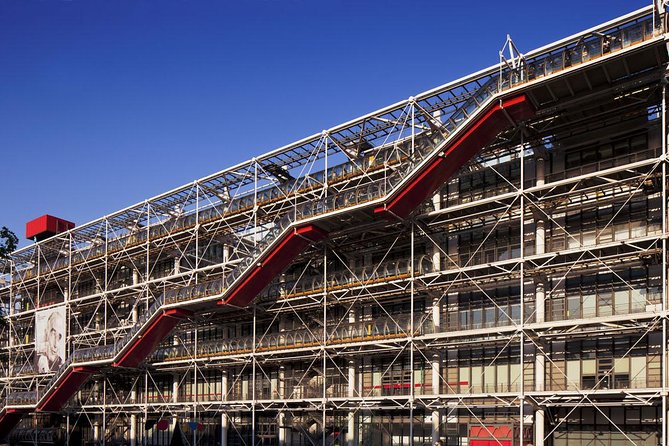
Modern art gets serious quickly, and the Pompidou is one of the places where that shift is easiest to feel. The tour helps you get surreal with works created during the World Wars while discussing Dada.
Dada isn’t just weird for the sake of being weird. The tour’s framing helps you understand it as a response—an art world reaction to the chaos and disillusionment of the era. Once you see Dada that way, the strange choices feel less random and more intentional.
This is also where I found the tour’s conversational tone to matter. Modern art often punishes people who want a “right answer.” Dada is not that kind of experience. A good guide makes room for questions while still giving you enough context to feel oriented.
You can also read our reviews of more museum experiences in Paris




The mid-century and Pop Art stretch: Warhol, the 50s, and the swinging 60s
Then the tour pivots toward the postwar decades—the 50s and swinging 60s—when Andy Warhol spearheaded Pop Art. This section is useful if you think of Warhol mostly through modern culture references (ads, images, media). You’ll get the “why” behind the look, not just the look itself.
Pop Art can be misunderstood as simple. But when you connect it to its era, it becomes clear that it’s questioning what counts as art and what counts as culture. The Pompidou does this well, and having a guide means you spend less time guessing what the artist is pointing at.
You’ll also hear about French artists as well as international figures. The tour notes that names you might encounter include Mondrian, Pollock, and O’Keef[e], which is a helpful sign that the guide is aiming to show the spread of modern styles, not only a single national story.
How the skip-the-line part really helps (and where it may not)
Let’s be honest: “skip-the-line” in museums doesn’t always mean zero waiting. The tour includes skip-the-line guided museum access, but the museum and surrounding security setup can still create some queues at times, including because of increased security measures at attractions.
Still, this tour is a smart move when you want more than a casual visit. The skip-the-line advantage buys you two things:
1) less dead time, and
2) more time for guided interpretation, which is the real value here.
This is also a private tour, so the guide can keep you moving through the museum in a way that makes the schedule feel manageable. And there are small room rules to watch for. Some rooms can be very quiet or restrict speaking. In those cases, your guide will explain the information about those places before you enter, so you’re not left wondering why everyone is suddenly whispering.
What you’ll miss if you come without this guide
The Centre Pompidou is not the kind of museum where you can simply “wander until it makes sense.” The whole point of the building and the collection is conceptual. Without context, it’s easy to spend your visit doing one of two things: snapping photos without understanding, or moving fast because you feel lost.
This tour’s structure reduces that stress. It uses a guided through-line across major movements—Cubism, Dada, Futurism, and Bauhaus—and ties those movements back to artists and eras, from Picasso and Matisse through Warhol and O’Keeffe. That makes the museum feel like a conversation instead of a puzzle box.
And because you get your guide exclusively for your group (unless you choose an option that changes that), your questions won’t derail the entire experience. That alone can make the difference between a “cool museum visit” and a “this changed how I see art” visit.
Who this tour is best for
This is a strong fit if you:
- want a guided entry into contemporary art rather than a self-directed museum maze
- like modern art history when it’s connected to artists and time periods
- prefer a private format so you can pause, ask, and focus
It’s also a good pick if you’ve already seen classic giants like the Louvre or Orsay and you want a different angle on Paris. The Pompidou gives you that modern counterweight in a single, well-paced session.
If you’re the type who hates structure and prefers roaming freely, this may feel like you’re following a set route. But even then, the architecture and the modern art movements can benefit from a map in your head.
Quick practical notes that can save you time
Before you go, keep these in mind:
- Bring only what you need. No large bags or suitcases inside—think handbag or small thin pack.
- Some sites inside may require appropriate dress for entry.
- The museum may have occasional closures without warning. If opening is delayed more than an hour from the tour’s start time, the provider says they’ll provide an alternative, but refunds/discounts aren’t available in those cases.
- Your mobile phone number (with country code) is required for confirmation.
These are small details, but they affect the smoothness of your afternoon or evening.
Should you book this Centre Pompidou guided museum tour?
If you want value, book this when your goal is understanding, not just entry. At $75 for about 2.5 hours with skip-the-line access, a guide focused on the building and major modern-art movements, and all entry fees included, it’s a fair trade for your time. The real reason it’s worth it is the way it teaches you how to read the museum—architecture first, then art.
I’d skip it only if you’re already fully comfortable with modern art history and you’d rather save money for a self-paced visit. But if you want the Pompidou to make sense fast—especially the Renzo Piano inside-out concept and the connections between Picasso, Dada, and Pop Art—this is the kind of tour that turns a big museum into a clear, memorable experience.
FAQ
How long is the Centre Pompidou skip-the-line guided tour?
It runs for approximately 2 hours 30 minutes.
What does the tour cost, and what’s included?
The price is listed as $75, and it includes the skip-the-line guided museum tour, admission ticket entry fees, and the 2.5-hour guided experience.
Is the guide private?
This is described as a private tour/activity, and the guide is exclusively for you, unless you choose the save option mentioned as affecting guide exclusivity.
Where do I meet, and where does the tour end?
The tour starts at Centre Georges Pompidou, 75004 Paris, France, and ends back at the meeting point.
What time does the tour start?
The start time listed is 5:00 pm.
Are temporary exhibitions included?
Temporary exhibitions are not included.
Is the tour wheelchair friendly?
Wheelchair friendly is listed as included, but it does not apply if you choose the SAVE! BOOK SEMI-PRIVATE option.
What are the bag rules inside the museum?
No large bags or suitcases are allowed inside. Only handbags or small thin bag packs are allowed through security.
Does skip-the-line mean there will never be lines?
Not necessarily. The information notes that some lines may form on tours with skip the line or no wait access due to increased security measures.
What if the Centre Pompidou is closed?
The Centre Pompidou may have occasional closures without previous warning. If the museum opening is delayed more than 1 hour from the tour start time, the provider will offer an appropriate alternative, and refunds or discounts are not available in those cases.