REVIEW · NATIONAL MUSEUM OF AMERICAN HISTORY
Smithsonian Museum of American History Semi-Private 8ppl Max
Book on GetYourGuide →Operated by Babylon Tours DC · Bookable on GetYourGuide
One of America’s most famous artifacts lives in one building. This 2.5-hour Smithsonian Museum of American History tour helps you zero in fast, with the Original Star-Spangled Banner and George Washington’s Sword as clear anchors. You get an English-speaking guide who connects the objects to the bigger story of how the U.S. grew into a world power.
I especially like that the stop list isn’t only presidents and wars. You’ll also admire Dorothy’s Ruby red slippers and see gowns worn by First Ladies across different eras. One catch: it’s only 150 minutes walking, so the museum will feel like a best-of highlights sprint rather than a full museum day.
In This Review
- Key highlights worth planning around
- A Smithsonian Tour That Actually Fits Real Schedules
- Semi-Private Pace: Small Groups, Real Questions
- The Star-Spangled Banner and Washington’s Sword: Your Fast Track to Meaning
- Thomas Jefferson’s Desk and the President Story Beyond Portraits
- Dorothy’s Ruby Red Slippers and the Hollywood Angle
- First Ladies Gowns: Women’s Roles Told Through Fabric
- Greensboro Lunch Counter: The Civil Rights Moment in One Object
- How the Guide Turns Three Million Items into a Story
- Logistics That Can Make or Break Your Day (Walking + Bag Rules)
- Price and Value: Is $95 Worth It?
- Who This Tour Fits Best
- Should You Book This Smithsonian Semi-Private Tour?
Key highlights worth planning around
- Skip-the-line entry focus so you spend time on objects, not ticket stress
- Small group cap (max 8) for a semi-private feel and more back-and-forth with your guide
- Museum standouts you usually can’t recreate elsewhere like the Star-Spangled Banner and Washington’s sword
- Pop culture meets politics, including Dorothy’s Ruby red slippers and how Hollywood shaped perceptions
- Civil Rights in one powerful stop, with the Greensboro Lunch Counter at the center of the discussion
- Women’s history made visible, using First Ladies gowns to explain changing roles over time
A Smithsonian Tour That Actually Fits Real Schedules
The Smithsonian Museum of American History is huge. That’s great if you want to wander for hours and follow your curiosity down random rabbit holes. It’s also exactly why a tightly guided 150-minute route can feel like the smarter move.
This semi-private format is built for focus. Instead of trying to cover everything, your guide takes you to major objects that help you understand the country’s evolution from early days to modern power. You’ll still get variety—historical, scientific, cultural, social, technological, and political angles—but the pacing stays realistic.
If you only have one morning or afternoon in Washington, D.C., I like that this tour gives you high-impact context early, without demanding a whole day in the museum.
You can also read our reviews of more tours and experiences in National Museum Of American History.

Semi-Private Pace: Small Groups, Real Questions
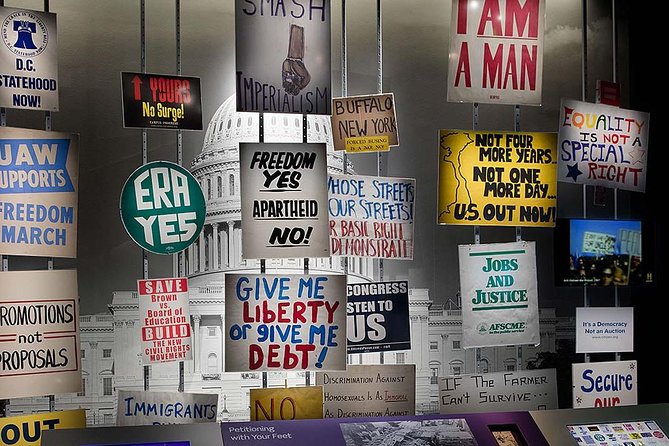
You’re capped at no more than 8 people per tour. That size matters more than people think. In a bigger group, you end up moving like a school field trip—watching the guide, trying to hear over everyone else, and rarely getting personal answers. Here, you’re more likely to ask follow-ups and get direct attention.
The tour is also described as offering small group or private options. That gives you a lever: if you’re traveling with family or friends and want a calmer, more custom flow, private can make the experience feel less like a “script” and more like a guided conversation.
From the reviews, one theme pops up: guides check what you want and adjust the pace. One guide (Amanda) was praised for humor and knowledge, especially when someone was on a tight schedule. Another guide (Christopher) was noted for passion and friendliness. If you like tours where the guide reads the room a bit, this setup fits that style.
The Star-Spangled Banner and Washington’s Sword: Your Fast Track to Meaning
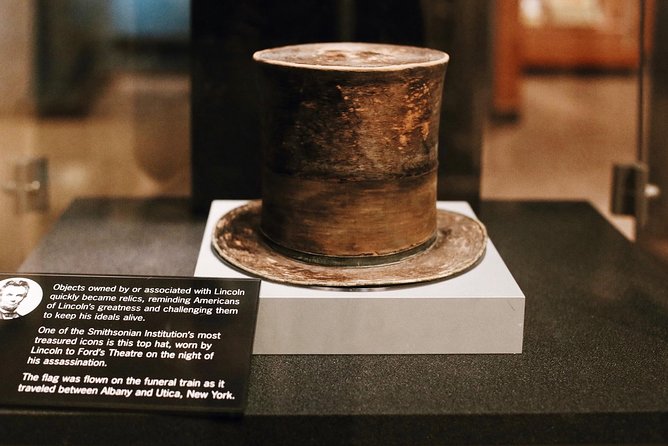
Most museum highlights are impressive because they’re old. These two are impressive because they’re loaded with symbolism.
You’ll see the actual Star-Spangled Banner that inspired the national anthem. That’s the kind of object that changes how you read the words once you’ve seen it. It’s not just a flag behind glass—it’s a “how the country imagined itself” artifact. Your guide can help connect what you’re looking at to the emotions and stakes of the time when the anthem took shape.
Then comes George Washington’s Sword. A sword is easy to treat like a prop if you only think in terms of weapons. But in the right telling, it becomes a window into leadership, authority, and the heavy symbolism that clung to early U.S. power. You’ll also learn about Washington while viewing it, so the object stays connected to real historical context rather than becoming a disconnected photo stop.
Why this pairing works: it gives you two sides of national identity. One is an anthem you hear and repeat. The other is a personal tool of power tied to the first president. Together, they anchor the rest of your tour.
Thomas Jefferson’s Desk and the President Story Beyond Portraits
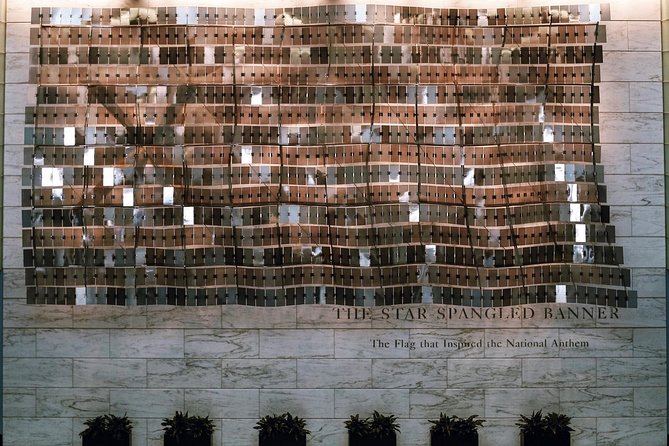
You’ll also see Thomas Jefferson’s desk. This is one of those objects that feels intimate in a way many presidential artifacts don’t. It’s furniture, yes—but it’s also where decision-making happened. Your guide can turn it into a story about ideas translated into governance, not just names on plaques.
This tour has an interesting “presidents to everyday impacts” rhythm: it uses items tied to leadership but keeps asking what those leadership choices meant for ordinary people. That’s also where the museum’s subject range becomes useful. You’re not only seeing political artifacts—you’re seeing how culture, technology, and social life tangled up with the direction of the country.
So if you’re the type who gets bored by purely chronological tours, you may find this pacing more satisfying because it links big decisions to real artifacts you can point at.
Dorothy’s Ruby Red Slippers and the Hollywood Angle
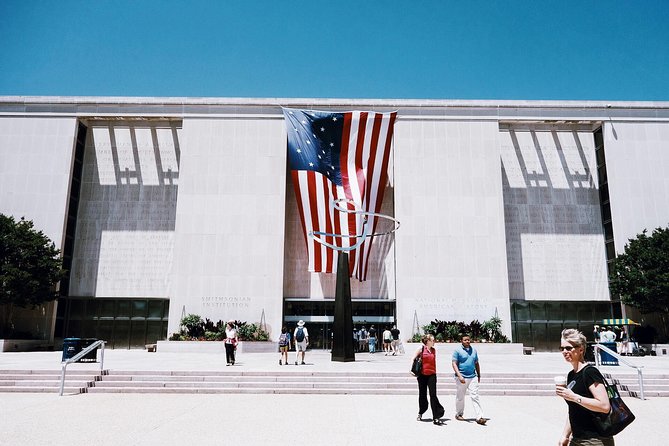
This is where the tour gets fun, and not in a throwaway way.
You’ll admire Dorothy’s Ruby red slippers from The Wizard of Oz. Seeing movie props in a museum could sound like a gimmick. But your guide frames it as cultural influence—how storytelling shapes national moods, values, and assumptions. The slippers also help you shift modes: you go from political symbolism (flags, swords, desks) to emotional symbolism—what Americans loved, feared, and projected onto fiction.
The tour also explicitly includes how Hollywood helped shape the country. That matters because entertainment doesn’t only reflect society. It teaches people how to feel about power, identity, “the good life,” and the world outside their own experience. In a museum context, that becomes more than nostalgia—it becomes a lens.
This section is a big reason the tour feels easier to “stay with.” Even if you’re not a movie person, the guide should help you connect pop culture to politics without turning it into a lecture.
First Ladies Gowns: Women’s Roles Told Through Fabric
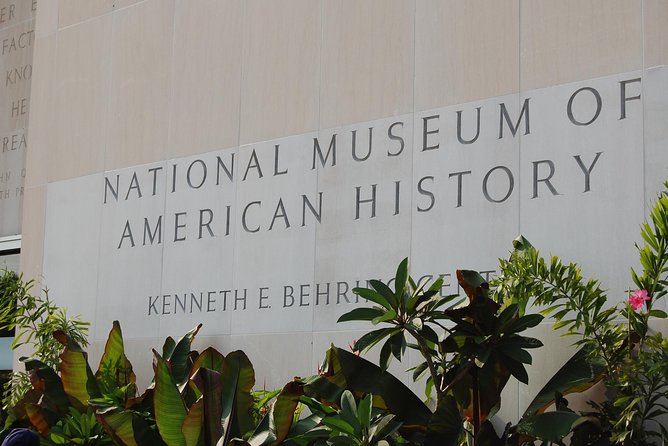
You’ll view gowns worn by First Ladies over the years. Clothing might sound like a detour if you came for wars and laws. In practice, it’s one of the clearest ways to talk about public roles.
A First Lady’s public life is tied to visibility: how leadership looks, how power is performed, and how social expectations shift. Gowns give you a tangible way to talk about changing norms. They can also help your guide cover the “so what” behind who had influence at court-like functions in the White House orbit.
If you care about gender and social change, this stop often lands well because it’s concrete. It’s not just talking about roles in general terms. You’re looking at preserved items while the guide explains what the exhibit is saying.
Greensboro Lunch Counter: The Civil Rights Moment in One Object
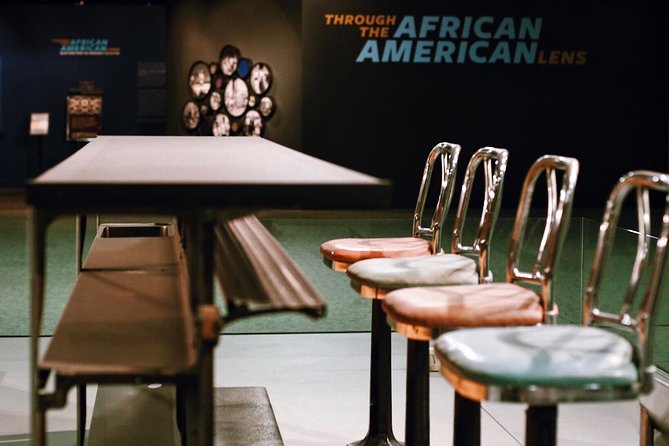
If you want one stop that carries weight, it’s the Greensboro Lunch Counter. Your guide uses it as a discussion touch point for the Civil Rights Movement.
Why this matters: it’s the kind of object that’s hard to treat as history from far away. A lunch counter is ordinary. That ordinariness makes it powerful when you learn the context. The guide’s role here is crucial—someone needs to frame what happened and why it mattered, so you don’t just see “a counter” but understand the strategy, courage, and pressure packed into a single location.
This stop also gives emotional range to the tour. It’s not only about national symbols and celebrity artifacts. It’s about how people pushed back against segregation and forced change to become public and unavoidable.
How the Guide Turns Three Million Items into a Story
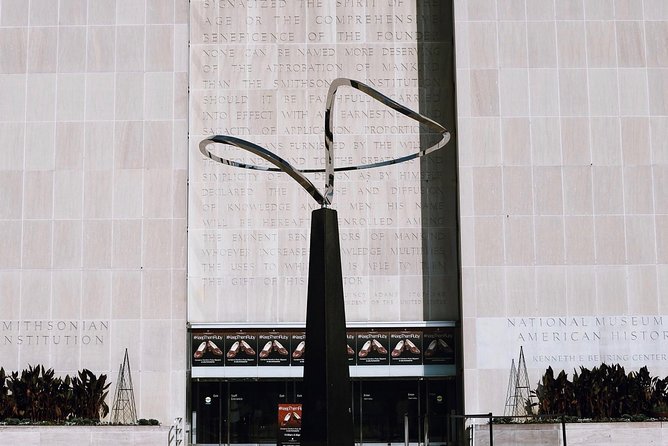
The museum collection is enormous, with more than three million historical items. Without a guide, that scale can be paralyzing. With a guide, it becomes an organized story.
Here’s what to expect from the guiding style described for this tour: you’ll get a mix of background stories and surprising details across history, science, culture, social life, technology, and politics. The guide should also bring a personal touch—favorite anecdotes, practical ways to connect objects, and help navigating what to focus on.
Reviews back up that the guides vary in style but consistently land on key objects. For example:
- Amanda was singled out for humor and knowledge, and for making the tour fit a tight schedule.
- Leigh received praise as exceptional.
- Christopher was described as passionate and friendly, with strong accommodating flexibility.
At least one reviewer noted a mismatch in how much material felt geared toward Americans versus international visitors. That’s a useful consideration for you: if you’re from outside the U.S. and want a more explicitly outsider perspective, pick a time when you can ask questions early and set expectations with your guide.
Logistics That Can Make or Break Your Day (Walking + Bag Rules)
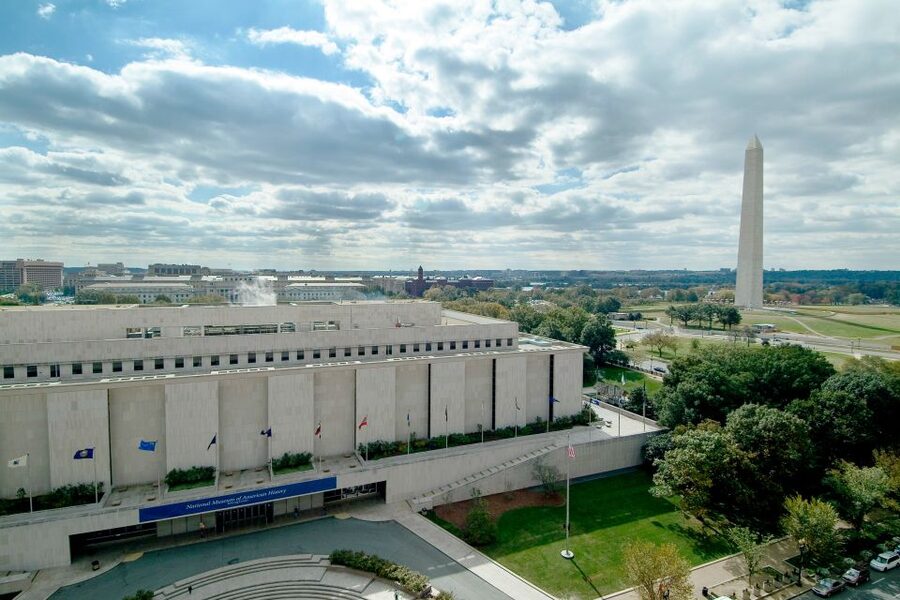
This is a walking tour. The duration is about 150 minutes, so wear shoes you can stand in comfortably. Even when the stops are compact, museum navigation and crowding add minutes fast.
Plan around the museum bag rules. Large bags and luggage aren’t allowed inside. You can bring only handbags or small thin bag packs through security. If you’re traveling light, you’re set. If you’re carrying a larger day bag, you’ll want to rethink what you bring.
Also note that the tour may include rooms with quiet or restricted rules about speaking. Your guide should warn you before entering, but it’s still good to know that your voice might need to lower at certain points.
Appropriate dress may be required for entry into some sites on this tour. That doesn’t mean you need formal wear, but it does mean keep it respectful—especially if you’re visiting parts of the museum with stricter decorum.
Finally, the museum can occasionally close without previous warning. If opening is delayed more than one hour from your tour start time, the supplier provides an alternative but refunds or discounts aren’t guaranteed in that case. That’s rare, but it’s smart to have a flexible plan around it.
Price and Value: Is $95 Worth It?
At $95 per person for a 2.5-hour semi-private walking tour, you’re paying for two things: access to a guide and a time-efficient route through major artifacts.
If you’re the type who enjoys museums but hates decision fatigue, value here is strong. The tour helps you prioritize the big “I came to see this” items: the Star-Spangled Banner, Washington’s sword, the Ruby red slippers, First Ladies gowns, and the Greensboro Lunch Counter—plus additional context like Jefferson’s desk and the Hollywood angle.
If, however, you’re the kind of visitor who wants to roam freely, follow tangents, and spend time reading every label, $95 may feel like you’re paying for someone else’s plan. In that case, you might prefer self-guided museum time.
For most people, the best value comes from using the tour as a foundation. You leave with a clearer map of themes, then you can return later (if you have time) to explore deeper.
Who This Tour Fits Best
This tour is a strong match if you:
- have limited time in Washington and want the best-known Smithsonian American History highlights
- want an English-speaking guide who connects objects to stories across multiple topics
- prefer small groups over big bus-style museum tours
- care about how culture and politics intersect (Hollywood, pop culture, symbolism)
- want a structured entry point into Civil Rights history through a major artifact
It may be less ideal if you’re:
- hoping for a complete museum day (you won’t get everything in 150 minutes)
- sensitive to strict museum rules around bags and speaking levels
- relying on wheelchair access, because the activity notes it isn’t suitable for wheelchair users (and you should still advise the operator if you require accessibility when booking)
Should You Book This Smithsonian Semi-Private Tour?
Book it if you want a smart, time-efficient way to hit the museum’s loudest highlights and walk away with context. The combination of iconic artifacts (Star-Spangled Banner, Washington’s sword) with culture and social change (Ruby red slippers, First Ladies gowns, Greensboro Lunch Counter) is exactly what makes this tour feel more than a photo list.
Skip it if you’re planning a full museum immersion day or you strongly prefer to set your own route without a guide steering you.
If your goal is: see the key objects, understand what they mean, and keep your D.C. schedule under control, this is a very solid choice.