REVIEW · PARIS
Paris: Guided Louvre Museum Tour with Optional Entry Ticket
Book on GetYourGuide →Operated by My Super Tour · Bookable on GetYourGuide
The Louvre feels smaller when you walk in first. I like that this tour gets you in with skip-the-line early access, and I also love the way the guide stitches famous artworks to what’s going on in the museum itself—so stops like the Mona Lisa and the Nike of Samothrace feel connected, not random. You’re done fast too, in a focused 2–3 hours.
One thing to consider: it’s not suitable for wheelchair users, and you should expect a lot of walking inside a huge building.
In This Review
- Key things I’d actually plan around
- Where this Louvre tour fits: fast, focused, and not overwhelming
- Meeting up by the Louvre with the My Super Tour sign
- Skip-the-line entry: how you save hours (and sanity)
- The first “wow” moment: the Louvre as a royal palace
- Mona Lisa and The Wedding at Cana: famous paintings, explained the usable way
- Nike of Samothrace, Venus of Milo, and the Greek sculpture stop you’ll remember
- Royal power you don’t expect: Napoleon stories and crown jewels
- Renaissance and Etruscan artwork: where the tour stretches your taste
- Ending at the Apollo Gallery: a smart place to continue on your own
- Optional Seine cruise discount: turn your Louvre day into a full Paris story
- What you’ll pay and why it feels like decent value
- Group size, guide styles, and real-world tips from guide names you might get
- Who should book this tour (and who shouldn’t)
- Should you book it?
- FAQ
- How long is the Louvre guided tour?
- Where do we meet the guide?
- Does this tour include skip-the-line entry?
- Is this tour only for people who don’t have tickets?
- Which highlights will we see?
- Where does the tour end?
- Is the Seine cruise included?
- What’s included in the tour?
- What should I bring?
- What languages are available for the live guide?
Key things I’d actually plan around
- Skip-the-line entry through a separate entrance to beat the worst of the crowd crush
- Mona Lisa + The Wedding at Cana as the headline paintings, explained clearly
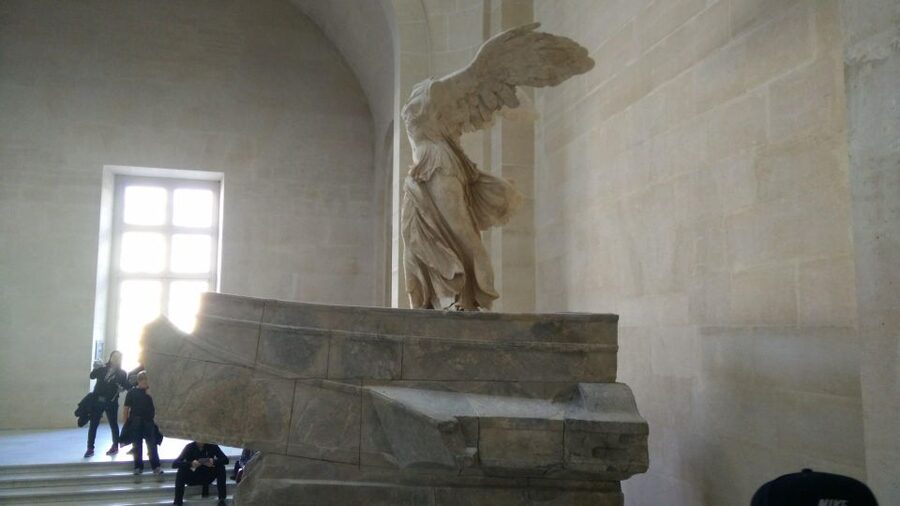
- Greek sculpture must-sees like the Nike of Samothrace and the Venus of Milo
- Hidden-power stories including Napoleon battle paintings and French crown jewels
- Apollo Gallery finish, which sets you up to keep exploring on your own
- Optional Seine cruise discount if you want a second “wow” moment after the Louvre
Where this Louvre tour fits: fast, focused, and not overwhelming
The Louvre is the kind of place that can eat your whole day. This tour doesn’t try to conquer every room. It does something smarter: it gets you into the museum early, then points you at the best stuff with enough context to make it matter.
You’ll cover highlights like the Mona Lisa and The Wedding at Cana, plus major sculptures such as the Nike of Samothrace and the Venus of Milo. The tour also includes some “wait, I didn’t know that was here” moments—like artwork tied to Napoleon’s campaigns and the collection of French crown jewels. That blend of famous and surprising is the heart of the experience.
Also, the group stays small, and that matters inside the Louvre. You move more smoothly. You get time to ask questions. And you’re not constantly losing your place in a sea of umbrellas.
A few more Paris tours and experiences worth a look



Meeting up by the Louvre with the My Super Tour sign
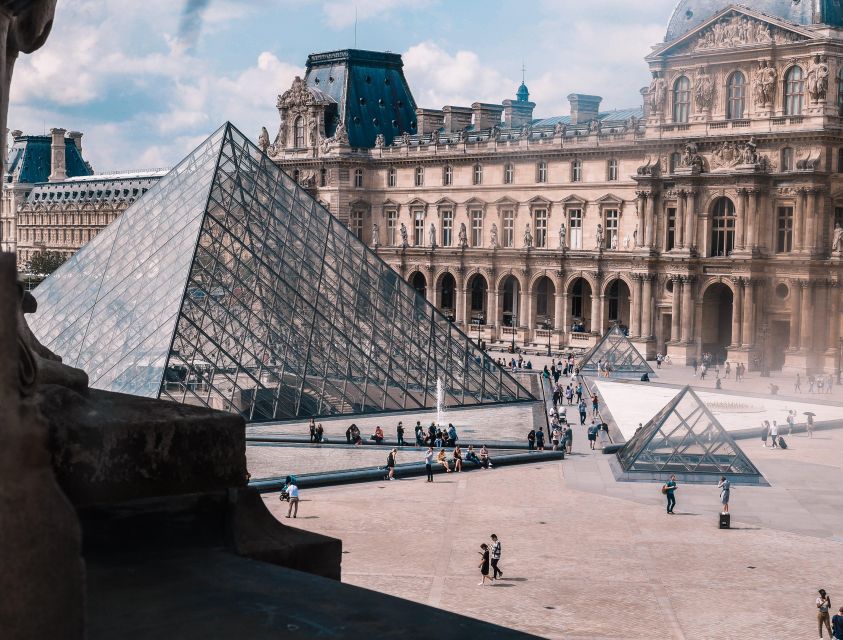
You meet your guide near the Louvre Museum. The exact cue is specific: look for a yellow sign that says My Super Tour under the statue of Louis XIV.
This meeting detail sounds small, but it saves stress. The Louvre area is big, and signage can be easy to miss. Arriving a little early helps, but keep in mind that your guide may wear an identification badge rather than holding a giant flag. One review even suggested it would be easier if umbrellas or a larger sign were used, so don’t assume you’ll spot them instantly from far away.
Once you’re together, the guide shepherds you through the entry process and into the museum—where, frankly, the real time savings begin.
Skip-the-line entry: how you save hours (and sanity)
The most practical feature here is the skip-the-line entry through a separate entrance. Instead of spending your limited Paris time inching forward with everyone else, you get in early and start seeing things.
That time shift is huge for two reasons:
1) Your brain stays fresh. The Louvre can feel like information overload. Starting earlier makes the highlights easier to absorb.
2) You don’t burn energy. Long lines are exhausting, and you need that energy once you’re inside.
This tour also lets you use your own ticket if you already have one, or opt to have entry tickets included in the tour option. Either way, the tour’s main promise is the same: less queuing, more art.
The first “wow” moment: the Louvre as a royal palace
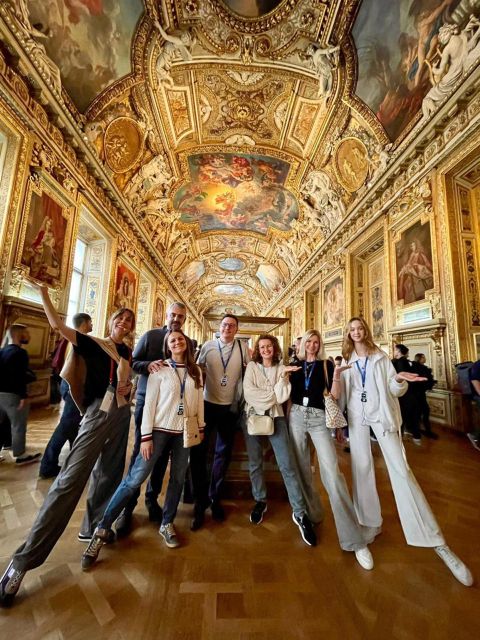
Right after you head inside, your guide helps you understand what you’re standing in. The Louvre wasn’t built as a museum first. It was built in 1190, originally as a palace where royalty and emperors lived.
That changes how you look at everything. Instead of seeing “just a building,” you start noticing the idea of power baked into the space—rooms, symbolism, and the kind of art that belongs in elite collections. A good guide makes you see the museum like a story, not a warehouse.
I also like that the tour points out these connections early, because it gives you a framework. When you later hear about royal emblems, crown jewels, or major historical artworks, the tour doesn’t feel like random trivia. It feels like cause-and-effect.
Mona Lisa and The Wedding at Cana: famous paintings, explained the usable way
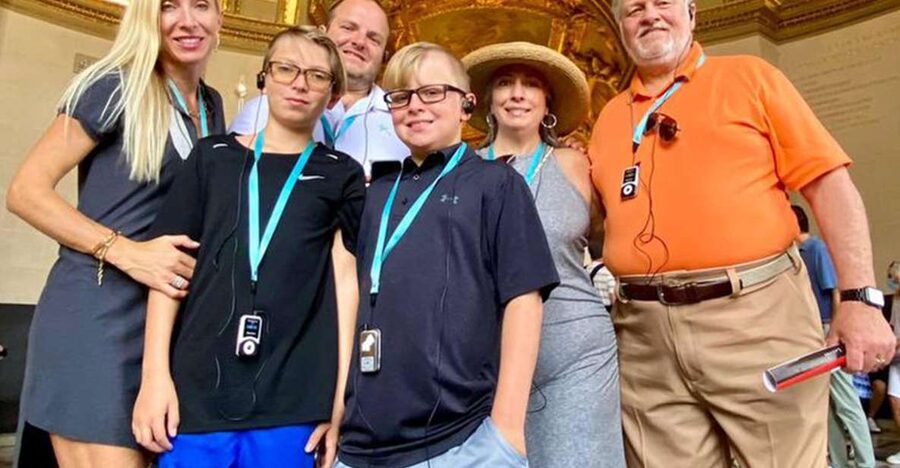
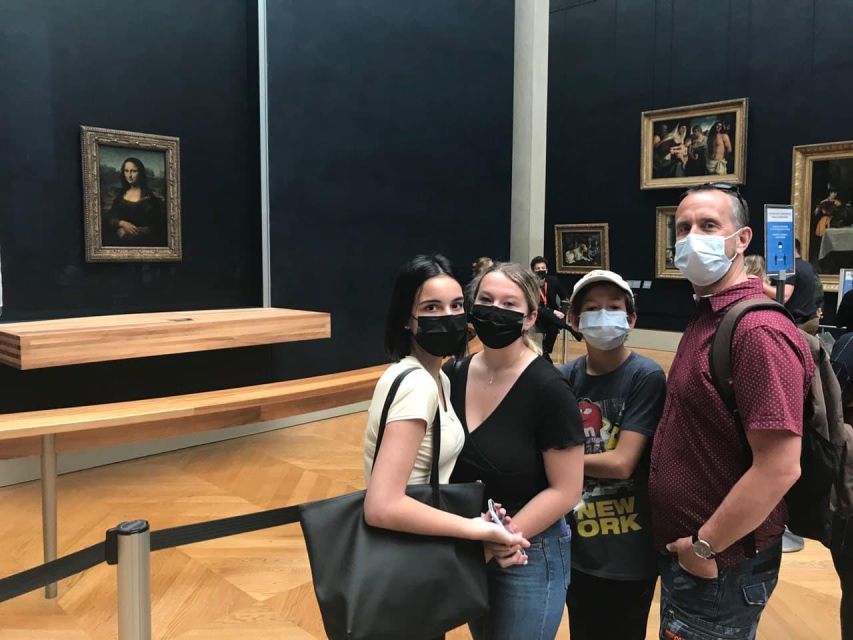
You’ll get close to two of the Louvre’s headline paintings: the Mona Lisa and The Wedding at Cana. The guide doesn’t just say what you’re looking at. They explain what’s going on—often the hidden or symbolic meaning that most first-time visits miss.
Here’s why that matters to you:
- If you only look, you tend to notice surface features—faces, colors, poses.
- If you get the story behind the story, you notice composition choices and why the artist built the scene the way they did.
The tour also keeps you moving through the museum highlights in a way that feels timed, not rushed. You cover the “must-sees” while still getting enough explanation to make the experience stick.
And yes, you’ll likely see those crowded areas. But because you’re in earlier and in a guided flow, it feels more controlled than the free-for-all.
You can also read our reviews of more guided tours in Paris



Nike of Samothrace, Venus of Milo, and the Greek sculpture stop you’ll remember
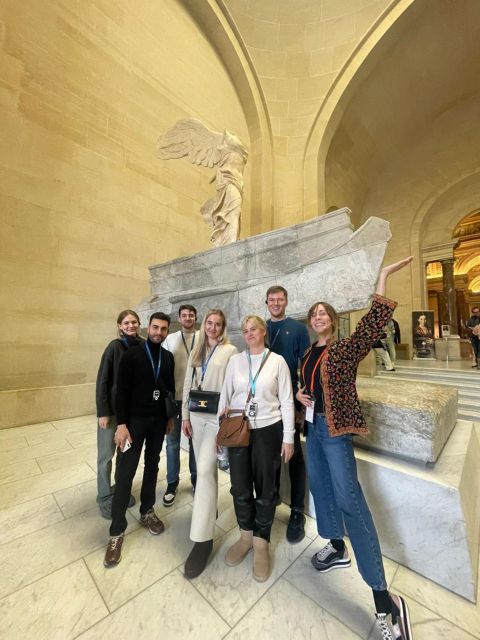
The Louvre’s paintings get most of the attention, but this tour makes the sculpture section a real part of your day. You’ll see Greek masterpieces such as the Nike of Samothrace and the Venus of Milo.
What I like about including these stops on a first visit is simple: sculpture changes your sense of scale and technique. A painting is a window. Sculpture is a physical presence. Even if you’re not an art-history person, the guide helps you read the details—stance, movement, expression, and why these works became benchmarks.
One of the best parts is that you’re shown how Greek art fits into the Louvre’s broader collection, not treated as a separate “side quest.” That’s the difference between seeing statues and understanding why they were collected and displayed.
Royal power you don’t expect: Napoleon stories and crown jewels
This tour goes beyond the usual “big name paintings + photos” route. You’ll also hear about what you might think of as hidden corners of the Louvre experience.
Two notable examples included on the tour:
- Paintings connected to wars led by Emperor Napoleon
- A collection of jewels of the French crown, presented as symbols of royal power
This is where the Louvre suddenly makes sense as a political machine. Art wasn’t just decoration. It helped reinforce authority, legitimacy, and status.
If you like your museums with a pulse—politics, symbolism, how regimes used culture—this is one of the strongest value sections. You’re not just admiring objects. You’re learning why they mattered to the people who owned them.
Renaissance and Etruscan artwork: where the tour stretches your taste
You’ll also see examples from Renaissance art as well as Etruscan artwork. That range matters because it prevents the tour from turning into one long parade of similar scenes.
Instead, the guide helps you move through thousands of years of art and culture—described as a walk through about 3,000 years of history. That can sound like a lot for 2–3 hours, but the point isn’t to exhaust the subject. It’s to give you a guided sampler that helps you decide what you want to chase once the tour ends.
Ending at the Apollo Gallery: a smart place to continue on your own
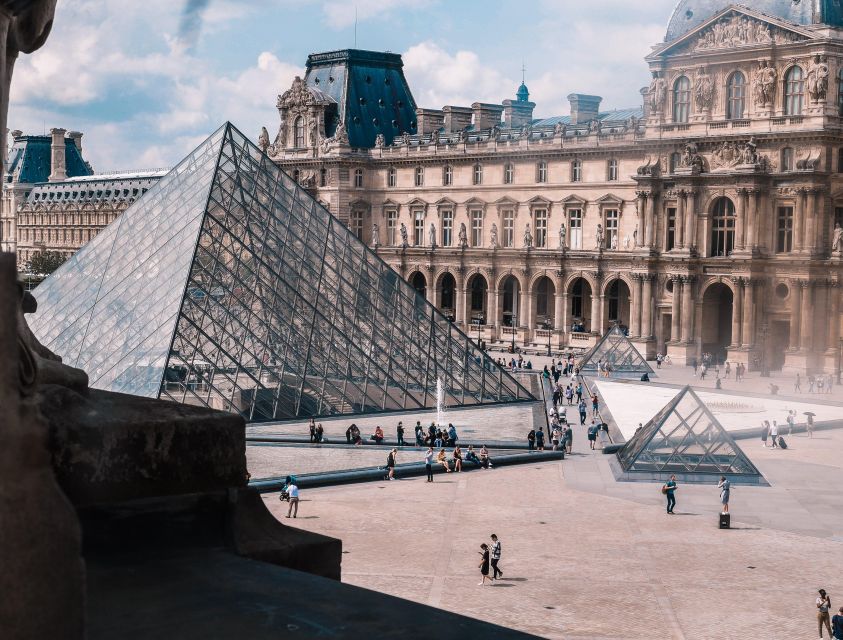
The tour ends in the Apollo Gallery. That matters because it’s not just a random stop where everyone disperses.
From there, you can take time to explore more of the museum at your own pace. I like ending with a “landing zone” because it avoids the common problem: a tour that leaves you near the start, forcing you to backtrack.
Also, you’ll receive a map of the Louvre to help you keep moving after your guide leaves. Even a simple map is useful here. The museum is designed to swallow you unless you have a plan.
Optional Seine cruise discount: turn your Louvre day into a full Paris story
If you pick the option, your tour includes a discount on a River Seine cruise ticket. After a museum day, this is one of the best ways to shift from indoor art to outdoor Paris drama.
You can use the cruise ticket to see major sites, including the Louvre Museum, from the vantage point of the river. That view gives you context and scale that you can’t get from sidewalks.
If you’re choosing between two museum days in Paris, this combo is especially good. It gives you variety without adding stress.
What you’ll pay and why it feels like decent value
This experience costs $128 per person and runs 2–3 hours. In a place like the Louvre, that price isn’t just paying for someone to talk. You’re paying for three things:
- the guide, who helps you pick what to prioritize
- the skip-the-line entry, which can be the difference between a good visit and a wasted one
- the tour’s focused structure, which helps you actually see the big works without getting lost in the “what now?” feeling
Is it cheaper than going on your own? Probably. But the Louvre can be brutally inefficient when you’re trying to plan on the fly. If you value your time, this tour is the kind of ticket that often pays off because it turns a huge, confusing museum into a readable route.
Group size, guide styles, and real-world tips from guide names you might get
The tour is listed as a small group. That’s consistent with the best reviews you provided: people repeatedly praised guides for being energetic, warm, and able to keep the group focused without making it feel stiff.
Some guide names that show up in the experience feedback include Elizabeth (praised for professionalism and energy), Liza (charismatic and humorous), Natalia (amazing personality and history-by-art storytelling), and Ahmed (modern presentation with humor). Others mentioned include Monica, Dina, and Fabien. Exact guiding style can vary, but the pattern is clear: the best part is the storytelling that makes each stop feel intentional.
Practical tip: bring water. Even a “short” Louvre visit involves a lot of walking. One review also mentioned there are lockers for storing belongings and that there are toilets near coat bins for small group tours. If you’re carrying bags, that’s worth planning around so you don’t waste time later.
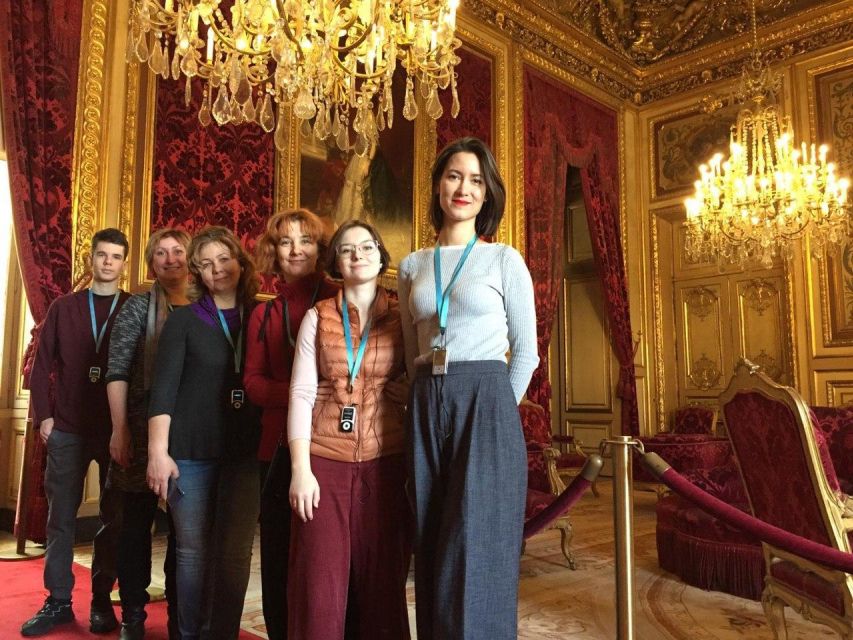
Also, in at least one review, the guide used a headset so everyone could hear. Not every guide will do the same, but it’s a good sign. Clear audio matters when you’re standing close to crowded works.
Who should book this tour (and who shouldn’t)
This tour is a strong match if you:
- want the Louvre’s biggest hits without spending half your trip in lines
- appreciate art-history context, especially when it connects paintings and sculpture to broader French and European history
- like guided pacing and then continuing on your own after the highlights are done
It may not be the best fit if you:
- use a wheelchair or need accessibility accommodations, since it’s not suitable for wheelchair users
- hate walking and prefer slower, wandering visits
- expect to see everything. This tour is built for highlights, not completionism
Should you book it?
I’d book this tour if you’re a first-timer or if you want your Louvre visit to feel controlled and meaningful. Skip-the-line entry plus a tight 2–3 hour route is the winning formula here. You’ll hit the Mona Lisa, The Wedding at Cana, and major sculpture like Nike of Samothrace and Venus of Milo, then finish in a location that makes it easy to keep exploring.
If you want a Louvre day that’s part museum, part story, and part practical time-saving, this fits. If you’re hoping for a fully relaxed stroll where you stumble into everything on your own, you might prefer a self-guided visit. For most people, though, especially on a first trip to Paris, this is one of the smarter ways to do the Louvre without losing your whole day.
FAQ
How long is the Louvre guided tour?
The tour lasts 2 to 3 hours.
Where do we meet the guide?
You meet near the Louvre Museum, under the statue of Louis XIV, looking for a yellow sign that says My Super Tour.
Does this tour include skip-the-line entry?
Yes. You skip the line through a separate entrance.
Is this tour only for people who don’t have tickets?
No. You can join even if you already have your own ticket, or you can opt to have entry tickets included in the tour option.
Which highlights will we see?
You’ll see major works such as the Mona Lisa and The Wedding at Cana, plus sculptures including the Nike of Samothrace and the Venus of Milo.
Where does the tour end?
It ends in the Apollo Gallery.
Is the Seine cruise included?
A discounted Seine river cruise ticket is included if you choose the option.
What’s included in the tour?
Included items are a tour guide, guided tour, skip-the-line entry, entry tickets if opted for, a map of the Louvre to continue on your own, and a discount on a Seine river cruise.
What should I bring?
Bring water.
What languages are available for the live guide?
The tour offers live guidance in English and Russian.