REVIEW · ATHENS
National Archeological Museum Private Tour with Admission
Book on GetYourGuide →Operated by WARMPENGUIN · Bookable on GetYourGuide
Greek mysteries live behind one quiet entrance. This private, state-accredited museum tour is one of the smartest ways to see the National Archaeological Museum because you’re not just looking at cases, you’re getting guided meaning. I love the chance to stand close to headline artifacts like the Death Mask of Agamemnon and the Antikythera Mechanism, explained in a way that actually sticks. The only drawback is simple: with a 2-hour window, you won’t linger in every room. Your guide will steer you toward the most important highlights.
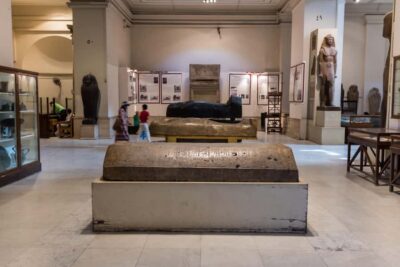
I also like the setting. The museum’s neoclassical home has an inner garden and a café, so even when you’re moving through galleries, there’s a calmer rhythm to it than a typical, all-hard-walls museum visit. Add in the whisper communication system (used for groups of 6 or more), and you’ll hear the commentary without shouting across your group.
Finally, the tour has real flexibility. Your guide can adjust the focus to your group’s interests, and that matters a lot in a museum this big. You can go more myth-focused, history-focused, or just aim to hit the main highlights. English, German, or Italian guided time makes it easy to match your group.
In This Review
- Key things that make this tour worth your time
- Where the tour starts: meeting your guide at the museum entrance
- The 2-hour structure that keeps you from feeling lost
- Death Mask of Agamemnon: why this stop anchors the whole visit
- Antikythera Mechanism and the Mycenaean Gold: big fame, better explanations
- Cup of Nestor and Ring of Theseus: where myth meets the display case
- Aphrodite and Poseidon sculpture: seeing beauty with a purpose
- The inner garden and café: a calm reset inside a big museum
- Private-group comfort: pacing, questions, and the whisper system
- Languages and guide style: English, German, or Italian
- Price and value: what $163 per person really buys you
- Who should book this National Archaeological Museum private tour
- Quick practical notes before you go
- Should you book?
- FAQ
- How long is the National Archaeological Museum private tour?
- What’s included in the price?
- What languages are the tours available in?
- Where do we meet the guide?
- Is the tour wheelchair accessible, and are pets allowed?
- Is there free cancellation?
Key things that make this tour worth your time

- State-credited archaeologist-led guiding so the stories you hear stay grounded.
- Top-ticket artifacts on the route, including the Death Mask of Agamemnon and the Antikythera Mechanism.
- Tailored commentary for your interests and your group’s ages.
- Private-group pacing that keeps you from getting swallowed by museum crowds.
- Whisper communication system for groups of 6 or more, for clearer listening.
- Neoclassical building with an inner garden and café for a breather in the middle of museum time.
Where the tour starts: meeting your guide at the museum entrance
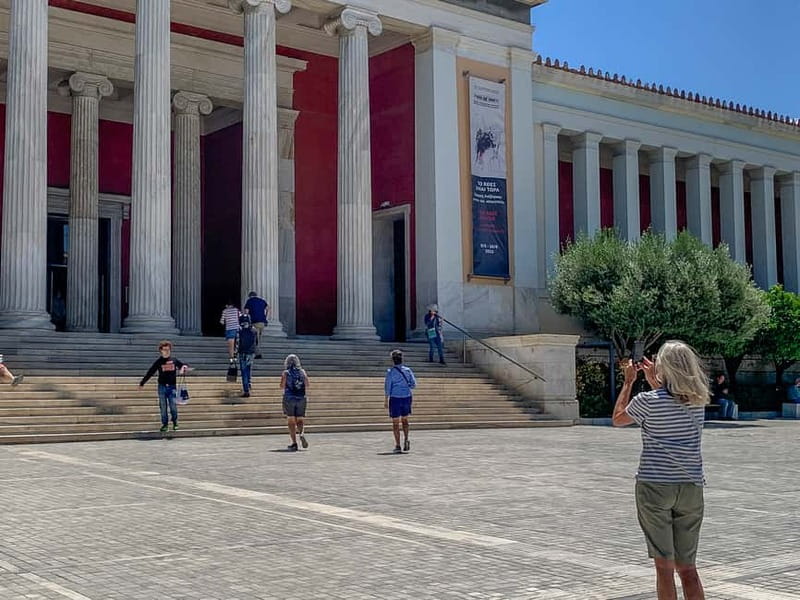
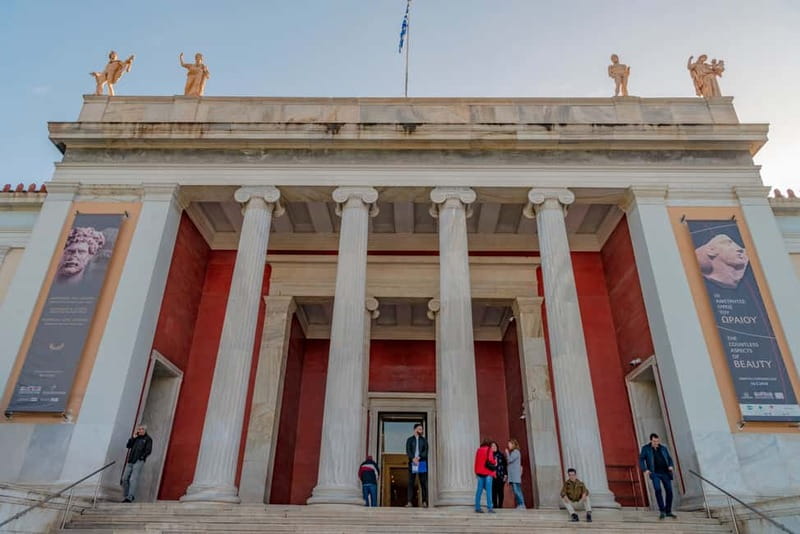
You start right where things matter most: at the main entrance of the National Archaeological Museum. Your guide will have a sign with your name, which cuts out the usual start-of-tour confusion. It sounds small, but it sets the tone. You walk in already oriented, instead of spending your first 10 minutes trying to find a person holding a random logo.
From the first moments, you’ll feel the difference between a guided tour and a self-guided wander. This is a private group format, so your guide isn’t trying to keep one pace for 30 strangers. You’ll move at a speed that lets you read labels, ask questions, and actually connect what you’re seeing to the larger story of Ancient Greece.
Practical tip: wear comfortable shoes and keep your phone charged. In two hours, you’ll want to capture what you care about most, because you won’t have the time to return to every gallery after the tour ends.
You can also read our reviews of more private tours in Athens


The 2-hour structure that keeps you from feeling lost

This tour runs about 2 hours inside the National Archaeological Museum. That time span is short enough to feel doable, but long enough to make real connections between objects and themes.
Here’s how it usually plays out: you begin at the museum entry point, then your guide leads you through key exhibition areas with a commentary that’s structured around major highlights. The goal isn’t to cover everything. The goal is to help you see what to look for first, and why it matters.
The best part is that your guide can adapt. If you show up more myth-curious, you’ll likely hear more mythology framing around objects tied to famous figures. If your group is more history-minded, the commentary can tilt that way instead. If someone in your group just wants the “greatest hits,” your guide will still make it coherent, not random.
Possible trade-off: you’ll get a curated route, not a complete museum sweep. If you want to stand in front of every single sculpture and inscription for 20 minutes each, you might find the pace a bit brisk. But if you want clarity and impact in a limited time, this duration is close to perfect.
Death Mask of Agamemnon: why this stop anchors the whole visit
The Death Mask of Agamemnon is one of those museum objects that pulls people in instantly. In this tour, it’s more than a famous name on a label. Your guide helps connect it to the surrounding world you’re seeing at the museum.
When you’re on a private tour, you can ask the quick questions that make a difference: What makes this artifact stand out? How do the stories around it fit into what the museum is trying to show? Why do people keep coming back to it?
I like that the tour isn’t just about staring. It’s about comprehension. Standing in front of a centerpiece object is far more satisfying when you understand what you’re looking at and how it relates to the broader myth-and-history blend that defines so much of Ancient Greece.
Also, you’ll likely hear how experts approach these objects, which helps you separate your first impression from the deeper context. That’s valuable, especially if you’re visiting with kids or if some group members are less “museum people” and more “show me the meaning.”
Antikythera Mechanism and the Mycenaean Gold: big fame, better explanations
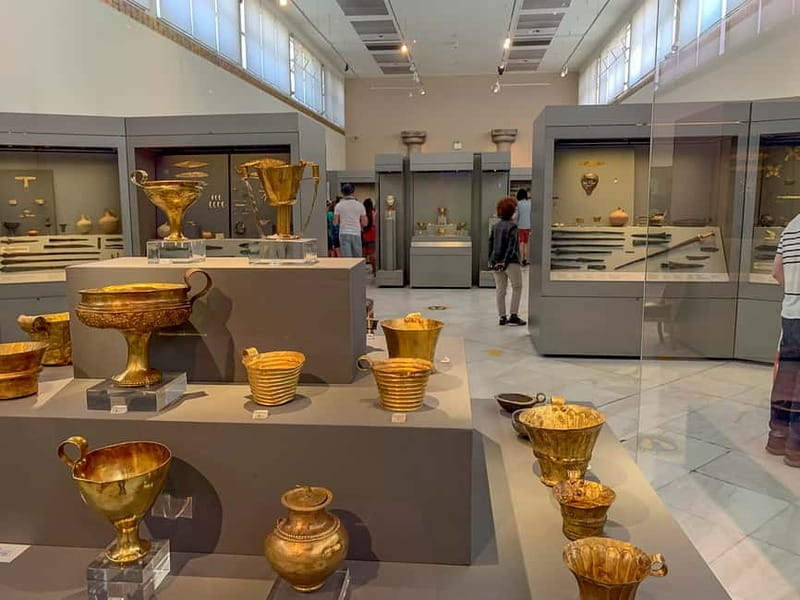
Two highlights that come up early in the experience are the Antikythera Mechanism and Mycenaean Gold-related treasures. Even if you’ve heard their names before, the museum version is where they become real.
The Antikythera Mechanism is described as about 2000 years old, and that age alone is a mind-bender. On a guided tour, you don’t just register the fact. You’ll learn what makes it famous and how it fits into what Ancient Greece could achieve.
Then there’s the Mycenaean Gold focus. Gold objects in museums can sometimes feel like “pretty stuff in a case.” On this tour, your guide helps you see why it’s more than decoration. Gold, craftsmanship, and the stories attached to these items are part of the larger picture of power, belief, and culture.
A practical note: these are the kinds of artifacts where photos can’t fully show what’s happening. If you care about details, take a slow second glance after your guide’s explanation. Let the description settle before you move on.
Cup of Nestor and Ring of Theseus: where myth meets the display case
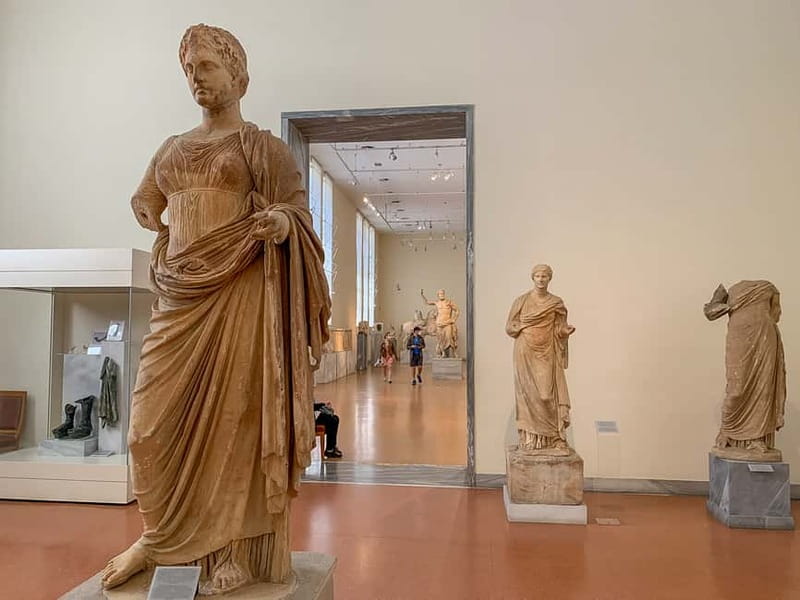
Not every highlight is a gigantic show-stopper. Objects like the Cup of Nestor and the Ring of Theseus give you a different flavor of the museum: the blend of legend and material evidence.
The tour is especially good at this “myth meets object” connection. You’ll hear the history and mythology thread that ties famous names to physical artifacts—so you’re not just memorizing titles. You’re learning the museum’s approach to connecting story and archaeology.
If your group likes mythology, this is where you’ll feel the tour come alive. Even if you don’t consider yourself a mythology expert, a good guide can translate names and legends into something you can actually remember.
And if you’re visiting with children, these are friendly entry points. Mythic references make it easier to follow the guide’s explanations, and the guide can shape the commentary so it works for all ages.
You can also read our reviews of more museum experiences in Athens




Aphrodite and Poseidon sculpture: seeing beauty with a purpose
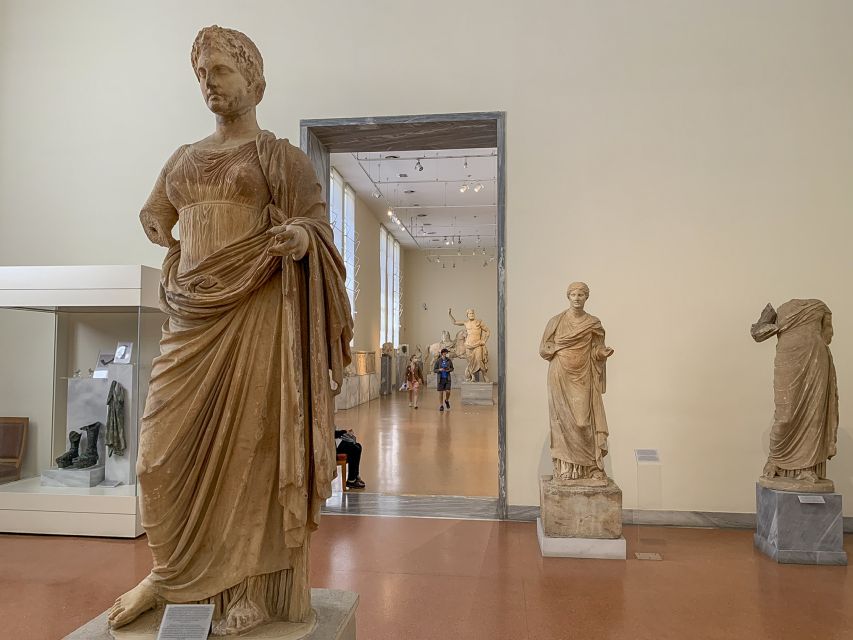
The museum’s sculpture displays, including statues of Aphrodite and Poseidon, are the kind of items you can easily enjoy without understanding. This tour helps you avoid that “pretty, but I forgot it” feeling.
Your guide will provide commentary as you move through the sculpture-focused areas, helping you connect the figures to the broader themes you’re hearing throughout the tour. That turns a visual experience into a story-driven one.
One thing I like about private guiding is that you can pause. If someone in your group wants to linger on the sculpture details, you can usually take a moment and let the guide adjust. In a group tour with strangers, you often can’t do that.
Practical tip: if sculpture is your priority, tell the guide right at the start. A simple statement like we want more time with the statue rooms helps your guide allocate attention within the 2-hour frame.
The inner garden and café: a calm reset inside a big museum
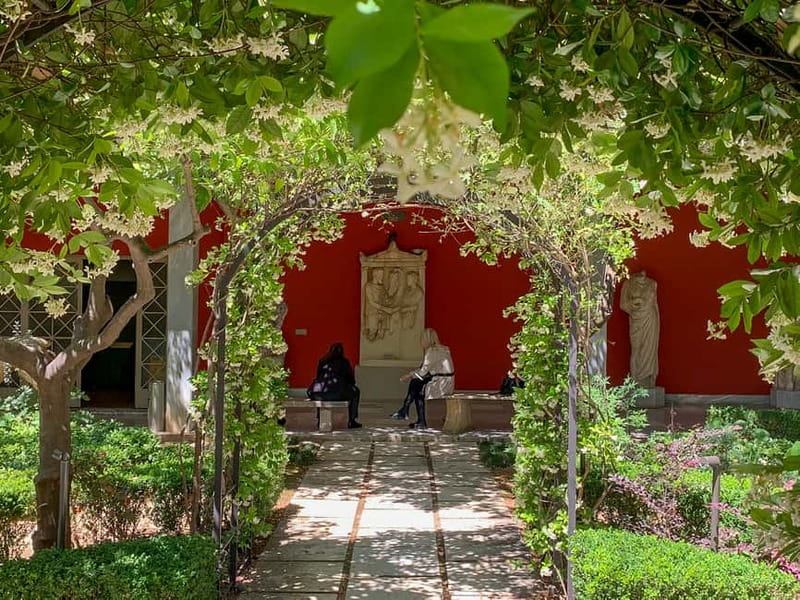
The National Archaeological Museum isn’t only galleries. The exhibit chambers open out onto a leafy inner garden with mosaics, plus a relaxing café area nearby. That means your brain gets a break from the indoor museum tempo.
Even if the tour focuses on the main exhibition highlights, the setting matters. A garden view helps you keep perspective when you’ve just seen a dense sequence of objects and names. It also makes it easier for families, since you’re not trapped in corridors the entire time.
If you like a post-tour treat, plan to use the café space to decompress after the guided portion. You’ll enjoy the museum more when you give yourself a small reset instead of rushing straight to the next stop in Athens.
Private-group comfort: pacing, questions, and the whisper system
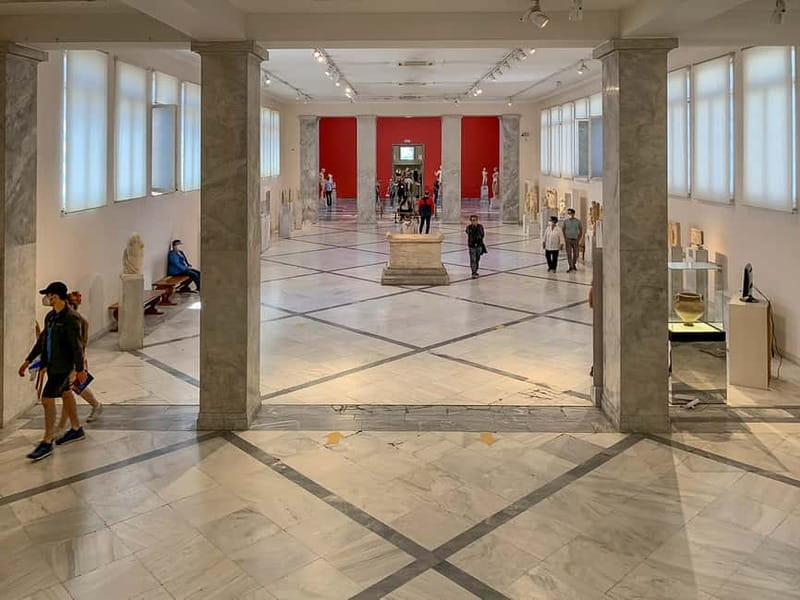
This is a private group tour, which changes the whole experience. You’re not wrestling with other people’s schedules. You’re not forced to keep up with strangers. And your guide can adapt the commentary to your group’s interests.
There’s also a communication upgrade for bigger private groups: a whisper communication system is included for groups of 6 or more. Anyone who’s visited large museums knows how hard it can be to hear explanations over room noise and distance. This system helps you actually catch the details your guide is sharing.
From my perspective, that’s one of the best “value features” of a tour like this. Hearing the guide clearly is what makes the artifacts meaningful. If you can’t hear well, you miss the point.
If you’re bringing friends, this is a great format for splitting up the kind of questions people want to ask. Someone can focus on myth, someone else on historical framing, and you can all benefit from the guide’s tailored answers.
Languages and guide style: English, German, or Italian
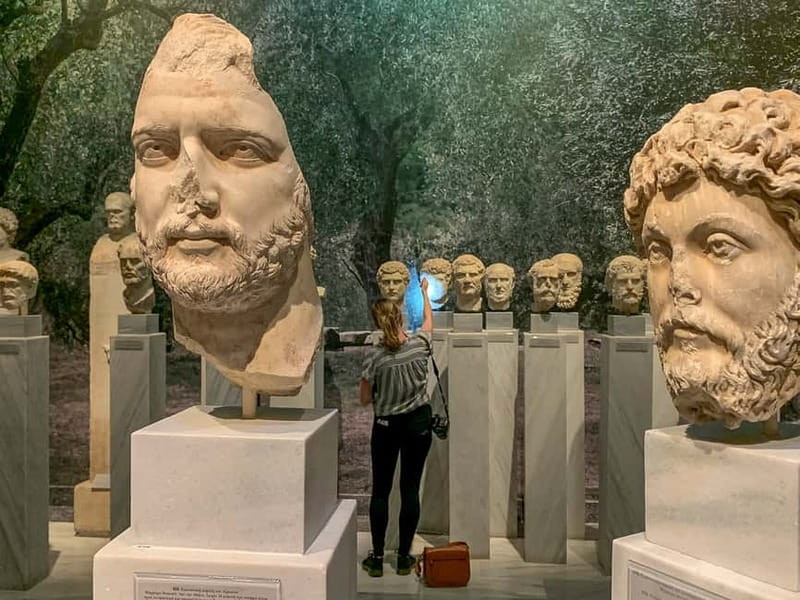
You can choose a live guided tour in English, German, or Italian. That’s not just a convenience. In a museum full of object names and cultural references, language accuracy matters.
Your guide is also there throughout the tour, not just for a quick introduction. That matters because you can build a sense of context as you move from object to object.
In the experience feedback that informed my expectations, guides who are trained archaeologists (with names like Vicky, Vasilis, Ria, and Katerina) are praised for highlighting exhibits clearly and answering questions thoughtfully. That tells me what you should look for on arrival: a guide who can explain without talking down and who can respond if your group’s curiosity shifts.
Small move: before the tour starts, decide what you want most—myth stories, major archaeological highlights, or a focused look at a few standout artifacts. Tell your guide early. It helps them guide efficiently.
Price and value: what $163 per person really buys you
At $163 per person for a 2-hour private tour with admission included, this isn’t the cheapest way into a museum. But it’s also not trying to be. You’re paying for three main value drivers:
First, you’re buying a professionally licensed archaeologist guide. In a museum packed with artifacts, the difference between a generic explanation and a guided archaeology-led one is huge.
Second, admission is included, so your cost isn’t doubled by needing to purchase tickets separately.
Third, you get a format built for clarity: private group pacing, plus the whisper system for groups of 6 or more. That’s what keeps the tour from turning into “walk fast, read nothing.”
So when is it worth it? It tends to be best when:
- you’re short on time in Athens and want high impact,
- you care about understanding what you’re seeing,
- you’re going with family members who benefit from adapted explanations,
- or you’re traveling in a group where dividing the cost makes sense.
If you’re traveling solo and your main goal is just to roam, a self-guided visit could feel more economical. But if you want the museum to make sense fast, this price starts looking more reasonable.
Who should book this National Archaeological Museum private tour
This tour fits best if you want a guided museum visit that doesn’t feel like school. I’d especially recommend it if:
- you’re visiting Athens for a short time and want a focused museum highlight route,
- your group includes a mix of interests (myth, history, specific artifacts),
- you want a guide who can adapt explanations for different ages,
- you prefer a private format where you can ask questions without feeling rushed.
It’s also a smart choice if you’ve already glanced at a museum map and felt overwhelmed. The National Archaeological Museum is impressive, but big museums can be mentally exhausting when you don’t know what to prioritize.
You should consider skipping the private tour only if you really want to go at your own pace for hours, reading everything slowly with no structured route. That style can be satisfying, but it’s a different experience than this one.
Quick practical notes before you go
A few things can help you get more out of your 2 hours:
- Bring comfortable walking shoes. You’ll move through exhibition rooms.
- Decide what you care about most, then tell the guide at the start.
- If you’re traveling with kids, plan on letting the guide set the story level. The tour is designed for all ages.
- Pets are not allowed.
- The museum is wheelchair accessible, so if you need step-free movement, you’re in the right place.
Should you book?
Yes, if you want the National Archaeological Museum to make sense quickly, this is a strong pick. The combination of a licensed archaeologist-led guide, admission included, and a private-group format gives you the kind of clarity that makes museum highlights feel earned, not just seen. The two-hour length is both the limitation and the strength—perfect for a “big impacts only” visit.
I’d book it if your group includes people who want either mythology, history, or specific standout objects like the Death Mask of Agamemnon and the Antikythera Mechanism. If your plan is to spend half a day slowly reading every label, then you may prefer self-guided time instead.
FAQ
How long is the National Archaeological Museum private tour?
The tour lasts about 2 hours.
What’s included in the price?
You get a professional licensed guide and admission tickets. A whisper communication system is included for groups of 6 or more.
What languages are the tours available in?
The live tour guide is available in English, German, and Italian.
Where do we meet the guide?
You meet at the main entrance of the museum. Your guide will have a sign with your name.
Is the tour wheelchair accessible, and are pets allowed?
The tour is wheelchair accessible. Pets are not allowed.
Is there free cancellation?
Yes. You can cancel up to 24 hours in advance for a full refund.