REVIEW · ATHENS
Acropolis of Athens, Parthenon and Acropolis Museum private tour with dinner
Book on Viator →Operated by Athens Walks Tour Company · Bookable on Viator
Your Acropolis day turns into a story.
This private tour stitches together the Acropolis, the New Acropolis Museum, and a Greek dinner with wine so you do not just see monuments, you understand them. It is built for first-time Athens visitors who want real context, not a fast photo sprint.
I especially love the professional archaeologist guide angle—names like Stelios, Hermes, and Giota show up in past groups, and the pattern is clear: careful explanation, strong history, and an easy, human teaching style. I also like the skip-the-line planning, which means less time stuck at entrances and more time inside the sites, where the details matter.
One thing to consider: this is still serious walking on uneven stone and stairs (moderate fitness helps), and your dinner experience depends on the specific restaurant setup and seating.
In This Review
- Key highlights worth planning around
- Why this Acropolis + Museum tour beats doing it solo
- Meeting at Porinou 5 and handling the practical setup
- The Acropolis portion: walking the south slope with real context
- Stop-by-stop: what you should watch for
- The Parthenon perimeter: symmetry, damage, and centuries of use
- Practical tip for enjoying the Parthenon with fewer headaches
- New Acropolis Museum: where the story becomes objects in hand
- Why this museum section is worth your time
- Finishing on the Odeon of Herodes Atticus and Erectheion
- Dinner with Parthenon views: what you’re really paying for
- How to make dinner work for you
- Price and time: does $265.49 per person feel fair
- Who this tour suits best (and who should choose differently)
- Quick booking checklist before you go
- Should you book the Acropolis, Parthenon, and Museum private tour with dinner?
- FAQ
- Is this a private tour or a group tour?
- What’s included besides the tour guide?
- Do I need to buy admission tickets myself?
- How long is the tour?
- Is pickup from a hotel included?
- What language is the tour in?
- How physically demanding is it?
- Is there a cancellation option?
Key highlights worth planning around
- Licensed archaeologist guide: you get construction, excavation, and mythology explained in plain language
- Skip-the-line admission: pre-booked entry helps you avoid the worst queues
- South slope route + Parthenon perimeter: major drama and symmetry without feeling rushed
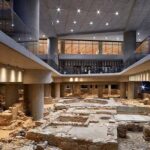
- New Acropolis Museum focus: statues and friezes framed with the site’s real finds (including glass-floor excavation views)
- Theatre of Dionysus and other anchor stops: you see the performing-arts side of ancient Athens
- Greek dinner with wine near the Parthenon: the meal becomes part of the memory, especially as the light changes
Why this Acropolis + Museum tour beats doing it solo
If you only do the Acropolis on your own, you can still have an amazing time. But you will miss the why. The Parthenon is not just a pretty ruin—it is tied to politics, religion, art, and rebuilding after damage. The same goes for what you find in the museum: objects only become powerful when someone explains what they are, where they came from, and how scholars read them.
This is a private format, so the tour is designed around your pace and your questions. That matters on the Acropolis, where you are moving between viewpoints, stepping over marble and stone, and trying to connect what you see from one angle to what used to stand there. When I see guides described as archaeologists who guide with patience—like Daphne looking after visitors stepping carefully—it signals the big win here: better flow, fewer blank stares, and more “oh, that is what I am looking at.”
The other advantage is timing. The experience runs in the afternoon and pairs ruins with the New Acropolis Museum, so you are not stuck at the museum with a dead-still rush or sprinting across monuments in the harshest hours. Past guests specifically mention quieter museum time on late departures, which is exactly what you want if you enjoy reading details without shoulder-to-shoulder crowds.
You can also read our reviews of more private tours in Athens



Meeting at Porinou 5 and handling the practical setup
You meet at Porinou 5, Athina 117 42. There is no hotel pickup listed, so you are responsible for getting yourself there using public transport or a short walk/taxi ride. The good news: the meeting point is in Athens, so you are not dealing with a remote bus transfer or long pre-dawn travel.
The tour is in English and you get a mobile ticket or voucher option, which keeps things simple. The tour is also private, so only your group participates, with a minimum of 2 people per booking.
Also, keep in mind what the tour is actually combining: an outdoor ruins section plus an indoor museum section plus dinner. That adds up to real total time on your feet, even if each individual stop is not long.
The Acropolis portion: walking the south slope with real context
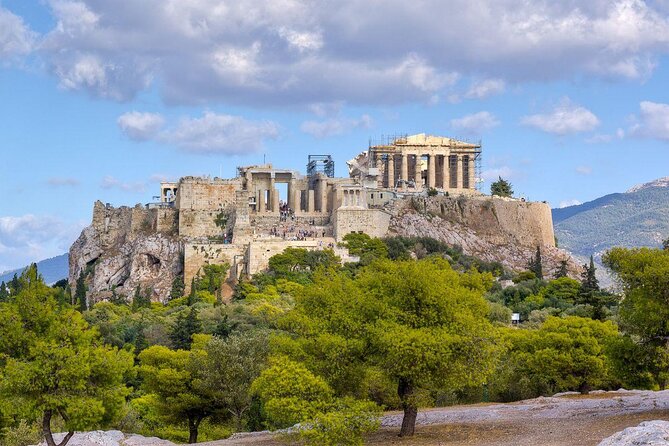
The visit starts on the Acropolis with a guide-led introduction. The Acropolis is a rocky hilltop citadel above Athens, and it is more than one building. It is an entire sacred and political zone, with different structures layered over centuries of rebuilding and reuse.
A typical flow begins with the south slope walk, where your guide explains how the hilltop became home to major buildings built in the 5th century BC, including the Parthenon. Past guests mention guides stopping for shade, which is smart. If you go in warmer months, that small operational detail can make the difference between enjoying the story and just surviving the heat.
Stop-by-stop: what you should watch for
You will hit several famous anchors, but the “value” is what a guide does between the anchors—linking architecture to meaning.
- The Parthenon area as a living viewpoint
You see the ruins in context before you reach the Parthenon itself. That matters because the Parthenon reads differently once you understand its place in the overall hilltop plan.
- The Theatre of Dionysus
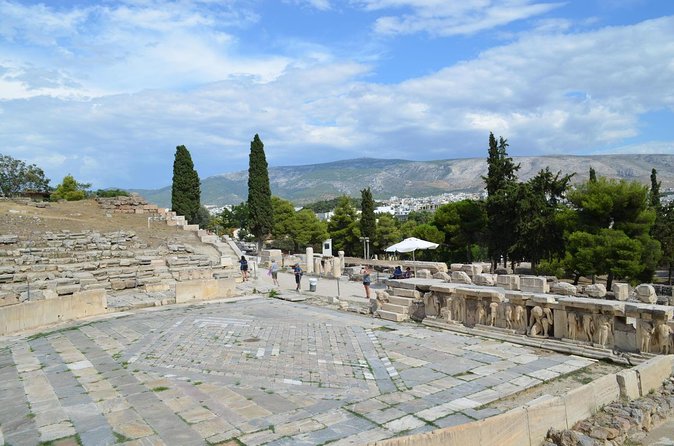
This spot is about the performing arts and ancient drama. The Theatre of Dionysus is described as a major theatre and considered a birthplace of theatre. When your guide points out how audiences once gathered here for plays by writers like Euripides, Sophocles, and Aeschylus, the theatre stops being a stone outline and turns into a stage.
- Temple of Athena Nike and Ionic design
This temple is dedicated to Athena Nike and is noted for being an early fully Ionic temple on the Acropolis. Even if you are not an architecture nerd, your eyes will catch the style shift because Ionic design details look different from Doric simplicity. The guide helps you see that without turning the tour into a lecture.
- Propylaea: the monumental gateway
The propylaea is the entrance gateway to the Acropolis. It is a good reminder that the Acropolis experience was designed as a journey. You did not just wander in; you passed through a statement of power and sacred structure.
One small caution: several stops are quick by design. That is not a flaw; it is how a private tour balances breadth with time. But if you are the type who likes to sit and study every inscription or take dozens of photos at one viewpoint, you will want your guide to prioritize those interests early.
The Parthenon perimeter: symmetry, damage, and centuries of use
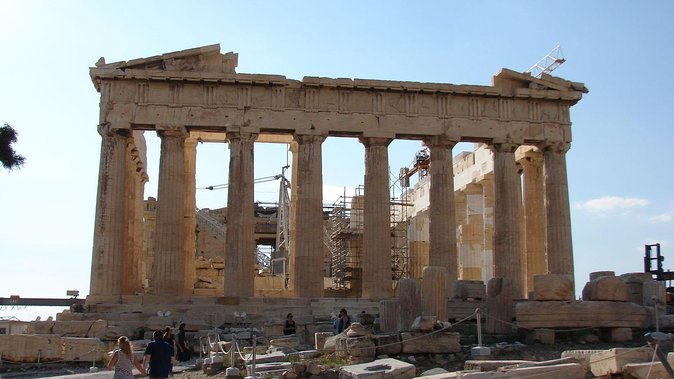
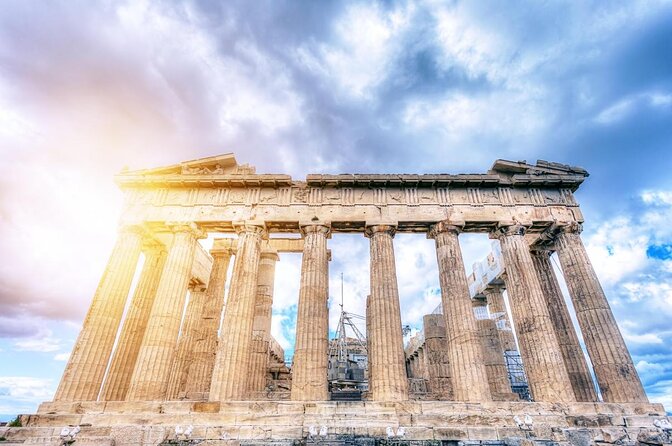
When you reach the Parthenon, the tour becomes the headline act. The Parthenon is a former temple dedicated to Athena, with construction starting in 447 BC during Athens’ peak. Your guide will walk you around the perimeter and explain what makes it special: the Doric design choices, the symmetry, and how it was used over time.
This is where a guide adds the biggest value, because the Parthenon is famous, yet many people do not know what they are looking at beyond the obvious columns. You are likely to hear how the structure served as a temple, then later roles as a church, and even as a mosque in later periods. The “centuries of change” framing helps you stop thinking of the Parthenon as one moment in time and start seeing it as a monument that survived through history.
You can also read our reviews of more museum experiences in Athens



Practical tip for enjoying the Parthenon with fewer headaches
Bring a small amount of patience for crowd flow. Even on a quieter late-afternoon run, the top of the Acropolis concentrates foot traffic. With a guide, you can time your own little photo pauses rather than guessing where to stand. If your group likes photos, tell your guide right away. Private tours work best when you set expectations early.
Also, wear shoes with grip. The marble steps can look smooth and feel slick, especially if humidity has a say. Several guides in past groups were described as taking care during climbs and stops—use that moment to ask for a slower pace if you need it.
New Acropolis Museum: where the story becomes objects in hand
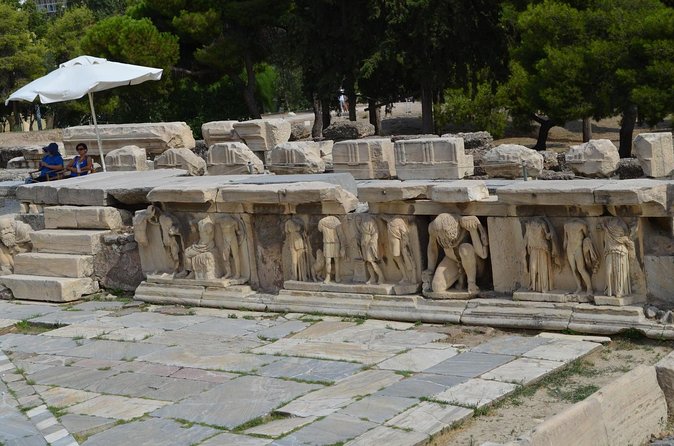
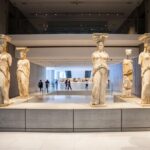
After the outdoor climb, you go to the Acropolis Museum, a light and airy space built to house finds from the Acropolis site. The museum matters because it takes you from “what the buildings looked like” to “what archaeologists found.”
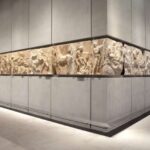
Your guide helps you explore statues, friezes, and other antiquities, and one of the standout features mentioned in the experience description is the glass floors. Through the glass, you can view the archaeological excavations where many exhibits were discovered. That instantly gives the collections a deeper sense of place. You are not looking at random artifacts—you are seeing evidence from the exact ground where the ancient world stood.
Why this museum section is worth your time
The Acropolis is dramatic because it is open sky and big architecture. The museum is dramatic because it is detail. Friezes and sculptural work reward slow looking, and this tour gives you that structure.
One past guest described a guide starting with the museum first to familiarize visitors with the authentic pieces before seeing replicas up on the Acropolis. That is a smart learning strategy: you understand what you are seeing outdoors, because you already studied the real art indoors. Even if your guide uses a different order within the plan, the underlying idea still holds: museum first (or at least museum emphasis) turns your outdoor photos into a guided reading experience.
If you care about classical art, mythology, and how scholarship interprets evidence, this museum stop is the part that will likely stick with you longest after dinner.
Finishing on the Odeon of Herodes Atticus and Erectheion
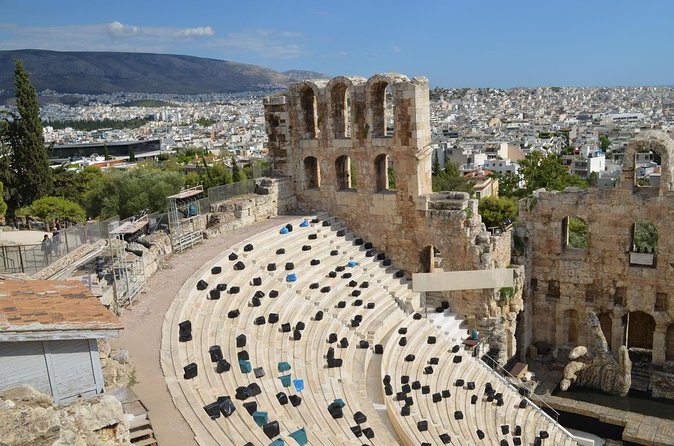
The tour continues through additional parts of the Acropolis area, including the Odeon of Herodes Atticus and the Erechtheion.
- Odeon of Herodes Atticus
This stone theatre structure is completed in 161 AD and is still used every summer for the Athens Festival. When your guide points out that the theatre is not just ancient history but something that still hosts performances, it ties the ancient arts theme back to the start at the Theatre of Dionysus.
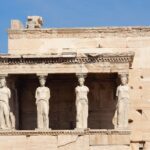
- Erechtheion
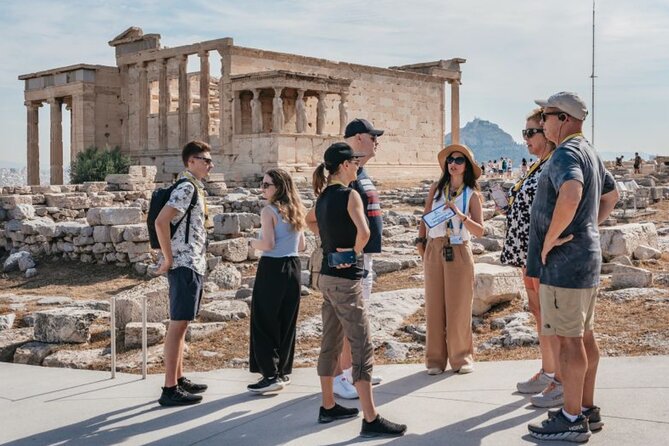
The Erechtheion is dedicated to Athena and Poseidon and sits on the north side of the Acropolis. It is another reminder that the hilltop was sacred to more than one power. A good guide will help you see these sites as part of a system, not isolated stops you tick off.
If you are someone who wants a “complete” Acropolis in a single afternoon, these final touches help round the experience out. If you are more focused on the Parthenon only, you may find the extra stops a bonus rather than a burden, as long as your guide keeps the narrative tight.
Dinner with Parthenon views: what you’re really paying for
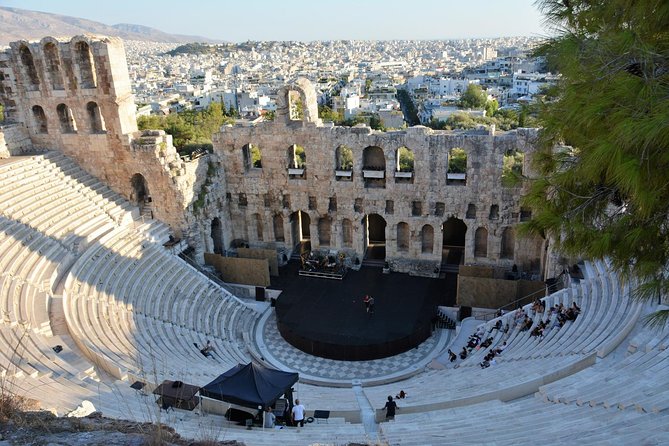
The tour ends at a nearby well-regarded restaurant with views of the Parthenon. You sit down for classic Greek dishes and wine. The experience description frames dinner as the final relax-and-chat moment, letting you connect the sites you just saw with the food and atmosphere of Athens.
This is also where people feel the value most strongly. The Acropolis and museum already cost time and energy. A good dinner stop is not just calories; it is a payoff. Past guests mention the view of the Parthenon lighting up at night and describe rooftop or elevated seating as part of the magic.
That said, dinner is the one piece where experience can vary more. Some guests liked the meal and praised specific dishes like lamb, while others felt the dinner did not match the price expectations. The practical takeaway: go into it expecting a solid Greek dinner with wine and a view, not a guaranteed high-end tasting menu.
How to make dinner work for you
If you are sensitive to long meals, tell your guide or staff you need a quicker pacing. Since the experience ends when you leave the restaurant, you do not have a built-in second activity afterward. Plan for a clear finish so you do not end up rushing dessert or walking back tired.
Price and time: does $265.49 per person feel fair
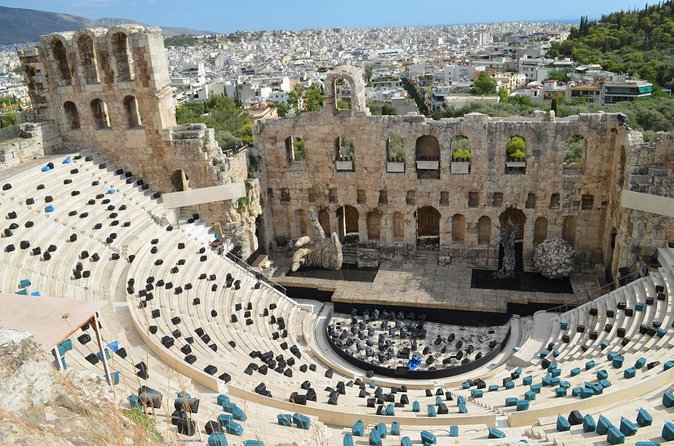
At about $265.49 per person, this is not a bargain tour. But it is also not an apples-to-apples comparison with a group bus tour. You are paying for:
- A private licensed archaeologist guide
- Skip-the-line admission tickets (pre-booked planning that saves time)
- A museum visit plus a structured Acropolis route
- A dinner with wine included in this Acropolis-with-dinner package
For first-time Athens visitors who want depth, the biggest cost driver is the guide. On an archaeologist-led private tour, your money buys interpretation, pacing, and the ability to ask questions on the spot. People who have done it on their own usually report that they see the stones but not the story. This tour is designed to give you the story.
The other value driver is time efficiency. The Acropolis is famous, so queues and crowding are real. Skip-the-line planning reduces stress, especially if you are traveling with limited time.
If you only want a photo checklist, you might feel the price is steep. If you want to understand what you are seeing, the value rises quickly.
Who this tour suits best (and who should choose differently)
This private Athens experience is a great fit if:
- You are a first-time visitor and want the major Acropolis highlights plus the museum
- You like guided explanation—construction, excavation, mythology, and art in plain terms
- You want to relax at dinner afterward with wine and Parthenon views
- Your group benefits from private pacing, like slower ascents or more Q&A
It may be less ideal if:
- You have very limited mobility or cannot manage uneven stone and stairs (the tour calls for moderate physical fitness)
- You only have interest in the Parthenon and would rather keep it short
- You are traveling solo and would need a group size adjustment (minimum of 2 per booking)
Quick booking checklist before you go
To get the most out of this tour, do three things:
- Wear shoes for stone steps and long walking.
- Go in expecting a full narrative, not a fast stop carousel.
- If dinner matters, ask in advance how the restaurant seating and dinner timing will work for your group.
And one more practical note: the tour is a private experience ending back at the meeting point, so think about your return plan afterward.
If you need flexibility, the operator offers free cancellation up to 24 hours before the experience start time.
Should you book the Acropolis, Parthenon, and Museum private tour with dinner?
Yes, if you want a guided Athens introduction where the Parthenon becomes understandable and the museum becomes more than a quiet room of artifacts. This tour is built for people who care about context and would rather pay for a guide than spend their limited energy guessing what everything means.
If you are cost-sensitive, treat this as a “choose-your-depth” decision. You can visit the Acropolis and museum on your own for less money, but you will likely lose the narrative thread that makes the architecture and objects click. For me, the strongest reason to book is the combo: archaeologist guide + skip-the-line time saved + museum context + dinner payoff in one afternoon.
FAQ
Is this a private tour or a group tour?
It is a private tour/activity, so only your group participates.
What’s included besides the tour guide?
The package includes a private tour, a professional licensed archaeologist guide, skip-the-line entrance tickets, and dinner (optional is listed in the inclusions, so confirm your exact meal setup at booking).
Do I need to buy admission tickets myself?
Skip-the-line entrance tickets are listed as included. You should still follow the tour instructions for vouchers or any ticket presentation requirements.
How long is the tour?
The duration is listed as approximately 3 to 5 hours.
Is pickup from a hotel included?
Hotel pickup and drop-off are not included.
What language is the tour in?
The tour is offered in English.
How physically demanding is it?
It requires a moderate physical fitness level, with walking and stairs on the Acropolis.
Is there a cancellation option?
Yes. You can cancel up to 24 hours in advance for a full refund.