REVIEW · PARIS
Private Tour Louvre Museum
Book on Viator →Operated by Iuliana Pintea · Bookable on Viator
The Louvre can feel like a maze. This private tour helps you hit the big masterpieces and understand the Palace of the Louvre at the same time. I especially like the skip-the-line entry with admission included and the way guides connect artworks to the building, rooms, and turning points like Napoleon’s era. One thing to consider: the tour is short by design (about 2–3 hours), and timing issues can sometimes cut it even tighter.
If you want the Louvre to make sense fast, this format is built for that. You’ll meet your guide, then move through key “greatest hits” spaces—Mona Lisa, Venus de Milo, and the Winged Victory—while also getting stories tied to the museum’s departments and historical staircases. It’s private (just your group), offered in English (and French as well), and you get a mobile ticket for a smoother day.
In This Review
- Key highlights you should know before you go
- A Private Louvre Tour That Cuts Through Chaos
- How the 2–3 Hour Route Hits the Louvre’s Major Icons
- What this route is best for
- What you might want to plan separately
- Inside the Louvre: What You See and Why It Matters
- Mona Lisa and the “why everyone crowds here”
- Venus de Milo: famous silhouette, clearer story
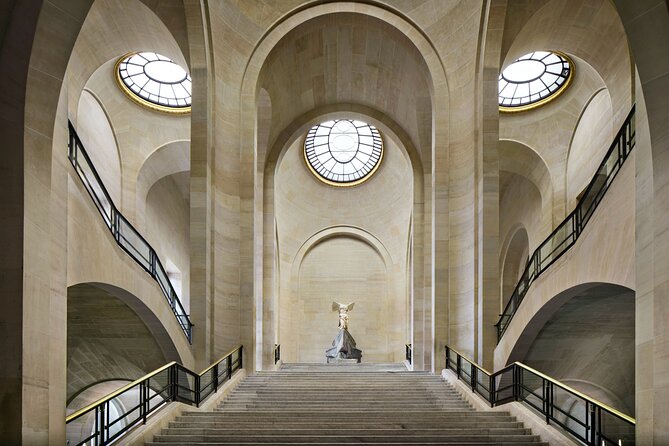
- Winged Victory of Samothrace: more than a headline
- Napoleon’s world and the art connected to it
- Delacroix and the Three Glorious Revolution
- Ball rooms, secret doors, and historical staircases
- Napoleon III Apartments (if open)
- The Skip-the-Line Part and Mobile Tickets: Practical Notes
- Timing: what I’d do in your shoes
- Guides Matter: The Iuliana-Style Approach and Other Talent
- Why this is a big deal for families
- Accessibility and comfort
- Price Versus Value in a Museum You Can’t Finish
- You’re buying time and direction
- You’re also paying for a guided narrative
- The main “value risk”
- Timing Tips: When to Enter and How to Avoid the Worst Crowds
- Who This Private Tour Is Best For
- Should You Book This Private Louvre Tour?
- FAQ
- What does the tour include?
- How long is the private tour?
- Is this tour private?
- Where do we meet, and where does the tour end?
- Are there any discounts or free admission rules?
- What are the cancellation terms?
Key highlights you should know before you go
- Private access with your own guide: only your group, so you can ask questions and go at your pace.
- Admission ticket included: you’re not juggling separate purchases while you’re trying to enjoy Paris.
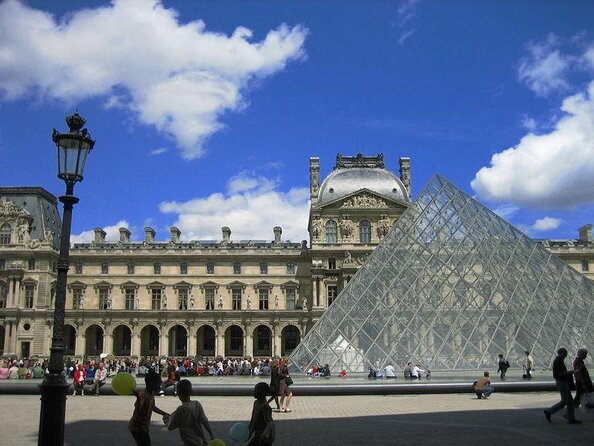
- Iconic targets plus palace context: Mona Lisa, Venus de Milo, Winged Victory, and the Louvre’s interior history.
- Stories tied to major French moments: Napoleon’s coronation themes, Delacroix, and the Three Glorious Revolution.
- Ball rooms, secret doors, and staircases: it’s not only art wall-to-wall.
- Family-friendly energy: guides can keep kids engaged without turning it into a lecture.
A Private Louvre Tour That Cuts Through Chaos
The Louvre is famous for two things: scale and crowds. Even with good intentions, it’s easy to wander for hours and still feel like you saw nothing of what you came for. A private tour helps you move with purpose—getting you into the museum and then guiding your feet to the right rooms without the constant map-checking.
What I like about this experience is that it’s not just a list of famous works. The tour is designed to read like a guided walk through time: the palace itself, the museum departments, and the way key moments in French history show up in art and setting. In plain terms, you stop thinking of the Louvre as one giant building and start experiencing it as a sequence of meaningful spaces.
The tour also includes admission tickets, so you’re not spending your limited Louvre time wrestling with ticket lines and separate logistics. And because it’s private, you’re not stuck with a big group’s pacing. You’re more likely to get real back-and-forth with your guide—especially useful if you’re traveling with kids or someone who needs occasional breaks.
You can also read our reviews of more private tours in Paris


How the 2–3 Hour Route Hits the Louvre’s Major Icons
This is a highlights route, and that matters. You’re not trying to see everything the Louvre owns (that would take weeks). Instead, you’re using your time for the best-known masterpieces and the rooms that explain why the Louvre looks the way it does.
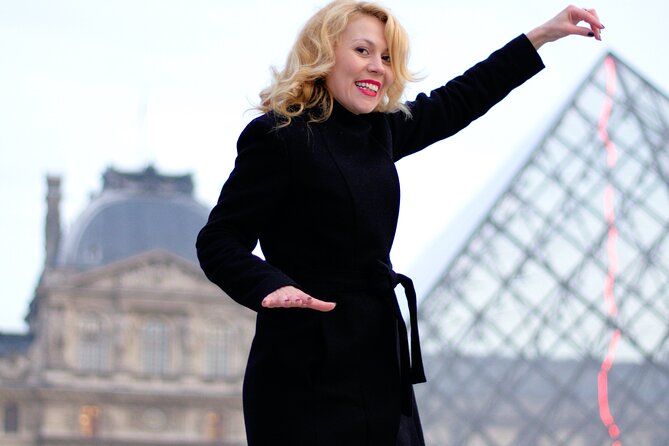
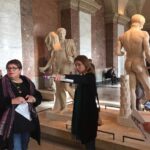
In the first part of your visit, you’ll focus on the works most people imagine before they ever arrive. That includes a stop for the Mona Lisa, time with Venus de Milo (you won’t be able to do the famous handshake pose—so bring a smile instead), and the Winged Victory of Samothrace, which is impressive in real life for a lot more reasons than its fame.
Then the tour widens. You’ll hear stories tied to themes such as Napoleon’s coronation and the Three Glorious Revolution connected to Delacroix. You’ll also move through areas that feel like part museum, part royal palace—ball rooms, secret doors (in the way your guide reveals them and the history behind them), and historical staircases.
If the Napoleon III Apartments are open, the tour can end with a reception-style visit there. That’s a nice closer because it shifts you from art icons to the palace atmosphere, so you leave with a stronger sense of how the Louvre evolved.
What this route is best for
- First-timers who want the Louvre’s greatest hits with context
- People with limited time who still want meaningful storytelling
- Families who do better with a guide that keeps momentum and explains what you’re looking at
What you might want to plan separately
- If you have a long list of specific artists or eras, you may still want a follow-up self-guided visit after you understand the lay of the land.
Inside the Louvre: What You See and Why It Matters

The big advantage of a guided Louvre highlights tour is that you’re not just looking—you’re learning where to look and what to notice. A strong guide will point out the details that make famous works feel less like postcards and more like living history.
Here’s what to expect from the main stops and themes:
You can also read our reviews of more museum experiences in Paris






Mona Lisa and the “why everyone crowds here”
Yes, Mona Lisa is always busy. But the value is that your guide helps you understand what you’re seeing and why this painting became a global magnet. You’re also more likely to get a better moment to view it without spending your whole hour in the same dense knot of people.
Venus de Milo: famous silhouette, clearer story
Venus de Milo is one of those sculptures where your brain already has an image before you arrive. A guide’s job is to sharpen your attention—what stands out in the form, how the sculpture fits into the broader collection, and what you should look for so you don’t just take a quick photo and move on.
Winged Victory of Samothrace: more than a headline
This one lands because you can read the sculpture’s energy in person. Your guide will connect it to the larger story of the Louvre’s collections, so you understand why it belongs in the spotlight and what makes it special beyond its reputation.
Napoleon’s world and the art connected to it
The tour includes themes tied to Napoleon’s coronation. You won’t be watching a reenactment; instead, you’ll get commentary that connects events and symbolism to works and the palace spaces that frame them. It’s history you can stand inside.
Delacroix and the Three Glorious Revolution
You’ll also get a thread through the Three Glorious Revolution with Delacroix. This is one of those tour elements that can turn a museum visit from object-hunting into meaning-building, because you start seeing relationships between artwork, politics, and the Louvre’s own place in French cultural life.
Ball rooms, secret doors, and historical staircases
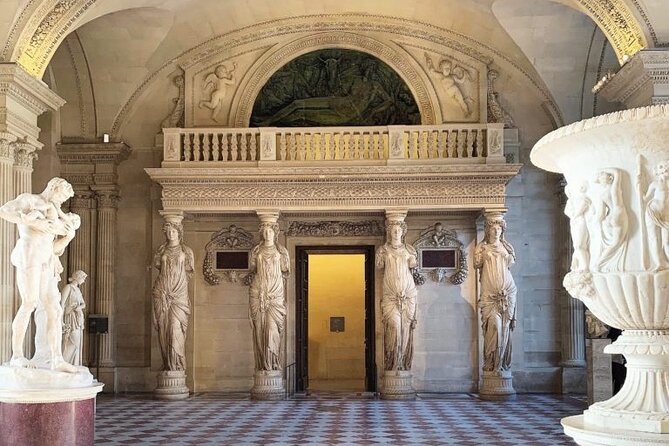
This is where the Louvre tour becomes more than art galleries. You’re walking through spaces that feel like they belong to a royal past, including ball rooms and staircases that reflect how the building functioned before it was a modern museum. Secret doors are handled the same way: not as fantasy lore, but as a way to understand how the palace was designed and used.
Napoleon III Apartments (if open)
If those apartments are available, they can be a memorable ending. After focusing on iconic works, the palace setting helps you switch gears—so the Louvre feels like a coherent story, not just a checklist.
The Skip-the-Line Part and Mobile Tickets: Practical Notes
The tour includes admission tickets and uses mobile ticketing, which is a real time-saver. In a museum where lines can stretch and signage can overwhelm, the smoother entry matters.
You’ll start at a meeting point near public transportation, and the tour ends back at the meeting point. The guide notes that you can ask for hotel pickup to begin the tour from your lodging, but if you don’t, you’ll meet at the designated spot.
Timing: what I’d do in your shoes
- Try for the earlier end of your day if you can. One of the recurring themes in the tour experience is that crowd levels change fast.
- Dress for short indoor walking distances plus occasional staircases. The tour calls for moderate physical fitness, and the Louvre has a lot of stairs and uneven crowd flow.
- Plan a little buffer around the start time. Even when a tour is tightly planned, the Louvre’s environment can shift quickly.
Guides Matter: The Iuliana-Style Approach and Other Talent
A private tour lives or dies by the guide. This experience is repeatedly associated with guides who explain the art with personality and pacing.
Iuliana Pintea is a featured guide here, and her approach—based on the way the tour is described—leans toward connecting masterpieces with the Louvre’s rooms and historical timeline. That matters because it helps you stop treating the museum like a photo gallery.
You’ll also see other guides in the same style of storytelling, including Ivan, Milan, Paulo (also spelled Paolo in one place), and Valerie. The common thread is clear: they don’t just name works. They guide your attention, then give you reasons to care about what’s in front of you.
Why this is a big deal for families
If you’re bringing kids, this kind of guide-led highlights route tends to work well. The key is keeping the tour moving and making explanations practical and fun. When the guide is good at adapting to different energy levels, even a child who thinks museums are boring can end up engaged.
Accessibility and comfort
The tour is described as having guides who can help with real-life needs, including arranging for a wheelchair. Still, keep expectations realistic: you’ll be moving through a large historic site, so plan for lots of walking and crowd navigation.
Price Versus Value in a Museum You Can’t Finish
At $300.50 per person, this isn’t a budget choice. You’re paying for privacy, guiding time, and included admission—plus the advantage of getting a plan inside one of Europe’s hardest museums to navigate.
So where does the value come from?
You’re buying time and direction
The Louvre’s biggest cost is confusion. Without a guide, you risk:
- spending your prime viewing time searching
- missing key masterpieces you wanted to see
- leaving without understanding what you just looked at
A 2–3 hour private highlights tour is built to reduce those losses. You trade a higher upfront price for less wasted time.
You’re also paying for a guided narrative
The tour doesn’t treat the Louvre as a warehouse. It connects art with building history and major French themes like Napoleon and Delacroix. That interpretive layer is what turns a quick pass into something you remember and can talk about later.
The main “value risk”
The one real downside isn’t the art—it’s the schedule. If a tour starts late or ends early, the value calculation shifts because you bought a set of curated time. If punctuality matters a lot for you (like you have dinner reservations or a strict itinerary), it’s worth starting your day with buffer.
Timing Tips: When to Enter and How to Avoid the Worst Crowds
The Louvre is busy in every season, but the feel changes by time of day. One piece of advice that comes up strongly is to consider entering earlier if you have that option. Earlier entrances can help you get to iconic works with less crowd friction.
Also, remember that the Mona Lisa area tends to create its own gravity well. Even with a guided plan, you may still encounter a lot of people there. The benefit is that your guide can help you time your viewing so you don’t feel stuck waiting in place for long stretches.
If you’re visiting in winter, you may still face heavy photo culture crowds. The tour format helps because you’re not spending your day wandering in circles—you’re being routed to the right places and given a reason to slow down.
Who This Private Tour Is Best For

This is a strong match if:
- you’re visiting the Louvre for the first time
- you have 2–3 hours and want to leave with the main highlights plus context
- you want a guide who can tailor the pace for a group (including kids)
- you’d rather pay for direction than spend your time plotting routes on the fly
It might be less ideal if:
- you’re determined to see a very specific set of works and eras (you might still need a custom itinerary)
- you’re extremely sensitive to schedule changes, since the visit length is capped and timing disruptions can reduce time inside
Should You Book This Private Louvre Tour?
I’d book this tour if your priority is a structured, high-value highlights experience. You’re getting admission included, you’re moving through the Louvre with a guide, and you’re seeing major works plus palace spaces that explain the museum’s setting.
It’s also a good pick when you want more than the usual “Mona Lisa and out” day. The focus on rooms, staircases, and themes like Napoleon and Delacroix helps you understand the Louvre as a story, not just a list.
If you do decide to book, plan your day around a realistic start, wear comfortable shoes, and come with a short wishlist of what you care about most. That way, you’ll get the greatest hits and also make the tour feel personal.
FAQ
What does the tour include?
The tour is a private guided experience at the Louvre Museum and includes an admission ticket. It’s offered in English (and French is also available). You’ll also receive a mobile ticket.
How long is the private tour?
The duration is about 2 to 3 hours.
Is this tour private?
Yes. This is a private tour/activity, and only your group participates.
Where do we meet, and where does the tour end?
You start at a designated meeting point near public transportation and the tour ends back at the meeting point.
Are there any discounts or free admission rules?
Free admission applies to visitors under 18 and EEA residents under 26, with valid ID and proof of residency.
What are the cancellation terms?
You can cancel for free up to 24 hours in advance for a full refund. If you cancel less than 24 hours before the start time, the amount you paid is not refunded.