REVIEW · PARIS
Louvre Museum Access Private Guided Visit
Book on Viator →Operated by Paris in person · Bookable on Viator
The Louvre can feel like a maze. This private, art-historian-led visit gives you a tight route through the museum’s biggest masterpieces and major art movements in just about two hours.
I especially love two things here: first, the way the guide can steer you straight to crowd magnets like the Mona Lisa (and other standouts) without wasting your time getting oriented. Second, I like that the tour doesn’t stop at famous names—it connects Roman, Greek, Medieval, Renaissance, Romantic, and Neoclassical art so you see the evolution of style, not just isolated paintings and statues.
One possible drawback: with only ~2 hours, you’re doing smart coverage, not total museum coverage. If you want long, slow time with every work or deep background on individual artists, you may wish you had an extra day (or a second guided session).
In This Review
- Key Highlights You’ll Feel Right Away
- A Private, English-Led Louvre Sprint That Still Feels Human
- Price and What You’re Really Paying For
- Meeting at Arc de Triomphe du Carrousel: Where the Day Starts
- A 2-Hour Route Through the Louvre’s Main Art Movements
- Stop 1: The Louvre Highlights You Came For
- Stop 2: The Roman Gallery and the Birth of Later European Influence
- Stop 3: Greek Art and Why It Still Matters
- Stop 4: Medieval Art’s Bridge Toward the Renaissance
- Stop 5: The Great Gallery and Italian Renaissance Painting
- Stop 6: Romanticism’s Drama on the Walls
- Stop 7: Neoclassicism’s Poised Control
- How the Guide Turns Crowds Into Learnable Art
- What You’ll Actually See (Beyond the Big Names)
- Who This Tour Fits Best
- Booking Decision: Should You Get This Private Louvre Visit?
- FAQ
- FAQ
- How long is the private Louvre guided visit?
- What is the price per person?
- Is the tour offered in English?
- Is this a private tour or a group tour?
- What is included in the price?
- What is not included?
- Where do we meet?
- Is the museum ticket handled digitally?
- Is it fully refundable if plans change?
- Are there cases where admission is free?
Key Highlights You’ll Feel Right Away
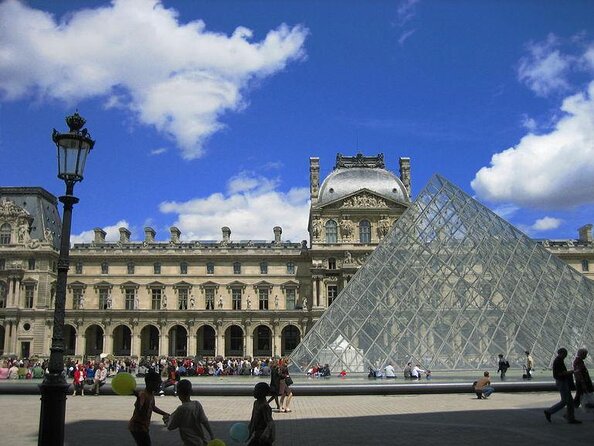
- Private guide, private pace: Only your group, so you can ask questions and adjust to your interests.
- Masterpieces plus context: You’ll see major works and also learn how styles shift across centuries.
- Efficient entry support: Your guide helps you get inside with less “standing around” time.
- Clear art “timeline” route: Roman and Greek foundations lead into Medieval and the Renaissance, then later movements.
- English language throughout: Designed for English-speaking visitors, with guidance tailored to what you want to see.
A Private, English-Led Louvre Sprint That Still Feels Human

If you’ve been nervous about the Louvre before, this tour is a great antidote. The museum is huge, with long corridors, packed rooms, and lines that can eat your day. A private format turns that chaos into something you can manage.
I like that the experience is led by a professional art historian guide and built around a high-impact route. You’re not stuck reading labels from a distance—you’re getting explanations that help the art make sense while you’re standing in front of it. This is also why solo travelers often love it: you get the social comfort of a guide, without needing to match anyone else’s pace.
The tour is also English-led, and feedback shows guides can be friendly and engaging. Some guides named in past experiences include Boris, Boraz, Tina, Mila, Amy, Steph, Adi, Anya, and Anne, and the common thread is that they guide with real teaching energy.
You can also read our reviews of more guided tours in Paris



Price and What You’re Really Paying For
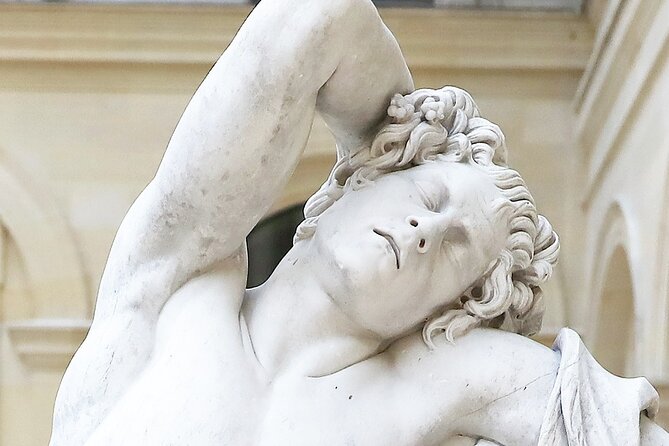
At $301.71 per person for a tour lasting about 2 hours, it’s not a budget choice. But the value is in the combination: private attention + an art historian + a focused route through the museum’s highest-yield highlights.
Here’s the practical breakdown: the tour includes a €22 adult museum entrance ticket, which covers your entry cost for the day. The rest of what you’re paying for is time—your guide’s planning, pacing, and in-the-moment teaching so you don’t lose hours wandering or hunting for the right rooms.
You also get group discounts, which can make this far more reasonable if you’re traveling with someone. If your Paris schedule is tight, paying for guided coverage can actually be cheaper than spending a half-day (or more) trying to figure out the Louvre on your own.
Meeting at Arc de Triomphe du Carrousel: Where the Day Starts
This starts at Arc de Triomphe du Carrousel, Pl. du Carrousel, 75001 Paris. It’s a smart meeting location because it’s tied into a major central area and is near public transportation.
Because this is a private tour, timing matters. Arriving a few minutes early helps your group roll smoothly into the museum rather than feeling rushed at the threshold. The tour uses a mobile ticket, which simplifies entry—no fumbling with printed papers once you’re there.
One more note: this visit calls for moderate physical fitness. That usually means expect walking and standing for extended periods while you move between galleries and pause for explanations.
A 2-Hour Route Through the Louvre’s Main Art Movements

You’ll move through a structured series of stops—each one short, but purposeful. The goal is to take you from the Louvre’s classical roots through later European styles, so your eyes start recognizing patterns as you go.
A big advantage of this structure is that it fights the Louvre’s most common problem: seeing a masterpiece, then drifting into unrelated rooms with no sense of why it matters. Here, each stop acts like a chapter in a story.
Below is what you can expect from the sequence.
Stop 1: The Louvre Highlights You Came For
You begin at the Louvre itself with a focus on major favorites and high-importance works. This is where the tour sets the tone: this museum isn’t just famous because it’s famous. It’s famous because the craftsmanship and ideas are world-class.
This stop includes iconic points people aim for, including the Nike of Samothrace and the Mona Lisa. The guide’s job is to help you look beyond the “famous painting” effect and understand what you’re actually seeing—composition, subject, materials, and why the work changed how people thought about art.
Tip: If you’ve always assumed the Louvre is only about crowd magnets, you’ll probably be surprised by how much you notice once you have a guide’s “what to watch for” cues.
You can also read our reviews of more private tours in Paris





Stop 2: The Roman Gallery and the Birth of Later European Influence
Next comes the Roman gallery, framed around how Roman art shaped later European culture. Roman works aren’t only “older versions” of something else. They carried strong ideas about realism, power, public identity, and storytelling through form.
In this stop, you’re not just looking at artifacts—you’re learning how Roman style affects what comes after. That makes later sections easier to understand, because you’ll recognize traits that persist, evolve, or get reworked.
Stop 3: Greek Art and Why It Still Matters
Then you move into the Greek works section. Greek art is often taught as the foundation of Western traditions, but the real value is in the details: how bodies are represented, how movement is suggested, and how idealized forms communicate meaning.
This stop is crucial because it sets up the comparisons you’ll make later—how Medieval art differs, and how Renaissance artists pulled ideas from antiquity while adding new approaches.
Stop 4: Medieval Art’s Bridge Toward the Renaissance
After the classical rooms, the tour turns to Medieval art and its influence on the Renaissance period. This is a smart shift because many first-timers don’t know what to do with Medieval galleries; they assume it’s less relevant than the famous paintings in later centuries.
Here, you’re shown why Medieval art matters to what follows. It’s the bridge—stylistic and intellectual—between the worlds of antiquity and the renewed human-focused emphasis of the Renaissance.
Stop 5: The Great Gallery and Italian Renaissance Painting
The Great Gallery is the big focal point. This is where the tour spotlights Italian Renaissance art, a period many people think of as a pinnacle of European painting.
Renaissance art can feel overwhelming if you’re just reading labels. With a guide, you get the key lens: how Renaissance artists approached proportion, perspective, realism, symbolism, and narrative. That’s how you start seeing why these works became models for generations.
This stop is also practical: it’s a central room where many visitors want to spend time, and a guided route helps you hit what matters without getting stuck in one location for the entire visit.
Stop 6: Romanticism’s Drama on the Walls
Next is Romanticism, where the paintings turn fiery and dramatic. Romantic art often aims for emotion first—movement, intensity, sky effects, figures caught in tension.
The value of this stop in a 2-hour experience is that it shows the Louvre isn’t a static “old masterpieces” museum. Styles change. The purpose of art shifts. And the drama you see in Romanticism connects to later European developments you might recognize in other museums back home.
Stop 7: Neoclassicism’s Poised Control
Finally, you reach Neoclassicism. If Romanticism is about raw feeling, Neoclassicism is more controlled—elegant, structured, and often framed with a sense of order.
This last stop is a payoff. You’ll leave with a clearer sense of how European art kept cycling between emotion, reason, classical themes, and new ways to present ideal forms.
How the Guide Turns Crowds Into Learnable Art
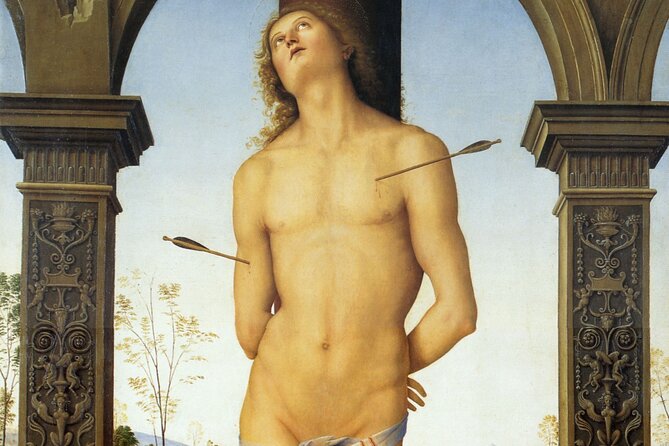
The best thing about this experience is how much it reduces the mental load. Without guidance, you can end up doing the Louvre version of speed-watching: you spot famous works, take a photo, and move on—then feel like you didn’t learn much.
With a guide, you get a running thread. People in English-led private tours often focus on seeing everything, but the highest-value part is interpretive: your guide points out what to notice and why it mattered in its own time.
From the quality of past guides named in experiences (including Boris, Boraz, Tina, Mila, Amy, Steph, Adi, Anya, and Anne), the repeated pattern is: punctual meeting, swift navigation through the museum, and explanations that connect art to bigger ideas. One guide approach described is tailoring the tour to your interests—so if you care more about sculptures, paintings, or specific movements, the route can feel more like your trip than a script.
Also, you get tips for continuing on your own after the guided portion. That matters because the Louvre doesn’t end at the final stop—you’ll likely want a bit of independent time afterward. When your guide gives guidance on how to navigate efficiently, you spend your next hour exploring instead of getting lost.
What You’ll Actually See (Beyond the Big Names)
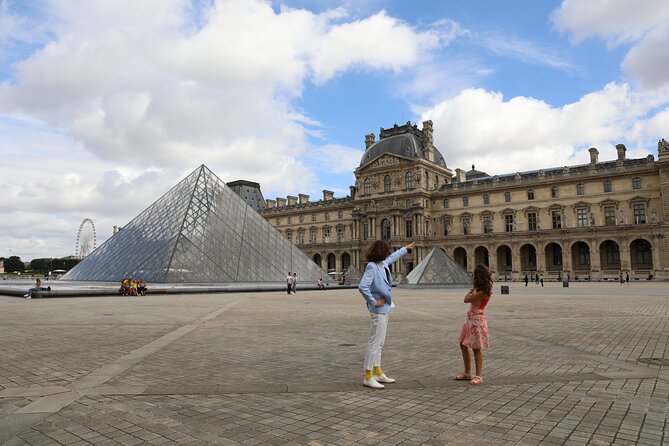
Yes, you’ll target top pieces such as the Mona Lisa and also major works like the Nike of Samothrace. But the tour’s design makes a point of also including works that aren’t always the first thing people hear about.
That’s where you often get the best “I didn’t expect that” moments. The Louvre has more excellence than your brain can handle without help. With this route, your guide pulls you toward works that represent key movements—so your time feels meaningful even when you’re not looking at a household name.
It also helps that each stop is tied to a movement with influence. Roman art influences later work, Greek art sets foundations, Medieval art bridges periods, and Renaissance through Romanticism and Neoclassicism show how styles evolve.
Who This Tour Fits Best
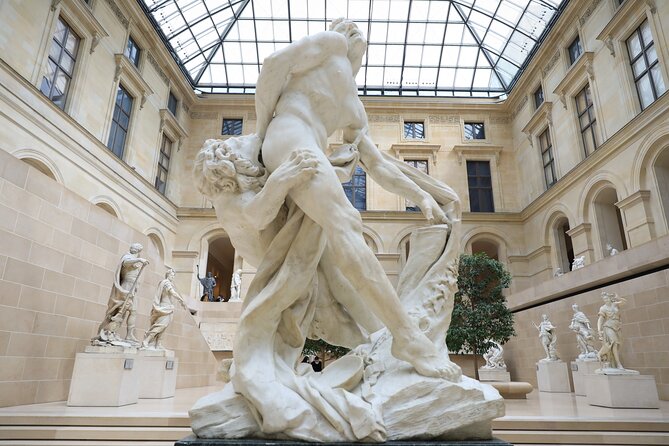
This tour is ideal if you:
- Have limited time in Paris and want a high-value plan for the Louvre
- Prefer private, small-group attention rather than a large group marching pace
- Want an art-historian framing so the museum feels understandable
- Are a solo traveler who wants confidence navigating a huge site
It also works well for couples and families who want structure. Feedback often highlights that guides can handle different ages and keep things friendly while still teaching.
If you’re the type who likes to sit for long periods and read every label, consider pairing this with additional time in the museum. The 2-hour focus is excellent, but it’s intentionally not a full museum marathon.
Booking Decision: Should You Get This Private Louvre Visit?

I’d book this if your priority is to maximize your Louvre time without spending the day in confusion. The price is steep for one tour, but the included entry ticket and the private guidance make it feel less like a splurge and more like paying for a time-efficient education.
You might skip it only if:
- You have a lot of time and plan to tour the Louvre slowly on your own
- You want extremely deep coverage on one single movement or artist across many rooms
- Language quality is a major concern for you, since not every experience rates the guide’s English the same way
If you’re deciding between “random self-guided wandering” and “guided highlights with real context,” this choice usually makes sense. It helps you see the Louvre as an art timeline instead of a crowded list of must-sees.
FAQ
FAQ
How long is the private Louvre guided visit?
It runs for about 2 hours.
What is the price per person?
The tour price is listed at $301.71 per person.
Is the tour offered in English?
Yes, it is offered in English.
Is this a private tour or a group tour?
It is private, meaning only your group participates.
What is included in the price?
You get a professional art historian guide, a private tour, and an adult museum entrance ticket (priced at €22).
What is not included?
Food and drinks are not included.
Where do we meet?
You meet at Arc de Triomphe du Carrousel, Pl. du Carrousel, 75001 Paris, France.
Is the museum ticket handled digitally?
Yes, it uses a mobile ticket.
Is it fully refundable if plans change?
No. The experience is non-refundable and cannot be changed.
Are there cases where admission is free?
Yes. Free admission applies to visitors under 18 and EEA residents under 26 if you show valid ID and proof of residency.