REVIEW · BUCHAREST
Bucharest: Museum of Communism Ticket with Communist Coffee
Book on GetYourGuide →Operated by Museum of Communism in Bucharest · Bookable on GetYourGuide
Bucharest has one museum that you feel in your hands.
The Museum of Communism turns late-20th-century Romanian life into something you can test, wear, and ask about, not just read. You get a guided presence in English, plus a small-but-memorable tasting that connects the story to the everyday routines people actually lived.
Two things I like a lot: touchable, interactive exhibits and the included nechezol communist coffee break. The museum is built for participation, from handling period-style items to using old-school props that make the messages click faster.
One drawback to consider: the museum can feel like it leans on posters and broad statements. If you want deep, nuanced historical analysis on every topic, you may want to spend extra time asking questions and reading closely.
In This Review
- Key highlights you should plan around
- Museum of Communism Bucharest: a hands-on history stop, not a lecture
- Where it fits in your day (and how long to plan)
- Walking the galleries: typewriters, magazines, and period routines
- Ask questions to a guide in English: what to ask and why it matters
- The living room and nechezol communist coffee tasting
- Price and value: is $10 worth museum time plus coffee?
- Who this fits best (and who should manage expectations)
- Common complaints and how to get more out of your visit
- Should you book this Museum of Communism ticket with communist coffee?
- FAQ
- How much does the Museum of Communism Bucharest ticket cost?
- How long does this experience take?
- What’s included with the ticket?
- Is there English support?
- Can I ask questions during the visit?
- What is nechezol communist coffee?
- Where do you drink the communist coffee?
- What language are the materials in?
- Is it refundable if I cancel?
- Is it suitable for wheelchair users?
Key highlights you should plan around
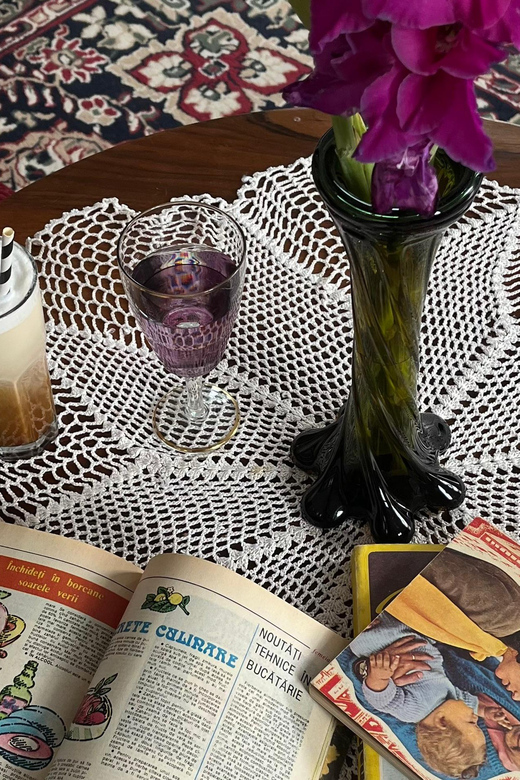
- Touch-first exhibits: type on an old typewriter, read original-style materials, and try on period clothing
- Ask questions in English: a guide presence is available so you can clarify what you’re seeing
- Nechezol coffee tasting: you learn how communist coffee came to Romania and then taste it
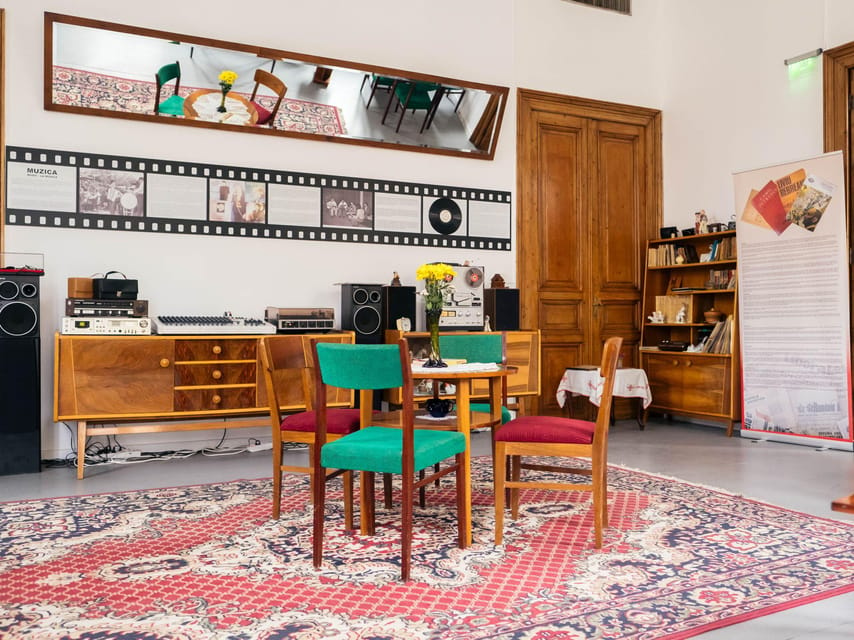
- Living room moment: you drink your coffee from an old cup on the communist couch setup
- A quick stop that works: many people are done in about 45 minutes to 1 hour if you focus
Museum of Communism Bucharest: a hands-on history stop, not a lecture

This museum works because it treats the topic like daily life, not just a slideshow. Yes, you’ll read. But you’ll also use things. You can touch most of the exhibits, so the information sticks in a more physical way than typical museum displays.
The format is simple: you move room to room, you handle items, and you ask questions when you want context. That matters in a museum like this, because communism wasn’t one single story. It changed with time, shortages, propaganda, and the way ordinary people made do.
And then there’s the included tasting, which is the clever extra. Instead of ending with a historical explanation of coffee scarcity, the ticket actually gives you the taste experience in a staged setting that feels like you stepped into the era.
A few more Bucharest tours and experiences worth a look

Where it fits in your day (and how long to plan)
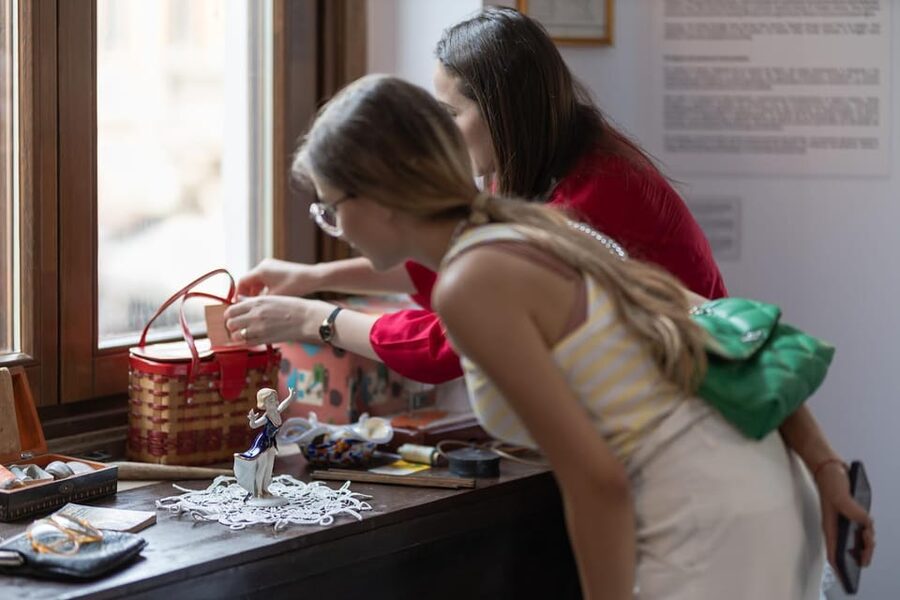
You’re looking at a 1-day valid ticket, but in practice this is a short, focused visit. Plan on roughly 45 minutes to 1 hour if you’re staying on track—especially if you’re moving through at a quick pace and spending time at the more interactive stations.
It’s also a good choice if you’re already in central Bucharest and want a structured break without committing to an all-day museum marathon. The museum is described as being in or near the old town area, so it’s easy to pair with a walk and then carry on with dinner or a late evening stroll.
Timing tip: if you’re visiting around a busier time, you’ll get more out of the hands-on bits by not trying to do everything at once. Pick your priorities—typewriter area, clothing try-on, and the coffee tasting—and let the rest come as it comes.
Walking the galleries: typewriters, magazines, and period routines

The museum’s core strength is that it gives you a few ways to process the era at different levels: reading for big picture, handling for memory, and props for quick understanding.
Here’s what you can expect from the hands-on side:
- Old typewriter interaction: using an era-appropriate machine helps you slow down and notice details you’d otherwise skip
- Original-style magazines: you can read materials that give the propaganda tone and media style more clearly
- Trying on old clothing: this isn’t about fashion. It’s about feeling how uniforms and period garments shaped daily presentation
The museum also leans into interactive photo opportunities and dressing-up moments, with music cues in the mix according to visitor accounts. That can make the visit feel less like school and more like stepping into a set.
Balanced reality check: some of the wall text can come off simplified, with statements that feel broad or general. If you’re sensitive to historical nuance, don’t let that discourage you. Instead, treat the exhibits as prompts, then use the guide time to ask what’s missing or what changed over time.
Ask questions to a guide in English: what to ask and why it matters
One of the most praised parts of the experience is the guide interaction. You can ask questions during your visit, and the English host/greeter presence helps you follow along without guessing.
This is where the museum becomes more than a themed room. If you only read posters, you might leave with a surface impression. If you ask good questions, you’ll connect the exhibits to real mechanisms: propaganda, scarcity, daily work, and how people navigated it.
What you can ask (use these as your mental checklist):
- How did access to everyday goods change during the late communist years?
- What was the real story behind nechezol and communist coffee in Romania?
- Which parts of the displays are about official ideology, and which reflect daily routines?
Practical tip: ask questions while you’re still in the room where the topic is visible. It’s much easier to understand an explanation when the exhibit is right in front of you.
Also, keep expectations realistic. Some visitors want a deeper historical argument; others love the fast, experiential style. Either way, your questions can tilt the experience toward the understanding you want.
The living room and nechezol communist coffee tasting
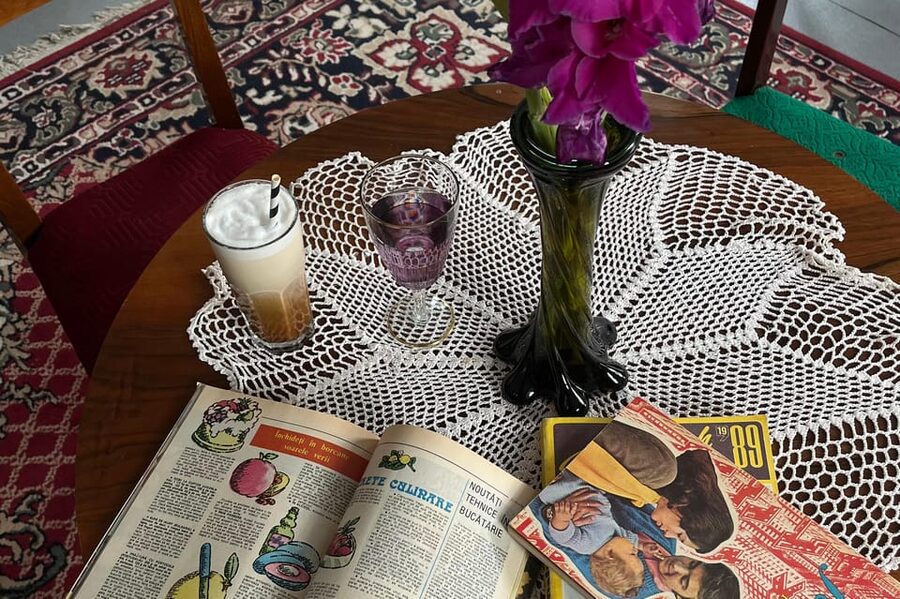
The added feature on this ticket is the part that makes it feel like more than just admission. During the last years of communism, coffee was imported in very small amounts in Romania. The museum explains how the substitute—often referred to as nechezol / communist coffee—appeared, and then you taste it.
The tasting setup is part of the storytelling. You drink your coffee from an original old cup in the museum’s living room area, sitting on the communist couch. That sounds like a gimmick until you realize what it does: it gives the coffee scarcity narrative a sensory anchor.
Taste expectation: you’ll find it described as a fun novelty and quite tasty, with at least some people saying it tastes similar to regular instant coffee. If you’re a coffee expert, you might notice subtle differences. If you’re like most people, the value is the experience and the context, not technical flavor profiling.
My advice: treat the tasting as a short break that helps you reset. After the hands-on exhibits, coffee makes the whole visit feel more complete.
You can also read our reviews of more museum experiences in Bucharest



Price and value: is $10 worth museum time plus coffee?
At $10 per person, the value depends on what you want from the visit.
What you get:
- Entry to the Museum of Communism
- A cup of nechezol communist coffee
For a short stop—around 45 minutes to 1 hour—the price-to-time ratio can be fair, especially because you’re not just paying for wall text. You’re also paying for the chance to touch objects and then wrap up with a built-in tasting.
Where value improves:
- You like interactive experiences.
- You’ll actually ask questions.
- You enjoy period-style props and photo moments.
Where value drops:
- You’re expecting a long, academic-style museum with heavy scholarly depth.
- You’re not interested in novelty experiences like the coffee break.
If you’re on a tight schedule in Bucharest and want one structured, memorable cultural stop, this ticket can work. It’s the type of place where the included coffee tasting is the difference between a quick look and a more rounded experience.
Who this fits best (and who should manage expectations)
This museum is a good match if you enjoy:
- Hands-on history
- People who learn by doing, not just reading
- Visiting as a small group or with a friend, since dressing-up and photo moments tend to feel more fun together
If you’re going solo, you can still enjoy it—especially if you focus on the interactive areas and the guide Q&A. One caution: some people find the best experience comes when you have someone to share the moments with, since a few activities are naturally social.
Who might need to adjust expectations:
- If you mainly want deep historical research, the balance of posters and simplified explanations may feel thin.
- If you’re the type who checks out quickly when there isn’t constant interaction, plan your route in your head: hit the touch stations first, then decide how much reading you want.
The good news is that you can control your experience. Spend more time where the exhibits are interactive, and use the guide to fill in what you feel is missing.
Common complaints and how to get more out of your visit

Some visitors criticize the museum as being more poster-heavy than they expected, and not enough interactive elements for them personally. Others love the interactivity and the energy of the staff.
So how do you tilt it in your favor?
- Start with the interactive stations: typewriter, magazines, clothing try-on. If you do those first, you’ll already have the best part covered.
- Don’t rush the question opportunities: ask at least one or two meaningful questions. That’s often what turns a basic visit into a memorable one.
- Read with a purpose: instead of trying to read every line, skim for the main claims and then test them with questions.
- Use the coffee as a checkpoint: if you still feel engaged afterward, continue through the remaining rooms. If not, you can finish while you’re still enjoying the experience.
Also, a small practical note: facilities are described as clean, and there’s no big gift shop focus. That’s another sign the museum aims to be about the experience first.
Should you book this Museum of Communism ticket with communist coffee?
I’d book it if you want a short, hands-on Bucharest stop that adds a real sensory element. The included nechezol coffee is a strong reason to choose this ticket over a plain admission, and the chance to ask questions in English can help you get more meaning out of the displays.
I’d think twice if you’re coming specifically for scholarly depth or if you strongly dislike museums where you spend lots of time reading posters. In that case, you may still enjoy the props, but you might feel underwhelmed by how some topics are presented.
If you’re the kind of visitor who likes history that you can touch, wear, and question, this one is likely to land well.
FAQ
How much does the Museum of Communism Bucharest ticket cost?
It costs $10 per person.
How long does this experience take?
It’s listed as a 1-day ticket, and in practice many visitors plan for about 45 minutes to 1 hour.
What’s included with the ticket?
You get entry to the Museum of Communism and a cup of nechezol communist coffee.
Is there English support?
Yes. The host or greeter is available in English.
Can I ask questions during the visit?
Yes. There’s a guide available in the museum and you can ask questions.
What is nechezol communist coffee?
The museum explains the story of nechezol/communist coffee and then gives you a chance to taste it.
Where do you drink the communist coffee?
You can drink your nechezol from an original old cup in the museum’s living room area, sitting on the communist couch.
What language are the materials in?
The experience is available in English.
Is it refundable if I cancel?
Yes. You can cancel up to 24 hours in advance for a full refund.
Is it suitable for wheelchair users?
No. It’s not suitable for wheelchair users.