REVIEW · BUCHAREST
Communism in Bucharest – Landmarks, Museum & Communist Appetizers
Book on Viator →Operated by Bucharest by Foot Tours · Bookable on Viator
Bucharest has a second map: the one under communism. This small-group walk ties together the big symbols of the regime with the stories behind them, all at a comfortable 3-hour pace. You’ll cover major sites like the Palace of Parliament and Revolution Square without feeling rushed.
What I like most is the mix of city streets and hands-on learning. You get traditional communist Romanian sweets and a communist coffee, then you step into a museum space where you can interact with exhibits and even try on clothes. One possible drawback: the Palace of Parliament stop is a look-from-outside moment, not an interior visit, so if you want rooms and artifacts inside, plan to save that for a different day.
The tour also leans on good weather. Since it’s a walking itinerary with a short indoor museum visit, you’ll enjoy it more when conditions are right.
In This Review
- Key things to love about this Bucharest communism tour
- Price and what you actually get for $48.37
- Your walking route through communist symbols in Bucharest
- Palace of Parliament: power outside, and the reason behind the madness
- Manastirea Antim: the monastery that dodged the wrecking ball
- Bloc 6: the boulevard in front of the power symbol
- Piata Revolutiei: where the last speech meets the start of the revolution
- University of Bucharest: the square named 21 December 1989
- Museum of Communism Bucharest: living-room snacks and try-on clothes
- Guides like Ali, Maria, and Gabriela (Gabi) make or break the tone
- Who this tour suits best (and who might want a different plan)
- What to do before and after you go
- Should you book this Bucharest communism tour?
- FAQ
- How long is the Bucharest communism tour?
- What’s the group size for this tour?
- Do we enter the Palace of Parliament?
- Is the Museum of Communism visit included?
- What food and drink are included?
- Is this tour suitable in bad weather?
Key things to love about this Bucharest communism tour
- Small group size (8 max) keeps the pace human and the questions practical
- Walking route connects the story across multiple neighborhoods and monuments
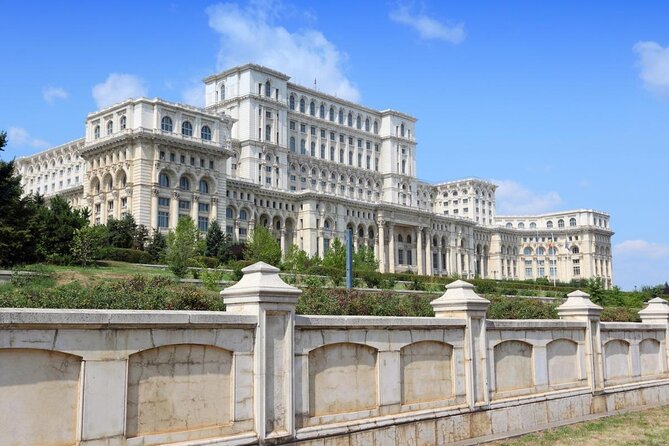
- Palace of Parliament viewing with explanations on why it was built and how Ceausescu imagined it
- Revolution Square focus on the last speech and the start of the revolution in Bucharest
- Museum of Communism hands-on time, including trying on clothes and snack-and-coffee breaks
- Free admission tickets for each outdoor stop and skip-the-line entry for the museum
Price and what you actually get for $48.37
At about $48.37 per person for roughly 3 hours, this tour is trying to buy you something that’s hard to do on your own: context that turns famous buildings into a clear narrative. You’re not just ticking off photos. You’re walking a tight route where each stop feeds the next—Palace power, then the nearby religious exception, then the housing-era bloc, then the revolution’s public stage, and finally an interactive museum.
For value, watch what’s included:
- English-speaking guide
- Museum admission with skip-the-line
- A communist snack (sweet or salty, depending on what’s available) plus communist coffee
- All fees and taxes
What isn’t included is also straightforward: other drinks besides the included coffee, plus gratuities. If you’re the type who likes a guided plan for a compact morning, the price starts to make sense fast.
You can also read our reviews of more museum experiences in Bucharest

Your walking route through communist symbols in Bucharest
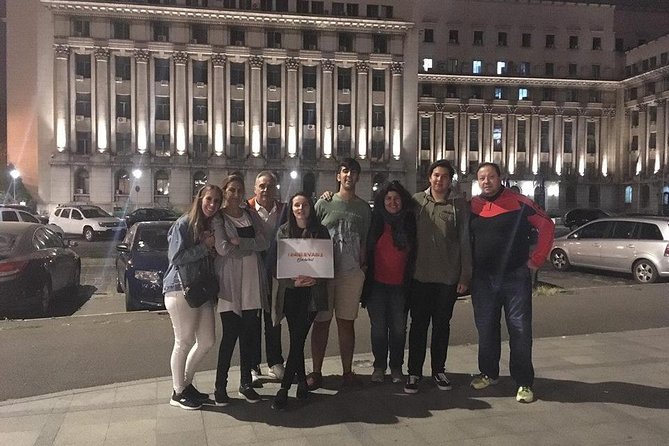
This tour is designed like a story you can walk through. You start on Bulevardul Unirii 1-3 at 10:00 am, and you finish at Revolution Square. The group stays small—maximum 8 travelers—so you’re less likely to get stuck in a crowd while the guide points at details that matter.
You also move in a way that helps the brain do history without melting. Outdoor stops are short, usually around 10 to 20 minutes each, and then you get a longer indoor chunk at the end. That pacing is a smart design choice because the final museum visit is where you’ll slow down and process what you just saw.
If you’re visiting Bucharest for the first time, this also works as a way to get your bearings quickly. After a few stops, you’ll understand how the city’s dramatic architecture connects to politics—and why some places feel like they’re telling you what to think.
Palace of Parliament: power outside, and the reason behind the madness
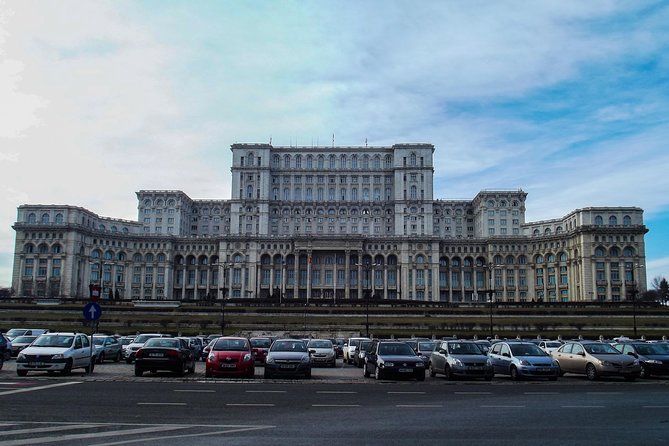
You don’t go inside the Palace of Parliament on this walk. Instead, you stand outside long enough for the guide to explain what it represents and why it was built the way it was. You’ll hear the story of why and how it was built, plus the guide’s take on Ceausescu’s crazy dream—the ambition, the symbolism, and the cost behind the marble.
Why I think this stop is worth doing even without entering: the Palace is so dominant in Bucharest that if you only see it in photos, you miss the point. From the street, you can grasp its scale and then understand the political message the regime wanted everyone to feel. The guide’s framing also makes it easier to connect the Palace to what comes next—housing, control, and the public stage of rebellion.
Practical note: because it’s an outside stop with a short time window, dress for walking and take a moment to look in the direction your guide indicates. The guide won’t waste minutes—so you shouldn’t either.
Manastirea Antim: the monastery that dodged the wrecking ball
Next comes Manastirea Antim, an 18th-century monastery that survived the demolition pushed through during the communist era. Even better, part of it was moved entirely to fulfill the dictator’s bigger plans.
This stop is where the tour gains depth. Communism in Romania isn’t only about grand projects; it’s also about what gets sacrificed, what gets saved, and what gets relocated. A monastery like this becomes a real-world example of cultural persistence. It shows that even when power tries to rewrite the city, older layers can resist—or at least survive in a changed form.
Time on the stop is about 15 minutes, so you’ll get enough to understand the significance without feeling like you’re stuck waiting for the group to finish photographing. If you like details—stonework, location, and the idea of a building literally being carried forward—this is the kind of stop you’ll remember later.
Bloc 6: the boulevard in front of the power symbol
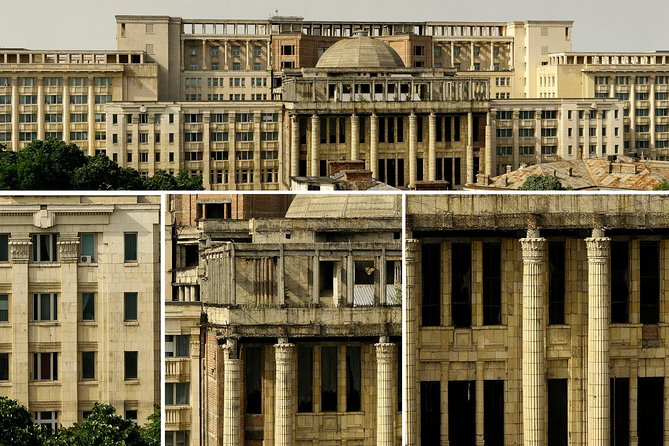
Then you reach Bloc 6, described as the boulevard that was built in front of the Palace of Parliament and its secrets. This is the “infrastructure” chapter. It’s less about a single building and more about how streets, views, and urban planning were shaped so the regime could control what people saw and how they moved.
The practical takeaway: when you understand why a road or frontage was built, the city stops feeling random. You’ll start noticing how power positions itself in public space—literally in your sightline.
Because the stop is brief (about 10 minutes), don’t treat it like a photo pause only. Let the guide explain what the boulevard changes. That’s what turns a walkway into evidence.
Piata Revolutiei: where the last speech meets the start of the revolution
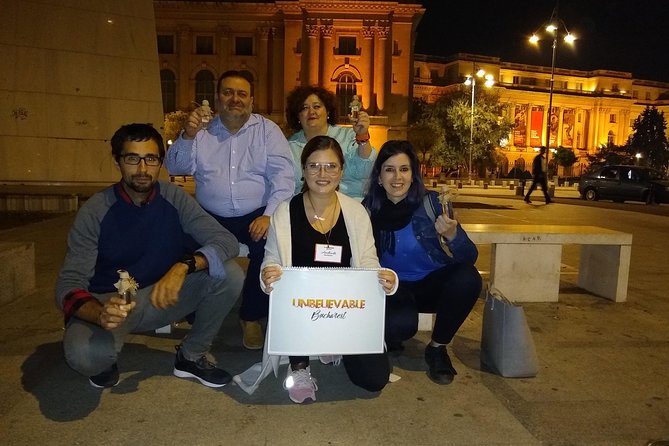
By the time you arrive at Piata Revolutiei, the mood shifts. This is the place where Ceausescu had his last speech, and where the revolution started in Bucharest on 21 December 1989.
The value here is in the specificity. Dates and events matter because they give you a timeline you can hold in your head while you walk. You’ll also get help connecting the political story to the urban reality—where speeches happen, where crowds gather, and how a city becomes part of a revolution.
This stop runs about 20 minutes, which feels right: enough time for the key sequence of events, not so long that it becomes a lecture. If you’re the kind of visitor who likes “show me where it happened,” this is the moment.
University of Bucharest: the square named 21 December 1989
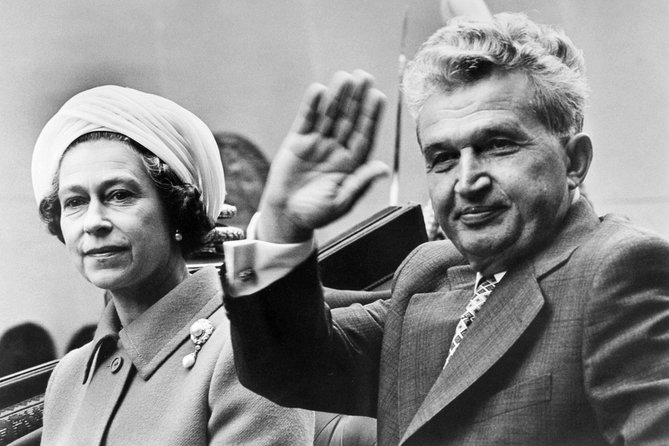
After Revolution Square, you move to the University of Bucharest area. There’s a small square next to the university bearing the name 21 December 1989, because this is where a large part of the Romanian revolution took place.
I like that this isn’t only “what happened in communism.” It pushes into the next question: what came after. You’ll hear about post-communist Romania and some of the mistakes made on the way to democracy. That matters because it prevents the story from becoming a simple bad-vs-good timeline.
Time here is about 15 minutes, so you’ll leave with a working mental framework rather than a dozen facts you can’t use later. It’s also a good bridge into the museum, because by now you’re ready to think beyond dates and into everyday experience.
Museum of Communism Bucharest: living-room snacks and try-on clothes
The final stop is Museum of Communism Bucharest – Undeva in Comunism for about 40 minutes, and it’s where the tour becomes memorable in a hands-on way.
This is not just a gallery of photos. You’ll interact with exhibits, try on clothes, and step into a setting where you’ll get a communist snack. The snack moment happens inside the museum in a space described as exactly the museum’s living room—so it feels staged, but in a purposeful, educational way.
You also get communist coffee here. It’s included, and it’s the kind of small detail that makes the history feel more “real life” than “museum facts.” Just be aware that other drinks aren’t included—so if you like tea, water, or something stronger, plan accordingly.
The skip-the-line part is quietly valuable. Museums in big cities can eat time, and this tour tries to protect your momentum so you finish with energy.
Guides like Ali, Maria, and Gabriela (Gabi) make or break the tone
A tour about communism lives or dies by how it’s explained. This one leans on guides who can handle both the political outline and the human feel. In past editions, guides have included people named Ali, Maria, and Gabriela (Gabi), and the common thread in their style is clear explanation without turning the topic into a dry lecture.
One reason this matters: communism can be emotionally heavy. If your guide can explain it for adults and still keep things clear for families, you’ll get more out of the walk. The museum also benefits from that kind of pacing, because you’ll want someone guiding you through what you’re seeing and why it mattered.
If you’re worried about understanding Romanian history, you can relax. The format is built to make the story easy to follow stop by stop.
Who this tour suits best (and who might want a different plan)
This works especially well if you:
- Want a compact introduction to communist-era Bucharest
- Like walking routes that connect big monuments to real story beats
- Enjoy museums where you can touch, try, and respond—not just look
- Prefer a small group setting so you can ask questions
It may not be the best fit if you:
- Only want Palace interiors, rooms, and objects inside (this tour keeps you outside the Palace)
- Want a long museum visit that runs for hours instead of about 40 minutes
If you’re traveling with kids, this can still be a good choice because the explanations are designed to land for younger listeners as well, not just adults.
What to do before and after you go
Before you go, wear shoes you trust for city sidewalks. You’ll be on your feet for a walking tour and then in a museum space where you might be asked to try on items. Also, keep an eye on the day’s weather since the experience notes that it requires good conditions.
After the tour, you’ll have a clearer sense of how Revolution Square and the Palace area connect. If you return to either place on your own, you’ll look at them like story pages, not just impressive backdrops. That’s the best kind of souvenir: the ability to see what you walked through.
Should you book this Bucharest communism tour?
I think you should book it if you want a smart, human-sized way to understand communist Bucharest without spending your whole day on logistics. The value is in the combination: outside landmarks, a monastery survival story, a revolution timeline, and an interactive museum with snack-and-coffee included.
Book it especially if you like guidance. Standing in front of the Palace of Parliament or Revolution Square on your own is impressive, but the tour gives you the meaning fast—so you come away with understanding instead of just photos.
If you dislike walking or you’re hoping for a deep Palace interior visit, you might want a different type of tour. Otherwise, this is a solid pick for an efficient morning that turns Bucharest’s most famous symbols into something you can actually explain.
FAQ
How long is the Bucharest communism tour?
It lasts about 3 hours.
What’s the group size for this tour?
It’s a small group, with a maximum of 8 travelers, and it’s also described as up to 15 or fewer depending on the listing’s group limits.
Do we enter the Palace of Parliament?
No. You see the Palace of Parliament from the outside on this tour.
Is the Museum of Communism visit included?
Yes. Museum of Communism Bucharest – Undeva in Comunism is included for about 40 minutes, with skip-the-line entry.
What food and drink are included?
You get a communist snack (sweet or salty depending on availability) and a communist coffee. Other drinks are not included.
Is this tour suitable in bad weather?
It requires good weather. If it’s canceled due to poor weather, you’ll be offered a different date or a full refund.