REVIEW · VALENCIA
Valencia: San Nicolás, Silk Museum and Santos Juanes Church
Book on Viator →Operated by Parroquia de San Nicolas de Bari y San Pedro Martir · Bookable on Viator
Valencia has a way of surprising you at street level. This self-led audio tour strings together three standout places, so you can set the pace instead of marching with a group.
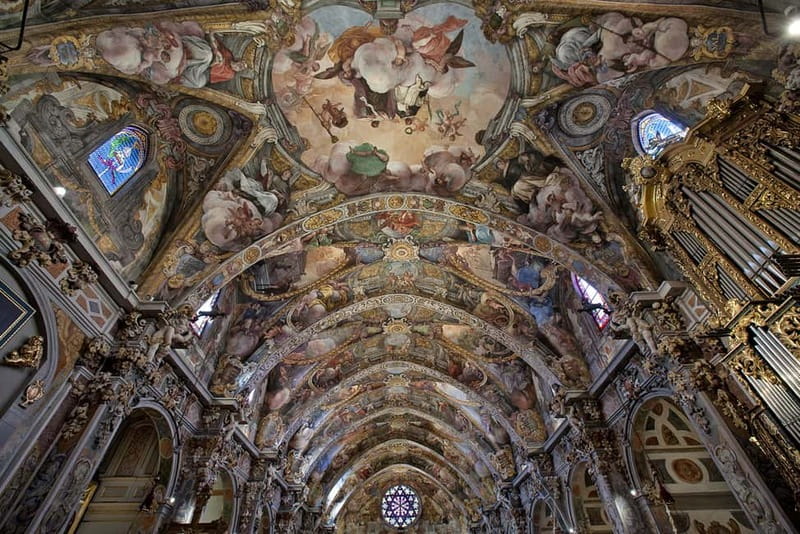
I especially like two things: San Nicolás Church, with its fresco-packed interiors people call the Valencian Sistine Chapel, and the Valencia Silk Museum, where the city’s silk trade story becomes easy to picture.
One thing to consider: Santos Juanes Church can be affected by renovation and site hours may shift on public holidays, so you’ll want to sanity-check before you plan your route.
In This Review
- Key highlights to look for
- How the San Nicolás–Silk Museum–Santos Juanes audio route works
- San Nicolás Church: the fresco room you’ll keep thinking about
- The Valencia Silk Museum: how silk shaped Valencia’s daily life
- Santos Juanes Church: market-area roots and church details that pay off
- Timing tips: spacing three free stops without feeling rushed
- Price and value: why $17.20 can be a smart deal here
- Should you book this audio tour?
- FAQ
- FAQ
- How long is the Valencia self-led audio tour?
- How much does it cost per person?
- Is this tour guided by an in-person guide?
- What stops are included?
- Is admission free at each location?
- In how many languages is the audio guide available?
- Is it a mobile ticket?
- What are the opening hours listed for Monday?
- What is the cancellation policy?
Key highlights to look for
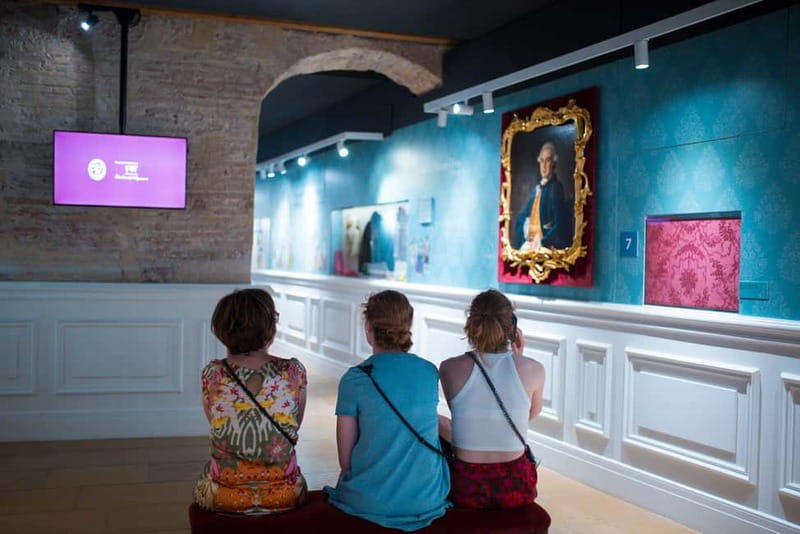
- San Nicolás fresco scale: nearly 2,000 square meters of painted vaults, plus striking baroque decoration inside an older Gothic structure
- The Valencian Sistine Chapel effect: the church’s mural ceiling feeling is the main payoff, and the audio helps you know what you’re seeing
- Gremi de Velluters story: the Silk Museum centers the 15th-century silk velvet weavers’ guild and how Valencia’s silk shaped everyday life
- Production details that make sense: you’ll hear how silkworms became luxury fabric, including references to the city’s looms—around 5,000
- Santos Juanes near the market area: the church’s “Saint John of the Market” nickname connects it to Valencia’s long-standing public spaces
- A flexible route you control: the mobile ticket and self-led format let you pause, linger, and pace yourself across three locations
How the San Nicolás–Silk Museum–Santos Juanes audio route works
This is a self-led experience, timed at about 3 hours total. You get a mobile ticket and access to an audio guide, then you move between the three stops at your own pace. Most travelers can participate, and the sites are described as near public transportation, which matters because you’ll save time compared with backtracking.
Here’s why I like this format: instead of cramming everything into one guided lecture, you hear stories when you’re physically in front of the artwork and architecture. When your attention is pointed exactly where it belongs—painted vaults, museum displays, or church details—you get more meaning per minute.
Also, each stop lists admission as ticket free. You’re paying for the audio experience and entry access setup, not for separate paid museum time, which improves the value if you’re watching your budget.
You can also read our reviews of more museum experiences in Valencia



San Nicolás Church: the fresco room you’ll keep thinking about
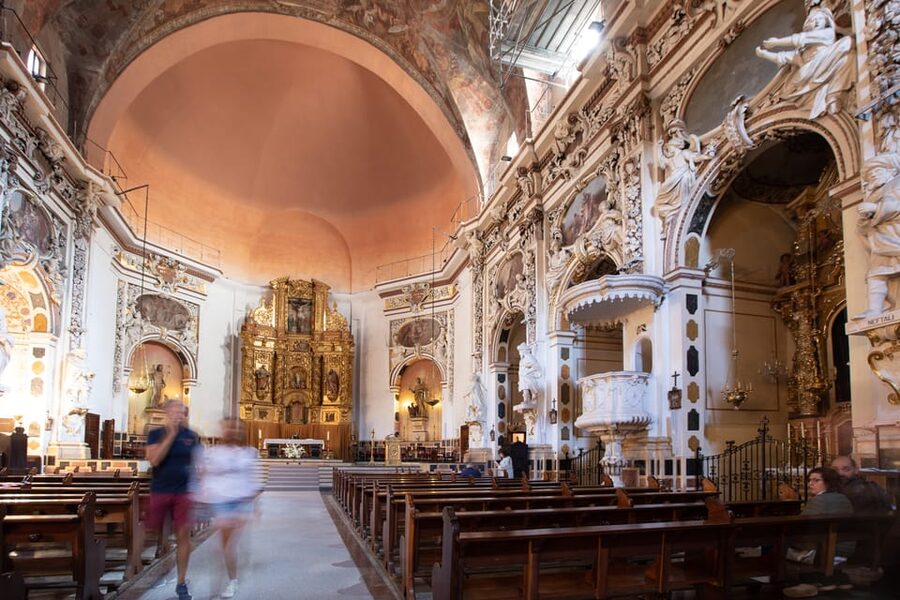
Start with Parroquia de San Nicolás de Bari y San Pedro Martir. It’s one of Valencia’s older parishes, founded more than 700 years ago, and it shows how the church evolved over time. The basic framework is Gothic, but later reforms gave it the appearance most visitors expect today.
The headline is what you’ll see overhead: inside, there are almost 2,000 square meters of fresco paintings spread across the vaults. That’s the reason people describe it like a Valencian version of the Sistine Chapel—because the room feels designed for one big visual moment. If you go in hoping for a quiet, ordinary church stop, you’ll miss the real experience. The interior is the event.
What you should do when you’re there: slow down and let the audio steer your eyes. The stories and explanations help you notice patterns you’d otherwise gloss over—especially when frescoes cover so much surface. Even if you’re not a stained-glass or art-expert type, the scale alone is memorable.
A practical note: the listing says the admission ticket is free at this stop, so your biggest variable is how long you want to spend absorbing the fresco ceiling versus quickly moving on.
The Valencia Silk Museum: how silk shaped Valencia’s daily life
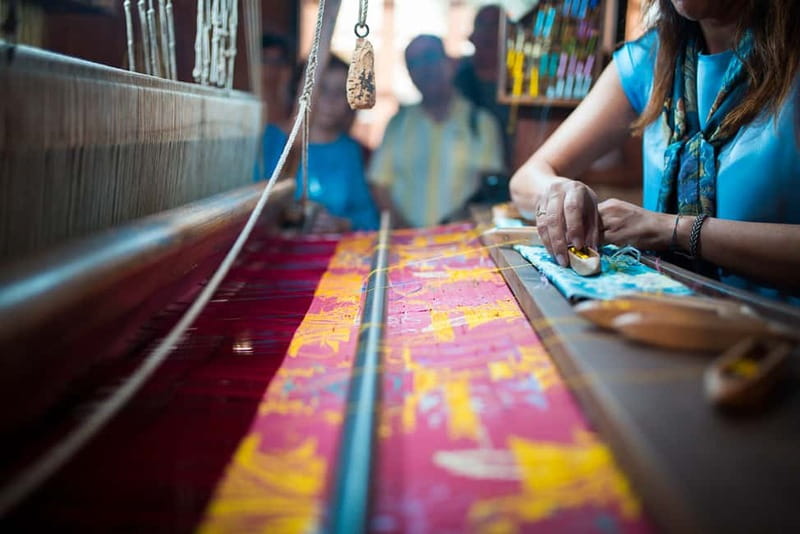
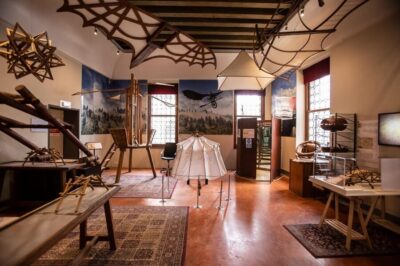
Next, head to Museo y Colegio del Arte Mayor de la Seda—the Silk Museum. The audio focuses on why silk mattered so much in Valencia, not just that it existed. In a city where trade goods became status and jobs, silk influenced the landscape and daily routines for centuries.
The museum centers the Gremi de Velluters, the silk velvet weavers’ guild. You’re learning inside the kind of building where these craftspeople established themselves in the 15th century. That matters because it turns “silk history” from an abstract lesson into something tied to real working life: tools, production rhythms, and a whole local system.
What I’d call the payoff is how the audio connects the steps. You’ll hear about the process from silkworm raising through the creation of luxurious fabric. The museum also references the scale of production, including almost 5,000 looms around the city. That number is a useful mental anchor. It tells you this wasn’t a side hobby—it was a real economic engine.
Some of the most compelling audio moments (the kind that makes you look longer at displays) are the origin-style stories and “how silk traveled” explanations. The audio experience also includes references to dramatic tales tied to Emperor Justinian and silk coming through unlikely channels, plus details about how silk became connected to fashion and competition. Even if you skim exhibits, the audio helps you make them cohere.
Timing-wise, the Silk Museum stop is about 1 hour. If you enjoy craft history—how something gets made—you might want to stretch this bit. If you’re more interested in architecture and murals, you can keep it closer to an hour without feeling like you missed the main thread.
Santos Juanes Church: market-area roots and church details that pay off
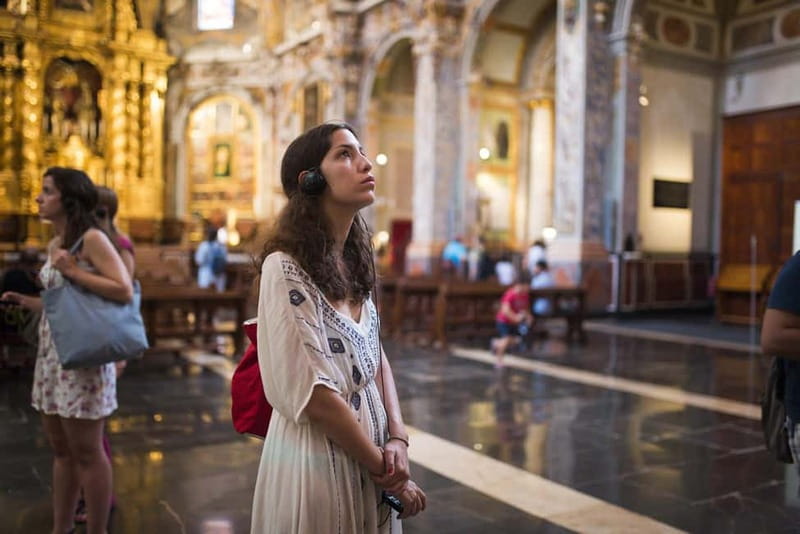
Finish at Iglesia de los Santos Juanes. This one is commonly known as Saint John of the Market because it sits by the market area. It’s not just a nickname for fun; it places the church in Valencia’s oldest everyday civic geography, where public space mattered.
The church’s setting connects to a long timeline. The square by the market area was already a main open space in the city by the 13th century, which means the church’s story is tied to who used that space and why. You’ll get more from the audio guide here because churches like this often feel “normal” until you understand the role the area played in city life.
The listed time for this stop is about 1 hour, and admission is free. The audio guide is available in 5 languages, so you can choose your language and keep the narrative consistent across all three locations.
Important caution: Santos Juanes can be undergoing restoration, and that can affect what you can see inside or how long it takes to access certain areas. If you hit it at the wrong time—or during a public holiday—your experience may be more limited than the ideal version. The fix is simple: plan with a little flexibility and check on current conditions before you lock your schedule.
Timing tips: spacing three free stops without feeling rushed
Because the total is about 3 hours, you’re working with a compact window. That’s good if you want a focused plan, but it also means you should avoid treating it like a casual stroll where you stop for coffee every 20 minutes. The best results come from a steady rhythm: walk to the next site, press play on the audio at that location, and then give yourself enough time to actually notice what the audio calls out.
Also, the booking pattern shows this tour is commonly reserved about 15 days in advance on average. That doesn’t mean you must book far ahead, but it suggests demand exists, especially in busier periods. If you’re traveling during peak season or on a weekend, I’d rather plan early.
The hours information provided includes Monday: 10:00 AM to 8:00 PM. Since the rest of the schedule isn’t detailed here, I recommend you confirm opening times for the day you’re going. If your day includes a public holiday, double-check site status and access, since church and museum hours can vary.




Price and value: why $17.20 can be a smart deal here
At $17.20 per person, the price is easy to understand when you treat it as an audio-guided ticketing service for three major stops. Each location lists free admission, so you’re not paying museum entry fees on top. Instead, you’re paying for the value of a guided narrative—delivered at your pace—covering three places.
That matters, because with churches and museums, a big chunk of the difference between a quick look and a meaningful visit is context. You don’t just see frescoes; you learn what to notice. You don’t just walk through craft displays; you understand how the silk industry operated and why it changed Valencia.
So if your goal is to get a coherent mini-tour of Valencia’s art, craft history, and church life in one morning/afternoon block, this price-to-output ratio is strong. You also avoid the “one size fits all” problem of group tours, where you lose time waiting for others to move.
Where it might feel less worth it: if you don’t like audio tours, or if you want a deep, interactive guide who answers questions on the spot. This isn’t that kind of experience. It’s an independent audio format. If that style fits you, the price feels right.
Should you book this audio tour?
Book it if you want a tight, self-paced route that links three famous sights—San Nicolás’s fresco intensity, the Silk Museum’s craft-industrial story, and Santos Juanes’ market-area roots—without spending the day in transit. It’s especially good for you if you like learning what you’re looking at while standing right in front of it.
Skip or rethink it if you’re set on visiting Santos Juanes no matter what and you can’t tolerate the possibility of renovation affecting access. In that case, check site conditions for your exact date first, and keep a backup plan for that last stop.
Overall, if you enjoy architecture and want a story-driven way to experience Valencia’s art and trades, this is a clean, practical pick.
FAQ
FAQ
How long is the Valencia self-led audio tour?
It’s listed as about 3 hours (approx.).
How much does it cost per person?
The price is $17.20 per person.
Is this tour guided by an in-person guide?
No, it’s self-led with an included audio guide. You use your access after booking and explore at your own pace.
What stops are included?
The experience includes San Nicolás Church, Valencia Silk Museum, and Santos Juanes Church.
Is admission free at each location?
The itinerary shows Admission Ticket Free for all three stops.
In how many languages is the audio guide available?
The audio guide is available in 5 languages.
Is it a mobile ticket?
Yes, the experience uses a mobile ticket.
What are the opening hours listed for Monday?
The opening hours shown include Monday: 10:00 AM – 8:00 PM.
What is the cancellation policy?
You can cancel for free up to 24 hours in advance for a full refund. If you cancel less than 24 hours before the experience starts, the amount paid isn’t refunded.