REVIEW · KRAKOW
Day Tour to Auschwitz Birkenau Museum with Transportation
Book on Viator →Operated by Krakow Tours by KrakowDirect · Bookable on Viator
Auschwitz in a single day is intense. This tour keeps things practical with round-trip transportation, skip-the-line admission to both Auschwitz I and Auschwitz II, and a guidebook to help you slow down. The main thing to consider is timing: museum entry slots and a tight schedule can make Birkenau feel rushed if the day runs late.
I also like that the experience is designed for calm, self-paced looking. You’ll spend real time at key places like the Auschwitz I barracks and the Birkenau gate, with a headset for the Auschwitz I portion and a documentary on the ride out. If you’re visiting with a stroller, plan for dirt tracks and uneven ground.
In This Review
- Key points worth knowing before you go
- A 7-hour Auschwitz day from Krakow: how the plan actually feels
- Transport and timing: what can affect your day
- Stop 1: the Judenrampe memorial between Auschwitz I and II
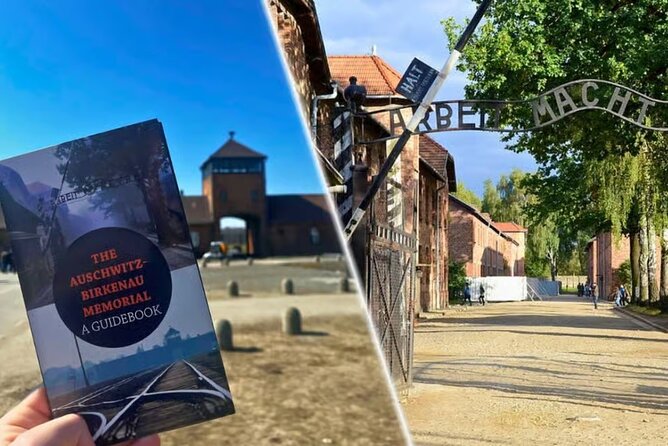
- Skip-the-line at Auschwitz I: walking through the gate and Arbeit Macht Frei
- Auschwitz I barracks, fences, gas chambers, and crematoria: seeing scale the right way
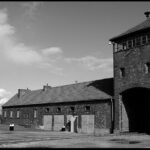
- Stop 3: Birkenau (Auschwitz II) historical gate and the liberation story
- Included extras that change the experience: guidebook, documents, and insurance
- What to bring and how to stay comfortable inside the camps
- Price and value: is $40.85 a good deal from Krakow?
- Who this tour suits best (and who may prefer another approach)
- Should you book this Auschwitz-Birkenau day tour from Krakow?
- FAQ
- Is Auschwitz admission included in this day tour?
- How long is the Krakow Auschwitz-Birkenau tour?
- Does the tour include transportation from Krakow?
- Do I need to bring my passport or ID?
- Is food included?
- Is the tour offered in English?
- Are photos allowed in the camps?
Key points worth knowing before you go
- Skip-the-line entry to Auschwitz I and Auschwitz II: you avoid wasting the morning in queues.
- Headset guidance for Auschwitz I: you can follow along while you walk through the camp.
- Judenrampe memorial stop: a lesser-known rail unloading platform you can’t easily miss on your own.
- Short, focused Birkenau time at the historical gate: powerful, but don’t expect hours to wander.
- ID is mandatory at the museum: bring your passport or your national ID card.
A 7-hour Auschwitz day from Krakow: how the plan actually feels
This is built as a full day out of Krakow, running about 7 hours including transportation. That length matters, because Auschwitz-Birkenau isn’t a “grab-and-go” place: you’ll be walking, stopping, and absorbing a lot at once.
The schedule is structured in three parts: a short stop for the Judenrampe memorial, a longer visit through Auschwitz I, and then time at Auschwitz II in Birkenau (Auschwitz II). Between them you’ll be moving on foot briefly and also riding in the bus, so you’ll want comfy shoes and patience.
One practical note: the group is capped at 30 travelers. That’s a good size for keeping the logistics manageable, especially with museum rules and check-in procedures.
Finally, the day is offered in English, which helps if you’re relying on the audio/headset portion and the guidebook instructions.
You can also read our reviews of more museum experiences in Krakow
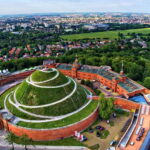
Transport and timing: what can affect your day
You get round-trip air-conditioned transportation from the Radisson Blu Hotel area in Krakow, and you end back at the same meeting point. Having a fixed pickup is the biggest value here: you don’t have to coordinate buses, trains, or transfers with time-sensitive museum entry.
That said, Auschwitz is strict about entry slots. In real life, departures can shift, and once you’re dealing with timed access, that can tighten how long you spend at each zone—especially at Birkenau. If you’re hoping to take your time at Auschwitz II, build a little flexibility into your expectations.
There’s also a documentary shown on the way to the museum: The liberation of Auschwitz. It can be helpful for setting context before you see the camps, but it won’t replace on-site looking. Think of it as a warm-up, not the main event.
Stop 1: the Judenrampe memorial between Auschwitz I and II
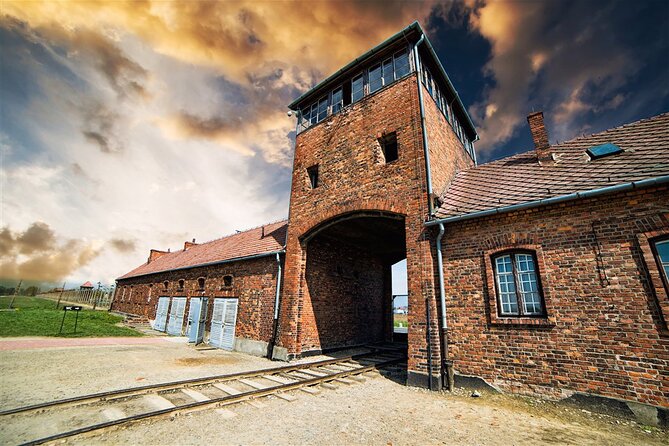
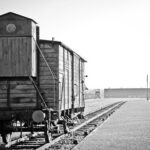
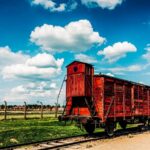
Your day starts with a Judenrampe stop—about 30 minutes—at the Jewish Ramp, a railway unloading platform used during the Holocaust (between 1942 and 1944). This is the kind of place that often gets less attention than the famous Birkenau gate, but it’s crucial to understanding how deportations worked.
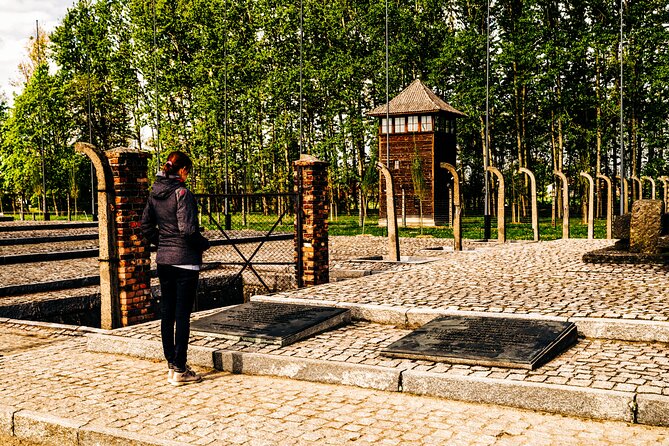
What makes this stop meaningful is the location and framing. It sits between Auschwitz I and Auschwitz II, so you get a physical link between the two camp areas before you’re absorbed by the larger site. Today it functions as a memorial with plaques honoring the victims, so it’s not just “a photo stop.” It’s meant for reflection.
A small practical perk: since the Judenrampe admission is free, it’s an efficient use of time early in the day. It also means your money is focused where ticketing is required inside the main museum areas.
Skip-the-line at Auschwitz I: walking through the gate and Arbeit Macht Frei
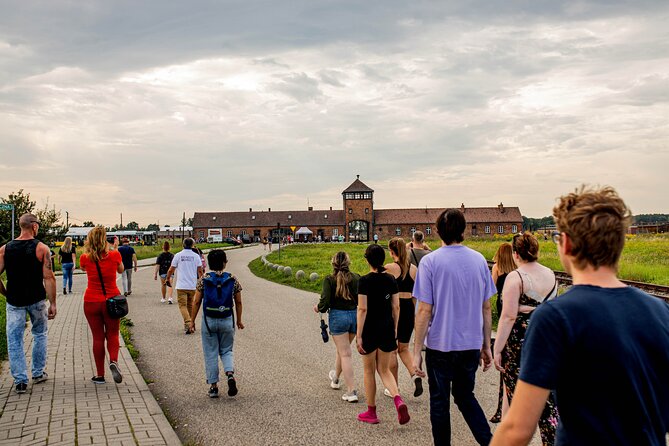
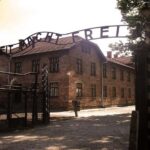
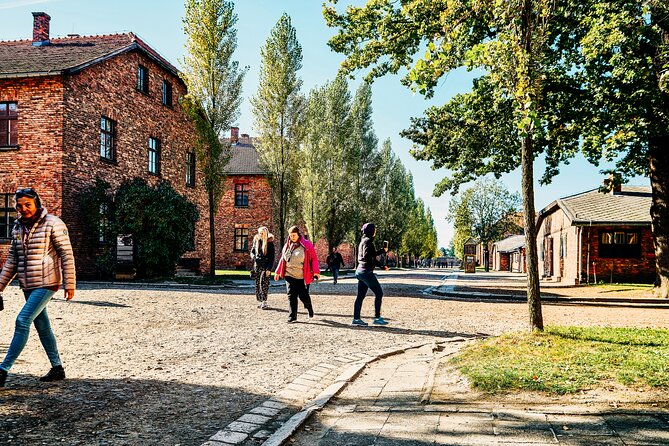
Auschwitz I is where you start to get the full weight of the camp system, and this tour routes you right through the gate of Auschwitz I first. You’ll walk under the infamous sign Arbeit Macht Frei (Work Sets You Free) before you move deeper into the camp.
This is the moment when a “simple day trip” stops feeling simple. The camp was established for Polish citizens arrested after Germany annexed the country in 1939, and that early context helps you understand why the site isn’t just about the late-war period.
You’ll also use headsets during the Auschwitz I portion, so you can hear the narration clearly while you’re walking. For a place this spread out, that audio support can make a big difference—otherwise you’re left trying to read everything at once.
The Auschwitz I museum time is about 1 hour 30 minutes. That can feel tight, but the tour’s structure helps: you’re not expected to do everything like a marathon; you’re set up to understand the main sections and then look carefully.
Auschwitz I barracks, fences, gas chambers, and crematoria: seeing scale the right way
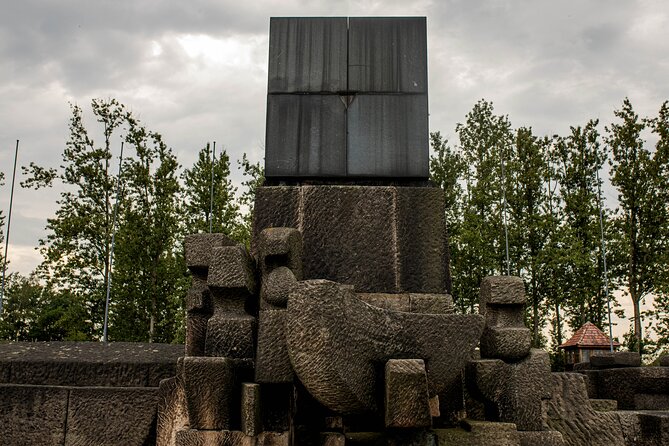
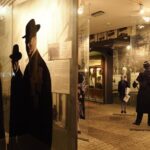
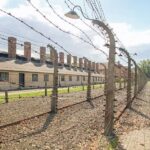
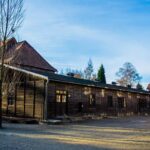
At Auschwitz I, you’ll explore original features that visitors often describe as chillingly real: fortified walls, barbed wire fences, and the atmosphere of the wooden barracks. You’ll also see the gas chamber and crematoria areas.
This is not just sightseeing. The goal of a timed visit is to help you grasp scale and mechanism. When you see the wiring and the tightly controlled spaces, it’s easier to understand how the camp functioned as a system—not as an abstract idea.
Here’s how you can get more out of limited time. Use the headset/audio portion to anchor your orientation, then slow down when you’re looking at the most dense areas. The tour includes a guidebook with your language and a route with detailed descriptions, so you can follow along at a pace that feels respectful and steady.
Group size and pace matter here, too. With a maximum of 30 people, you’re less likely to be herded into motion constantly. Still, you should expect crowds in peak entry times, and you’ll want to keep moving respectfully in bottleneck moments.



Stop 3: Birkenau (Auschwitz II) historical gate and the liberation story
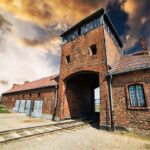
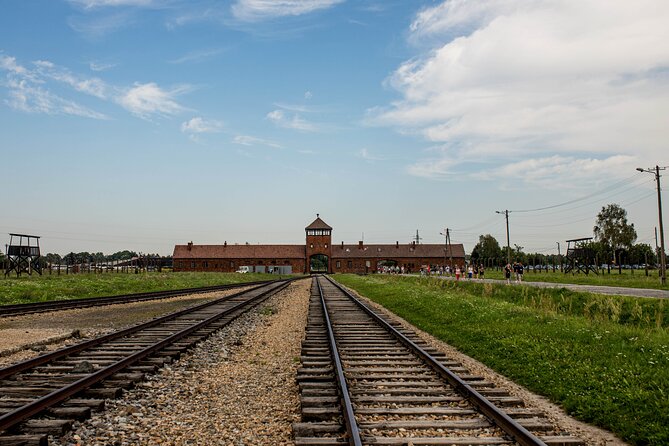
Birkenau is the larger camp, Auschwitz II, located in Brzezinka, and it’s close—about 3 minutes away from Auschwitz I by transfer. The tour keeps this section focused: you’ll be taken to the Auschwitz II historical gate for about 30 minutes.
This part is powerful because of what it represents: Birkenau was built and operated with the sole purpose of making Europe Judenrein (free of Jews). The tour’s narrative also covers the camp’s capacity (around 90,000 prisoners) and the reality of selection, brutal living conditions, and Nazi medical atrocities, including references to Josef Mengele.
You should treat the Birkenau gate stop as both an emotional anchor and an orientation moment. It’s not really a long wander-through, and the camp is huge. So if you want extended exploring beyond what’s scheduled, you may need a different kind of visit later.
The tour ends with a liberation story: on January 27, 1945, soldiers from the 60th Army of the First Ukrainian Front opened the gates of Auschwitz. That final note matters because it points toward what the site demands from us: witness, responsibility, and prevention.
Included extras that change the experience: guidebook, documents, and insurance
The included guidebook is quietly one of the most valuable parts of this tour. Since there’s no live guide listed as included, the guidebook becomes your steady companion: route guidance, detailed explanations, and a way to keep your place when the site is complex.
You also get the documentary on the way in, plus insurance. That insurance won’t make the day easier emotionally, but it can remove a layer of worry about logistics and travel mishaps—especially on long, structured days.
There’s also included admission that covers both Auschwitz areas. The skip-the-line setup is a real advantage here because Auschwitz entry timing is strict. If you’ve ever tried to line up for a timed museum, you know how quickly your plan can fall apart without pre-arranged access.
One balancing thought: the tour is built around self-guided looking with audio help at Auschwitz I. If you’re the kind of traveler who likes a constant live explanation at every step, you might find this format less satisfying. If you prefer to read, look, and reflect with guidance close by, this setup fits well.
What to bring and how to stay comfortable inside the camps
Bring your passport or national ID. Auschwitz requires you to confirm personal details at the entrance, and if you forget it, you may not be allowed to enter. That’s one of the few “hard rules” on the day, so don’t wing it.
You should also pay attention to carry-on size: maximum dimensions listed are 11.8 x 7.8 x 3.9 inches (30 x 20 x 10 cm). Larger luggage can be left in the car, which helps keep your day simple—just don’t pack a huge bag and assume it will pass.
On the ground, expect mostly dirt tracks. This can cause minor difficulties for strollers, so plan accordingly. If you’re traveling with mobility concerns, plan your pace and bring the right footwear. Even without accessibility issues, uneven ground is part of the reality of these memorial sites.
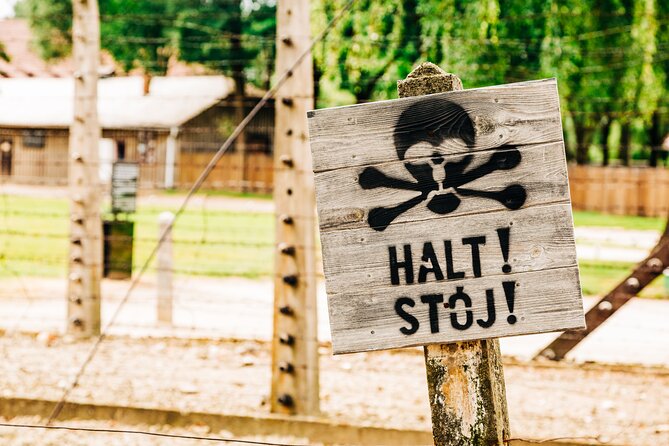
For photos and filming, there’s general permission with a few clearly indicated exceptions. The key is to follow the signage on-site and behave respectfully at all times, because the rules exist for a reason.
Finally, no food or drinks are included. So it’s smart to eat before you go and bring water if permitted by your plans and comfort level. A day like this drains energy even if you don’t notice it at first.
Price and value: is $40.85 a good deal from Krakow?
At $40.85 per person, the value comes from bundling several expensive-in-time pieces together: admission to both Auschwitz areas (with skip-the-line access), round-trip transportation, and a guidebook plus a documentary. If you tried to plan all of that yourself, you’d likely spend time coordinating timed entry while also dealing with transportation.
You are paying for convenience and a smoother day flow. The trade-off is that it’s not a luxury, long, slow experience. The Auschwitz II time is shorter by design, and the day’s structure depends on museum entry slots and the tour’s route.
I think the pricing is strongest if you want a dependable, ticketed day trip and you’re okay with a guided-but-self-paced approach. If you’re aiming for maximum time in Birkenau or you want lots of in-person explanation, you may feel the limits of a 7-hour schedule.
Who this tour suits best (and who may prefer another approach)
This works well for first-timers who want a solid, respectful overview without the hassle of figuring out transport and timed entry. It’s also a strong choice if you like structure: headset support at Auschwitz I, a guidebook to keep you oriented, and a clear handoff to Birkenau.
If you travel solo or with a partner and you want to keep costs down while still getting admission taken care of, this format can be a good match. The group size cap at 30 also helps keep it manageable.
Where it might not fit is if you need extra time at Auschwitz II. Birkenau is vast, and a 30-minute stop at the historical gate is intense but short. If you want deeper wandering and more time for reading on-site, consider a different tour style or a visit with a longer planned duration.
And if pre-trip communication is your biggest worry, treat this like a checklist day. Confirm your pickup details and entry timing well ahead of departure and don’t assume messages will land right away. For an ID-sensitive museum, it’s not the moment to be unsure.
Should you book this Auschwitz-Birkenau day tour from Krakow?
Yes, if you want a practical, well-organized way to see both Auschwitz I and Auschwitz II with skip-the-line access, transportation handled, and written guidance in English. The Judenrampe stop is a thoughtful addition, and the headset-supported Auschwitz I portion can help you move through a complicated site without feeling lost.
Book it with realistic expectations. This is a memorial, not a casual attraction, and the schedule can be tight—especially if anything shifts with timed entry. If you bring your ID, comfy shoes, and patience, you’ll be set up for a respectful, structured day.
FAQ
Is Auschwitz admission included in this day tour?
Yes. Skip-the-line admission is included for Auschwitz I and Auschwitz II.
How long is the Krakow Auschwitz-Birkenau tour?
It runs about 7 hours (approx.), including transportation.
Does the tour include transportation from Krakow?
Yes. Round trip transport by air-conditioned vehicle is included, with pick-up at Radisson Blu Hotel, Krakow and returning to the same meeting point.
Do I need to bring my passport or ID?
Yes. You must take your passport or ID to confirm your details at the museum entrance, or you may not be allowed in.
Is food included?
No. Food and drinks are not included, so you’ll want to plan for that on your own.
Is the tour offered in English?
Yes. The tour is offered in English.
Are photos allowed in the camps?
Generally, visitors are allowed to take pictures with a few clearly indicated exceptions. Follow the rules and signage on-site.