REVIEW · KRAKOW
Schindler’s Factory Museum
Book on Viator →Operated by Walkative! TOUR · Bookable on Viator
War feels real in this factory museum. Step inside Schindler’s Factory Museum in Krakow and you get an emotional, story-driven route through occupied life, with a local guide speaking Spanish and bringing context to what you’re seeing. I love that it doesn’t treat history like a highlight reel; it connects the Nazis’ control of the city to real daily consequences. I also like that you’re in the famous Schindler’s List location, not just looking at replicas.
Here’s the tradeoff: the museum can get crowded, and the spaces are close. When that happens, the experience shifts from slow-and-reflective to “move along, read when you can.”
In This Review
- Key things I’d focus on before you go
- Schindler’s Factory Museum: what kind of experience this is
- Entering the factory complex near Lipowa 4F
- How the WWII story unfolds inside the museum
- The Schindler’s List connection: what you’ll recognize vs what you may not
- The guides matter: Damian and Lucy as examples
- Price and value: is $36 worth it?
- Skip-the-line strategy: find the yellow umbrella
- What about reading walls, red lights, and tight spaces?
- How long is the visit really?
- Who should book this WWII Krakow tour (and who might not)
- Should you book Walkative! TOUR here?
- FAQ
- Where is the Schindler’s Factory Museum tour meeting point?
- How long does the tour take?
- How much does it cost?
- What language is the guide?
- How many people are in the group?
- Does the tour include museum tickets?
- Is there a way to avoid waiting in line?
- Is the exhibition suitable for teens?
- Can you leave the museum and come back later?
- Is it easy to reach using public transportation?
Key things I’d focus on before you go
- Real WWII setting: You walk the story in the actual factory complex tied to the Schindler’s List setting.
- Local guide narration: A guided route helps you connect objects, dates, and neighborhoods into one thread.
- It’s about Krakow, not just one man: The story centers on occupied Polish city life and survival choices.
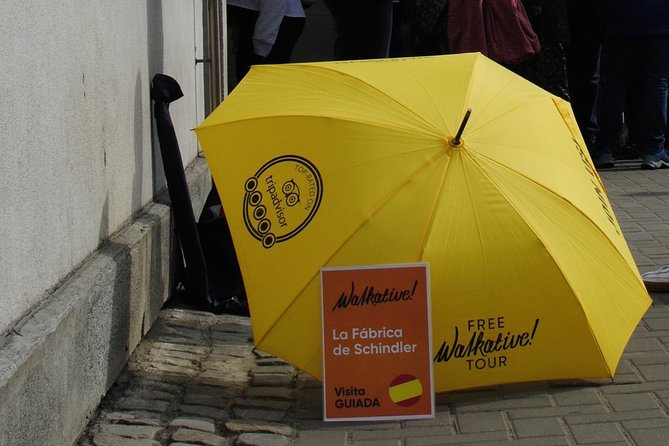
- Skip-the-line support: Look for the yellow umbrella with your guide to avoid the worst waiting.
- Short time, heavy content: Expect lots of reading and a fairly packed timeline in about 1.5 hours.
- Best for ages 14+: The exhibition is recommended for youth from 14 years onward.
Schindler’s Factory Museum: what kind of experience this is
Schindler’s Factory Museum is one of those places where “museum” is almost the wrong word. Yes, you’re touring an exhibit, but the route is built like a guided story about Krakow under Nazi occupation—how ordinary life changed, how people adapted, and how survival was tied to systems that were brutally organized.
The tone matters. Instead of starting with a single hero and staying there, the experience works through the occupied city first: the takeover, the forced economic reality, the crushing bureaucracy, and the human cost. The factory setting puts you in the right mood because it wasn’t built as a memorial. It was built as a workplace, and the exhibition uses that fact to make the history feel immediate.
And if you know the Schindler’s List story, you’ll recognize the setting quickly. That recognition isn’t the point, though. The deeper value is how the exhibition frames the world that made that story possible.
You can also read our reviews of more museum experiences in Krakow
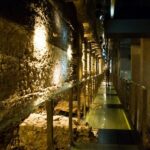

Entering the factory complex near Lipowa 4F
Your tour meeting point is Lipowa 4F, 30-702 Kraków, and the experience ends back there. That matters for two reasons: first, you’re not stuck guessing where the route finishes. Second, it makes the visit feel like a planned block in your day, not a “sometime this afternoon” museum detour.
It’s also near public transportation, which is handy in Krakow. Many sights cluster around the old town, but this one sits in an area that’s easy to reach by tram or other local transit. Plan on a bit of walking once you’re off the tram, and you’ll be fine.
One practical tip: don’t show up right at the start time without any buffer. Even with a guide, the museum area can be busy. Arrive a few minutes early so you can find the group and get in smoothly.
How the WWII story unfolds inside the museum
The core of the experience is a guided route that follows the occupied city timeline. The opening idea is simple but heavy: when everything feels uncertain, the choices you make—and the systems controlling you—start to decide who lives and who doesn’t.
As you move through the galleries, the museum ties together several threads:
- how the Nazi occupation reorganized everyday life in Krakow
- how the factory connected to that system
- how Jewish lives were trapped within Nazi control
- how the story of survival is linked to the factory’s role in saving more than 1,000 Jews
This is also where a guide changes everything. A lot of museums in Europe are “walk and read.” Here, the guide helps you see patterns: why certain items are displayed together, what the timeline is trying to show, and how one stage of occupation built into the next. With the Spanish narration, you’ll still get the through-line even if some details require full concentration.
The Schindler’s List connection: what you’ll recognize vs what you may not
If you’re coming because of Schindler’s List, you should be prepared for both payoff and limitation.
The payoff: the factory setting is famous, and you’ll see the place the movie brought into popular memory. That context can make you feel what an “industrial” environment looks like when history inside it is catastrophic.
The limitation: multiple visitors note that the museum isn’t just an Oskar Schindler story. It includes him, but it spends more time on the wider Nazi occupation of Poland and the lived experience of Krakow’s citizens—Jewish and non-Jewish.
So if you want a deep biography of Oskar Schindler, you might find the focus split. Some of the route emphasizes the city’s transformation and occupation machinery first, and the Schindler thread may appear more strongly later in the visit. That doesn’t make it wrong. It just means your expectations should match the museum’s design: history of a place and its people, with Schindler’s role as part of that larger picture.
The guides matter: Damian and Lucy as examples
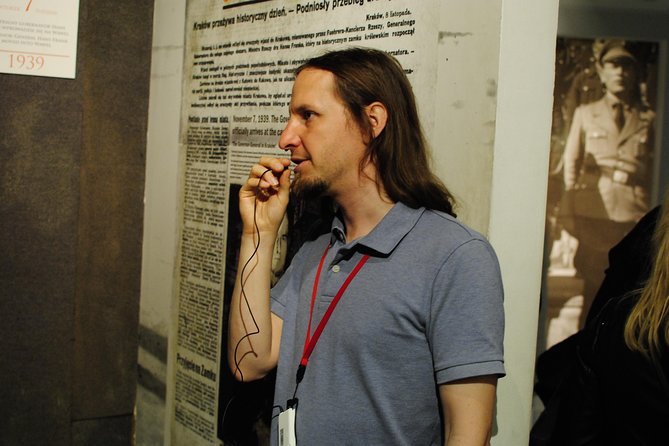
This tour runs with a professional, local guide in Spanish. In practice, the guide is what turns walls of information into an ordered story you can follow without feeling lost.
You’ll hear names like Damian and Lucy mentioned in visitor feedback, and that’s telling. When guides are effective, you feel it quickly: the tour doesn’t just list facts. It adds human context—how Krakow changed before the war, during occupation, and even in the aftermath. Some guides also bring in personal-scale details, which helps the exhibit stop being abstract.
One thing I’d keep in mind: the experience depends on how crowded the museum is at your time slot. In a bottleneck, even the best guide can’t slow down every group. If you want the full benefit of the narration, try to arrive with calm energy and give yourself patience.






Price and value: is $36 worth it?
At about $36 for roughly 1 hour 30 minutes, this is priced like a guided historical visit, not a self-guided entry. For many people, that’s the key value: you’re paying for interpretation and a structured route through a lot of content.
Here’s where the math feels fair:
- The museum itself has a lot to read and absorb, and a guide helps you avoid wandering.
- You get an “avoid the queue” advantage through the yellow umbrella meet-up.
- The group size is capped at 15 travelers, which is more comfortable than the huge group chaos you sometimes find at major attractions.
Could it be less “worth it” for some people? Yes. If you already know the story deeply and you prefer silent, self-paced viewing, you might feel the guide is too focused on the bigger occupation narrative. But if you’d like help connecting the dots, the $36 feels reasonable.
Skip-the-line strategy: find the yellow umbrella
This is one of the most practical tips in the whole experience: avoid the queue by looking for the guide with the yellow umbrella.
That doesn’t mean you’ll never wait. It means your group has a better chance at moving through the entrance process smoothly. One visitor described how ticket holders and group visitors get roped into clearer areas, while people without the right setup can end up in messy, uncertain lines outside.
So when you arrive:
- locate your guide quickly
- double-check you’re in the correct group before you head toward the entry area
- don’t assume the crowd will organize itself for you
If you arrive later in the day, expect more congestion. The museum can be popular, and the galleries can feel tight once the groups merge.
What about reading walls, red lights, and tight spaces?
A museum like this can hit you with two challenges at once: crowding and information density.
Several visitors point out that the route involves a lot of text, and you’ll want more time than you think to read everything properly. Some galleries feel like a narrow corridor experience where you can’t pause for long without blocking someone behind you.
There’s also a practical visual issue: one visitor mentioned red lights affecting the way the route is viewed. That’s the kind of small detail that can matter if you’re trying to read labels or signs. The best answer is simple: keep your head up, move slowly when you can, and don’t plan on photographing every label and reading it later.
If you’re the type who needs to “own the pace,” this might feel like a sprint. If you’re okay letting the guide drive the timing, you’ll get more out of it.
How long is the visit really?
The tour runs about 1 hour 30 minutes. In reality, you may spend a bit more time inside the exhibition, but the guided format keeps it structured.
Also note one important rule from visitor experience: the ticket doesn’t allow you to leave and come back. So treat it like an all-in-one block. If you need a break, take it during the flow of the visit rather than planning to step outside.
If you’re scheduling your day, I’d build in a small buffer before and after so you aren’t rushing your next stop.
Who should book this WWII Krakow tour (and who might not)
This tour fits best if you want:
- a guided storyline through occupied Krakow
- a real-world Schindler’s Factory setting linked to Schindler’s List
- context beyond a single-person legend, including how the occupation system shaped daily life
It’s also recommended for youth from 14 years, which helps if you’re traveling as a family and want a history-focused experience with an appropriate age framing.
You might think twice if:
- you’re hoping for a biography-style deep dive on Oskar Schindler alone
- you hate guided pacing and prefer full self-directed museum wandering
- you’re sensitive to crowded indoor spaces and lots of reading
Should you book Walkative! TOUR here?
If your goal is to understand the WWII story in Krakow in a guided, structured way, I think booking is a smart move. The price makes sense because you’re buying context plus a smoother entry approach, and the yellow umbrella setup is exactly the kind of small detail that saves time and stress.
I’d book especially if you like history explained in plain language and you’re comfortable with an experience that mixes personal stories with harsh timelines. The museum’s strength is that it doesn’t let you stay in movie-land; it takes you into the systems and choices behind the survival story.
Just manage expectations: this is not only about Schindler. It’s about the occupied city and the factory’s role inside a larger Nazi-controlled reality. If that matches what you want, you’ll leave with a clearer picture—and a heavy, honest one.
FAQ
Where is the Schindler’s Factory Museum tour meeting point?
The meeting point is Lipowa 4F, 30-702 Kraków, Poland, and the tour ends back at the same location.
How long does the tour take?
The experience lasts about 1 hour 30 minutes.
How much does it cost?
The price is $36.
What language is the guide?
The tour includes a local professional guide in Spanish.
How many people are in the group?
The maximum group size is 15 travelers.
Does the tour include museum tickets?
Yes. It includes the entrance to Schindler’s Factory Museum, plus VAT.
Is there a way to avoid waiting in line?
Yes. You’re advised to avoid the queue by looking for the guide holding a yellow umbrella.
Is the exhibition suitable for teens?
The recommended admission for the exhibition is for youth from 14 years.
Can you leave the museum and come back later?
One visitor noted that the ticket does not allow leaving and re-entering, so plan to complete the visit in one go.
Is it easy to reach using public transportation?
Yes. It’s listed as near public transportation.