REVIEW · NICE
Visit Marc Chagall Museum
Book on Viator →Operated by French Riviera Tours by Marina · Bookable on Viator
A museum you can read like a story. This tour centers on the Musée Marc Chagall in Nice, designed around the iconic Biblical Message series and created to make symbolism feel personal. I love how Marina’s guidance links Chagall’s life to what you’re seeing, and I love that the format is tight and practical. One heads-up: the core experience is about 1 to 2 hours, so if you want to linger slowly, you’ll want to budget extra time after the tour.
In addition to the museum visit, you may also spend time in Cimiez, where Roman thermal baths and arenas meet a Franciscan monastery setting and an olive-grove view over Nice. If you’re trying to pack smart art days, there’s also an upgrade option that can take you to the Matisse Museum, another top stop in town.
This is a private outing for your group, in English, starting at 36 Av. Dr Ménard and ending back there. At $216.86 per person, it’s not a cheap afternoon—but when a guide can turn paintings into clear, emotional meaning, the value can feel real fast.
In This Review
- Key things to know before you go
- Entering the Musée Marc Chagall: why this museum clicks fast
- The heart of the visit: the Biblical Message series and its emotional logic
- Marina’s style: how the guide makes symbolism make sense
- The Cimiez add-on: Roman thermal baths, Arenas, and a view over Nice
- Pairing options: adding the Matisse Museum if you want a bigger art day
- Price and value: what $216.86 buys you in real terms
- Who this tour suits best (and who might want a different plan)
- Should you book the Marc Chagall Museum tour with Marina?
- FAQ
- How long is the Marc Chagall Museum visit?
- Is the tour offered in English?
- Is this a private tour?
- Where does the tour start and end?
- Is museum admission included in the price?
- Can I cancel for a full refund?
Key things to know before you go
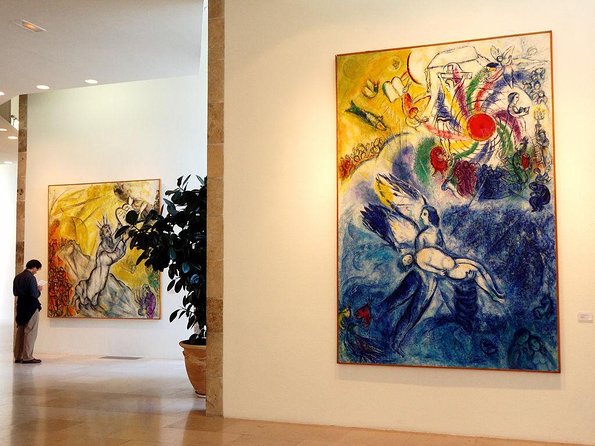
- Chagall’s Biblical Message focus: the museum is specifically designed to display that major series
- A garden setting with a spiritual tone: the visit feels more like a personal space than a warehouse of art
- Marina’s interpretation of symbols: you’ll get help reading recurring images and themes
- Cimiez add-on: Roman thermal baths/arenas, a Franciscan monastery area, olive grove views
- Private, English-guided format: just your group, with room to ask questions
- Short and efficient timing: expect about 1–2 hours for the main experience
Entering the Musée Marc Chagall: why this museum clicks fast
The Musée Marc Chagall is a great choice when you want art with context, without losing half your day. The museum is intimate and arranged so you’re not constantly re-orienting yourself. It also opened in 1973, while Chagall was still alive, which helps explain why the space feels like a deliberate conversation with his themes rather than a generic gallery box.
What makes this place especially satisfying is the way the museum’s concept supports attention. You’re not thrown into the middle of a huge collection; instead, the visit is oriented around a single major thread. In this case, that’s the Biblical Message series, which is famous for blending scripture, memory, and Chagall’s own emotional world.
If you’re the kind of person who likes “Why did the artist paint it this way?” this is a strong format. You’ll have a guide to point out how particular symbols and repeated motifs connect to the bigger human stories behind the work. If you prefer silent wandering only, you may want to add extra solo time afterward—because the guiding part moves at a thoughtful pace.
You can also read our reviews of more museum experiences in Nice

The heart of the visit: the Biblical Message series and its emotional logic
Chagall’s Biblical Message paintings are central here, and the museum’s layout is designed around them. That matters because the series isn’t just about religion in a narrow sense. The works are presented as a spiritual space where people are welcome to connect with the Divine in whatever way makes sense to them.
That framing changes how you read the paintings. Instead of treating them like historical illustrations, you can approach them like symbols and experiences. The guide’s job is to give you a key for the images—how they work together, what the recurring elements tend to suggest, and how the paintings shift between biblical themes and personal feeling.
One of the most useful outcomes of that kind of guidance is clarity. A lot of people know Chagall’s name and a few impressions, but the “aha” moment comes when you can connect the biblical references to the artist’s own life—his loves, his heartbreaks, and his imagination. In this museum, that connection isn’t left to guesswork.
Practical tip: wear comfortable shoes. The museum experience is easy-going, but you’ll still be standing and looking closely at art for long stretches. And if you want to get full value from the interpretation, keep your pace slow enough to see details without rushing.
Marina’s style: how the guide makes symbolism make sense
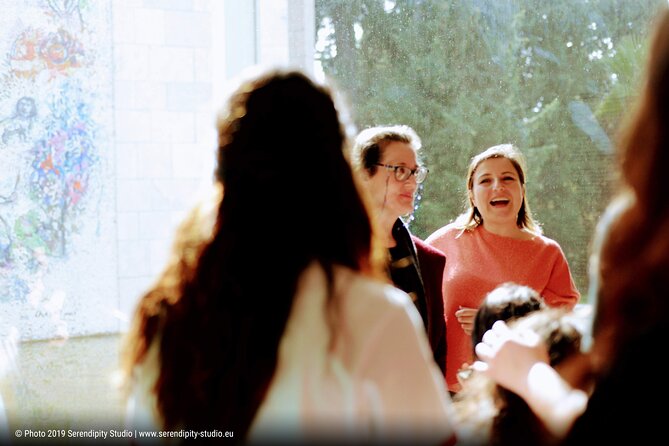
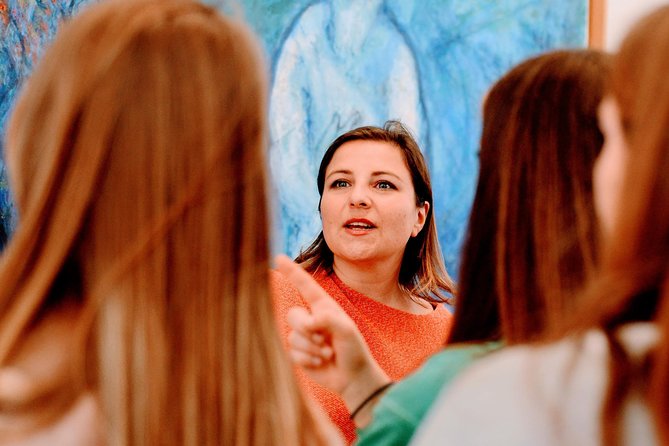
The guide on this experience is Marina, and she’s consistently praised for turning complicated themes into something you can actually track in your mind. The big strength is how she explains relevance, not just facts. You’re guided through how particular biblical themes land on the page and then how those themes connect back to Chagall as a person.
What you’ll likely enjoy most is the way she breaks things down into pieces you can hold: symbols, techniques, emotional tone, and life connections. That kind of structure helps you stop feeling lost. Even if your art background is light, you won’t feel like you need a crash course first.
Another practical win: the tour is private. That means you can ask follow-up questions in the moment. If something doesn’t click right away—maybe a motif, maybe a recurring color or figure—your guide can adjust and explain again without juggling a large group schedule.
If you’re worried that an art tour will feel like a lecture, this one tends to feel more like conversation. The goal is to make the painter feel human and the artwork feel readable.
The Cimiez add-on: Roman thermal baths, Arenas, and a view over Nice
Many art museum visits stop at the doors. This one often keeps going with Cimiez, a suburb area where multiple layers of Nice history sit side by side.
Here’s what you can expect to learn about during this walk:
- Roman thermal baths and arenas: you’ll connect the idea of Roman leisure and engineering to what you see in the area
- Franciscan monastery: a different rhythm of history, more spiritual and contemplative
- Olive tree grove: a calmer pause that also helps you reset after the museum intensity
- Views over Nice: you get an outlook that makes the setting feel larger than just the walls of the museum
Even if you’re not a Roman-history buff, this combination works. The Roman pieces add physical grounding: the place has been used, inhabited, and adapted over centuries. Then the monastery and olive grove shift the tone toward quiet and reflection, which matches the museum’s spiritual presentation.
If you have a limited time in Nice, Cimiez is a smart use of it. It’s not just sightseeing for the sake of photos; it’s a way to understand why this part of the city feels distinct.
A small consideration: since this part of the experience is time-based, it’s not the same as taking a full-day historic site tour. You’ll get a helpful introduction, not an exhaustive deep scan of every ruin.
Pairing options: adding the Matisse Museum if you want a bigger art day
The tour package is built as a convenient art outing, and there’s an upgrade option that can include a visit to the Matisse Museum. If you’re the kind of visitor who likes to compare artists across different styles, that can be a great move.
Chagall’s world tends to lean toward narrative symbolism and emotional memory. Matisse usually brings a different kind of energy—color, form, and a more modern artistic logic. Seeing them in sequence can help you notice how artists tell stories without using the same tools.
Is the upgrade worth it? If you’re staying in Nice for multiple days and you want more than one major museum, it often is. If your schedule is tight and you want to keep this day light, you can also treat the Chagall museum as the main event and add Matisse another day.
Price and value: what $216.86 buys you in real terms
At $216.86 per person, this is positioned as a guided, private museum experience rather than a low-cost group admission. The key value driver isn’t just access—it’s the interpretation.
The tour includes items like government fees and an entrance fee. That said, the experience details also contain a note that an admission ticket might not be included in one part of the timing description. So the most practical move is to double-check what’s covered for your exact booking, especially for museum entry.
Where the money tends to earn its keep:
- You get someone to explain how the paintings’ symbols connect to themes you might otherwise miss
- You get pacing that fits a short visit while still leaving room to ask questions
- You get a private setup for your group, which makes the experience feel personal rather than rushed
If you’re the type who likes art at face value—just looking—then a cheaper ticket-only approach might feel better. But if you want to understand what you’re seeing and why it matters, this is the kind of tour that can turn a 1–2 hour museum stop into a memorable story.
Who this tour suits best (and who might want a different plan)
This is a strong choice if you want:
- An art-focused outing in English with a private guide
- Clear explanations of symbolism and themes in a major Chagall collection
- A compact plan that can fit into a busy Nice itinerary
- A blend of museum time plus an outdoor historic stroll in Cimiez
It can be less ideal if:
- You want to spend most of the time quietly alone, with zero guidance
- You expect a full-day exploration of all Roman ruins and monastery areas
If you’re traveling solo, this private format is also a plus because you’re not stuck with a big-group pace. And if you’re traveling as a couple or small group, it’s an easy way to make sure the guide can tailor attention to what you care about.
Should you book the Marc Chagall Museum tour with Marina?
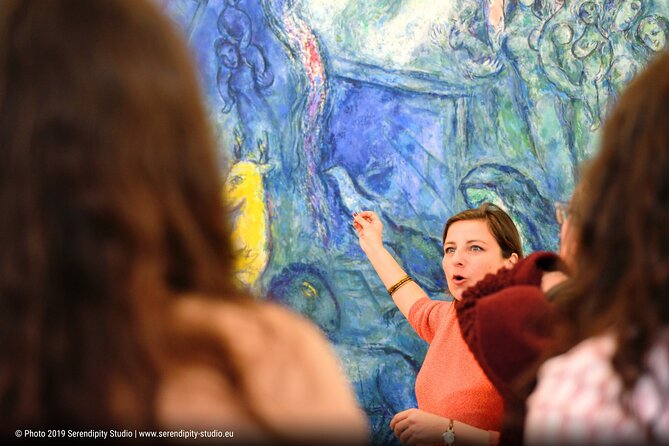
I’d book it if you want Chagall explained in a way that respects the emotion of the art, not just the dates and labels. The museum’s built-for-purpose focus on the Biblical Message series makes it a good match for guided interpretation, and Marina’s approach—connecting symbols and technique to Chagall as a person—seems like exactly what turns art viewing into understanding.
Skip it or consider a lighter plan if you’re the type who needs hours per room, or if you prefer to control every minute alone. The structure here is efficient, not endless.
If your goal is to get a meaningful art day in Nice without wasting time figuring out what to notice, this is a solid bet.
FAQ
How long is the Marc Chagall Museum visit?
The experience runs about 1 to 2 hours.
Is the tour offered in English?
Yes, the tour is offered in English.
Is this a private tour?
Yes. It’s private, and only your group participates.
Where does the tour start and end?
It starts at 36 Av. Dr Ménard, 06000 Nice, France, and ends back at the same meeting point.
Is museum admission included in the price?
The included details list an entrance fee, but one timing note also says admission ticket not included. It’s smart to confirm what your booking includes for museum entry.
Can I cancel for a full refund?
Yes. Free cancellation is available up to 24 hours in advance for a full refund. Canceling less than 24 hours before the start time isn’t refunded.