REVIEW · KRAKOW
Self-Guided Tour of Auschwitz-Birkenau Museum with Transportation
Book on Viator →Operated by Krakow Tours by KrakowDirect · Bookable on Viator
Auschwitz is heavy, but this plan keeps it organized. You’ll visit the Auschwitz-Birkenau Museum complex with round-trip transport from central Krakow and headset-style narration when you’re inside, letting you set your own pace without losing the plot. The stop at the lesser-known Judenrampe also adds context beyond the usual photo spots.
What I like most is the built-in value: skip-the-line entrance to Auschwitz I and Auschwitz II is included, plus a route guidebook and a documentary movie on the way. It’s an efficient way to see a lot without spending your day sorting out tickets and directions.
One consideration: with a late-afternoon start, your timing depends on museum entry windows and closing times. If you arrive before your timed entry or get shuffled around, you can end up with less time than you expected at Birkenau—so I’d plan to be flexible and confirm your entry time before you head inside.
In This Review
- Key Highlights at a Glance
- Price and Logistics: What You’re Really Paying For
- Meeting Point in Krakow: Start Smart, Start On Time
- Stop 1: Judenrampe Memorial Stop (Your First Context Point)
- Auschwitz I (Auschwitz Main Camp): Gate, Barracks, and the Cost of “Normal”
- Stop 2: Auschwitz II-Birkenau (Auschwitz II): The Largest Camp and the Forced Logic of Genocide
- The Self-Guided Part: Guidebook and Headsets, Not a Live Tour Guide Following You
- Transportation: The Hidden Benefit of Round-Trip Transfers
- What to Expect From the Timing (And How to Protect Your Time)
- Who This Tour Fits Best (And Who Should Look Elsewhere)
- Should You Book This Auschwitz-Birkenau Tour From Krakow?
- FAQ
- How long does the Auschwitz-Birkenau tour take?
- What time does the tour start in Krakow?
- Where do I meet the group in Krakow?
- Is admission included for Auschwitz I and Auschwitz II?
- Is there a live guide during the tour?
- What does the tour include besides tickets and transport?
- Can I cancel for a full refund?
Key Highlights at a Glance
- Skip-the-line tickets for both Auschwitz I and Auschwitz II (Birkenau)
- Round-trip transportation from central Krakow, ending back at the pickup point
- Judenrampe memorial stop between Auschwitz I and Auschwitz II
- Headset narration during the Auschwitz I and Birkenau sections, without needing to follow a live guide everywhere
- Max group size of 30, which stays more manageable for a site this intense
- Documentary movie on the ride to help you get oriented fast
Price and Logistics: What You’re Really Paying For
At $40.51 per person for about 7 hours, this doesn’t feel expensive—if you use what’s included. You’re getting:
- Round-trip transportation from Krakow (not a small detail, because getting to the camps is the hard part)
- Skip-the-line admission to Auschwitz I and Auschwitz II
- A guidebook in your language with the route and descriptions
- A documentary, The liberation of Auschwitz, on the way
That combination matters. Auschwitz-Birkenau isn’t a place where you want to waste time hunting for tickets, figuring out schedules, or trying to navigate the complex on your own. For many people, the real cost is mental energy, not just money.
Still, keep your expectations grounded. This is described as self-guided, which means you get structure (transport, tickets, a guidebook, and headset narration during key parts), but you’re not guaranteed unlimited time at every stop. A few practical questions can make a big difference:
- What time is your timed entry?
- How long do you realistically have at Birkenau that day?
- Where do you regroup for the shuttle back to Krakow?
If those answers are clear, this tour feels like a solid deal. If not, late-day logistics can steal time.
You can also read our reviews of more guided tours in Krakow

Meeting Point in Krakow: Start Smart, Start On Time
Your pickup starts at the Radisson Blu Hotel, Krakow at Floriana Straszewskiego 17, with the tour beginning at 2:30 pm. The end is back at the meeting point.
This is a straightforward location, but don’t treat “near public transportation” as a fallback plan. Show up early. Even if you’re not the one stressing, the day will run on a schedule, and the schedule matters more at Auschwitz than almost anywhere else.
If you’re traveling with carry-ons or bags, plan for a slow, serious day. You’ll want to stay calm, keep moving when prompted, and avoid being the person who delays the bus.
Stop 1: Judenrampe Memorial Stop (Your First Context Point)
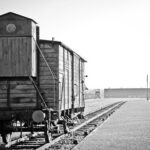
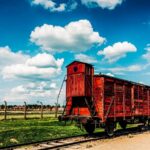
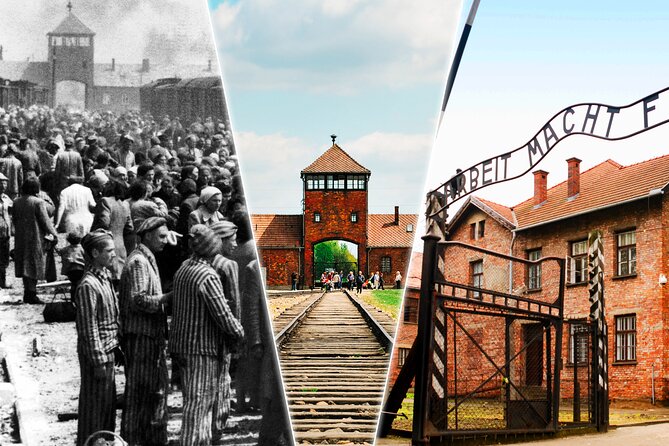
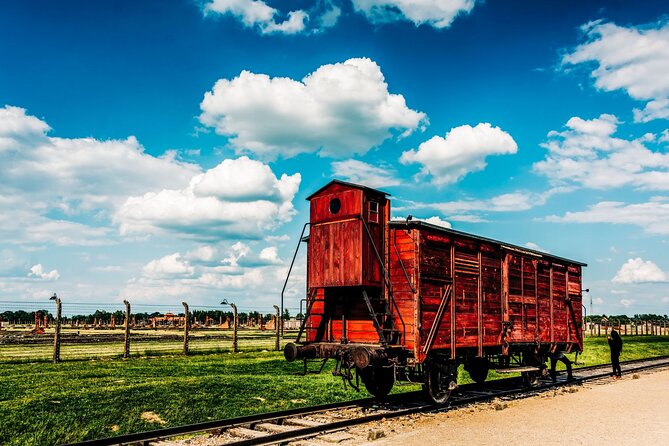
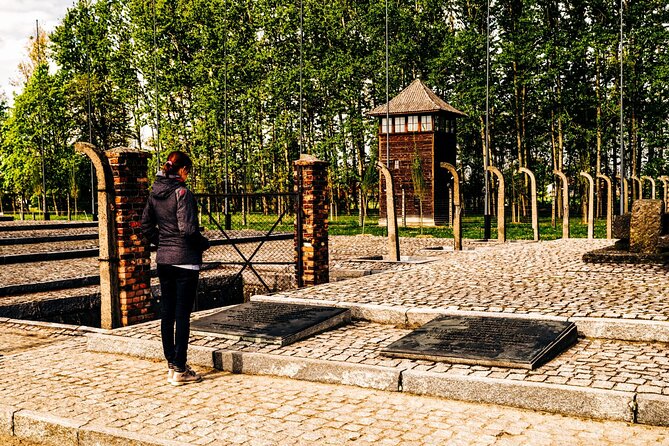
The tour’s first museum moment is the Judenrampe, a railway unloading platform used during the Holocaust between 1942 and 1944. It sat between Auschwitz I (the main camp) and Auschwitz II-Birkenau.
Today, it’s a memorial area with commemorative plaques. It’s also a good reality check: most visitors come expecting a single iconic image of Birkenau, but the Judenrampe shows how mass deportations worked in the wider machinery of the camp system.
Why I think this stop is useful:
- It gives you context before you’re overwhelmed by the sheer scale at Auschwitz I and Birkenau.
- It highlights that not everything important happened at one famous spot.
- It’s a quieter, less crowded starting point for absorbing what you’re about to see.
Timing here is about 30 minutes. That’s enough to read the plaques, take a breath, and get your bearings before the heavier Auschwitz I section.
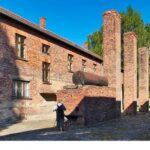
Auschwitz I (Auschwitz Main Camp): Gate, Barracks, and the Cost of “Normal”
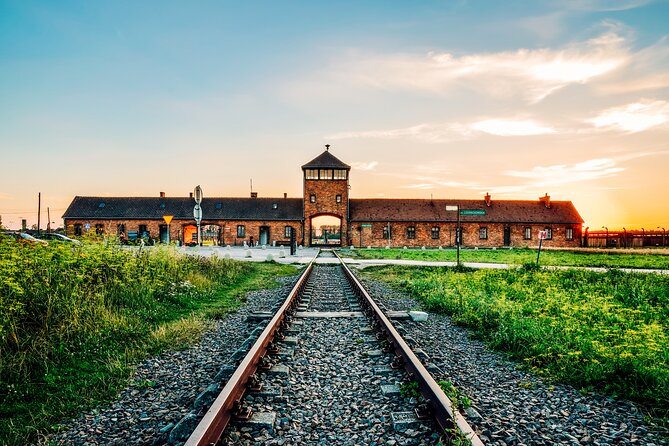
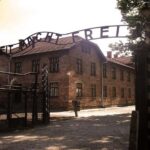
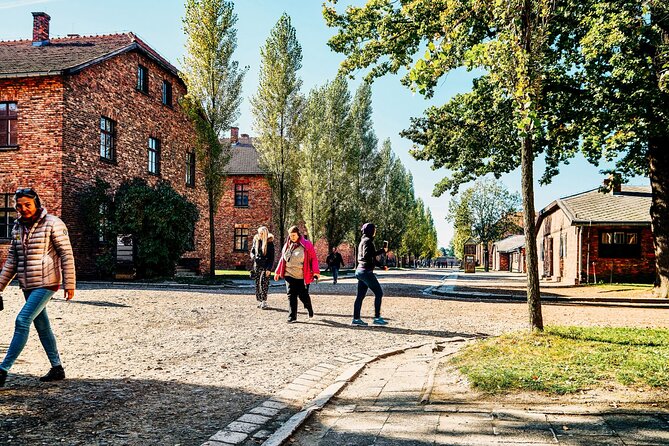
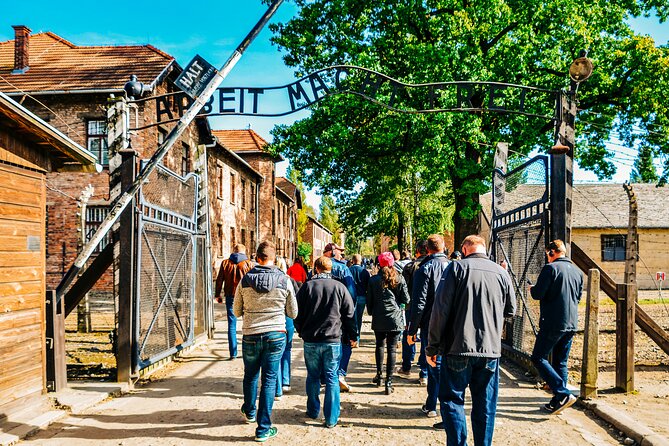
Auschwitz I is your main entry into the story. You’ll walk through the gate of Auschwitz I, passing under the sign Arbeit Macht Frei (Work Makes You Free). Expect this part to last about 2 hours, supported by headset narration so you can hear explanations clearly while you move through the exhibits.
What makes Auschwitz I different from Birkenau is that it feels like the start of the system—the early structure and the infrastructure that helped the Nazis expand and refine what they were doing. You’ll see features that visitors often describe as haunting because they don’t feel abstract. They are physical.
You’re likely to encounter:
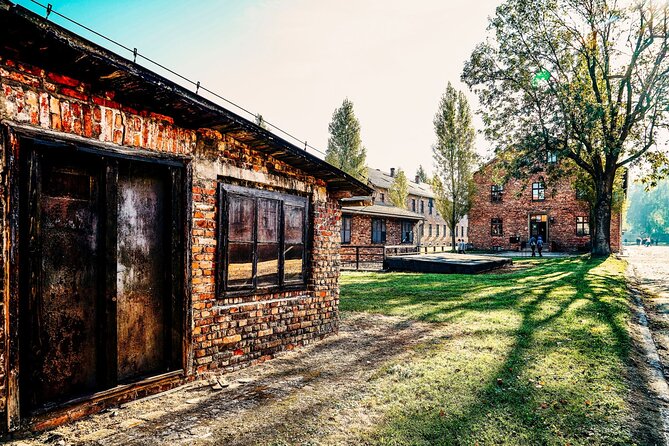
- Original wooden barracks
- Fortified walls and barbed wire fences
- Gas chambers and crematoria within the camp context
Important practical note: this part includes headset narration and a structured route, but you still get to set your own pacing inside. If you need silence, take it. If you want to spend extra time reading, you can—just be mindful of regroup times.
This stop is also where people tend to feel the pressure to “get it done.” Don’t. Auschwitz isn’t a checklist. I’d treat the first loop through the exhibits as a foundation, then use your headset breaks (and your time later) to focus on what hit you most.
A standard length estimate given for this stop is 1.5 hours, with the rest of the 2-hour block reflecting the flow through the camp and any time spent transitioning. Either way, don’t assume you’ll have the same freedom of pace as a normal museum.
Stop 2: Auschwitz II-Birkenau (Auschwitz II): The Largest Camp and the Forced Logic of Genocide
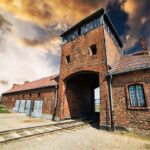
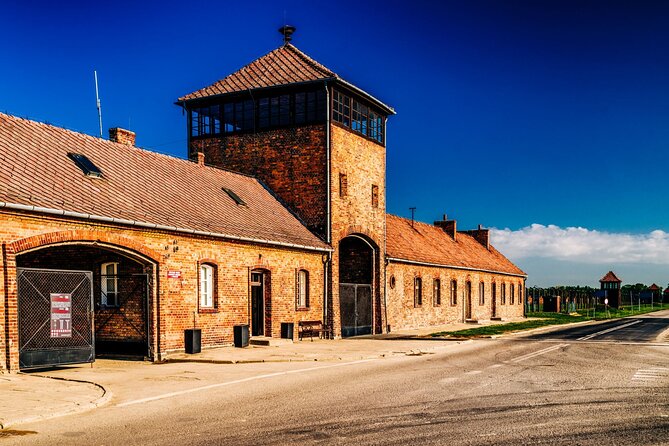
Birkenau is about 3 minutes away by transport from Auschwitz I. It’s the bigger camp—built under SS leadership with the purpose of making Europe Judenrein (free of Jews). The plan includes storytelling and narration again during this section, with the tour concluding around liberation and what happened after.
Birkenau is described as having the capacity to hold around 90,000 prisoners, and the narrative centers on:
- The brutal living conditions
- The cruel selection process
- Nazi medical experiments tied to doctors such as Josef Mengele
The liberation story closes the arc: on January 27, 1945, soldiers from the 60th Army of the First Ukrainian Front opened the gates of Auschwitz, leaving you with a clear sense that genocide is not only history—it’s a warning that must never repeat.
Timing here is about 30 minutes in the structured plan, though your real-world time can vary depending on entry windows and closing time. This is the part where a late start can bite.
A practical strategy:
- If you arrive and your timed entry is late, protect the time you do have at Birkenau by choosing what you’ll prioritize.
- Don’t try to read everything at once. Instead, pick a few areas that match your interests, then let the scale land on you.
Even with short time, Birkenau’s layout does something big to your understanding. The “why” and “how” can click faster here than at Auschwitz I, simply because the camp’s scale forces your brain to confront what industrialized cruelty looks like on the ground.
You can also read our reviews of more museum experiences in Krakow


The Self-Guided Part: Guidebook and Headsets, Not a Live Tour Guide Following You
This is a self-guided experience with structure. You’re not walking in blind.
What you can rely on:
- Skip-the-line entry helps you avoid the worst waiting lines
- A guidebook in your language provides route and descriptions
- Headset narration supports you during the Auschwitz I and Birkenau portions
What you should double-check:
- Before you leave the pickup area (or at the first check-in point you use), make sure you actually have the guidebook you were expecting.
- If anything feels unclear—especially around when you return to the bus—confirm fast. Don’t wait until you’re already near the end of the day.
One of the strongest things about this format is control. You’re not stuck in a rigid group tempo the whole time, and you can pace yourself as your emotional bandwidth allows. That’s a genuine value on a site like this.
Transportation: The Hidden Benefit of Round-Trip Transfers
Round-trip transportation is included, and for most people, that’s the practical win. Getting to the Auschwitz-Birkenau area from Krakow involves time, planning, and stress.
With this setup, you get:
- A clear start point (Radisson Blu Hotel)
- A scheduled pickup window
- A return to the same meeting place
And you also get one extra orientation tool: the documentary movie on the way, The liberation of Auschwitz, which can help you stop feeling like you’re arriving mid-story.
There’s one more human factor. On tough days, safe and smooth driving matters. In real life, transportation quality shapes how much energy you have for the camps. When the driver is calm and professional, you can arrive mentally ready instead of frazzled.
What to Expect From the Timing (And How to Protect Your Time)
This tour is approximately 7 hours with a start at 2:30 pm. The stop durations listed are short at each major location, especially at Birkenau.
So here’s my advice for managing expectations:
- Treat your visit as structured, not free-form. You’ll have “you can read” time, not “you can linger all day” time.
- Confirm the timed entry you’re assigned, so you’re not stuck waiting outside.
- Know that museum closing times matter. If Birkenau closes shortly after your arrival, you’ll feel it.
In short: the tour can go smoothly and still feel rushed if the timing windows don’t match your expectations. You can’t control that entirely—but you can reduce the risk by staying alert to when you’re actually allowed to enter each area.
Who This Tour Fits Best (And Who Should Look Elsewhere)
This experience suits you if:
- You want WWII-era history in a serious, organized format
- You like the idea of self-guided pacing but don’t want to manage logistics alone
- You value skip-the-line access and a simple Krakow pickup
- You’re comfortable using a guidebook and headsets rather than having a live guide constantly with you
You might want a different option if:
- You’re planning a tight schedule and can’t handle delays
- You need longer time in Birkenau to read and reflect deeply
- You prefer a fully guided experience where every timing detail is handled for you
Should You Book This Auschwitz-Birkenau Tour From Krakow?
I’d book it if you want the practical advantages—transportation, skip-the-line entry, and a clear structure—at a price that doesn’t require mental math. The Judenrampe stop is a smart bonus for anyone who’s tired of seeing only the most famous angles.
But book with your eyes open. Start at 2:30 pm, and your day at Birkenau may depend on timed entry and closing rules on that date. If you’re the type who hates rushing at museums, you should consider an option that gives more time at Birkenau.
If you choose this one, do two things and you’ll be glad you did:
- Arrive early at the pickup so you don’t lose time before the first entry window.
- Double-check when you can enter each site and when you must be back for the return.
For many people, that makes a hard day easier to manage—and that’s the kind of value you’ll actually feel.
FAQ
How long does the Auschwitz-Birkenau tour take?
The tour is listed as about 7 hours.
What time does the tour start in Krakow?
It starts at 2:30 pm.
Where do I meet the group in Krakow?
The meeting point is the Radisson Blu Hotel, Krakow, Floriana Straszewskiego 17.
Is admission included for Auschwitz I and Auschwitz II?
Yes. Skip-the-line admission tickets are included for both Auschwitz I and Auschwitz II.
Is there a live guide during the tour?
No live guide is listed as included. The itinerary describes headset-style narration during the museum sections, plus a guidebook in your language.
What does the tour include besides tickets and transport?
It includes round-trip transportation, a language guidebook with route and descriptions, and a documentary movie on the way: The liberation of Auschwitz.
Can I cancel for a full refund?
Yes. You can cancel up to 24 hours in advance for a full refund.