REVIEW · ATHENS
Best of Athens in One Day: Acropolis, Acropolis Museum & City Tour
Book on Viator →Operated by Greeking.me · Bookable on Viator
One day in Athens can still feel huge. I really like the way this tour is built around skip-the-line timing plus a guide who connects the monuments to what people actually believed and did, and I also like that you get a full block at the Acropolis Museum instead of rushing past it. The trade-off: it’s a walking day with no lunch included, and entrance tickets aren’t included in the base price.
This is a private, English-language tour that runs about 7 hours starting at 8:00 am from AcropoliAthens. You’ll use a mobile ticket, and you won’t have private transportation, so you’re moving on foot between major sights—smart for the city center, but plan on comfortable shoes and a steady pace.
You’ll cover the big hitters in one run: the Acropolis monuments, the museum galleries, then neighborhood walks through Plaka and Monastiraki, plus Syntagma Square, the National Garden, Panathenaic Stadium, and a final look toward the Temple of Olympian Zeus. If you have moderate mobility limits, the route will still likely work—but you should expect uphill bits on the Acropolis and long stretches of standing and walking.
In This Review
- Key things that make this tour worth your time
- A full-day Athens plan that works when you have limited time
- Acropolis Hill: Parthenon-area monuments with a guide’s map
- Acropolis Museum: the fastest way to make the stones make sense
- Plaka stroll and Roman Agora glimpses from the outside
- Monastiraki Square and the named landmarks you’ll actually remember
- Syntagma Square, Evzones timing, and a breather in the National Garden
- Panathenaic Stadium and the long final look toward Olympian Zeus
- Price and value: what you’re paying for at $493.96 per person
- Who this tour suits best
- Should you book this Best of Athens in One Day tour?
- FAQ
- Is this tour private?
- How long is the tour?
- What’s included in the price?
- Are entrance tickets included?
- Do I need private transportation?
- Where does the tour start and end?
- Is lunch included?
Key things that make this tour worth your time
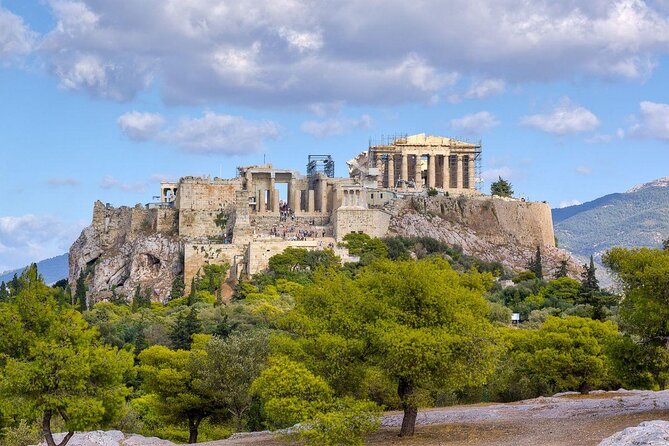
- Skip-the-line style planning for the Acropolis: you’ll arrive with a plan that’s meant to save time at the busiest points
- A licensed guide for myth to stone: you get interpretation while you’re actually looking at Parthenon-area landmarks
- Acropolis Museum right after the hill: you’ll see artifacts while the site stories are fresh
- Plaka and Monastiraki with named landmarks: Choragic Monument of Lysicrates, Tzistarakis Mosque, Hadrian’s Library, Pantanassa Church
- Syntagma Square plus the Evzones moment: you’ll be in position for the hourly changing of the guards
- Walking-first format: no private transport means you’ll spend more time on your feet, less time waiting
A full-day Athens plan that works when you have limited time

Athens is the kind of place where a half-day often turns into a sprint. This one-day tour is designed to stop that from happening by stacking the most meaningful sights in a logical order, starting early.
The format also helps with context. When you go up to the Acropolis first, then walk into the Acropolis Museum right afterward, everything starts clicking: the sculptures, the building parts, and the reasons those spaces mattered. It feels like you’re translating what you see instead of just collecting photos.
Because it’s private, your guide can pace you based on what you actually care about—architecture details, museum objects, or the urban history of central Athens. The downside is simple: since there’s no private transportation included, you’ll be walking for hours.
You can also read our reviews of more city tours in Athens



Acropolis Hill: Parthenon-area monuments with a guide’s map
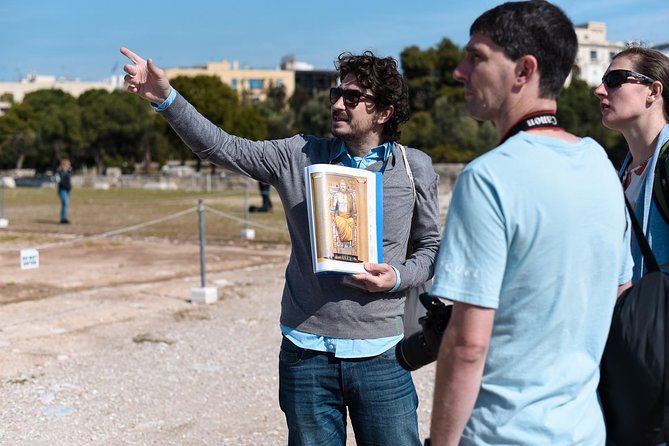
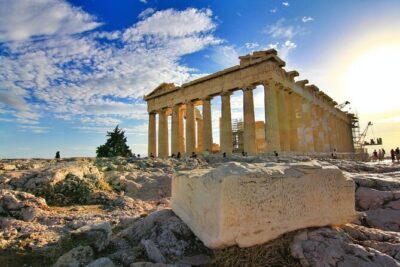
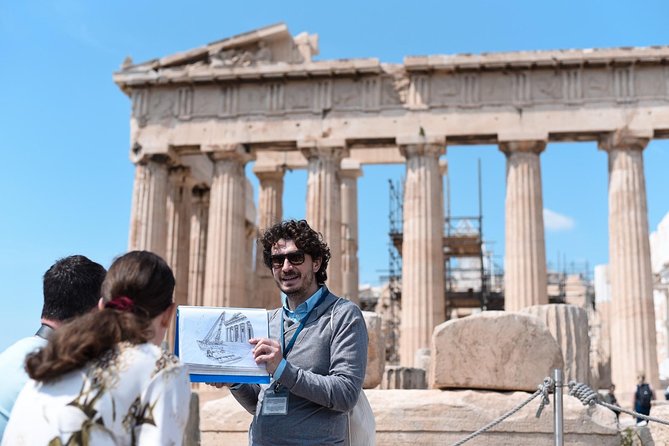
The Acropolis is not just one view—it’s a whole zone of monuments packed onto one sacred rock. You’ll start here with your licensed guide leading the way, which is valuable because the site is big, uneven, and easy to misread if you’re moving on your own.
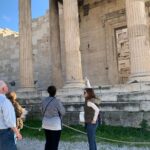
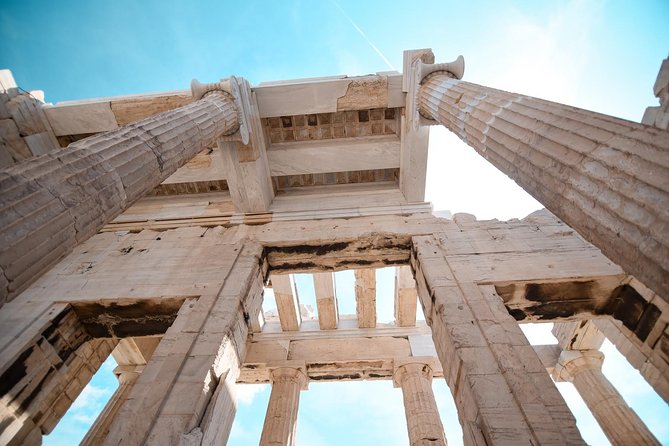
You’ll be oriented around the main showpieces: the Parthenon, the Temple of Nike, the Propylaea, and the Erechtheion. What I like about having a guide at this stage is that you’re not only looking at famous names—you’re getting explanations of how these structures fit together and what the myths and religious ideas meant for ancient Athenians.
There’s also a practical benefit: skip-the-line help is the kind of “boring” advantage that makes a real difference here. The Acropolis lines can eat your day, and skipping that time keeps your energy for the walk-and-look part that’s actually worth it.
Possible drawback: this is still a climb and a lot of standing. You’ll get the best experience if you’re comfortable with uneven ground and you’re willing to stop often for the guide’s story.
Acropolis Museum: the fastest way to make the stones make sense

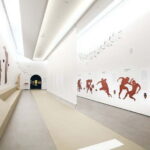
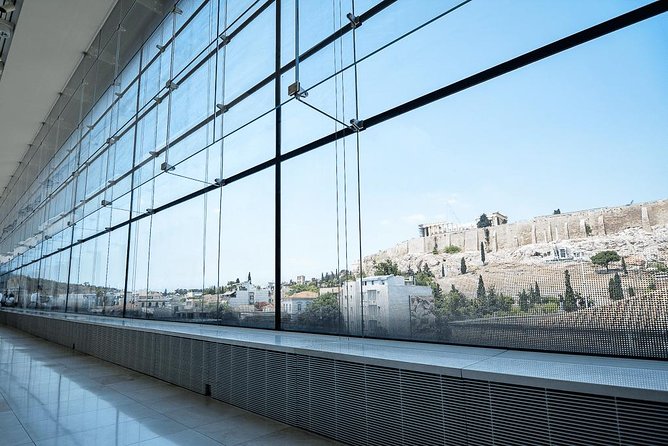
Right after the hill, you head to the Acropolis Museum. The big win here is timing. When you’ve just spent time on the site, the museum stops being abstract. You’re suddenly seeing the objects as pieces of a lived cultural world, not just museum inventory.
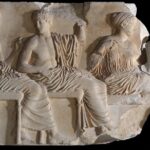
The museum visit runs about 1 hour 30 minutes, and you’ll spend that time with your guide interpreting what you see. The museum is known for exhibiting artifacts that are nearly 3,000 years old, and the guided approach helps you connect customs and daily life to the broader monument story.
I especially like how the museum tour can correct a common problem: people photograph the Acropolis, then forget what they actually looked at. A guided stop here turns it into a coherent narrative—architecture, sculpture, and meaning—while you still remember the site layout.
A small reality check: the museum is indoor, but it can still feel like a lot of “looking” in a concentrated time window. If you get tired standing, plan to take short pauses and don’t be shy about asking your guide to slow down.
Plaka stroll and Roman Agora glimpses from the outside

Once you leave the museum area, you head into Plaka, which is one of those neighborhoods where the streets feel slower and more human-scaled. This part works well after the museum because you’re shifting from interpretation mode to wandering mode.
You’ll stroll around the area and admire neoclassical buildings and monuments such as the Choragic Monument of Lysicrates. That’s a nice pairing: you went from museum artifacts to real neighborhood scenery where ancient references still show up in the streetscape.
Plaka is also a comfortable reset if you need a mental break from museums and major ruins. The vibe is easier, and you can get your bearings for the rest of the day.
Along the way, you’ll also have an outside view of the Roman Agora, built between 19 and 11 B.C. with connections to Julius Caesar and Augustus. Since you’re not going inside, think of this stop as orientation and atmosphere rather than a deep-ticket attraction.
Monastiraki Square and the named landmarks you’ll actually remember

After Plaka, you move toward Monastiraki Square, a central Athens crossroads famous for historic sites and a lively flea market atmosphere. Even if you’re not shopping, it’s a good place to see how the city feels in layers—old and modern rubbing shoulders.
This is one of those stops where a guide can help you spot what matters. You’ll pass by or look toward landmarks tied to Athens’ heritage, including the Tzistarakis Mosque, Hadrian’s Library, and the Pantanassa Church.
This part of the walk is useful for three reasons. First, it shows you the geography of the center. Second, it gives you a handful of specific places to anchor your memory. Third, it helps explain how different eras have left their mark in the same neighborhoods.
Potential drawback: Monastiraki can be crowded, and with a walking tour, it helps if your group is comfortable with crowds and slowing down for foot traffic.
You can also read our reviews of more museum experiences in Athens




Syntagma Square, Evzones timing, and a breather in the National Garden
Then it’s on to Syntagma Square. This is where Athens turns official and formal: the Greek Parliament building sits prominently, and there’s a fountain in the center that anchors the open space.
You’ll also have a chance to catch the changing of the presidential guards—the Evzones—dressed in traditional Greek uniform. The key detail for planning is that it happens every hour. If your timing lines up, it’s a memorable watch because it turns a normal square stop into something rhythmic and show-like.
Next, the tour takes you to the National Garden of Greece right next to the Parliament area. Even if you only spend a short stretch there, it’s a smart pause in an otherwise stone-and-street heavy day. You’ll breathe in the scent of many plant species and get a quick “downshift” after all the sightseeing.
This is also a good moment to check your energy and water levels. By the time you reach this section of the walk, you’ve already done major climbs and indoor time.
Panathenaic Stadium and the long final look toward Olympian Zeus
After the garden, you walk toward Panathenaic Stadium, the site where the first modern Olympic Games took place. It’s one of the few places in Athens where ancient prestige and modern sports history overlap clearly in a single stop.
Then you finish the tour looking toward the Temple of Olympian Zeus—colossal, unfinished in parts, and still visually commanding. Even without a deep ticket-based visit here, it’s a strong closing image because it connects the day’s story of major religious monuments with one of Athens’ grandest scale statements.
If you want to make this ending feel extra meaningful, keep an eye on proportions while you look. The temple’s scale is part of the lesson: it’s less about intricate detail and more about how huge ambition was expressed in stone.
Price and value: what you’re paying for at $493.96 per person
At $493.96 per person, this is not a bargain-basement option. But for Athens, the price starts to make sense when you break down what you’re buying.
You’re paying for a private 7-hour guided plan that includes all taxes and VAT, plus a licensed guide for both the Acropolis and the Acropolis Museum. Those two locations are the most time-sensitive and most explanation-intensive stops on the whole day. Having help at both places is often the difference between seeing monuments and understanding them.
You’re also paying for a structured approach to time at the Acropolis and a city walk that hits multiple neighborhoods. Skip-the-line support is available through pre-purchasing entrance tickets, and that’s a real cost-saving in stress even if the dollar math is separate.
What isn’t included is equally important. Entrance fees and lunch are not included, and there’s no private transportation. That means you’ll likely add ticket costs on top, and you’ll need to plan your own meal strategy.
So is it good value? For people who want maximum meaning in a single day—and who appreciate a guide’s storytelling while you’re standing in front of the monuments—it’s strong value. If you prefer DIY pace, or you already know the full historical context, you might not get as much from the guide time.
Who this tour suits best
This one-day Athens tour is best for you if you want:
- A “see and understand” day rather than a photo-only checklist
- A licensed guide for the Acropolis and museum, where context matters most
- Central-city walking that connects neighborhoods like Plaka and Monastiraki to formal sights like Syntagma
It’s also a good match if you travel as a small group and like the flexibility of a private format.
It may be less ideal if:
- You struggle with long walks and standing
- You need a built-in lunch stop with no effort on your part
- You’d rather pick tickets and move at your own pace without scheduling a guide around them
Should you book this Best of Athens in One Day tour?
Book it if you’re trying to make one day count and you like the idea of pairing the Acropolis with the Acropolis Museum back-to-back. That combination is the tour’s core strength: you’ll leave with a clearer picture of what you saw and why it mattered.
Also book it if you value having a guide during the moments that are hardest to DIY—navigating the Acropolis without wasting time, and turning museum objects into a story you can carry home.
If you’re unsure, treat it like this: if your ideal Athens day includes guided meaning as much as sightseeing, this is a smart choice. If you’d rather wander freely with minimal structure, you might get more satisfaction building your own route and managing tickets yourself.
FAQ
Is this tour private?
Yes. It’s a private tour/activity, so only your group participates.
How long is the tour?
The duration is listed as about 7 hours.
What’s included in the price?
The tour includes a 7-hour private guided experience with taxes and VAT. Guided visits to the Acropolis, Acropolis Museum, and city highlights are included.
Are entrance tickets included?
No. Entrance fees are not included. The tour notes that skip-the-line tickets can be pre-purchased for you.
Do I need private transportation?
No. Private transportation is not included, and it’s described as a walking tour.
Where does the tour start and end?
It starts at AcropoliAthens (117 42, Greece) and ends back at the same meeting point.
Is lunch included?
No. Lunch is not included, so you’ll need to plan your own meal.