REVIEW · ATHENS
Acropolis and Acropolis Museum (Small Group Afternoon Walking Tour)
Book on Viator →Operated by Mister Plato · Bookable on Viator
Athens rewards the prepared visitor, and this tour helps you get there fast. I love the museum-first plan because it gives you context before you climb, and I love the small group size that makes it easy to hear your guide. The one thing to watch is that the big sights still involve walking and stairs, so bring grippy shoes and take it steady.
The flow is simple and smart: you start at the Acropolis Museum, then you head up to the Acropolis for the key outdoor stops. The afternoon timing (start time 4:00 pm) also tends to mean kinder light and fewer crowds than mornings, so you can focus on photos and the details your guide points out.
You’ll get mobile tickets on your phone, and you’ll skip the line with the guide’s help. Entrance fees are not included in the base price, and you pay them in cash to the guide: €30 for the Acropolis and €20 for the Acropolis Museum (total €50 per person).
In This Review
- Key highlights worth planning for
- A 4 pm start that helps Athens feel human
- Meeting point, walking pace, and what to wear
- Stop 1: Acropolis Museum first, where the Parthenon starts to click
- Stop 2: The south slope walk—Dionysus, Asclepius, Athena Nike, and Mars Hill
- The top payoff: Parthenon and Erectheion, with real time for pictures
- Price and tickets: the math that actually matters
- What kind of guide experience you can expect
- Small-group size: why 10 travelers changes everything
- Who should book this afternoon walk
- Should you book it?
- FAQ
- How long is the Acropolis and Acropolis Museum small group afternoon walking tour?
- What time does the tour start?
- Where is the meeting point?
- Is this a small group tour?
- What’s included in the price?
- Are entrance tickets included?
- What about children and teens?
- Do I need a ticket for my phone?
- Is pick-up or drop-off included?
- What are the cancellation rules?
Key highlights worth planning for
- Museum models and sculpture details before the climb, so the Parthenon makes instant sense
- Traces of color you can still see on ancient stone, right where your brain expects them
- A south-slope walk with real landmarks, including the theater of Dionysus and Mars Hill
- Temple-and-theater photo stops that don’t feel rushed, even with a 3+ hour schedule
- A top-of-site finish at the Parthenon and Erectheion with time for walking around
- Skip-the-line service plus a group capped at 10 for better pacing
A 4 pm start that helps Athens feel human
This is an afternoon tour, starting at 4:00 pm. That matters because Athens heat can be brutal earlier in the day, and late-day lighting makes outdoor stone look extra crisp. Your guide also has room to slow down, which helps if you’re moving at a careful pace or just don’t want to rush your photos.
The tour is designed to avoid the typical day-trip chaos. The total duration is listed at about 3 hours 15 minutes, but the walking portion for the Acropolis area is often kept under 2 hours. Translation: you’re still on your feet, but you’re not doing a full-day hike.
One more practical win: the group limit is 10 travelers. In Athens, that size is a big difference. It’s the difference between hearing every explanation and constantly craning your neck to catch up.
You can also read our reviews of more walking tours in Athens



Meeting point, walking pace, and what to wear

You meet at Makrigianni 4, Athina 117 42. The end point is at AcropoliAthens 117 42 (near the Acropolis area). The meeting location is near public transportation, which is handy if you’re already in the city center and don’t want to deal with cabs.
Your physical requirement is listed as moderate fitness. That fits the reality of the Acropolis: uneven stone, stairs, and slopes. Even if you consider yourself “fine on your feet,” I recommend shoes with traction. Several guides on this route are also attentive to slick marble, especially when humidity or rain makes surfaces a little risky.
A simple kit makes this smoother:
- Comfortable walking shoes with grip
- Sun protection (even in the afternoon)
- A light layer if the evening breeze kicks in
Stop 1: Acropolis Museum first, where the Parthenon starts to click
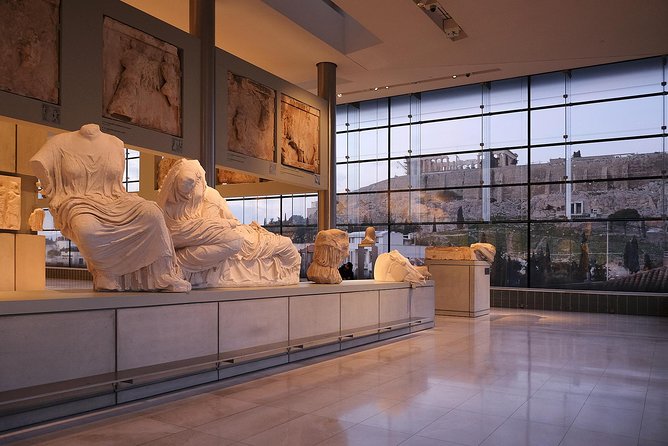
The tour begins at the Acropolis Museum, and I think this is the move that makes the whole day feel coherent. If you arrive at the Acropolis first, your eyes see big forms but your brain misses the storyline. Museum first fixes that.
You’ll walk over to the museum and also look at ancient neighborhood remains that sit underneath the building area. It’s a reminder that Athens wasn’t just a “classical ruins city.” It was a lived-in place, buried and re-discovered over time.
Inside, the visit is paced to build understanding in layers:
- You start with models of the Acropolis and ancient Athens, which helps you understand where everything sits.
- You then focus on important finds from the slopes of the Acropolis, so you get a sense of what was removed, preserved, and studied.
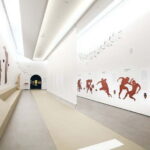
- On the first floor, you stand in front of sculptures from the first Parthenon (dated to the 6th century B.C.). One detail to watch for: your guide points out traces of colors that can still be seen on the stone. That’s a quick reality check—these monuments weren’t all gray marble.
- You move through archaic statues that once decorated the top of the Acropolis, including the calfbearer and the child of Kritias.
- Next come the Caryatids (the maidens from the Erectheion), which leads naturally into how Greek sculpture evolved into its 5th-century B.C. golden age.
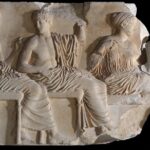
Then you head to the third floor for the Parthenon Gallery. This is where myths and the overall arrangement of the room help you connect what you’re seeing to the larger design. Your guide explains the main concept and how the sculptures relate to the narrative.
Time on this stop is about 1 hour 30 minutes, and that feels about right. You’re not standing in one room for ages, but you also don’t skip the parts that make the Parthenon meaningful.
Potential drawback: if you love reading on your own at a slow pace, the museum portion may feel timed. The good news is that a small group and an expert guide help the time feel purposeful rather than rushed.
Stop 2: The south slope walk—Dionysus, Asclepius, Athena Nike, and Mars Hill
After the museum, you walk with your guide along the south slope of the Acropolis. This section is special because it’s not just “walk to the top.” You’re going landmark to landmark, and your guide threads the stories together.
Here are the key outdoor stops you can expect:
- Dionysos Theater, one of the oldest theaters in Greece. Even if you don’t know your theater history, your eyes can follow the shape and the scale.
- The Sanctuary of Asclepios, tied to medicine. It helps balance the religious power of the Acropolis with a very human theme: health and healing.
- The delicate Temple of Athena Nike, which is easy to overlook if you’re just sprinting toward the Parthenon. Your guide slows you down so you notice it.
- The funeral monument of Philopappus, which adds another “layer of Athens” feeling—this wasn’t only about the classical era.
- The Odeon of Herodes, where concerts still take place. It’s a rare moment where ancient stone shows up in modern life.
- Mars Hill, where St Paul spoke of the unknown God. This gives you a bridge between ancient Greece and the later religious history that also shaped Athens.
Along the way, there are chances to pause for photos and quick looks. And because you’re not starting at the steepest point, you’re likely to feel more steady than if you tackle everything straight from the bottom.
The outdoor walking portion is listed at around 1 hour 45 minutes. In practice, the pacing depends on the group and the conditions, but the structure is clear: you’re moving, stopping, and learning without feeling dragged.
The top payoff: Parthenon and Erectheion, with real time for pictures
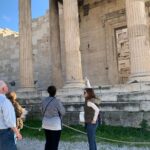
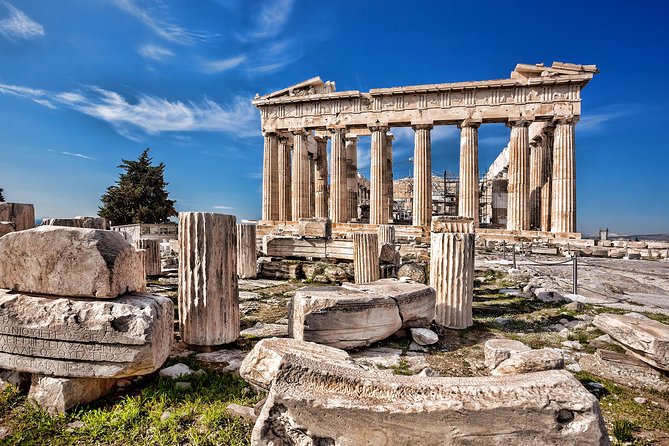
Once you reach the top, the tour gets satisfyingly visual. You’ll pass through the monumental gate called the Propylaea, then your attention lands where it should: the Parthenon and the Erectheion.
The Parthenon is the big moment, but what I love about the way this tour approaches it is that you don’t just stare. Your guide’s explanations connect design, sculpture, and myth, so you’re not seeing a poster-perfect façade—you’re seeing a whole system of meaning.
Then you get to the Erectheion, where the Caryatids are linked back to what you saw in the museum. That “mirror effect” is one reason museum-first works so well: you’re confirming details with your eyes in real space.
The route also builds in time for photos and walking around. That matters because the best photos come from choosing your angle and stepping back—not from clicking quickly while your group keeps moving.
Reality check: the top is windy and the stone can be uneven. Don’t wear slippery soles, and don’t count on shade. Bring a hat if it’s sunny, even late-day.
You can also read our reviews of more museum experiences in Athens



Price and tickets: the math that actually matters
The base price is $61.47 per person and includes a licensed guide plus skip-the-line service. That’s the part you’re paying for directly: someone who can translate what you see and help you avoid the long waits.
Then there are entrance fees, which are not included:
- Acropolis entrance: €30 per person
- Acropolis Museum entrance: €20 per person
Total: €50 per person, purchased in cash from the guide.
That “cash from the guide” detail is important for planning. If you don’t want to carry cash, or you’re unprepared with euros, this could be annoying. But if you plan ahead, it’s straightforward.
Is the total value fair? For many visitors, yes—mainly because the museum portion gives context that you simply can’t get from signage. And the skip-the-line help matters at the Acropolis, where delays can eat your afternoon fast.
Also, this tour runs in English, and it’s set up for an all-ages experience with discounted tickets for children. Persons under 18 are entitled to a free entrance ticket, but they must present an ID at the entrance.
What kind of guide experience you can expect
One reason this tour gets such high marks is the guide style. The best comments are about clarity and pacing, with lots of attention to viewpoints and how to interpret what’s right in front of you.
You may meet guides such as Nikos (and you may see variations of similar names in the guide team). In any case, the pattern is consistent: explanations are detailed, and the guide helps the landmarks feel connected instead of separate.
This is the kind of tour where your guide also helps you manage the physical side. You’re not just given a route—you’re guided through it, including where to slow down, where to look closely, and where the best photo angles are.
If you’re visiting with kids or older adults, the small-group format helps a lot. There are reviews mentioning the route working well even for travelers in their 70s, largely because the pacing can stay gentle and flexible.
Small-group size: why 10 travelers changes everything
With a maximum of 10 travelers, you typically get three benefits:
- You’re less likely to lose the guide in crowds.
- You’re more likely to hear explanations clearly.
- You can pause for questions without derailing the whole group.
That makes a difference at the Acropolis Museum, where rooms can feel tight and attention spans get stretched. It also makes a difference on the outdoor slopes, where wind and elevation can make communication harder.
If you like to ask questions (and you should), this setup is ideal.
Who should book this afternoon walk
This tour is a great fit if you want:
- The Acropolis experience, but with better understanding than you’d get from self-guided wandering
- A museum-first plan that makes sculpture and myth easier to follow
- Classic photo stops with someone helping you find the good angles
- A pace that’s not a full-day grind
It’s also a good choice if you’re not trying to do everything in one day. The total time is long enough to matter, but short enough that you can still enjoy the rest of Athens afterward.
What might not be ideal:
- If you want a totally independent visit with no guidance at all, you may feel the guide portion limits your freedom.
- If you hate stairs and uneven stone, you might be happier with a different approach to the Acropolis that reduces walking. This route is manageable for many, but it’s still the Acropolis.
Should you book it?
I’d book this tour if you want the Acropolis to make sense. The museum-first strategy alone is worth it, because it turns the Parthenon from a big sight into a story you can actually read with your eyes.
Also, the timing is smart. Starting at 4:00 pm often means easier conditions for walking and better light for photos.
The main reason to think twice is the add-on cost of entrance tickets (€50 total) and the fact that they’re purchased in cash from the guide. If you’re comfortable with that, this is a strong value for the amount of meaning you’ll get in about three hours.
FAQ
How long is the Acropolis and Acropolis Museum small group afternoon walking tour?
The tour lasts about 3 hours 15 minutes (approx.).
What time does the tour start?
The start time is 4:00 pm.
Where is the meeting point?
Meet at Makrigianni 4, Athina 117 42, Greece.
Is this a small group tour?
Yes. The tour has a maximum of 10 travelers.
What’s included in the price?
You get a licensed tour guide and skip-the-line service.
Are entrance tickets included?
No. Entrance fees are not included. You pay cash to the guide for:
- €30 for the Acropolis
- €20 for the Acropolis Museum
Total: €50 per person.
What about children and teens?
Persons under 18 are entitled to a free entrance ticket, but they must present an ID at the entrance.
Do I need a ticket for my phone?
You’ll receive a mobile ticket (downloadable tickets are provided for mobile phones).
Is pick-up or drop-off included?
No pick-up and drop-off service is included.
What are the cancellation rules?
There’s free cancellation if you cancel up to 24 hours in advance for a full refund.