REVIEW · ATHENS
Athens City, Acropolis and Museum Tour with Entry Tickets
Book on GetYourGuide →Operated by G.O.TOURS · Bookable on GetYourGuide
Athens can feel like a blur until you get the big story in order. This tour strings together Panathenaic Stadium, the Acropolis ruins, and the Acropolis Museum so you see how modern Olympic glory connects back to ancient Greece. I like that it’s built for limited time, with a tight route and guided explanations that help you read what you’re looking at, not just walk past it.
Two things I really appreciate: first, you get a coach ride that covers key city sights, including Syntagma Square and the passing landmarks around central Athens. Second, you’re not left guessing at the top—once you reach the Acropolis, you cover the major monuments (Propylaea, Temple of Athena Nike, Parthenon) and then go straight to the museum to make the stones make sense. One consideration: the Acropolis involves walking and there can be stairs and uneven footing, so if mobility is a concern, you’ll want to plan for alternate routes with your guide.
In This Review
- Key Takeaways Before You Go
- Athens in Four Hours: How This Tour Fits the Big Hits
- Panathenaic Stadium and the Road to the Acropolis
- Syntagma Square Stops: Parliament, Memorial, and Grand Institutions
- Temple of Olympian Zeus to Hadrian’s Arch: Reading the City From the Coach
- Acropolis Highlights: Propylaea, Athena Nike, and the Parthenon
- Acropolis Museum: Making the Stones Make Sense
- Price and What You Actually Get for $129
- Language, Guide Style, and the Small Details That Matter
- Who This Tour Suits Best (and Who Should Skip It)
- Should You Book This Athens City, Acropolis, and Museum Tour?
- FAQ
- How long is the Athens City, Acropolis and Museum Tour?
- What sights are included in this tour?
- Is hotel pick-up included?
- Will I be taken back to my hotel after the tour?
- Do I get entry tickets?
- What languages are the live guides?
- Can the order of stops change?
- Is the Acropolis easy to walk?
- What is the cancellation and payment policy?
Key Takeaways Before You Go

- Panathenaic Stadium takes you back to the modern Olympics origin point in a way a photo never does
- Acropolis Museum helps you connect ruins to artifacts, fast
- Coach + walking balance keeps the route efficient for a half-day
- Monuments in sequence makes it easier to understand how the Acropolis was organized
- Syntagma Square sights add the Athens “now” layer alongside the ancient stuff
Athens in Four Hours: How This Tour Fits the Big Hits

This is the kind of Athens tour that respects your schedule. You’re looking at a 4–5 hour experience that combines city highlights with the Acropolis and then finishes at the Acropolis Museum. That last part matters more than people think. If you do only the ruins, you often end up staring at columns and assuming you’ll somehow figure it all out later.
With this format, you get guided context before and after you see the monuments. The coach tour gives you geographic and historical anchors—so when the bus drops you near the Acropolis, you understand what you’re standing above. Then the museum ties the visuals together with artifacts, reconstructions, and explanations from the guide.
The group timing is compact. You won’t have hours to linger at one spot. If you love deep, slow museum wandering, you may want extra time on your own. If you want the main story and the best viewpoints without turning your day into a marathon, this is a smart fit.
A few more Athens tours and experiences worth a look


Panathenaic Stadium and the Road to the Acropolis
The day often starts with the Panathenaic Stadium—famous as the site of the first modern Olympic Games. Even if you’ve seen it in images, being there helps you understand why this venue is such a big deal. It’s not just a stadium; it’s a symbol of how Athens repackages ancient greatness for modern ceremonies.
From there, you move through central Athens by air-conditioned coach. That matters in summer and shoulder seasons, when walking between stops can turn into a heat test. The route is designed to give you a “view corridor” of the city as you travel—so you’re not stuck only looking out a window without substance.
As you pass major landmarks, your guide’s job is to connect the dots. You’ll hear about the way Athens evolved from ancient power centers to modern political and cultural ones. That makes the next phase—heading toward the Acropolis—feel less like a random climb and more like arriving at a planned world.
Syntagma Square Stops: Parliament, Memorial, and Grand Institutions
A big reason to do a guided Athens route is that central landmarks can look similar from street level unless someone points out what you’re seeing. Syntagma Square is one of those places. It’s where modern Athens shows itself—government buildings, public space, and the feeling that the city’s everyday life happens in the open.
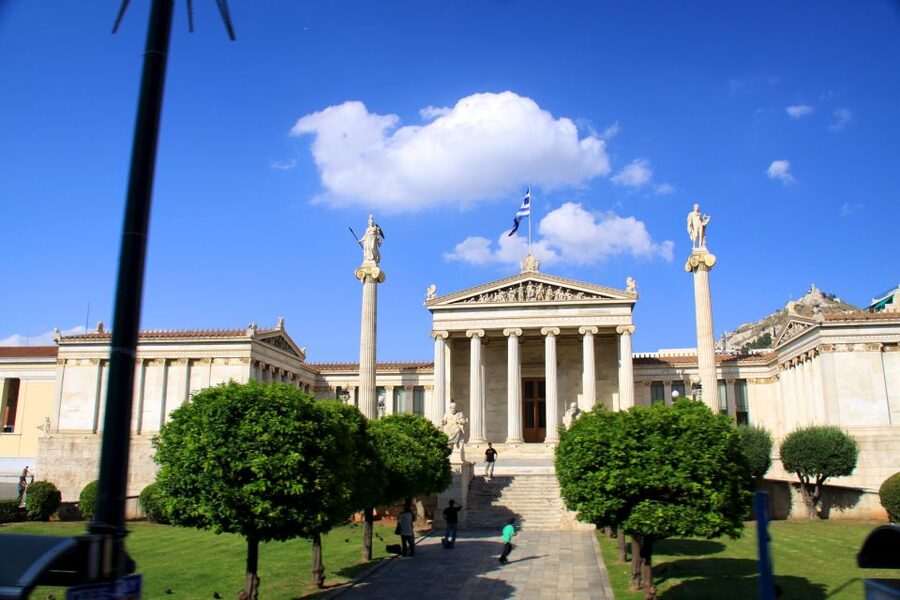
On this tour, you’ll see the Greek Parliament building and the Memorial to the Unknown Soldier. You’ll also admire the older institutional architecture around the square, including the old Academy, Athens University, and the National Library. Those buildings aren’t just “nice facades.” They explain Athens’ role as a modern capital that still borrows its visual language from the classical world.
This section works well because it gives you a breath before the Acropolis climb. You get the contrast: political Athens in the foreground, ancient Athens looming in the background. You’ll likely find it easier to enjoy the ruins afterward because your brain isn’t trying to switch gears instantly.
Temple of Olympian Zeus to Hadrian’s Arch: Reading the City From the Coach

Another practical win is that you pass the Temple of Olympian Zeus and Hadrian’s Arch. Both are eye-catching, but the real value is context—your guide frames why these monuments matter and how they fit into Athens’ longer timeline.
You’re not stopping for a long walk here (this is an efficient half-day route), but you’ll still get the key visual impressions: the scale of the Temple of Olympian Zeus and the ceremonial feel of Hadrian’s Arch. In many self-guided days, people rush through these sights without learning what to notice.
On a coach, the tempo is different. It’s more about getting a sense of the city layout and making the future stops feel logical. If you use that time well—listening for the connections—you’ll feel more oriented when the tour shifts from “passing views” to “climbing and looking up.”
Acropolis Highlights: Propylaea, Athena Nike, and the Parthenon
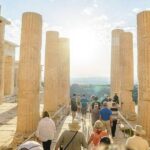
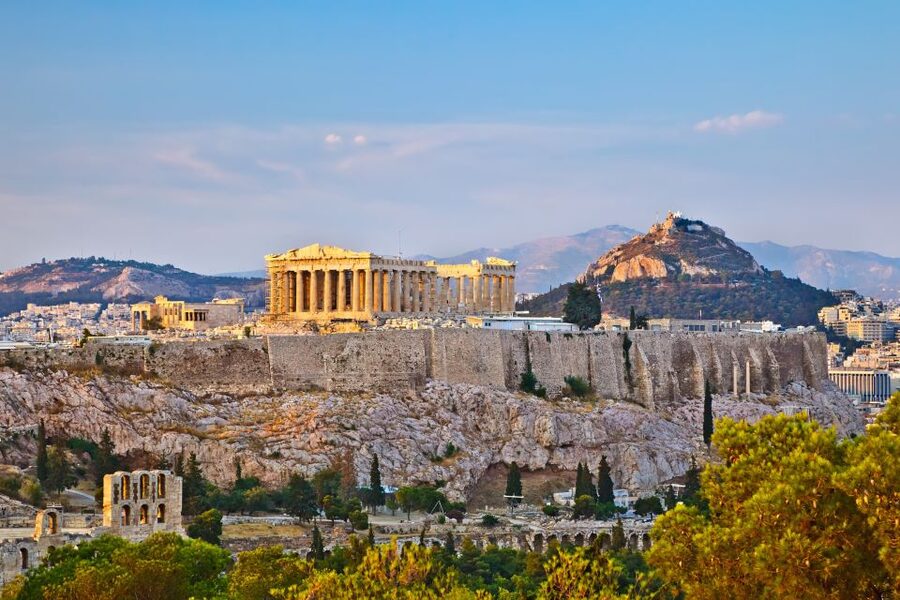
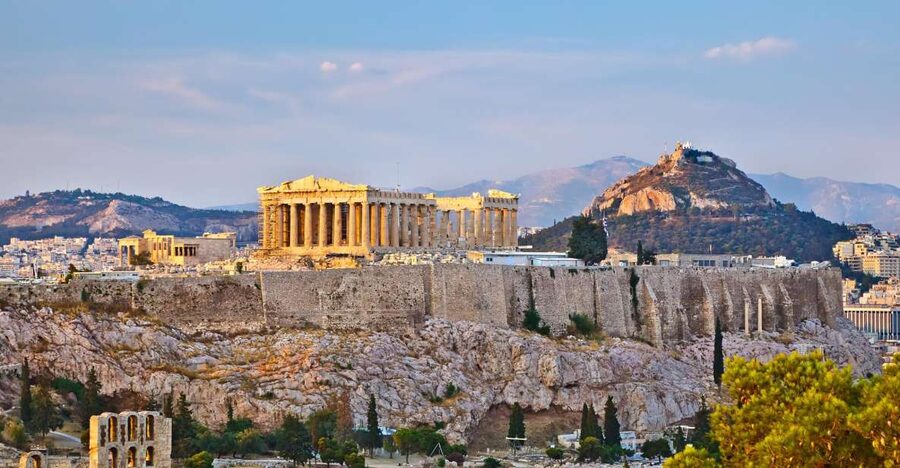
The Acropolis is the main event, and this tour approaches it with a clear sequence. You’ll explore the remains of the Acropolis and focus on the standout structures that most people come for: the monumental gate of the Propylaea, the Temple of Athena Nike, and the Parthenon.
What I like about seeing these in order is that the Acropolis starts to feel like a designed experience, not a random pile of ruins. The Propylaea is about entry and transition—how you move into a sacred space. The Temple of Athena Nike connects worship to victory and identity. Then the Parthenon becomes the centerpiece you can understand more clearly once the guide has put it into words.
One consideration: the Acropolis involves walking over uneven surfaces, and there can be stairs depending on where you enter and which pathways are open. In one of the past experiences I reviewed, someone with a walking issue was initially told they needed to climb stairs, only to learn later there was a winding path option. That’s a good reminder for you: if mobility is limited, speak up early and ask what route is possible at the moment you arrive.
If you do take a slower pace, don’t try to “just keep up” blindly. The guide’s job is to explain and coordinate, and a quick check can save you stress once you’re on site.
You can also read our reviews of more city tours in Athens



Acropolis Museum: Making the Stones Make Sense
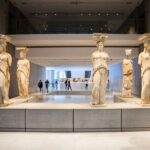
The Acropolis Museum is where the tour often becomes more than sightseeing. Instead of seeing ruins as isolated structures, you get the chance to connect them with the story of what was here and why it mattered.
You’ll learn more about the history of the city at the Acropolis Museum, which is described as state-of-the-art. Even if you’re not a hardcore art buff, museums help you notice details: what sculptures represent, what materials were used, and how the Acropolis fit into the life of Athens.
One practical note: due to visitor time restrictions at the museum, the order of the program may be changed. In other words, you might not always go to the museum last, depending on access rules. That’s not a dealbreaker—it’s normal for busy sites—but it’s good to expect a possible rearrangement so you don’t feel thrown off if your schedule shifts by a bit.
If you want the best value from your limited time, the museum is where you should focus your attention. Spend your effort on the pieces your guide points out. That turns a “quick visit” into the part of the day that actually upgrades your understanding.
Price and What You Actually Get for $129
At $129 per person for a 4–5 hour guided tour with entry tickets and transportation, the cost can feel like a lot at first glance. But once you break it down, it looks more reasonable.
Here’s what you’re paying for:
- A live guide in Italian, French, or English
- Entrance fees for the sites included
- Transportation by luxury air-conditioned coach
- Pick-up service from most hotels in Athens
- A route that covers multiple major monuments and museum time without you having to plan every turn
If you were to DIY this day, you’d still spend time organizing transit, paying individual entry fees, and figuring out the best sequence for your energy level. The guide’s value is in prioritizing the most important parts and explaining what you’re seeing in a way that’s hard to reproduce from signage.
That said, this isn’t a “buy it and stop thinking” tour. If you hate group pacing, or you want to linger for long periods inside the museum, you might feel slightly rushed. If you’re the type who likes seeing the highlights and then enjoying a slower follow-up on your own, this price is easier to justify.
Language, Guide Style, and the Small Details That Matter
The tour runs with live tour guides in Italian, French, and English, so you can match the day to your comfort level. In one highlight from the experiences I’ve seen, a guide named Sopfia was described as excellent—professional and charismatic—which is exactly the kind of guide you want for a half-day sprint through big sites.
A good guide makes the difference between:
- looking at monuments, and
- understanding why those monuments look the way they do
On this tour, you’ll have multiple “stop-and-explain” moments: stadium context, central Athens institutions, and then the Acropolis sequence. Those are the moments where listening matters. If you tune in during the coach ride and early site explanations, your later time on the Parthenon and in the museum can feel more rewarding.
Who This Tour Suits Best (and Who Should Skip It)
This tour is a good match if you:
- have limited time in Athens and want major Acropolis sights plus the museum
- like guided context more than wandering with guesswork
- prefer coach transportation between central stops
- want a structured half-day that still includes the important “now vs then” contrast of Athens
You might want to skip or reconsider if you:
- need long on-site breaks to recharge and don’t do well with group timing
- want to experience the Acropolis and museum at a very slow pace
- have significant mobility constraints without flexibility, since the Acropolis can involve stairs and uneven ground
If you’re somewhere in the middle, you can still make it work by being honest about your pace and asking about routes as you arrive.
Should You Book This Athens City, Acropolis, and Museum Tour?
I’d book this tour if you want an efficient Athens day that connects the city’s layers—modern political Athens at Syntagma Square, modern Olympic symbolism at the Panathenaic Stadium, and the ancient core at the Acropolis. The biggest value is the pairing of ruins plus Acropolis Museum, because it turns “I saw it” into “I get it.”
I wouldn’t book it if your top priority is unhurried, independent exploration with lots of free time to linger. For that style, you’d likely want a less structured plan.
If you fit the first group—short on time, open to guided pacing—this tour offers solid value for your money and a clear route that hits the highlights without turning your day into chaos.
FAQ
How long is the Athens City, Acropolis and Museum Tour?
The duration is typically 4 to 5 hours.
What sights are included in this tour?
You’ll visit Panathenaic Stadium, explore Acropolis monuments (including Propylaea, Temple of Athena Nike, and the Parthenon), and see highlights at the Acropolis Museum. The tour also includes city center sights around Syntagma Square and passes major landmarks such as Temple of Olympian Zeus and Hadrian’s Arch.
Is hotel pick-up included?
Yes. Pick-up is offered from most hotels in Athens.
Will I be taken back to my hotel after the tour?
If you’re staying at a hotel on the coast, you’ll be transferred back using the Cape Sounion tour bus. For other hotels, the tour’s pick-up service covers the transfer arrangement as provided for your booking.
Do I get entry tickets?
Yes. Entrance fees are included.
What languages are the live guides?
The live tour guide is available in Italian, French, and English.
Can the order of stops change?
Yes. Due to visitor time restrictions at the Acropolis Museum, the order of the program may change.
Is the Acropolis easy to walk?
The tour involves walking at the Acropolis. There can be stairs and different paths depending on access at the time, so if you have walking concerns, it’s best to ask the guide about a suitable route when you arrive.
What is the cancellation and payment policy?
You can cancel up to 24 hours in advance for a full refund. There is also a reserve now & pay later option where you can book without paying today.