REVIEW · MEXICO CITY
Tour Museum of Anthropology a trip to the past-Small groups
Book on Viator →Operated by Educando con Cultura · Bookable on Viator
A museum this big can make your head spin fast. This small-group tour puts the National Museum of Anthropology into a clear timeline, with guided stops at the objects that actually explain the big ideas behind pre-Hispanic Mexico.
I like the 3-hour focus: you get enough structure to understand what you’re seeing, not just a long walk with lots of Spanish plaques. The guide-led pacing also makes the museum feel manageable.
What really makes this tour worth it is the way it turns famous artifacts into something you can follow. Guides like Jorge and Delta use questions, maps, and repeating symbols so the tour starts making sense from the first rooms and keeps building.
One thing to consider: you only see a slice of the collection. The museum is huge, and if you want to linger at everything afterward, your tour time won’t cover it.
In This Review
- Key things you should know before you go
- Why the National Museum of Anthropology makes sense in only 3 hours
- VIP-style access and what small-group size changes for you
- How the tour uses a start-and-return method for symbols
- The artifacts that usually become your mental anchors
- Teotihuacan, Maya, Aztec, and why the guide connects the regions
- English support in a museum that is mostly Spanish
- Timing, crowds, and why your start time can change everything
- Price and value: $98.57 for admission plus a real guide
- Who this tour fits best (and who might not need it)
- A quick note on tickets and avoiding day-of stress
- Should you book the Museum of Anthropology: a trip to the past?
- FAQ
- Where does the tour start and end?
- How long is the tour?
- Is the tour offered in English?
- What’s included in the price?
- What is the group size limit?
- Is free cancellation available?
Key things you should know before you go
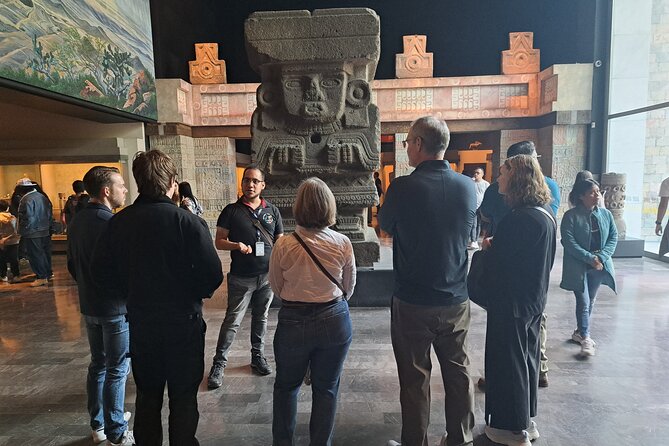
- Small groups (max 15) keep the experience focused and interactive.
- VIP-style access helps you avoid the worst lines and crowd pressure.
- Guides connect the timeline across cultures instead of treating each room like a separate world.
- You’ll look for symbols, not just admire objects, with a start-and-return approach around a major display.
- English support is practical, since many labels and signs are in Spanish.
- 3 hours is highlight mode, so it’s best if you want the best explanations, not the full museum crawl.
Why the National Museum of Anthropology makes sense in only 3 hours
The National Museum of Anthropology in Mexico City is the kind of place where you quickly realize you can’t “see it all.” Even with good English signs, you’d still miss the thread that connects one civilization’s art, beliefs, and technology to the next.
That’s why a guided 3-hour format works so well. You’re not just collecting facts. You’re learning how archaeologists piece together 4,000-plus years using objects, context, and symbols. Guides on this tour are especially good at turning big museum themes into something you can track room by room, which is exactly what you need when the museum is overwhelming in size.
You’ll also be walking toward the museum’s most meaningful anchors. Expect stops that help you understand why certain objects matter beyond their looks. When the guide links them in order, the museum starts feeling like a story instead of a storage building.
You can also read our reviews of more museum experiences in Mexico City

VIP-style access and what small-group size changes for you
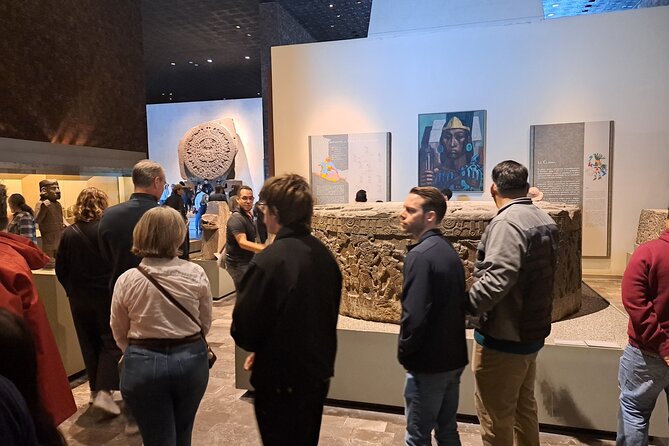
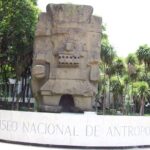
The tour starts at Museo Nacional de Antropología on Av. P.º de la Reforma s/n, Polanco, Bosque de Chapultepec area, and ends back at the same meeting point. That “start and end at one spot” matters because the museum is so spread out that navigating efficiently is half the battle.
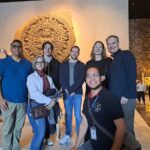
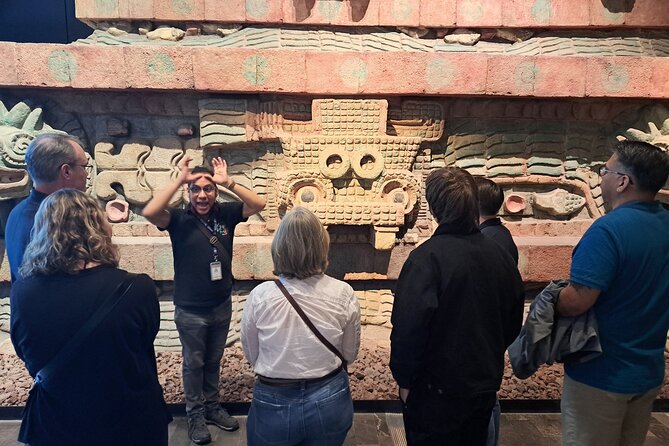
With a maximum of 15 people, the guide can actually manage questions and keep the group together. In reviews, people specifically praised how guides asked participants what they saw, then returned to those ideas later. That kind of interaction is hard in a giant bus group.
The tour also includes VIP access and special timing away from peak crowds. You can feel the difference when you’re not constantly squeezing past groups while trying to read labels. For many visitors, that calm pace is the difference between enjoying the museum and just surviving it.
How the tour uses a start-and-return method for symbols
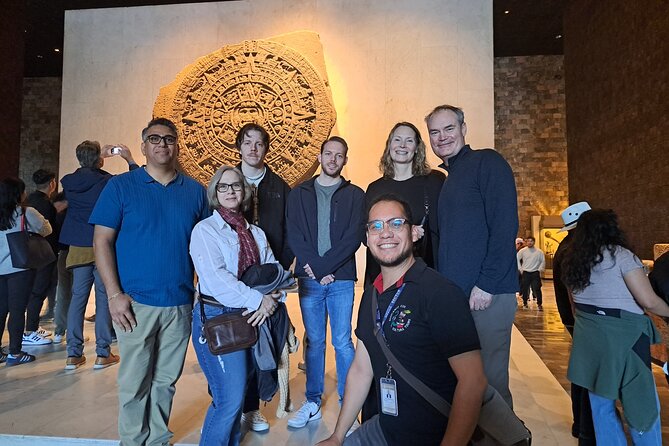
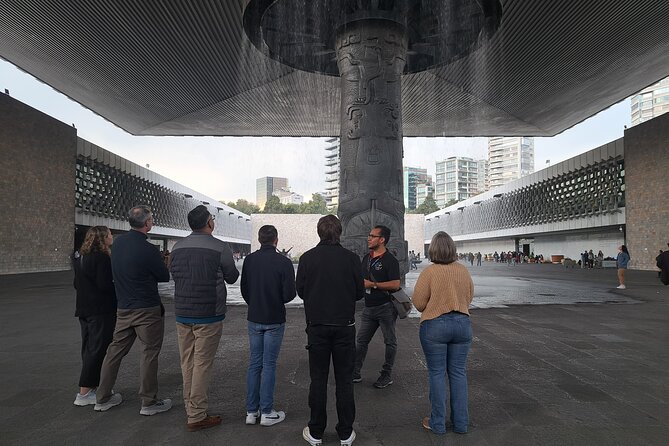
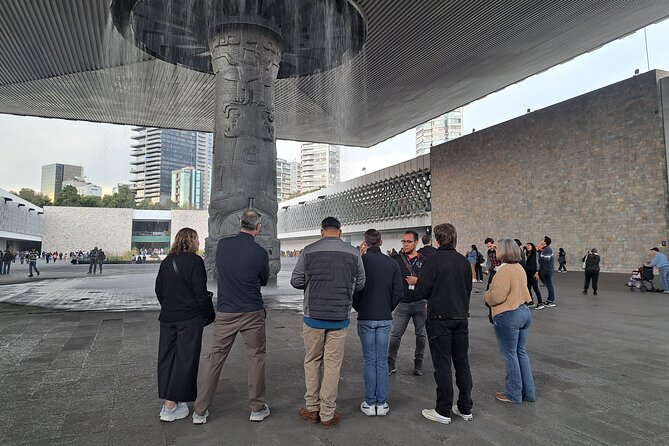
One standout pattern described in multiple accounts is that the guide begins with a major display area and uses it like a classroom board. For example, Jorge is noted for starting at a big pillar area, asking you to name what you notice, then explaining how meaning lands after you’ve seen the right supporting pieces.
By the end, the tour often loops back to that same starting point so the symbols you first stared at now have context. This isn’t just a trick for attention. It’s a smart way to handle a museum where the meaning of carvings, figures, and stonework depends on understanding culture, geography, and time period.
If you’re the type who likes to connect dots, you’ll appreciate this structure. If you’re the type who prefers to wander, you’ll still benefit because you’re learning how to look. Either way, you leave with a framework you can use later if you decide to explore on your own afterward.
The artifacts that usually become your mental anchors
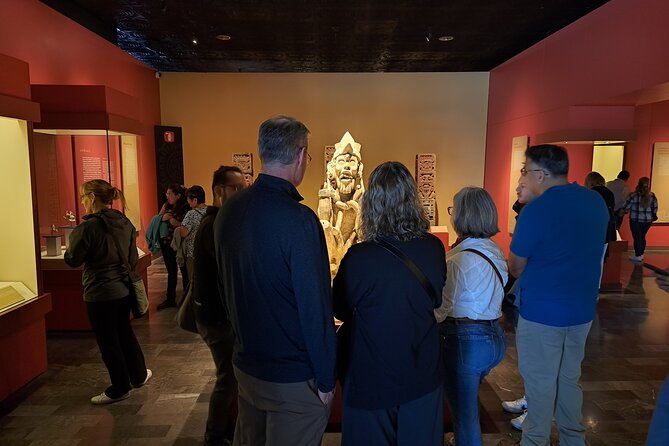
This tour is built around iconic objects that help you decode the museum’s bigger story. The description specifically calls out the Sun Stone and the Pakal Sarcophagus, and those names aren’t marketing fluff. They’re the kinds of masterpieces that attract attention because they’re visually powerful, but they also carry layers of cultural meaning that most people won’t guess correctly without guidance.
Here’s what makes these anchors valuable: once you understand what you’re looking at—symbol systems, power, cosmology, and how societies expressed authority in art—you start noticing similar patterns elsewhere in the museum. That’s why a guided highlights tour often feels like it gives you access to the whole museum, even though you’re only seeing part of it.
The tour also mentions seeing objects not regularly displayed to the public, plus multimedia resources showing ancient ritual themes and restoration work. That restoration angle is a quiet superpower. It helps you understand that museums aren’t time machines. They’re also detective labs.
Teotihuacan, Maya, Aztec, and why the guide connects the regions
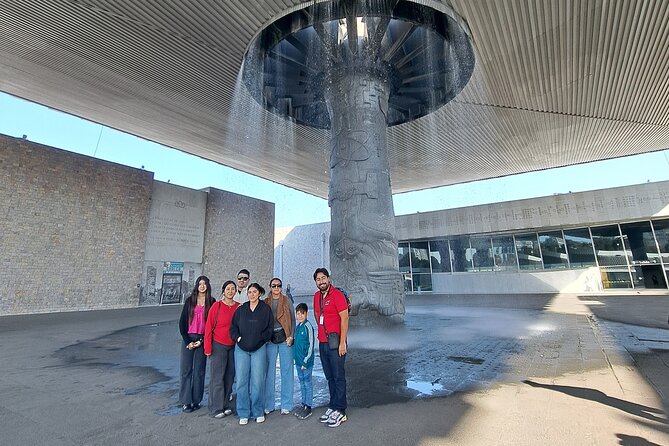
One of the most praised elements in the accounts you provided is how guides explain the timeline across multiple cultures, rather than treating each room like an isolated chapter. Jorge is repeatedly described as threading timelines clearly from early Mesoamerican cultures through later powers people often associate with Aztec history.
This matters because the museum can otherwise feel like a collection of different eras with no real connection. When the guide links them, you start seeing overlaps: shared themes in art, different versions of similar ideas, and how later groups interpreted earlier legacies.
You’ll also hear more about how historians and archaeologists decide what’s provable. One guide is specifically described as asking thoughtful questions about how history is told and what can get distorted when narratives become simplified. If you care about separating evidence from legend, this approach can feel refreshing instead of “textbook.”
And because the guide uses bigger visuals like maps and charts (mentioned in reviews), you get spatial context too. It’s easier to remember where things fit when you see regions laid out, not just displayed as objects in cases.


English support in a museum that is mostly Spanish
Here’s the reality: the museum has many signs primarily in Spanish, and there are limited English translations depending on the area. That’s why this tour’s English guide is not just convenient—it’s practical.
In reviews, people directly pointed out that you’d miss a lot without guidance, especially if you don’t read Spanish well. Even if you can read enough to get the basics, museum language often assumes you already understand the context. A guide fills those gaps with explanations you can’t easily speed-read.
Another detail that comes up: you may get an earpiece so you can hear clearly while walking. In a big museum with uneven sound and lots of foot traffic, that helps a lot. It lets you focus on what the guide says instead of constantly adjusting your position.
Timing, crowds, and why your start time can change everything
Your tour runs about 3 hours and includes admission. Since it’s only a few hours, your timing inside the day matters. One reviewer notes choosing a 2 pm slot helped with crowd levels, but also reminds that the museum closes at 5 pm, leaving little time for extra wandering afterward.
So think about your goal:
- If you want the best explanations with minimal stress, an afternoon slot can work well, but plan carefully for that 5 pm closing limit.
- If you want a deeper self-paced follow-up, you’ll need a schedule that leaves room for it, because your guided portion won’t cover most of the collection.
Also, because the tour is described as VIP-style and away from heavy crowds, starting at a time when the museum is busy can still be workable. The bigger factor is whether you’ll have enough remaining daylight (and museum hours) to do your own exploring afterward.
Price and value: $98.57 for admission plus a real guide
At $98.57 per person for roughly 3 hours, this isn’t a “cheap add-on.” The value comes from what’s included and what the guide prevents you from doing.
You get tickets and a guide, and the museum admission is part of the deal. That alone matters because museum entry fees add up quickly when you travel as a group.
The bigger value is interpretive. The museum is large and the labels are not consistently English. A guided overview helps you understand symbolism, cultural development, and why the most famous objects have the meaning they do. Several reviews basically say the same thing in different ways: you’d spend the time looking, but without context you wouldn’t understand what you were seeing.
Small-group size also affects value. You’re not competing with dozens of people for attention, and the guide can ask questions and keep the group on track.
Who this tour fits best (and who might not need it)
This tour fits best if you want structure. It’s ideal for:
- First-time museum visitors who feel intimidated by the museum’s scale
- People who don’t read Spanish well but still want to understand the artifacts
- Couples and solo travelers who enjoy stories that connect ideas
- Families with teens, if the guide keeps things interactive (one review explicitly said it worked well for teens)
It can also be a great choice if you’re proud of Mexico’s roots and want explanations that help you connect personal identity with the archaeological record. One guide was praised for turning major pre-Hispanic developments into something that felt meaningful, not distant.
One group that might think twice: someone who already knows Mesoamerican history deeply and prefers reading everything at their own pace. Even then, you might still find the guided approach useful for symbols and the tour’s “start and return” method.
Good to know: the tour notes service animals allowed and that it’s near public transportation, so getting there is usually not a headache.
A quick note on tickets and avoiding day-of stress
This tour uses a mobile ticket, and confirmation is received at booking. That’s straightforward when it works.
One issue did appear in a past experience: a participant reported ticket download trouble and needed to purchase additional tickets to enter. It’s not something you can assume will happen, but it’s worth being cautious. If you book, save your booking confirmation and keep it accessible on your phone (and ideally a screenshot).
Should you book the Museum of Anthropology: a trip to the past?
I’d book this tour if you’re aiming to get your bearings fast and leave with a real understanding of the museum’s key objects and symbols. The strongest case for booking is the combination of small group size, VIP-style timing, and guides who use interaction and repeating reference points so the museum makes sense instead of just filling your camera roll.
I would not book it if your main goal is a long, self-paced museum experience where you linger at everything. In that case, you may prefer going on your own and spending more time in the galleries that grab you.
Bottom line: if you want the museum to feel like a story you understand, not a warehouse of ancient stuff, this is a smart way to spend 3 hours in Mexico City.
FAQ
Where does the tour start and end?
The tour starts at Museo Nacional de Antropología in the Polanco / Bosque de Chapultepec area on Av. P.º de la Reforma s/n, and it ends back at the same meeting point.
How long is the tour?
The tour lasts about 3 hours.
Is the tour offered in English?
Yes, it’s offered in English.
What’s included in the price?
The price includes tickets and a guide. Admission is included.
What is the group size limit?
This experience has a maximum of 15 travelers.
Is free cancellation available?
Yes. You can cancel up to 24 hours in advance for a full refund.