REVIEW · TURIN
Museo delle Langhe Entrance Ticket
Book on Viator →Operated by Castello di Grinzane · Bookable on Viator
A castle museum with real country grit. You get an entrance ticket to the Grinzane Cavour Castle grounds and the Museo delle Langhe spaces inside—an easy way to turn a stop in the Langhe into something hands-on, not just scenic. I like that the visit is built around working life: you’ll move past rooms that cover trades, tools, and food culture tied to the region.
Two things I’m especially drawn to are the Hall of Masks ceiling (with 157 painted panels) and the way the ethnographic museum lays out rural life in a concrete, visual way. And if you want the fun part after the history, you can head to the gourmet shops for Piedmontese wine and other local products—at your own expense, but it’s a logical payoff.
One heads-up: the castle setting is historic, and access may be difficult for visitors with disabilities (one review explicitly called it not suitable). If mobility is a big issue for you, plan a quick check before you go.
In This Review
- Key takeaways before you buy
- Museo delle Langhe at Grinzane Cavour Castle: What the ticket actually covers
- First impressions: walking into a 13th-century stronghold
- The Hall of Masks: a ceiling that steals your attention
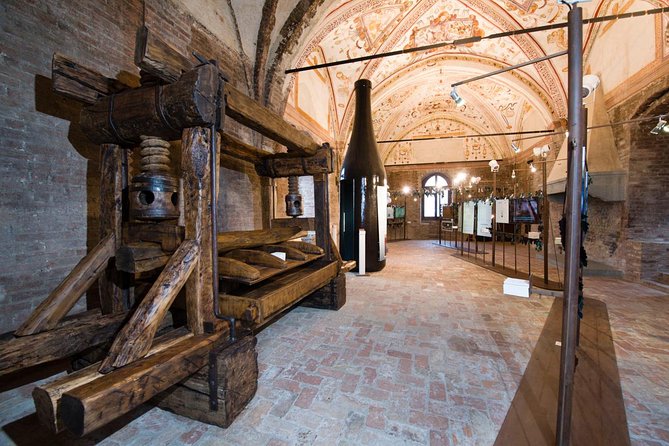
- Museo delle Langhe exhibits: rural life, tools, kitchens, and trades
- The 18th-century distillery: where wine culture gets real
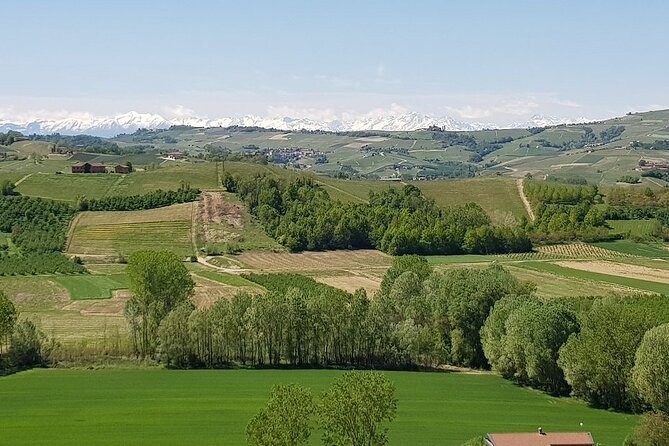
- Grounds and gardens: when the Langhe view earns its spot
- Cavour Regional Enoteca: the tasting stop you control
- How long to plan: 1 to 5 hours, and how to use it
- Making it work as a day trip from Alba
- Price and value: $9.75 for a full castle-museum outing
- English experience, private group feel, and the pace you can control
- Should you book the Museo delle Langhe entrance ticket at Grinzane Cavour?
- FAQ
- What is included with the Museo delle Langhe entrance ticket?
- Is food or wine included in the ticket price?
- How long should I plan for the visit?
- What language is the experience offered in?
- What are the opening hours?
- Is this a private experience?
- Can children go, or is it adults-only?
- What is the cancellation policy?
- Is it near public transportation?
Key takeaways before you buy
- Castle architecture matters here: redbrick, trapezoidal plan, and later 16th-century round turrets.
- The Hall of Masks is a showpiece with a coffered ceiling and 157 painted panels.
- You’ll see trades in action through exhibits like the blacksmith and cooper workshops.
- A real rural-life museum includes kitchens, a distillery, farm tools, and truffle references.
- Wine is optional, not included: tasting in the enoteca/gourmet shops is “buy what you want.”
- Great for pairing with Alba when you want a Langhe day that’s more than a pretty drive.
Museo delle Langhe at Grinzane Cavour Castle: What the ticket actually covers
This experience is basically your entry pass into Castello di Grinzane Cavour plus the museum areas inside and the castle grounds. The ticket is priced at $9.75 per person, and that’s the kind of fee that makes sense for a 1 to 5 hour outing. You’re not just paying to look at walls. You’re paying for a guided-by-your-eyes walk through exhibits that connect the region’s food and farming world to the castle.
The offer is listed as English, so you can expect the experience to be available in that language (handy if your Italian is still in “survival mode”). It’s also set up as a private activity, meaning it’s only your group.
What’s not included is also important: food and drinks aren’t part of the ticket price. You can sample Piedmontese wine and products in the gourmet shops, but it’s on you. I like that clarity. You’ll know whether you want to treat yourself or just do the museum and move on.
A few more Turin tours and experiences worth a look

First impressions: walking into a 13th-century stronghold
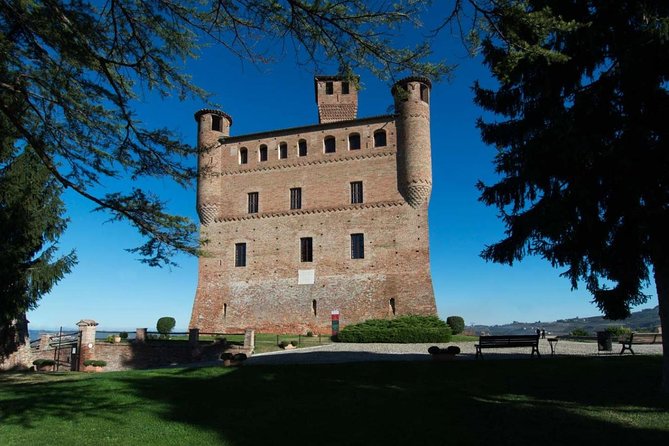
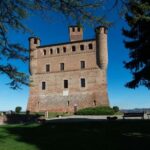
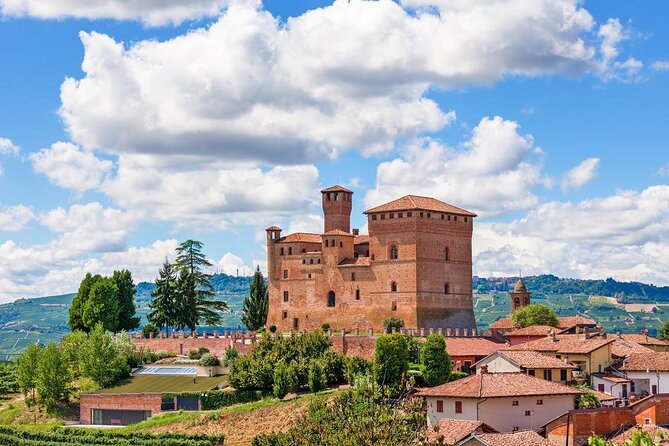
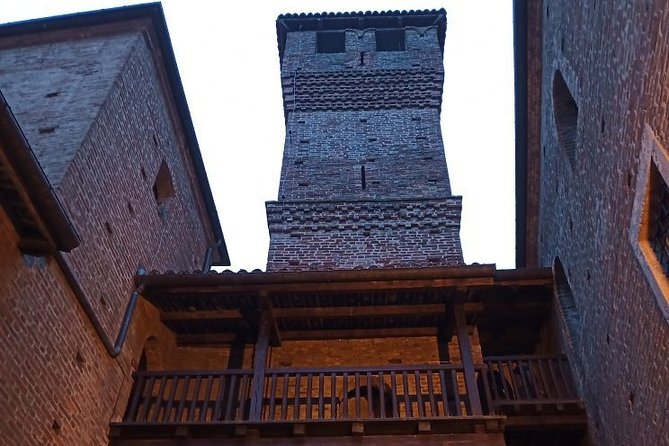
Before you even reach the exhibits, the castle itself gives you context. The building dates to the first half of the 13th century, but it didn’t stay frozen in time. Architectural changes happened over the centuries, and the most recent major renovations were done in 1961 to mark the centenary of Italian unification.
Visually, it’s an imposing redbrick structure. It’s built on a trapezoidal plan with four sections arranged irregularly around a small main courtyard. In the 16th century, two round turrets were added, which helps explain why the place looks both fortress-like and slightly theatrical up close.
If you enjoy “reading” buildings—spotting differences by age and style—you’ll get more out of the visit. If you just want the quickest route to the main rooms, it’s still easy to manage: you can focus on the museum galleries and then take your time outside for the views.
The Hall of Masks: a ceiling that steals your attention
One of the most memorable details is the Hall of Masks, known for its coffered ceiling with 157 painted panels. Even if you don’t love museums that much, a room like that has a way of resetting your expectations. You stop thinking about tickets and start thinking about craft—painting, design, and the way the room was meant to impress.
This is also a good reminder that the castle isn’t only about rural life. Yes, the Museo delle Langhe is the main draw, but the castle’s own artistic and architectural moments help you understand why this site matters.
Museo delle Langhe exhibits: rural life, tools, kitchens, and trades
Inside the museum areas tied to rural life, the exhibits are organized around how people actually lived and worked. That’s what makes it satisfying. It’s not just “here’s some stuff.” It’s more like, here’s the system—food, labor, equipment, and local specialties.
You’ll see the ethnographic museum covering topics such as:
- Cavourian relics (linked to the region’s historical identity)
- Wines from Alba in the Roman world
- 17th- and 19th-century local kitchen settings
- Wine glasses and objects connected to Alba’s food and wine traditions
- Workshops including a blacksmith and a cooper
- An 18th-century distillery
- Farmyard implements
- Weights and measures
- Information about truffles
The kitchens are especially good if you like everyday history. The room setups help you picture meals and routines rather than only tasting the results of the system. And the weights-and-measures theme is more interesting than it sounds: it grounds “food culture” in the practical realities of buying, selling, and producing.
The trades exhibits—especially the blacksmith and cooper—also do something smart: they show supporting industries that make agriculture and winemaking possible. If you’ve ever wondered what “backstage work” keeps a food culture going, this section answers it in a way that feels physical, not abstract.
The 18th-century distillery: where wine culture gets real
The museum includes an 18th-century distillery, which is a strong anchor point for understanding how the region treated alcohol and spirits as more than a modern treat. Distillation also connects to the bigger idea of storage, preservation, and turning raw materials into products people could depend on.
Don’t expect a hands-on workshop. But do expect the exhibit to give you a tangible sense of production steps and equipment. It’s the kind of exhibit that pairs well with later wine tasting, because you’ll recognize ideas even if the bottles are newer.
Grounds and gardens: when the Langhe view earns its spot
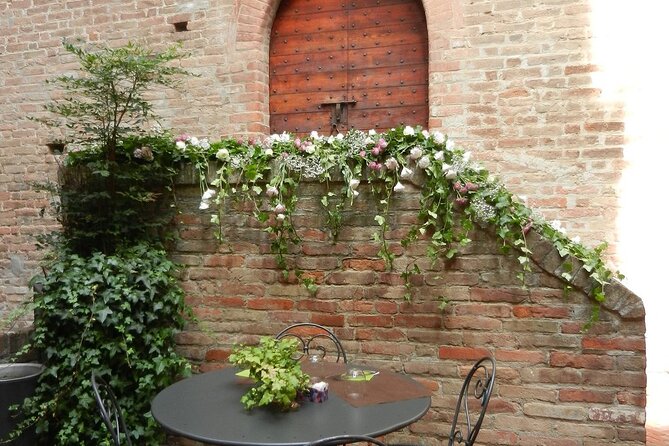
Even if you go straight for the museum rooms, leave time for the outside. The grounds and gardens are part of the value of having an entrance ticket to the castle property, not just a single museum room.
This is also where you’ll feel why Grinzane Cavour is a classic Langhe base. You’re up on a site that offers views over the countryside, and one of the standout notes from recent visitors is the combination of beautiful gardens and great Langhe views. You don’t need a long hike for this payoff—just enough time to slow down and look.
Cavour Regional Enoteca: the tasting stop you control
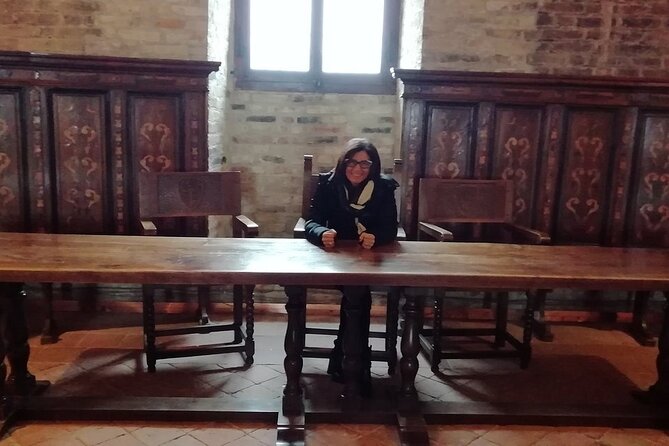
Inside the castle complex, you’ll find the Cavour Regional Enoteca, and it’s linked with restaurant space as well. The ticket you buy is for entry, not for a meal, but the enoteca and surrounding gourmet shops turn the visit into something you can “finish” in a satisfying way.
Here’s the key: wine and products are an optional add-on. If you enjoy sampling, you can taste Piedmontese wine and other items in the shops at your own expense. If you don’t want to spend more, you can still use the enoteca as an orientation point—seeing how the museum’s stories connect to what’s sold and served today.
I like enotecas in general because they help you avoid the common museum problem: you learn a lot, but the experience stops short of real-life taste. This setup gives you a natural place to choose whether you want that final step.
How long to plan: 1 to 5 hours, and how to use it
The experience is listed as 1 to 5 hours, and that range is realistic because you control how much you want to linger.
- If you’re short on time (about 1 to 2 hours), focus on the major museum rooms: the historic sections, the Hall of Masks area, and the key rural-life exhibits like the kitchen and workshops. Then do a quick walk outside for the gardens and views.
- If you want the full experience (closer to 4 to 5 hours), slow down. Spend more time with the trade exhibits and the distillery area, then use the enoteca/gourmet shops as your tasting break.
Practical tip: wear comfortable shoes. Castle floors can be uneven, and you’ll likely walk between different zones on the property. The museum is interesting, but the setting makes good walking footwear feel like a smart purchase rather than an afterthought.
Making it work as a day trip from Alba
This ticket is a great fit as a simple day trip from nearby Alba. That’s one of the biggest reasons it’s a sensible use of time: you can combine a regional town base with a “serious-but-friendly” cultural stop.
A common mistake on the Langhe is overcorrecting into only driving between viewpoints. This experience gives you a stronger link between what you see outside and what’s produced inside—especially with the truffle references, the distillery, and the kitchen settings.
If you build your day around the castle, you’ll usually end with a smoother rhythm: museum first, then outside views, then (optional) wine or snacks from the enoteca.
Price and value: $9.75 for a full castle-museum outing
For $9.75 per person, you’re paying for entrance to the castle grounds and the museum content. That’s a good value when you consider how many topics are covered: kitchens, trades, equipment, historical wine connections, and a major showpiece room.
Food and drinks cost extra. But you can keep it economical by treating tastings as optional rather than assumed. If you do want tastings, you’ll at least be choosing with context—after seeing the stories behind the region’s products.
In other words: this ticket works as either a low-cost culture stop or the first half of a food-and-wine day. That flexibility is what makes the price feel fair.
English experience, private group feel, and the pace you can control
The experience is offered in English, and it’s set up as a private activity for your group. That typically matters because you can move at your own pace without battling crowds. You also have more freedom to stop and re-read labels when something clicks.
Most travelers can participate, and children must be accompanied by an adult. If you’re traveling with kids, it’s a good note that the museum focuses on visual, physical objects—tools, workshops, and rooms—so it can be more engaging than a purely text-based site.
One caution: it’s a historic castle. If you have mobility needs, pay extra attention to whether the routes work for your situation, since at least one review said it’s not suitable for disabled visitors.
Should you book the Museo delle Langhe entrance ticket at Grinzane Cavour?
Yes—if you want a Langhe day that mixes views with real context. The combination of castle architecture, the Hall of Masks, and rural-life exhibits like the blacksmith/cooper workshops, the 18th-century distillery, and the kitchen settings makes this more than a quick photo stop.
Book it especially if:
- you’re planning a day trip from Alba and want a structured outing
- you enjoy food history tied to tools, trades, and how people worked
- you like the idea of finishing with a tasting in the enoteca/gourmet shops
Skip it or investigate accessibility first if:
- mobility is a major concern for you or anyone in your group
- you only want minimal walking and maximum seating
If you’re on the fence, think of this as a “choose your depth” ticket: short and sweet, or slow and detailed. Either way, you’ll come away with a better sense of what makes the Langhe taste like it does.
FAQ
What is included with the Museo delle Langhe entrance ticket?
The ticket includes entrance to the museum and the castle grounds at Castello di Grinzane Cavour.
Is food or wine included in the ticket price?
No. Food and drinks are not included. You can sample Piedmontese wine and other products in gourmet shops, but that’s at your own expense.
How long should I plan for the visit?
Plan for about 1 to 5 hours, depending on how much time you spend in the museum areas and outside in the gardens.
What language is the experience offered in?
It’s offered in English.
What are the opening hours?
The hours provided show Monday: 10:00 AM to 5:00 PM (listed for the 2026 season).
Is this a private experience?
Yes. It’s a private tour/activity, meaning only your group will participate.
Can children go, or is it adults-only?
Children must be accompanied by an adult.
What is the cancellation policy?
You can cancel for a full refund if you cancel at least 24 hours in advance. Changes within 24 hours of the start time aren’t accepted.
Is it near public transportation?
Yes. It’s listed as being near public transportation.