REVIEW · MEXICO CITY
Anthropology Museum Guided Tour
Book on Viator →Operated by Amigo Tours · Bookable on Viator
Two and a half hours, one huge museum. This guided run through the Museo Nacional de Antropología turns a wall of displays into a clear story, from the Olmec giant heads to the Aztec Calendar, with guides like Alexa and Alan often praised for keeping it understandable.
I love that your ticket includes both museum admission and a professional guide, so you’re not paying twice or scrambling for entry. You’ll also get a morning option that leaves your afternoon more flexible, which helps when you want to add other Chapultepec-area stops.
One thing to consider: the museum signage is often mainly in Spanish, and English quality can vary by guide. If you’re sensitive to audio or need extra clarity, plan to arrive early and be ready with a couple of questions.
In This Review
- Key things you’ll notice on this tour
- Why a guided visit helps at Mexico City’s Museum of Anthropology
- Entering the museum: meeting point rules and what to bring
- The main stop: your 2.5 hours inside the National Museum of Anthropology
- Getting oriented with pre-Columbian Mexico and beyond
- Stop highlights you’ll likely cover: Olmec, Maya, Aztec
- Understanding Tenochtitlan: the modern city sits on an older world
- Visiting exhibits may be part of the route
- How the guide experience shapes your learning (and your mood)
- Price and value: is $39 worth it?
- Practical tips to get the most out of your tour
- Should you book this Anthropology Museum guided tour?
- FAQ
- What does the tour price include?
- How long is the guided tour?
- Is the tour offered in English?
- Where do we meet for the tour?
- Is there a group size limit?
- Are food, drinks, or backpacks allowed inside?
- What is the cancellation policy?
Key things you’ll notice on this tour
- Admission included, guide included: you pay one price and walk in
- Small group size (max 25): easier pacing than a huge crush
- Big “what am I looking at?” moments: Olmec heads, Maya tomb reconstructions, Aztec Calendar
- A timeline feel instead of random wandering: you get context across civilizations
- Language support helps for non-Spanish readers: many guides explain what the labels won’t fully cover
- Punctuality matters at the start: arriving late can mean missing the group
Why a guided visit helps at Mexico City’s Museum of Anthropology
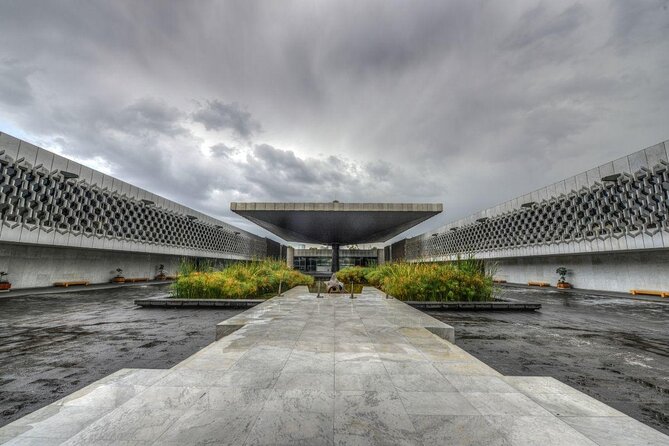
The National Museum of Anthropology is the kind of place that looks straightforward from the outside: walk in, see artifacts, take photos. Inside, it can turn into sensory overload. The displays are world-class, but they cover a lot of time and a lot of regions, and many visitors end up spending energy trying to decode what connects everything.
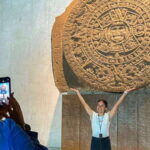
That’s exactly where this tour earns its keep. You’re not just looking at famous objects like the Stone of the Sun. You’re learning what they mean in their original cultural context, and how different Mesoamerican societies influenced what came next. The museum already has the material—this tour helps you read it.
It also helps that the museum is physically huge, built for major collections rather than quick sightseeing. With a guide, you get a more logical route through major rooms instead of bouncing between civilizations and wondering if you missed something important.
And if you’re traveling on a schedule, the structure matters. You’re looking at about 2 hours 30 minutes, which is long enough to build understanding but short enough to keep your day from getting swallowed by the museum.
You can also read our reviews of more guided tours in Mexico City
Entering the museum: meeting point rules and what to bring
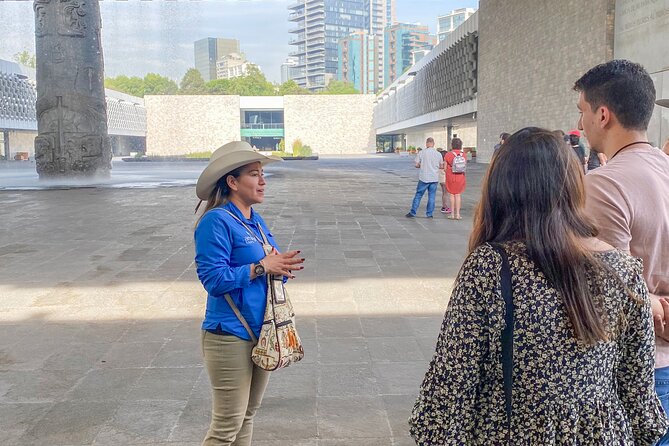
You meet at the museum itself, at Av. P.º de la Reforma s/n, Polanco, Bosque de Chapultepec I Secc, Miguel Hidalgo, 11560 Ciudad de México, CDMX. It’s near public transportation, which helps for an area that can get slow during peak traffic.
Before you go in, know the rules. You can’t enter with food, drinks, or backpacks. A handbag is allowed. So plan your day around that. If you’re the type who likes carrying snacks “just in case,” it’s better to skip that habit here.
You should also plan for a slightly “organized start.” Some groups are handled with extra steps at the entrance, and you may be given audio support (like headphones) depending on how your specific guide runs the tour. That can be great when English is being broadcast, but it also means you don’t want to dawdle at check-in.
Lastly, punctuality is not a suggestion. CDMX traffic happens, but this tour model relies on groups starting on time so everyone can move together and still cover the main stops.
The main stop: your 2.5 hours inside the National Museum of Anthropology
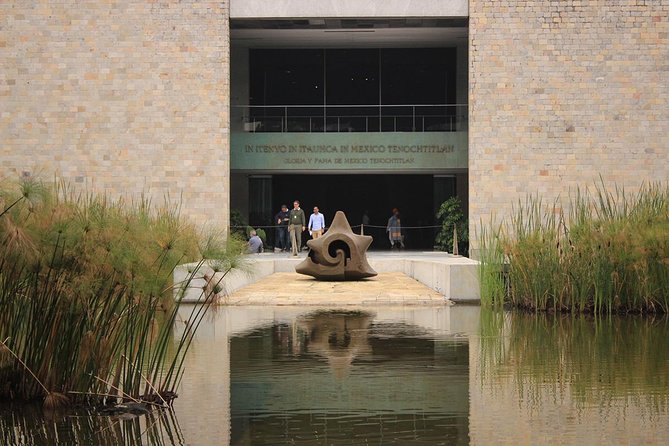
This tour is essentially one continuous experience inside the museum. The timing matters: with 2 hours 30 minutes, your guide is likely to focus on the objects that make the museum’s story click, not every single case in every room.
Here’s what you can expect to be highlighted.
Getting oriented with pre-Columbian Mexico and beyond
The museum’s permanent exhibitions cover pre-Columbian civilizations across what is now Mexico—and even into parts of what today is the southwestern United States. Early on, the guide’s job is to help you place what you’re seeing into a big-picture framework: where these cultures were located and why their art and architecture looked the way it did.
If you’ve never studied Mesoamerican history, this orientation step is what prevents the rest of the tour from feeling like a random slide show. You begin to notice patterns: repeated symbolism, shared themes across regions, and differences in style and purpose.
Stop highlights you’ll likely cover: Olmec, Maya, Aztec
The tour’s big-name artifacts are the kind that can look confusing without context. With a guide, you’ll get the story behind them, including:
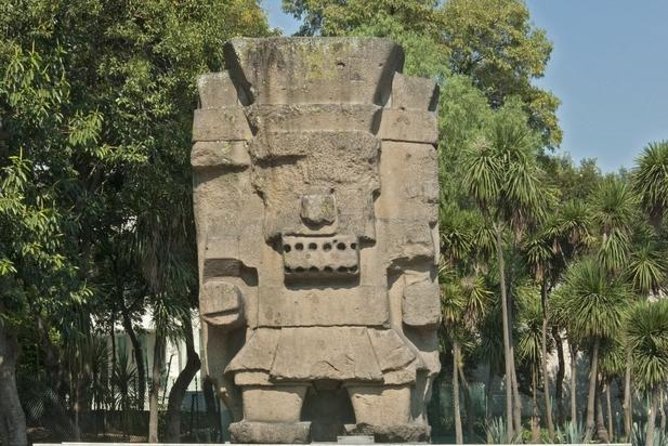
- Olmec giant heads (found in Tabasco and Veracruz): these help you see how early monumental art set a tone for later cultures.
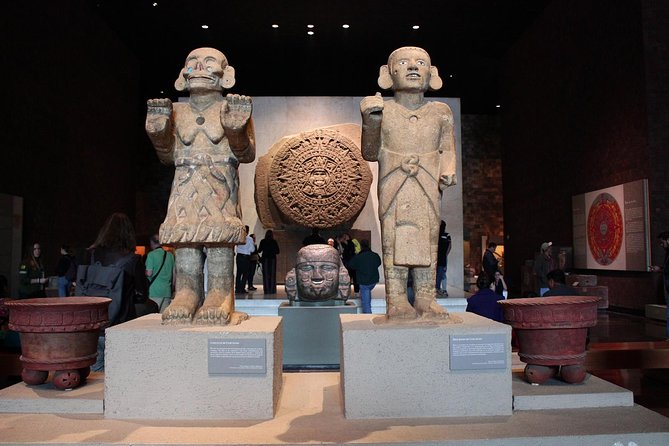
- The Aztec Calendar: it’s famous, but the guide’s framing helps you understand it as a cultural system, not just a sculpture.
- Maya treasures, including references tied to the Sacred Cenote at Chichen Itza: this is where the museum’s collections become more than “pretty objects.”
- Reconstructions connected to Maya tombs: these can be especially helpful if you want to visualize burial practices rather than just read about them.
- The Stone of the Sun: a centerpiece that benefits from an explanation of symbol systems and cultural meaning.
Even if you’ve seen photos online, it’s the guide’s narrative that helps you connect the pieces. A guide can also explain why these civilizations influenced later Mexico—something you’re harder pressed to piece together if you only rely on Spanish labels and room-by-room self-navigation.
You can also read our reviews of more museum experiences in Mexico City




Understanding Tenochtitlan: the modern city sits on an older world
One of the most practical and memorable museum elements for first-timers is the model of Tenochtitlan, the Aztec capital, and how its layout connects to what’s now the central area of modern-day Mexico City.
This is the kind of detail that changes the whole day. Suddenly, streets and landmarks outside the museum start to feel like layers, not unrelated places. If you’re planning other sights later, that mental map can make everything easier.
Visiting exhibits may be part of the route
The museum also hosts visiting exhibits that generally focus on other major world cultures. Your guide might connect what you’re seeing with those rotating displays, but what’s included can vary. If you’re visiting for a short time and want the core pre-Columbian story, the permanent collections are still the backbone.
How the guide experience shapes your learning (and your mood)
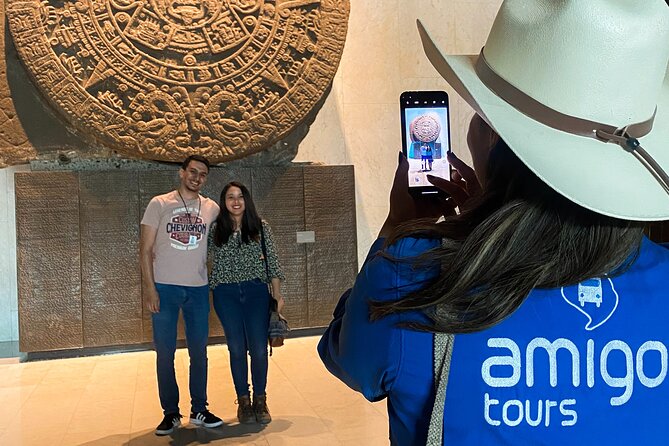
The best guides don’t just recite facts. They help you organize the museum in your head.
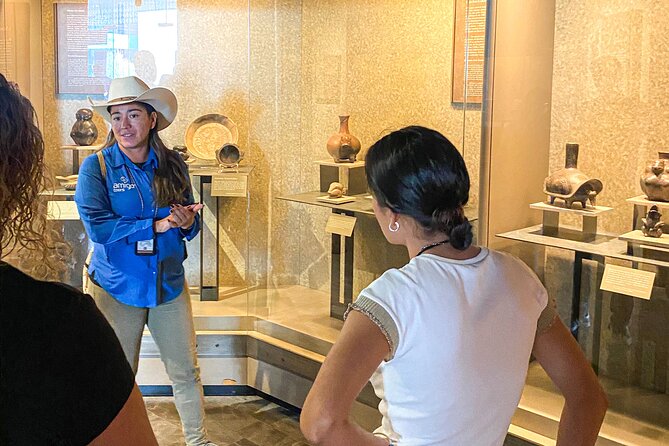
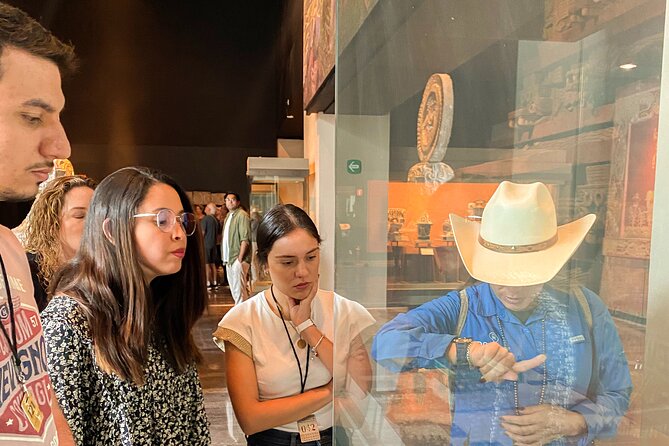
In strong tours, you start with geography and high-level context, then the guide slows down to interpret specific objects. Guides like Alan were described as starting broadly and then zooming in gradually. Alexa was praised for helping a complex museum feel accessible instead of overwhelming. Leonardo was noted for weaving a thoughtful progression through Aztecs, Mayans, and other groups.
You’ll also see what many guides do well in terms of pace. Some guides give you short moments to explore rooms on your own and then bring you back for interpretation. That’s useful because it lets you build your own questions before the guide provides answers. If your guide is more lecture-style the entire time, you may feel like you’re watching the museum through a filter instead of engaging with it.
Language quality is the biggest variable. This tour is offered in English, but multiple experiences in the provided info point to uneven English clarity depending on the guide. On the positive side, some guides have been described as answering questions in both English and Spanish (for example, Ligia). On the negative side, some visitors struggled with audio or understanding.
If English comprehension is critical for your enjoyment, I’d choose the morning slot and arrive ready to settle in quickly—less rushing usually means fewer misunderstandings and smoother audio handoffs.
Price and value: is $39 worth it?
At $39 per person, the value comes from the mix of guided interpretation plus museum admission. If you buy admission alone, you’re only buying access to the building and the artifacts. With this tour, you’re paying to translate what you see into something you can connect to real history and regional relationships.
That matters here because the museum has fewer easy “quick reading” shortcuts than you’d hope—especially if you don’t read Spanish fluently. Even though the museum displays are impressive on their own, visitors often benefit from a guide who can explain the why behind the objects.
Also, the tour time is tight enough to feel efficient. 2.5 hours is a good match for someone who wants the highlights and the context without planning an all-day museum marathon.
The one value caution: if your guide’s English delivery doesn’t work for you, or if the group handling at the start is messy (like delays distributing equipment), the experience can feel less worth the price. That doesn’t mean the museum isn’t worth it—it means the guide portion is what you’re really paying for.
Practical tips to get the most out of your tour
If you want this to be a win, do a few things before you walk in.
- Arrive early and stay early: late arrivals can throw you out of the group flow.
- Pack light: no backpacks, and only a handbag is allowed. If you’re traveling with a day bag habit, adjust.
- Be ready for mostly Spanish labels: a guide helps a lot, but the building still leans on Spanish signage.
- Ask one question per room: don’t wait for the perfect moment. If you want clarity on why an artifact matters, ask when you’re standing in front of it.
- Plan one museum follow-up: after the tour, return to a room where you felt the strongest connection and spend extra minutes there. The time you spent with the guide will make that follow-up easier.
Should you book this Anthropology Museum guided tour?
Book it if you want a fast, guided path through a world-class museum without having to turn the day into a self-taught archaeology course. It’s a strong pick for English speakers who would rather understand the objects than just photograph them. Guides like Alexa, Alan, Leonardo, Antonio, and Miriam have been called out for making the museum feel understandable and connected.
I’d hesitate if you:
- need crystal-clear English audio and know you struggle with accents or unclear sound equipment
- get easily frustrated by group logistics and long entrance queues
- are traveling with children and want zero ambiguity around ticket handling rules—double-check details ahead of time
If you’re flexible, this is one of the better ways to tackle the National Museum of Anthropology in a limited window. You’ll leave with a clearer sense of how Olmec, Maya, Aztec, and Spanish-colonial timelines connect—and that can turn the museum from a list of artifacts into a real story you can carry to the rest of your Mexico City trip.
FAQ
What does the tour price include?
The price includes a professional guide and entrance to the National Museum of Anthropology.
How long is the guided tour?
It runs about 2 hours 30 minutes.
Is the tour offered in English?
Yes, it is offered in English.
Where do we meet for the tour?
The meeting point is at Museo Nacional de Antropología, Av. P.º de la Reforma s/n, Polanco, Bosque de Chapultepec I Secc, Miguel Hidalgo, 11560 Ciudad de México, CDMX.
Is there a group size limit?
Yes. The maximum group size is 25 travelers.
Are food, drinks, or backpacks allowed inside?
No. You are not allowed to enter with food, drinks, or backpacks. A handbag is allowed.
What is the cancellation policy?
You can cancel for a full refund if you cancel up to 24 hours in advance of the experience start time. If you cancel less than 24 hours before, you won’t receive a refund.