REVIEW · PARIS
Paris: Louvre Museum Skip-The-Line Tour
Book on GetYourGuide →Operated by Paris in person private tours · Bookable on GetYourGuide
Two hours, one clear Louvre path. This skip-the-line private tour gives you a focused route through the Louvre’s Renaissance, Neoclassicism, and Romantic highlights instead of making you guess where to go first.
I especially like how the guide connects artworks to big shifts in ideas, from the Medieval world toward Humanism and early Renaissance thinking. I also love the punch of set-piece works you can’t miss, like the Nike of Samothrace and Botticelli’s fresco moments.
The main consideration is simple: it’s only 2 hours, so you’ll see selected highlights rather than trying to cover the entire museum.
In This Review
- Key things I’d watch for
- Entering the Louvre’s “greatest hits” in just 2 hours
- Meeting at Arc du Carrousel and finding your guide fast
- Skip-the-line access: what it actually changes for you
- Renaissance to Humanism: the story behind Botticelli and Mantegna
- Nike of Samothrace: why the statue still grabs people
- Neoclassical and Renaissance “hits”: Mona Lisa, Veronese, and the big canvas effect
- Romanticism in full force: Gericault and Delacroix’s political emotion
- Ingres and Jacques-Louis David: power, performance, and mythmaking
- What you’ll learn (and why it sticks)
- Price and value: is $294 for 2 hours worth it?
- Who should book this tour
- Should you book this Louvre skip-the-line tour?
- FAQ
- How long is the Louvre skip-the-line tour?
- Where do we meet?
- What is included in the price?
- Is food or beverages included?
- What languages are the guides available in?
- Is this tour private and wheelchair accessible?
- Does the tour run in bad weather?
- Are oversize bags allowed?
- What is the cancellation policy?
Key things I’d watch for
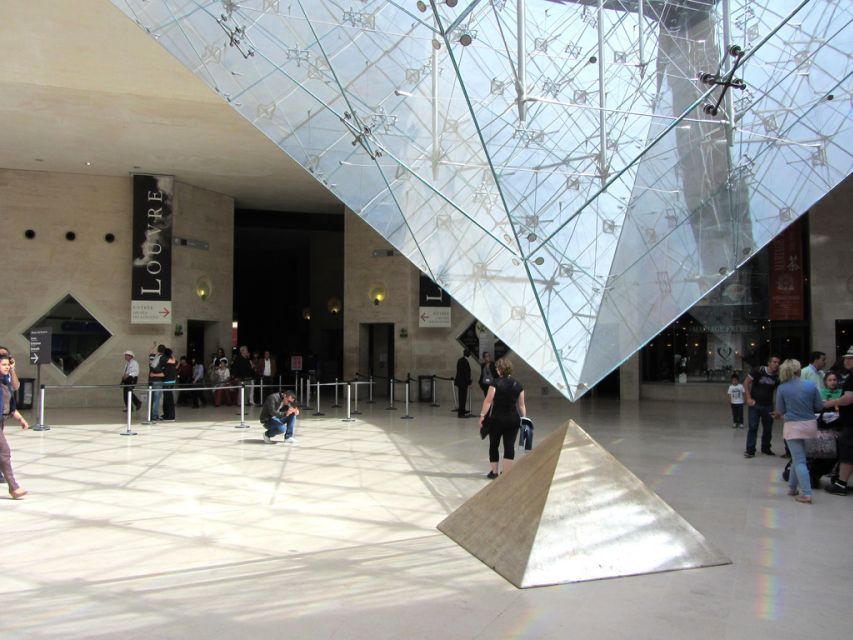
- Arc de Triomphe du Carrousel meeting point with your guide carrying a red tote canvas bag
- Skip-the-line entrance so you can start art time fast
- A tight focus on three periods: Renaissance, Neoclassicism, and Romanticism
- Specific showstoppers named in the route, from Botticelli to Delacroix and Jacques-Louis David
- Guide storytelling that ties art to themes, including how light and the sun show up in works
- Private group format that’s easier to manage, including with teenagers
Entering the Louvre’s “greatest hits” in just 2 hours
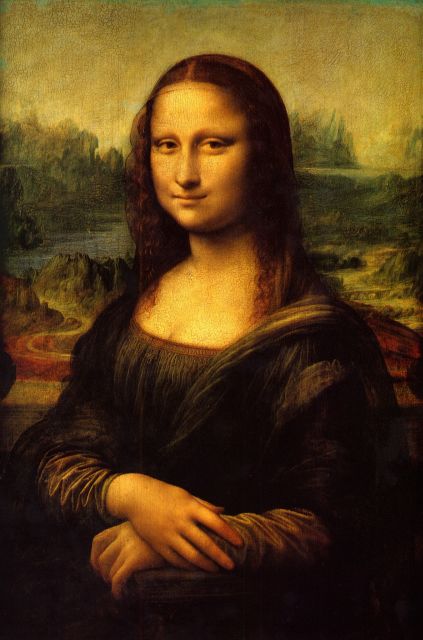
The Louvre can feel like a maze when you show up cold. This tour solves that by putting your time into a clear, theme-based run through major works across the Renaissance and beyond. You’ll spend your energy watching art, not hunting for it.
The length matters. At 2 hours, you’re not trying to absorb everything the museum owns—you’re hitting the strongest, most readable points where art history is easiest to understand in a short visit.
And because it’s private, you’re not stuck in a herd. That format helps a lot if you’re traveling as a couple, a small family, or anyone who gets impatient when groups move too slowly or too fast.
You can also read our reviews of more museum experiences in Paris



Meeting at Arc du Carrousel and finding your guide fast
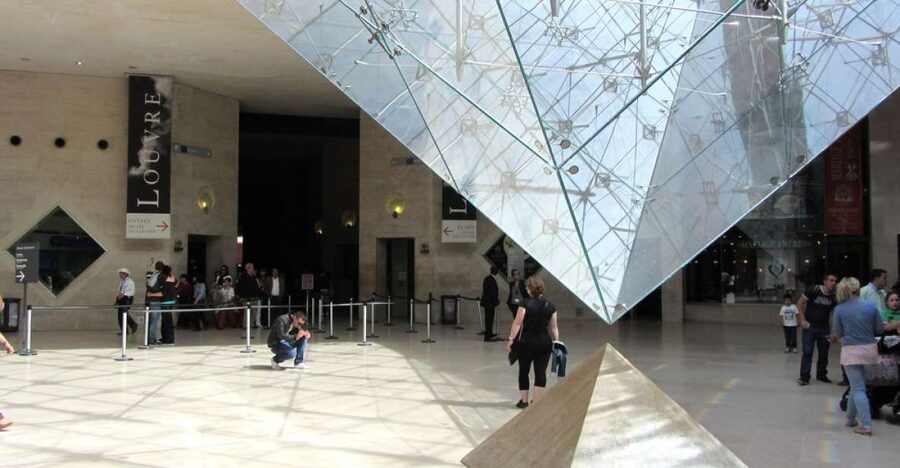
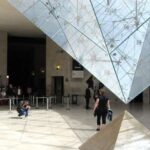
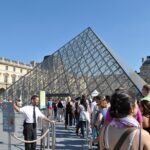
You’ll meet at Arc de Triomphe du Carrousel. The guide will be carrying a red tote canvas bag, which is a genuinely useful detail because that area can get crowded.
I like that the meeting point is a fixed landmark rather than a vague “near the entrance.” It reduces that pre-tour stress where you’re trying to match a face to a photo while everyone else is already moving.
Plan to arrive with a little cushion. Even with skip-the-line access, you still want everyone to be ready to go so your 2-hour window stays meaningful.
Skip-the-line access: what it actually changes for you
Skip-the-line is the big value lever here. In a museum as massive as the Louvre, the difference between waiting and starting matters more than people expect.
Instead of losing your best energy to queue time, you can use the time on what you came for: guided viewing of key works across multiple art movements. It’s especially helpful if you don’t want to spend your day zig-zagging through unrelated rooms.
If you’ve ever visited a landmark museum and felt like you saw only “the route between things,” this tour is built to prevent that. You’ll be walking through themes in a planned order, not winging it.
Renaissance to Humanism: the story behind Botticelli and Mantegna
One reason I like this tour’s structure is that it doesn’t treat Renaissance art like a random collection of famous names. Your guide frames it as a transition—how ideas moved from Medieval traditions toward Humanism and the early Renaissance way of thinking.
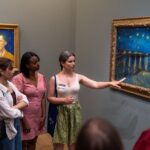
You’ll see Botticelli’s fresco Venus and the Three Graces Presenting Gifts to a Young Woman. Botticelli is the kind of artist where knowing the theme makes the visuals click. The fresco setting also helps you understand how artists worked on walls and how painting could act like storytelling in public spaces.
Then you’ll get an early Renaissance touchpoint with Mantegna’s Saint Sebastian. This matters because early Renaissance art often feels like it’s doing something slightly new while still carrying older instincts. With the guide’s framing, you’re not just looking—you’re comparing how style and intention shift over time.
If you care about the why behind the art—how the cultural mood changes—this is where the tour earns its keep.
Nike of Samothrace: why the statue still grabs people
The tour highlights the Nike of Samothrace, a 2nd-century BC marble statue of the Greek goddess Nike (Victory). Seeing this kind of sculpture in person is a reminder that “classical” isn’t boring. It’s movement, attitude, and drama frozen in stone.
From a practical angle, it also works as an anchor point in your understanding of how earlier art traditions influence later European styles. Even though the tour spans multiple eras, classic references keep resurfacing.
If you want at least one moment that feels bigger than the room around it, this statue is the one to remember.
A few more Paris tours and experiences worth a look

Neoclassical and Renaissance “hits”: Mona Lisa, Veronese, and the big canvas effect
Leonardo da Vinci’s Mona Lisa is included as one of the Renaissance represented touchstones. It’s famous for a reason, but the guide’s job is to help you see it beyond the hype—how the work fits into the larger movement toward Renaissance approaches to human presence and observation.
You’ll also see Veronese’s Marriage at Cana. This is described as the largest painting in the Louvre, and size isn’t just trivia here—it changes how you experience the scene. Big canvases create a different kind of storytelling pressure: you’re scanning, following, and reading the composition like a visual narrative.
This section is a good reminder that Renaissance masterpieces aren’t only about single faces or single poses. They can be about organization—how many elements a painting can hold and still feel coherent.
Romanticism in full force: Gericault and Delacroix’s political emotion
Romanticism shows up through some major emotional and political works. You’ll see Gericault’s Raft of the Medusa, which the tour frames through the Romantic lens. That means you’ll be looking at more than technique—you’ll be thinking about suffering, urgency, and the human stakes of the scene.
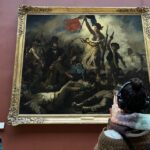
Then comes Delacroix’s Liberty Leading the People, tied to the July Revolution of 1830. This piece is a classic example of art serving as an argument and a memory at the same time. You’re not just admiring paint; you’re seeing how an artwork can carry a message people wanted to keep alive.
These two stops work well as a contrast to earlier periods. Renaissance Humanism tends to focus on human meaning and representation, while Romanticism often pushes toward emotion, conflict, and moral intensity. Put those ideas back-to-back and you can actually feel the timeline instead of just reciting it.
Ingres and Jacques-Louis David: power, performance, and mythmaking
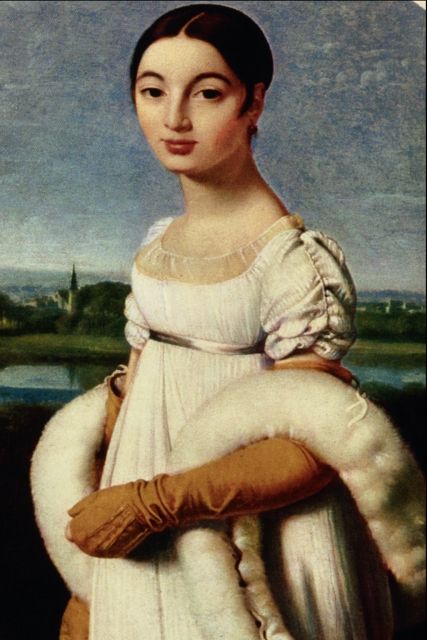
The tour also includes Ingres’ Une Odalisque. The description calls out the sinuous nude, and what that signals is how Neoclassical and later styles could emphasize ideal form and staged spectacle. With a guide, you’ll be able to connect the artwork to the period’s taste rather than treating it like an isolated figure study.
You’ll then see Jacques-Louis David’s The Oath of The Horatii and Crowning of Napoleon. This pair is a big deal because it shows how the same artistic language could be used for different political moments—public virtue, civic duty, and imperial theater.
If you’re interested in how rulers used images to build legitimacy, David is your guy. The guide’s storytelling is what turns the viewing into understanding, especially when you’re moving quickly and don’t want to get lost in symbolism.
What you’ll learn (and why it sticks)
Guides on this tour are clearly focused on interpretation, not just identification. In one review, Boris stood out for giving historical perspective and explaining how the sun and light were depicted in artworks of the time. That kind of theme-based talking is exactly what makes a short tour feel longer.
I also like that the tour can adjust to the group’s needs. One family used the experience with two teenage boys, and the guide managed the flow without losing the content. That’s a sign of real-world teaching skill, not just reading off a placard.
And because the tour spans several major movements, you end up with a mental map you can reuse later when you return on your own. Even one or two clear ideas about transitions—Medieval to Humanism, then moving toward Romantic emotion—helps you read what you see next.
Price and value: is $294 for 2 hours worth it?
At $294 per person for a 2-hour private experience, you’re paying for three things: a guide, skip-the-line entrance, and a tight selection of major works across periods.
Is it cheap? No. But it can be good value if:
- You want more than a quick self-guided glance at random rooms
- You’d rather spend time learning than waiting in line
- You’re traveling as a small group and want a private format that’s easier to manage
If you’re the type who enjoys museum wandering and you’re flexible, you could do it on your own. But if you want an organized route with named artworks and clear historical framing, this price starts to make sense—especially because you’re buying time and direction.
Who should book this tour
This is a strong fit if you:
- Want the Louvre’s key Renaissance and beyond highlights without spending your whole day figuring out the route
- Like art history told through themes and transitions, not just dates
- Appreciate when guides explain context in a way that feels practical and clear
It’s also a smart choice for groups with mixed interests. The tour includes religious, myth, political, and portrait-related works, so chances are higher that everyone finds something they care about.
Should you book this Louvre skip-the-line tour?
If you want a focused Louvre experience with a guided route across Renaissance, Neoclassicism, and Romanticism, I’d say yes—especially if you value skip-the-line access and named stops like Botticelli, Veronese, Gericault, Delacroix, and David.
Skip booking if you’re hoping to see a huge chunk of the museum or you prefer long, solo wandering with no structure. This tour is designed to make every minute count, not to cover everything.
FAQ
How long is the Louvre skip-the-line tour?
The tour lasts 2 hours.
Where do we meet?
You meet at Arc de Triomphe du Carrousel. Your guide will be carrying a red tote canvas bag.
What is included in the price?
The price includes a skip-the-line entrance ticket to the Louvre and a live guide.
Is food or beverages included?
No. Food and beverages are not included.
What languages are the guides available in?
The live guide is available in English, French, and Serbo-Croatian.
Is this tour private and wheelchair accessible?
Yes. It is a private group, and it is wheelchair accessible.
Does the tour run in bad weather?
It operates rain or shine.
Are oversize bags allowed?
Oversize luggage is not allowed. Items exceeding 55x35x20 cm are not permitted in the museum.
What is the cancellation policy?
You can cancel up to 24 hours in advance for a full refund.