REVIEW · PARIS
Paris: Louvre Museum Highlights and Mona Lisa Tour
Book on GetYourGuide →Operated by Mon Petit Paris · Bookable on GetYourGuide
The Louvre can swallow your day fast. This guided highlights visit helps you cut through the chaos with pre-reserved entry and a plan that takes you to the museum’s best-known works, plus the context around them.
I love two things most: the way the headsets keep the guide easy to hear in a packed room, and the storytelling. Guides such as Sally, Barbara, Pierre, and Camille are repeatedly praised for making art feel like a real human drama instead of a museum label.
The main consideration is physical: you’ll walk and climb stairs, and the tour isn’t set up for people with mobility impairments. Also, once you’ve moved out under the pyramid, you can’t go back into the earlier rooms.
In This Review
- Key things that make this tour work
- Why the Louvre Highlights Tour Makes Sense in 1–2 Hours
- Starting at Arc du Carrousel: The Route Begins Before You See Art
- Fast-Track Entry and Airport-Style Security (Plan for a Short Wait)
- The Big Stops: Venus de Milo, Winged Victory, and Mona Lisa
- Venus de Milo: the sculpture you can read
- Winged Victory of Samothrace: why this statue feels alive
- The Mona Lisa: the theft story and why it mattered
- How the Guide Turns Each Masterpiece Into a Story
- Beyond the Headliners: Renaissance, Ancient Greece, and Royal Prints
- Down Below: Medieval Fortress Remains in the Underground Galleries
- Group Size, Headsets, and Getting Unstuck in Crowds
- Price and Time Saved: Is $116 Worth It?
- Who Should Book This Tour (and Who Should Skip It)
- Should You Book This Louvre Mona Lisa Tour?
- FAQ
- Where do I meet the guide?
- How long is the Louvre highlights tour?
- Does this tour include skip-the-line entry?
- What’s included in the price?
- What should I bring, and what’s not allowed?
- Is the tour wheelchair accessible or suitable for mobility impairments?
- What are the cancellation terms?
Key things that make this tour work
- Meet at Arc du Carrousel (usually just outside the Louvre) so you don’t waste time hunting for the group
- Skip the ticket line with fast-track entry using your pre-reserved ticket
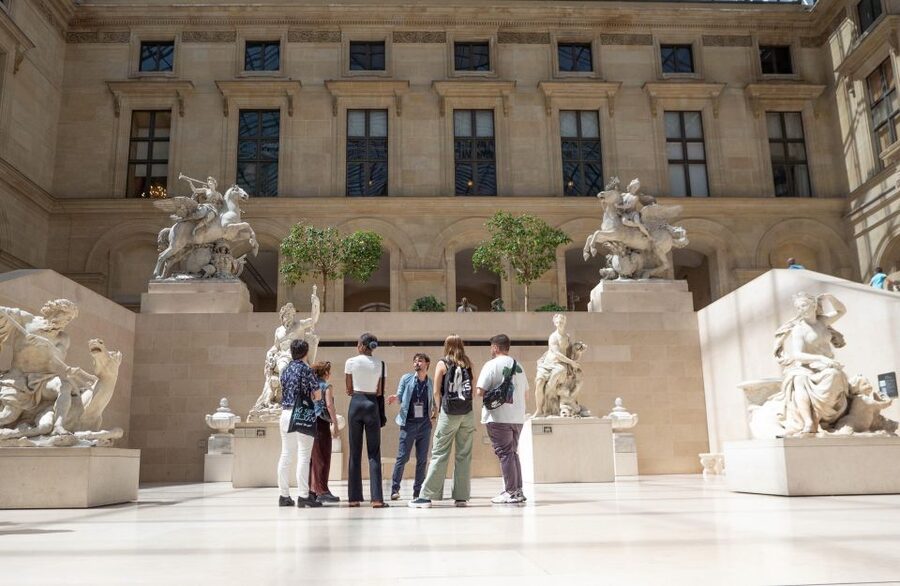
- Small groups (up to 20) plus headsets so you don’t lose the guide in the crowd
- A tight highlights route built around Venus de Milo, Winged Victory of Samothrace, and the Mona Lisa
- More than the “big three” with Renaissance, ancient Greece, 13th–19th century paintings, and Royal Collection prints
- Underground galleries where you’ll see medieval fortress remains and foundations
Why the Louvre Highlights Tour Makes Sense in 1–2 Hours
If you’ve never been, the Louvre is not just large. It’s overwhelming. You can start in one wing and accidentally spend your whole trip circling the same neighborhoods of galleries without getting the meaning behind what you’re seeing.
This tour solves that with a tight time window: 1–2 hours long, built for first-timers who want the major works without spending the day lost. You also get a structured route so the Mona Lisa moment lands with context, not just a quick photo-jam.
The value isn’t only speed. The guide’s job is to connect the dots: what you’re looking at, why it was made, and how it fits into centuries of changing taste, power, and artistic technique. That’s what makes a highlights tour feel like more than a checklist.
You can also read our reviews of more museum experiences in Paris



Starting at Arc du Carrousel: The Route Begins Before You See Art
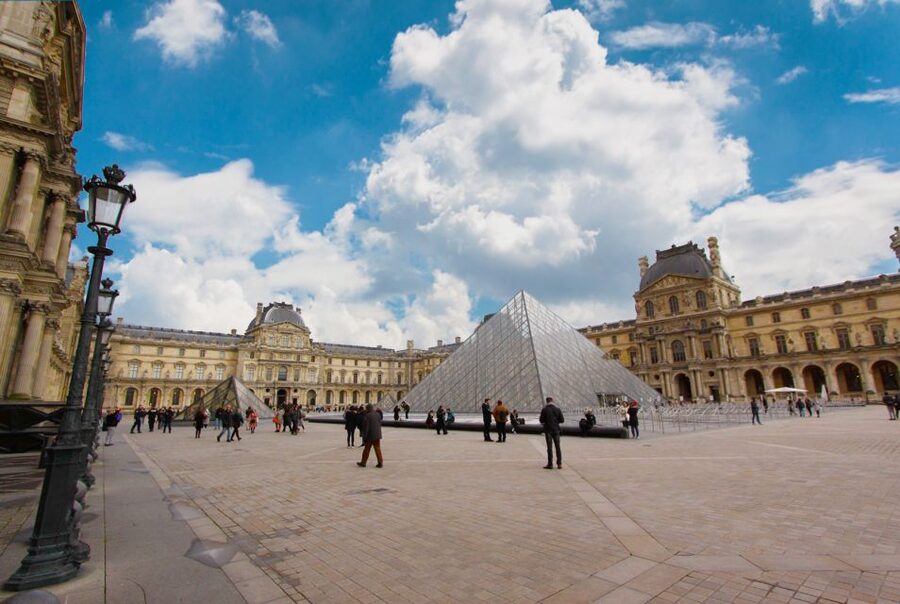
Your day starts outside the museum at the Arc du Carrousel du Louvre, just outside the entrance area. This matters more than you might think. If you go straight to the Louvre entrance, you can easily miss the start of the organized group flow.
One practical tip: bring your passport or ID card. Louvre entry runs on verification, and you’ll go through airport-style security once you’re in the process.
Also wear comfortable shoes. The tour includes stairs, and the Louvre is not a place where you can “power through” in dressy footwear and call it a day. The tour is designed for walking, not gliding.
Fast-Track Entry and Airport-Style Security (Plan for a Short Wait)

Even with skip-the-line entry, you still pass through security. The museum requires checks for everyone, so expect some waiting time.
The good news: the tour is built with a separate entrance and a pre-reserved entry ticket, so you’re not stuck in the standard ticket queue. During peak times, you might see a wait of up to 20 minutes at security, especially in summer when the museum is busier than usual.
Here’s the move that makes the day easier: arrive early enough that you’re not rushing. If you’re late, you may not be able to join with a ticket issued for your time slot because this is a group booking.
The Big Stops: Venus de Milo, Winged Victory, and Mona Lisa
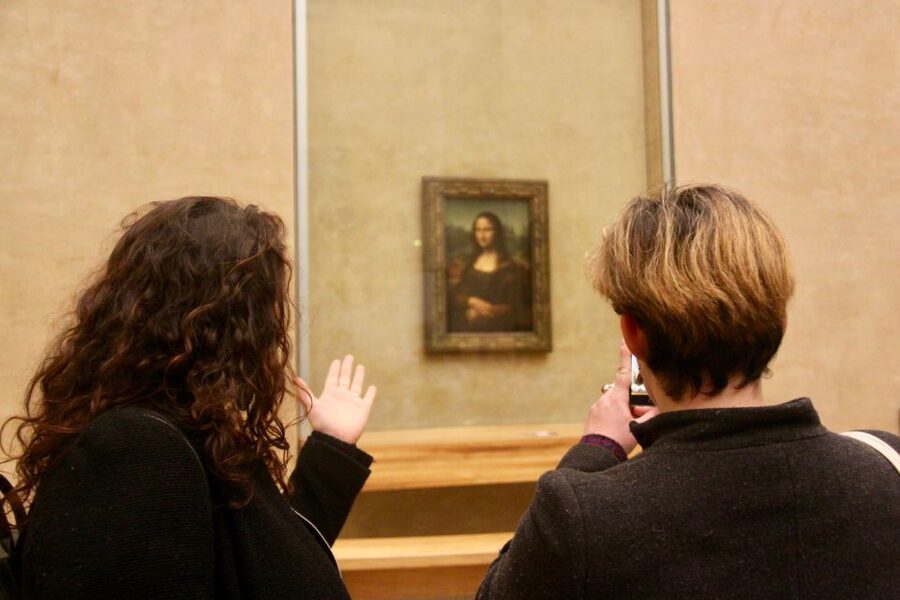
The heart of this tour is a carefully organized flow through the Louvre’s headline masterpieces. The payoff is that you don’t just locate each artwork. You learn what to notice once you’re standing in front of it.
Venus de Milo: the sculpture you can read
You’ll spend time at Venus de Milo. You may have seen her in textbooks, but in person the experience is different. The tour framing helps you focus on why this statue has had such a long artistic influence—how its form and style became a reference point for generations of artists.





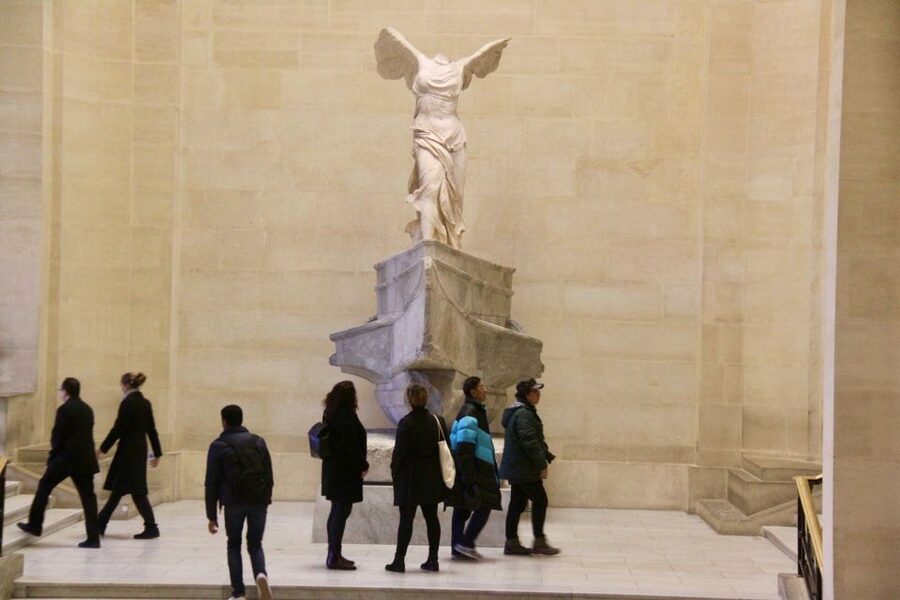
Winged Victory of Samothrace: why this statue feels alive
Next is Winged Victory of Samothrace. The guide helps you connect the dots between the storytelling you can’t see at a glance—gesture, movement, and drama—and the historical idea it represents: Nike, the Greek goddess of victory.
This is one of those works where the crowds can flatten your attention. With the guide and headsets, you get something most people miss: a “what to look for” map that keeps you from just staring at the most obvious angles.
The Mona Lisa: the theft story and why it mattered
Finally, you’ll reach the Mona Lisa, the world’s most famous Renaissance portrait. One of the most interesting parts of the tour is the explanation of the painting’s fame, including how the 1911 theft helped rocket it into global attention.
The tour often ends with a focused explanation at the Mona Lisa area, then you’re free to explore afterward. Just keep the location rules in mind: once you’ve exited the wings and are under the pyramid, you can’t re-enter those rooms. So if something earlier caught your eye, take your best look during the guided time.
How the Guide Turns Each Masterpiece Into a Story
What makes this tour stand out, again and again, is the guide style. People consistently highlight guides who tell stories with pacing, humor, and clear explanations.
You’ll hear examples of how this looks in real life. Guides like Sally are praised as strong storytellers who keep the experience fun and not academic. Barbara is repeatedly mentioned for being both professional and personable, with explanations that add insight rather than just facts. Pierre is noted for making sure people get positioned well for key views and for turning art history into something you can actually follow.
This is exactly what you want from a Louvre guide:
- Not a lecture that makes you sleepy
- Not a rushed stop where you barely get close
- A narrative that gives you a mental framework while you’re standing there
That framework pays off when you wander after. You start noticing themes across rooms—how artists borrow ideas, revise styles, and respond to politics and patronage. The Louvre becomes less like a maze and more like a connected timeline.
Beyond the Headliners: Renaissance, Ancient Greece, and Royal Prints
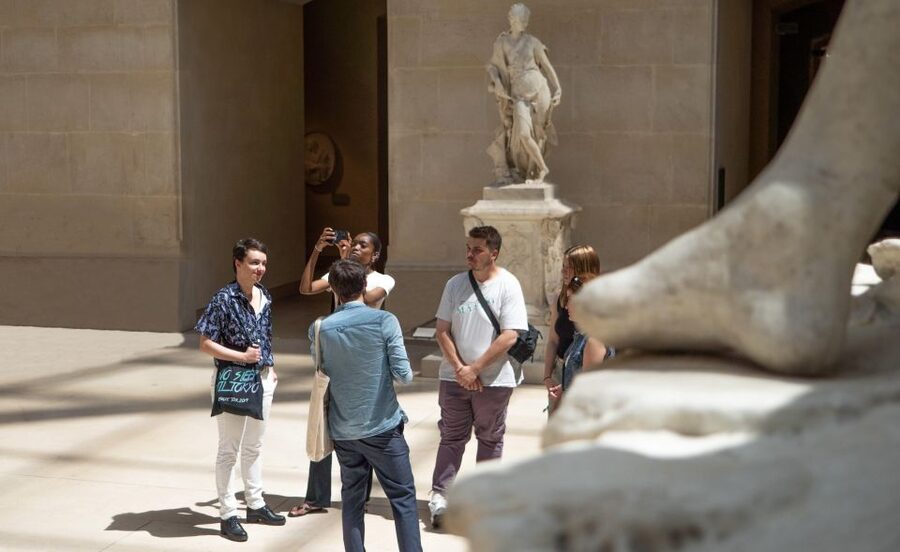
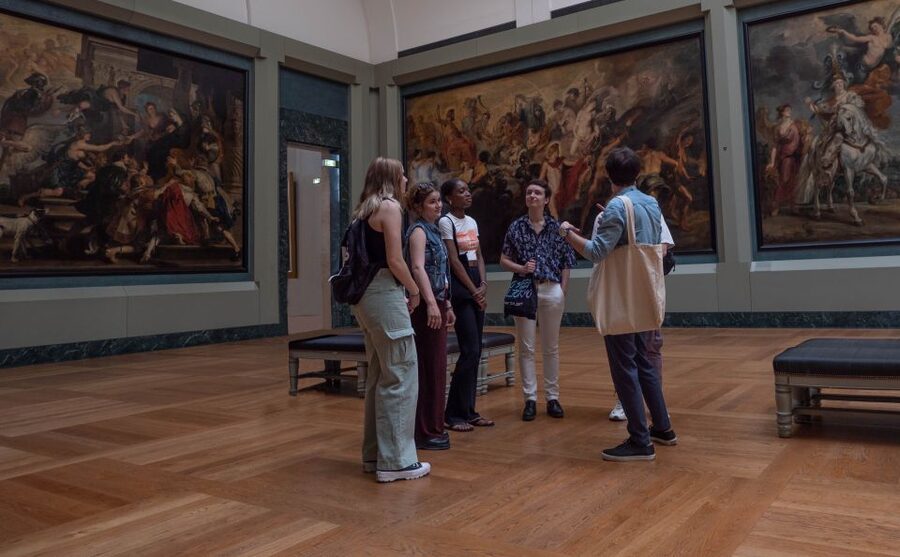
A good Louvre visit is not only about the famous objects. It’s about learning how the Louvre’s collection spans time, from ancient civilizations to the mid-19th century.
During the tour, you’ll go beyond the three mega-stars. You can expect attention to:
- Renaissance art and why it changed how portraiture and storytelling worked
- Ancient Greek relics, where sculpture isn’t just decoration—it’s history made physical
- Paintings from the 13th to the 19th centuries, which helps you see shifting styles over time
- Prints from the Royal Collection, which adds another layer to how power and taste shaped collecting
This kind of breadth is what makes a 1–2 hour tour feel like a “taste with context,” not just a highlight sprint. You leave with a handful of reference points that help you navigate later on your own.
Down Below: Medieval Fortress Remains in the Underground Galleries
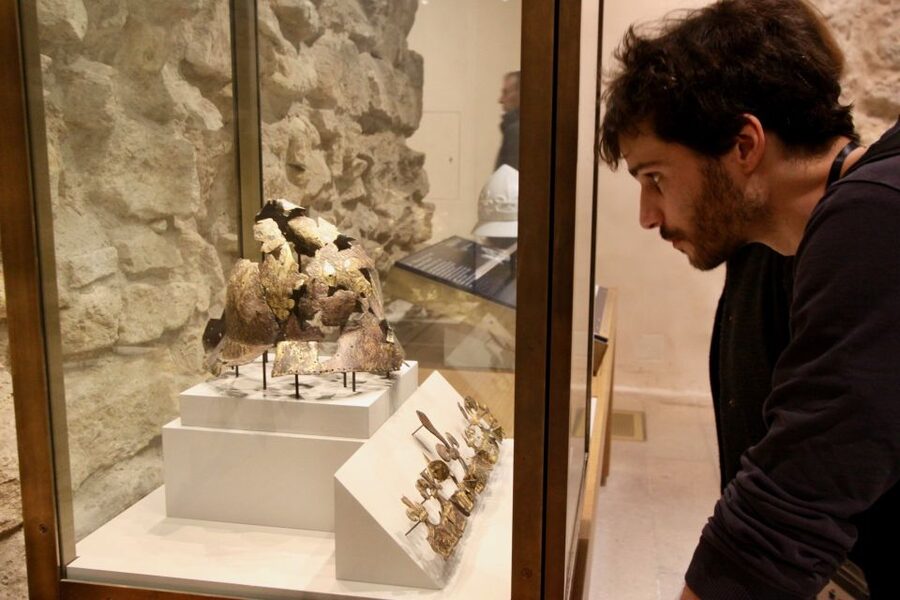
One of the most fascinating parts is the museum’s underworld. The Louvre isn’t only a palace turned art gallery. Beneath it are underground galleries showing remains of the original medieval fortress and foundations that shaped the palace’s history.
This matters because the Louvre is not just an art museum. It’s a building with layers. When you understand that the site evolved over time, the museum feels less like a random list of objects and more like a place where history is physically stacked.
It’s also a welcome break from the busiest central rooms. If crowds near the Mona Lisa and Venus de Milo make your patience thin, the underground focus can feel like a reset.
Group Size, Headsets, and Getting Unstuck in Crowds

You’re in a standard group (max 20 participants), which is a sweet spot. Large groups tend to slow down or spread out. Smaller groups keep movement smoother and make it easier for the guide to stay connected to everyone.
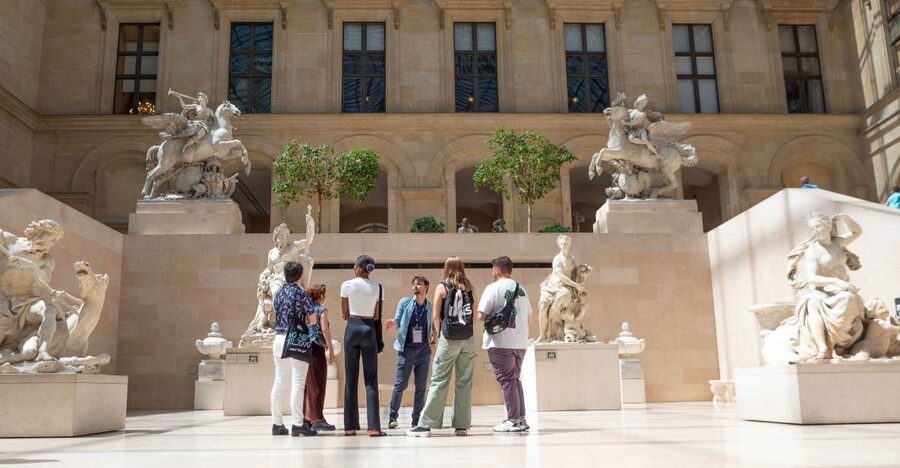
The headsets are a big deal. In the Louvre, even close-up spots can feel far away because crowds absorb sound. With headsets, you catch the guide’s explanation without craning your neck or guessing what you missed.
Pacing also matters. Many guides are praised for not rushing and for leaving space for questions. That’s how you turn a fast pass into a genuinely useful experience—especially if you’re not an art history person.
Price and Time Saved: Is $116 Worth It?
At $116 per person for 1–2 hours, this is not a budget ticket. But you’re paying for three things that have real value in Paris:
1) Fast-track access so you’re not burning precious time in line
2) A licensed English guide who adds meaning to what you’re looking at
3) Headsets that make the tour actually enjoyable inside a noisy, crowded museum
If you’re visiting for the first time and you don’t yet know where the best objects sit (or how to structure your day), the guide saves you more than time. It saves you from the feeling of floating without direction.
The other side of value: this tour is timed and highlights-focused. If your goal is to linger deeply in one department for hours, you’ll likely want longer access outside the tour. In that case, use this as your foundation visit, then come back for the rabbit holes later.
Who Should Book This Tour (and Who Should Skip It)
This tour is a strong fit if:
- You want Mona Lisa + the main sculptures without spending your day lost
- You like hearing stories behind artworks, not just reading labels
- You’re traveling with kids or mixed ages and want a guide to keep everyone on track
It’s also ideal if you’re the type who gets stressed in crowds. The route and group keeping help you manage the flow, and the guide helps you avoid spending time stuck in the wrong rooms at the wrong moment.
It may be a poor fit if:
- You need a wheelchair-accessible route. The tour is not suitable for mobility impairments due to stairs and elevator placement
- You hate walking and climbing stairs. You’ll do both
If stairs are a concern, don’t guess. Plan using the Louvre’s physical reality, not your own optimism.
Should You Book This Louvre Mona Lisa Tour?
If you’re thinking about the Louvre and wondering how to make it feel human, this is a smart way to start. You get skip-the-line entry, a guide with strong storytelling, and a route that hits the biggest masterpieces plus supporting works that help you understand what you’re seeing.
I’d book it if you’re a first-timer, short on time, or you want the Mona Lisa experience without turning it into a frantic crowd sprint. It’s also a great “buy once, benefit twice” choice: the tour gives you context, then you can wander with clearer taste and better instincts.
I’d hold off if you want a fully flexible, slow museum day with deep independent browsing from the first minute. This tour is structured, and once you’re moved out under the pyramid area, you can’t re-enter earlier rooms.
FAQ
Where do I meet the guide?
Meet your guide at the Arc du Carrousel du Louvre, just outside the museum. The exact meeting point may vary depending on the option you book, so it’s worth double-checking your specific details.
How long is the Louvre highlights tour?
The duration is listed as 1–2 hours. Starting times depend on availability, so pick your time slot and expect a short, focused route.
Does this tour include skip-the-line entry?
Yes. You get a pre-reserved Louvre entry ticket and skip ticket lines through a separate/fast-track entrance.
What’s included in the price?
Included are a guided tour in English with a licensed guide, your pre-reserved entry ticket, and headsets so you can hear the guide better. Groups are capped at a standard size of up to 20 participants.
What should I bring, and what’s not allowed?
Bring a passport or ID card and wear comfortable shoes. The tour requires airport-style security screening, and luggage/large bags are not allowed. Non-folding strollers are not allowed either.
Is the tour wheelchair accessible or suitable for mobility impairments?
No. The tour isn’t suitable for people with mobility impairments. You must be able to walk and climb stairs, and the museum’s elevators location is part of why it can’t accommodate wheelchairs.
What are the cancellation terms?
You can cancel up to 24 hours in advance for a full refund. After that window, the tour is non-refundable and cannot be rescheduled.
If you want, tell me your travel month and whether you’re going early or late in the day—I can suggest the best timing strategy for hitting the Mona Lisa area with less stress.