REVIEW · SANTIAGO
Museo Chileno de Arte Precolombino Admission Ticket
Book on Viator →Operated by Museo Chileno de Arte Precolombino · Bookable on Viator
A museum ticket that feels like time travel. In Santiago, the Museo Chileno de Arte Precolombino turns ancient cultures into a memorable, easy-to-follow visit inside a handsome 1805 neoclassical building.
What I like most is the museum’s permanent exhibition, Chile before Chile, which connects humans in what is now Chile all the way to today’s Indigenous peoples and their artistic expressions. I also like that the museum experience supports Spanish and English explanations, so you can understand what you’re seeing without playing guessing games.
One possible drawback: the museum feels on the smaller side, and the lower level can be dark, which can make some signage harder to read. If you’re sensitive to low light or you hate squinting, plan to move slowly and give yourself extra time.
In This Review
- Key highlights before you go
- Entering the museum housed in an 1805 Royal Customs House
- Chile before Chile: the exhibition that stitches 14,000+ years together
- Your 2-hour visit plan: pace yourself and prioritize the exhibition
- The museum’s small-group feel (and what it means for you)
- Café breaks and a quick gift shop stop
- Value and ticket pricing: why $17 can make sense
- Who should book this admission ticket, and who might want another plan
- Should you book the Museo Chileno de Arte Precolombino ticket?
- FAQ
- What is the price of the admission ticket?
- How long does the visit take?
- Where is this experience located?
- What are the opening hours?
- Does the ticket include the museum entry?
- Is food included?
- Are children allowed?
- Are discounted tickets available?
- Is confirmation provided after booking?
- What is the cancellation policy?
- Is there a limit on group size?
Key highlights before you go
- A ticket you can plan around: about a 2-hour visit in the Santiago center
- Chile before Chile: a permanent show built around 14,000+ years of human presence
- A standout setting: the museum is in an 1805 neoclassical former Royal Customs House
- Meaningful identity thread: ancient roots connected to present-day Indigenous culture
- On-site comfort: a cafe and a small gift shop to round out your visit
- Small group feel: max 15 people, with confirmation received at booking
Entering the museum housed in an 1805 Royal Customs House
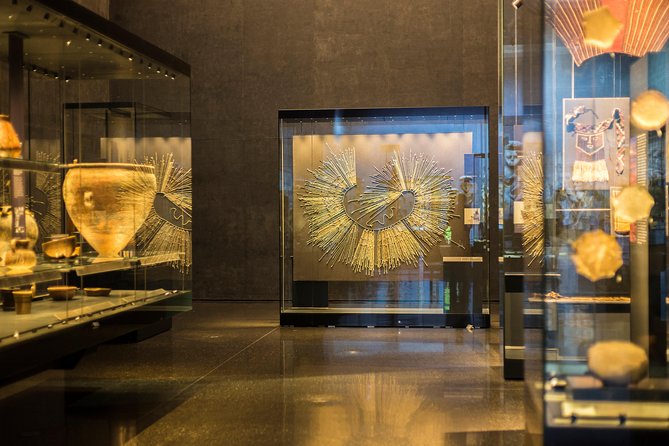
This museum is housed in one of Santiago’s grand colonial-era buildings. It dates to 1805 and was built in a neoclassical style, originally serving as the colonial government’s Royal Customs House. That matters more than you might think. The building gives the visit a sense of place, and it frames the collection like something worth slowing down for.
A key practical point: this isn’t a giant maze of galleries. That can be good. You’re not forced into a sprint to cover everything. You can take time with objects that catch your eye, then circle back if something sparks curiosity.
If you’re used to museums where you need a plan for every room, you’ll be happy here. The experience is built for a steady pace, and the central exhibition gives you a clear storyline instead of a “grab bag” of artifacts.
Also, the museum sits in central Santiago and is near public transportation, so it works well as a standalone stop or a calm break between busier sights.
Chile before Chile: the exhibition that stitches 14,000+ years together
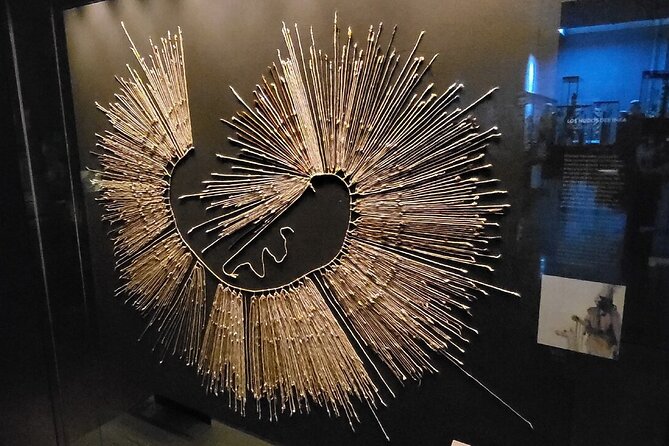
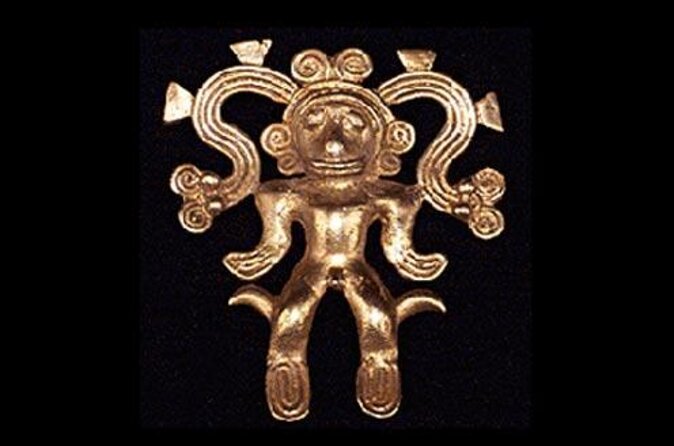
The permanent exhibition, Chile before Chile, is the heart of the visit. It focuses on how people first entered the territory that is now Chile more than 14,000 years ago, then how different groups inhabited its diverse geography over time. The show doesn’t stop at the past either. It connects those ancient cultures to present-day Indigenous communities, including the idea that genes, artistic expression, and histories are part of Chilean identity.
What makes this approach valuable is how it avoids the common museum trap of treating ancient cultures like they belong to a different planet. Instead, the exhibition is organized to help you see continuity: techniques, motifs, and cultural memory don’t vanish the moment a new era begins.
You’ll also see how art and objects carry meaning beyond aesthetics. Think of these pieces as tools for communication. They tell you how people adapted, what they valued, and how they made life understandable in their own world.
Two more helpful details that shape your experience:
- You can follow along with Spanish and English explanations for items in the exhibition.
- The museum’s structure supports a walk-through format where you can spend more time on objects that hold your attention.
There’s one caution to keep in mind. A smaller museum can sometimes mean fewer temporary exhibitions at a given moment. Based on past on-site conditions, you might find the focus is very strongly on the permanent display, with other areas limited or closed. That’s not necessarily bad, especially if you came for the core exhibition story.
Your 2-hour visit plan: pace yourself and prioritize the exhibition
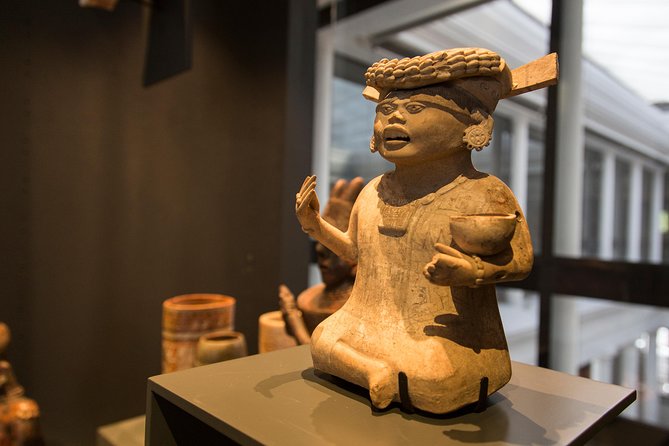
This is an admission ticket built around a visit of about 2 hours. Because it’s not built like a long guided lecture, you get more freedom to set your pace. I like that for this museum. When you’re dealing with artifacts across thousands of years, rushing makes it harder to see patterns.
Here’s a practical way to structure your time:
- Start with Chile before Chile and treat it like a timeline you can move through slowly.
- When you hit an object that grabs you, linger. The museum’s explanations help you connect the art to the people and time period behind it.
- If you plan to visit lower areas, give yourself extra time and keep an eye on signage.
That signage detail matters. The lower level can be dark, and some labels are harder to read. This is the main “attention tax” of the visit. Solution: slow down, position yourself so you can read comfortably, and don’t assume every label will be instantly legible from across the room.
Language tip: if your Spanish is rusty, don’t panic. The museum experience includes Spanish and English explanations. If you’re stronger in one language, you can use it as your anchor, then cross-check anything confusing in the other.
Also, the museum ticket is the only inclusion. There’s no bundled food or transport, so you’ll want to think ahead if you’re building a longer day in Santiago.
The museum’s small-group feel (and what it means for you)
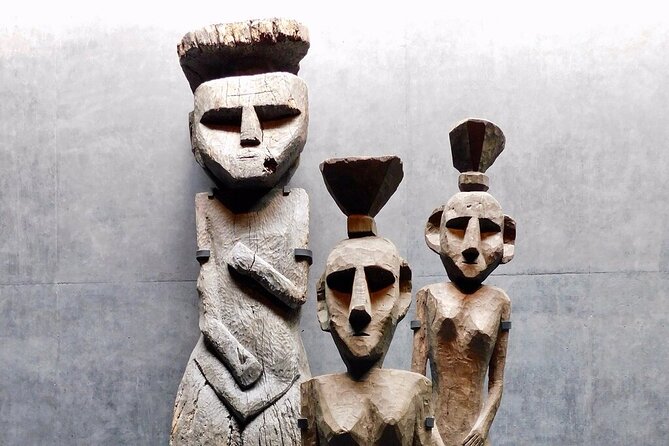
The experience is limited to a maximum of 15 people. Even though this is an admission ticket experience rather than an hour-by-hour guided program, that small cap tends to keep things calmer at the entrance and in the galleries.
Another real-world plus: even if you’re using a phone or an app for your ticket, sometimes tech acts up. One practical workaround is available at the desk: staff can check you in and print your reservation if needed. So if your ticket looks weird on your screen, you’re not stuck.
And because confirmation is received at booking, you’re not walking in blind. That helps when you have a tight schedule.
If you’re coming with kids, note that children must be accompanied by an adult. This can still work as a family stop, especially because the museum’s exhibition topic is structured like a story. Just plan for a bit more time for wandering and questions.
Café breaks and a quick gift shop stop
One of the nicest surprises in a smaller museum is that you can stay longer without leaving the building. There is a cafe inside, which makes it easy to take a breather mid-visit rather than trying to squeeze food into your Santiago day.
Afterward, you can also stop by the gift shop. It’s a simple way to turn what you learned into something you’ll remember later, especially if you like art books or small cultural items.
One more atmosphere note: sometimes you may catch live music or performances in nearby areas of the building. It’s not something you should plan around like a fixed showtime, but it can add a fun, unexpected moment to the experience.
Value and ticket pricing: why $17 can make sense
At $17 per person, the ticket is priced like a museum stop meant to be doable in a day. The value here isn’t just the collection. It’s the combination of:
- A permanent exhibition with a clear theme
- Explanations available in Spanish and English
- A historic building that makes the visit feel grounded and real
- A visit length (around 2 hours) that doesn’t swallow your whole schedule
If you’re traveling with limited time in Santiago, this museum is a strong option because you’re not betting your day on a complicated route. It’s in the center, near transit, and the core exhibition is the main event. You can come, see the story, take a break at the cafe, and still have energy left for the rest of your itinerary.
Discounts can also improve value. If you’re a Chilean national, a foreign resident in Chile, or a student, discounted tickets are available at the museum entrance with ID. That can make a big difference if you’re going with more than one person.
Who should book this admission ticket, and who might want another plan

This museum fits best if you want an organized introduction to the Indigenous cultures of Chile and how ancient presence connects to modern identity. If you like archaeology-adjacent art, cultural storytelling, or you simply want a museum that doesn’t feel like a blur of unrelated objects, you’ll likely enjoy it.
It’s also a good choice if:
- You want something in the city center without an all-day commitment
- You prefer a smaller-scale museum where you can actually read the labels
- You’ll appreciate bilingual support (Spanish and English explanations)
- You want a calm stop that still feels meaningful
It may be less ideal if:
- You need bright lighting everywhere for label reading
- You’re expecting a huge, sweeping “world-class collection” museum with tons of rotating exhibitions
- You want guided, step-by-step interpretation led by a host (this is mainly a ticketed, self-paced visit)
Should you book the Museo Chileno de Arte Precolombino ticket?
Yes, if you want a thoughtful, easy-to-fit museum stop that connects 14,000+ years of history to present-day Indigenous identity through art. The building alone is worth appreciating, and the permanent exhibition gives you a clear storyline without demanding specialist background.
Skip or reconsider if dark areas would make you uncomfortable, or if you’re specifically chasing a changing mix of temporary exhibits. In a smaller museum, the main focus is often the permanent show.
If you’re choosing between this and another museum on the same day, I’d pick the one that helps you build a coherent mental map of Chile, not just random highlights. This ticket is designed for that kind of understanding.
FAQ
What is the price of the admission ticket?
The ticket costs $17.00 per person.
How long does the visit take?
Plan for about 2 hours (approx.) for the visit.
Where is this experience located?
It takes place in Santiago, Chile, at the Museo Chileno de Arte Precolombino in the city center area near public transportation.
What are the opening hours?
From Tuesday to Sunday, the museum is open from 10:00 AM to 5:00 PM in both 2025 and 2026.
Does the ticket include the museum entry?
Yes. The museum ticket is included.
Is food included?
No. Food and drinks are not included.
Are children allowed?
Children must be accompanied by an adult.
Are discounted tickets available?
Yes. Chilean nationals, foreign residents in Chile, and students can buy discounted tickets directly at the museum entrance by showing an ID.
Is confirmation provided after booking?
Yes. Confirmation is received at the time of booking.
What is the cancellation policy?
You can cancel for a full refund if you cancel at least 24 hours before the experience’s start time. Free cancellation is available under those conditions.
Is there a limit on group size?
Yes. The experience has a maximum of 15 people.