REVIEW · PARIS
Paris: Best of Orsay Museum Small Group Tour with Tickets
Book on GetYourGuide →Operated by CONNECTING FRANCE · Bookable on GetYourGuide
If you only have two hours, Orsay can still feel huge. This small-group tour turns Musée d’Orsay into a clear art story, not a museum maze. You get tickets, a live guide, and a focused path through the paintings (and the building itself).
I especially like the way the tour connects artists and ideas across time. You’ll see big names like Monet, Renoir, Degas, Van Gogh, and Cézanne, but the guide doesn’t treat them like random highlights. Second, I love the small-group size—often around 6, and sometimes even smaller—so it’s easier to ask questions and actually hear what matters. In past groups, guides like Miriam, Mae, and Marine led lively discussions that made the art feel less distant.
One thing to keep in mind: Orsay gets crowded. Even with quick access, you still need to go through security, and crowd noise can make it harder to concentrate in certain rooms—so picking a calmer time slot helps.
In This Review
- Key things you’ll notice on this Orsay tour
- Entering Musée d’Orsay with tickets already in hand
- Meeting at the elephant statue: find your guide fast
- A quick viewpoint moment before you hit the galleries
- Realism to Impressionism: the story your guide threads for you
- The core stops: Monet, Renoir, Van Gogh, and the works you’ll remember
- Manet’s role and why the timeline matters
- Cézanne, Van Gogh, Gauguin, and Matisse: the push toward the new century
- Orsay’s sculpture and art nouveau details (and why they’re not filler)
- The Orsay Railway Station story that changes how you see the museum
- Small-group dynamics: why you’ll hear your guide and see the same thing
- What to bring, and what will slow you down
- Price and value: $102 for two hours—what you’re actually paying for
- Who should book this Orsay small-group tour
- Should you book this Orsay tour or go it alone?
- FAQ
- How long is the Musée d’Orsay small-group tour?
- What’s included in the tour price?
- Where do we meet the guide?
- Which languages are available for the live guide?
- Can I skip the security line?
- What identification do I need?
- Is luggage or a large bag allowed?
- Is the tour suitable for wheelchair users or people with mobility impairments?
- What happens if Orsay has a closure due to strikes?
- What’s the cancellation policy?
Key things you’ll notice on this Orsay tour
- Tickets included, so you’re not hunting for timed entry while the line grows
- Small-group format (often about 6), which makes Q&A real
- Impressionism plus post-Impressionism, with the “why it happened” explained
- Art history connections across politics, society, and artistic technique
- The Orsay station-to-museum backstory, so the building makes sense
- More than paintings: sculpture (Rodin), art nouveau, and the surprise of Lady Liberty
Entering Musée d’Orsay with tickets already in hand
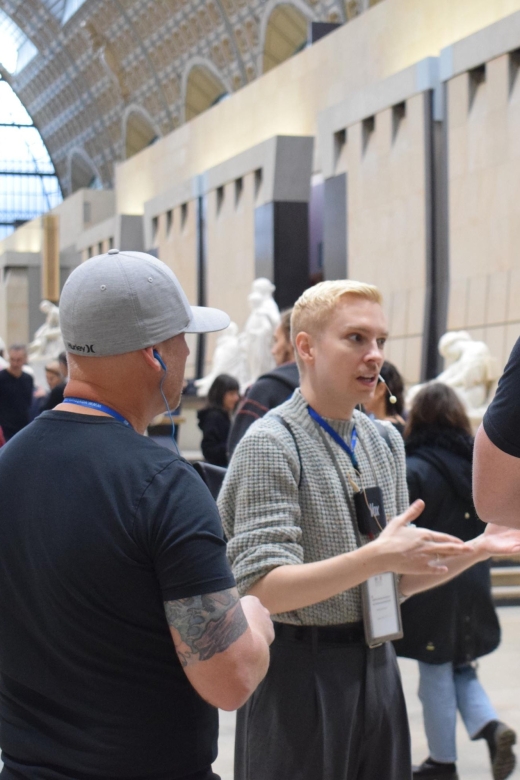
Musee d’Orsay is the kind of museum where you can walk in with high expectations and still end up lost. This tour helps because your time is structured around what people come for: the Impressionists and the post-Impressionists who followed right after.
You’re not just buying entry. You’re buying focus. That matters, because the museum holds a lot—paintings, sculpture, decorative arts—and if you freestyle for two hours, you’ll likely miss the story the museum is built to tell.
And yes, this tour includes entrance tickets. The big practical benefit is less time doing admin and more time with the art. Even so, quick access doesn’t mean security disappears. You still pass through it—just without the worst wait.
A few more Paris tours and experiences worth a look



Meeting at the elephant statue: find your guide fast
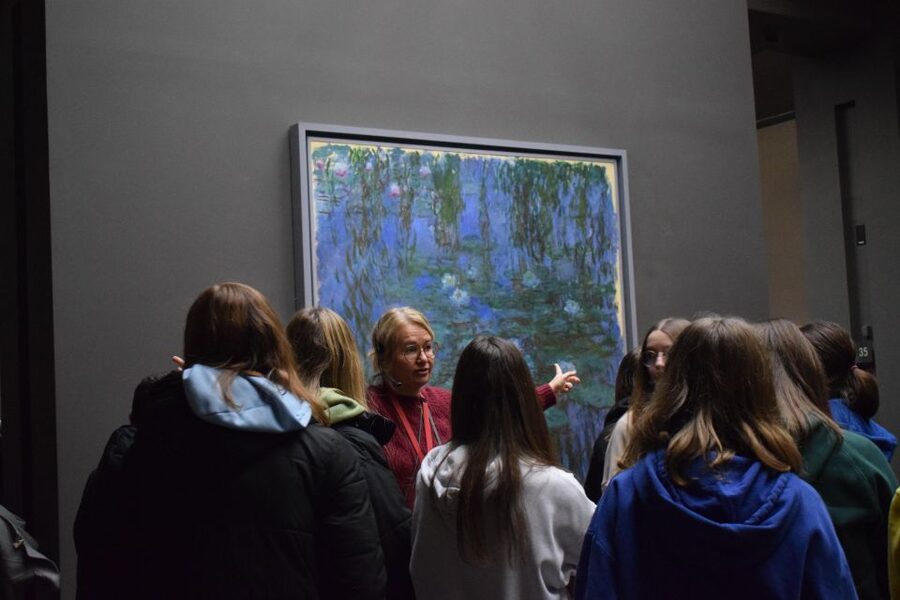
Your meeting point is in front of the museum by the huge elephant statue, where your guide holds a sign reading Connecting France. That’s a lifesaver on a first visit, because Orsay’s exterior can feel like one long street of entrances.
If you’re coming in from central Paris, give yourself a buffer. Not because the tour is disorganized—it’s because crowds around major museums tend to make normal walking slower than you expect. Arrive a bit early, locate the elephant, and you’ll start the tour without the pre-museum stress.
Also note: you’ll be using your ticket for a personal entry. The tour is built around timed access, so keep your ID handy.
A quick viewpoint moment before you hit the galleries
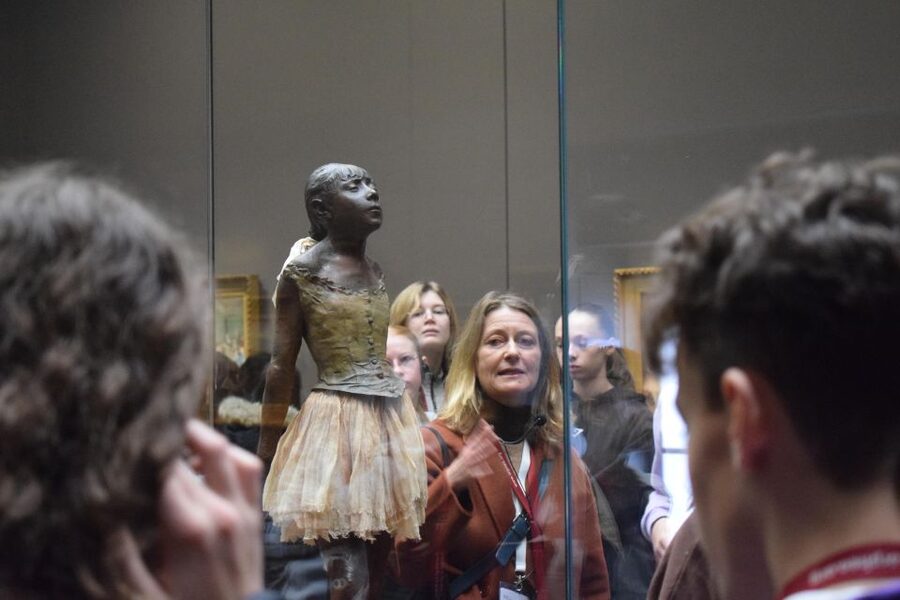
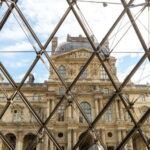
The schedule includes a brief viewpoint visit before you settle into Musée d’Orsay. I like this kind of start because it sets your brain to the right “mode.” Before you face a room full of paintings, you get a sense of the building and context so the guide’s narrative lands better once you’re inside.
You’re not meant to do a long photo stop here. The goal is orientation, then straight into art.
Realism to Impressionism: the story your guide threads for you

Orsay is famous for Impressionism, but the smartest part of this tour is how it starts earlier. The guide sets up the shift from realist approaches and academic standards to the artists who challenged them.
You’ll get the idea that Impressionism wasn’t just a style choice. It was connected to what artists were reacting against—social change, politics, and changing tastes. Guides highlighted this “art and society” link in their own ways, including the way some guides framed artists as rebels responding to their moment.
If you’ve ever thought impressionism looks effortless in photos, this tour helps you see the work behind the look. The tour also places key figures in sequence—so names like Manet, Degas, Pissarro, Renoir, and Monet don’t feel like a random list.
The core stops: Monet, Renoir, Van Gogh, and the works you’ll remember
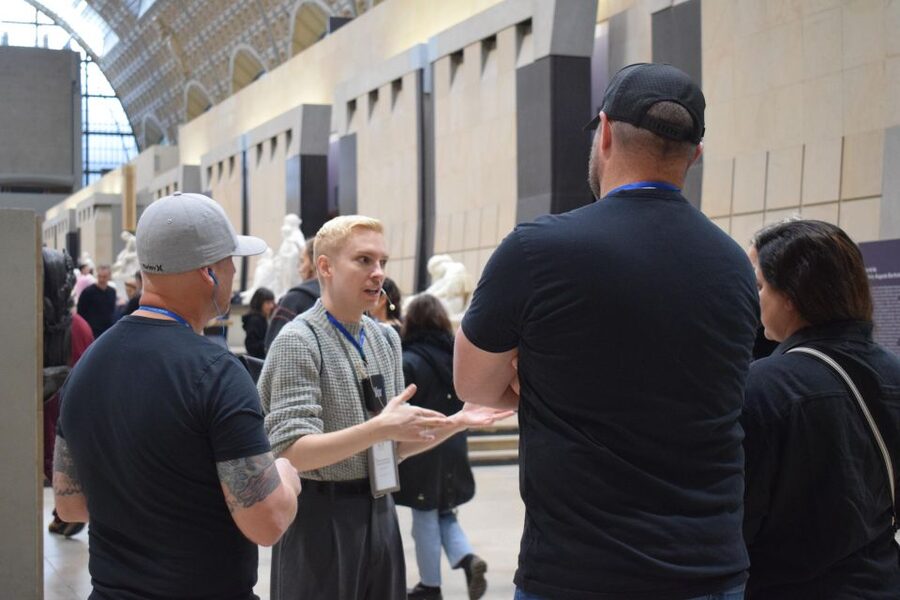
This is the part you came for: a guided walk through the museum’s top Impressionist and post-Impressionist holdings. The tour is designed to cover the major artists people expect—Monet, Renoir, Van Gogh, Degas, Sisley—plus the broader transition around them.
I like the way the guide picks standout paintings to anchor the conversation. For example, you’ll see Dance at Le Moulin de la Galette by Renoir, and the guide uses it as a springboard for technique and meaning, not just “here’s a famous piece.”
Here’s what you’ll likely get more of, compared with an unguided visit:
- a quick read of what you’re looking at (and what to notice first)
- a sense of why this painting looks the way it does
- an explanation of symbols and clues in what’s happening on the canvas
More than once, reviews praised guides for pointing out symbols and visual details you might otherwise miss. That’s a big deal in Orsay, where some works reward slow looking.
You can also read our reviews of more museum experiences in Paris






Manet’s role and why the timeline matters
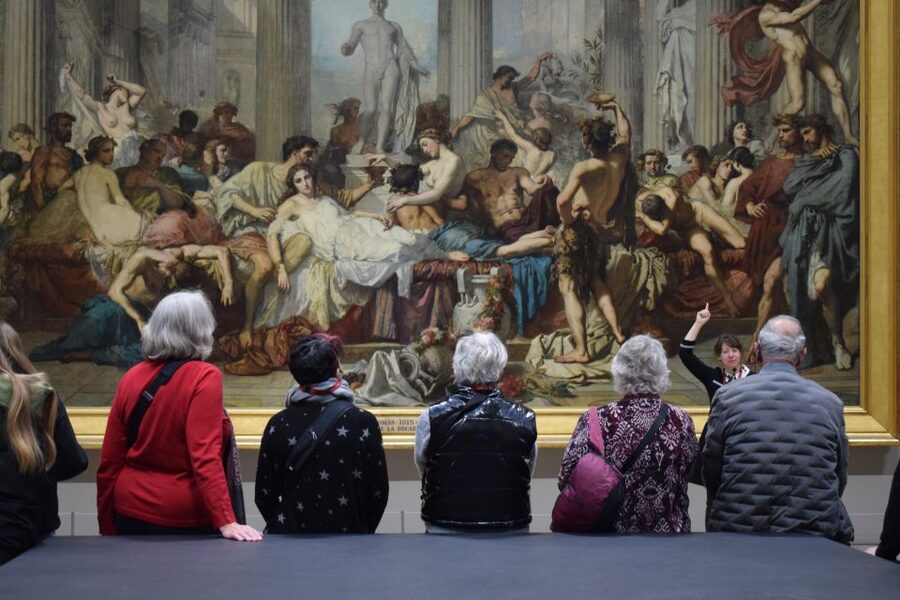
A lot of first-time museum visitors treat art history like isolated islands: Monet here, Van Gogh there. This tour connects the lines.
Manet gets positioned as a bridge figure—someone whose work helped pave the way for the Impressionists. That framing makes Degas and the others feel less like unrelated geniuses and more like part of a chain of change.
It also helps you understand the “break” in style. When academic painting gave rigid expectations, these artists moved in new directions: brushwork, color, subject matter, and the feeling of modern life. By the time you reach later works, you’ll understand what changed and why.
Cézanne, Van Gogh, Gauguin, and Matisse: the push toward the new century
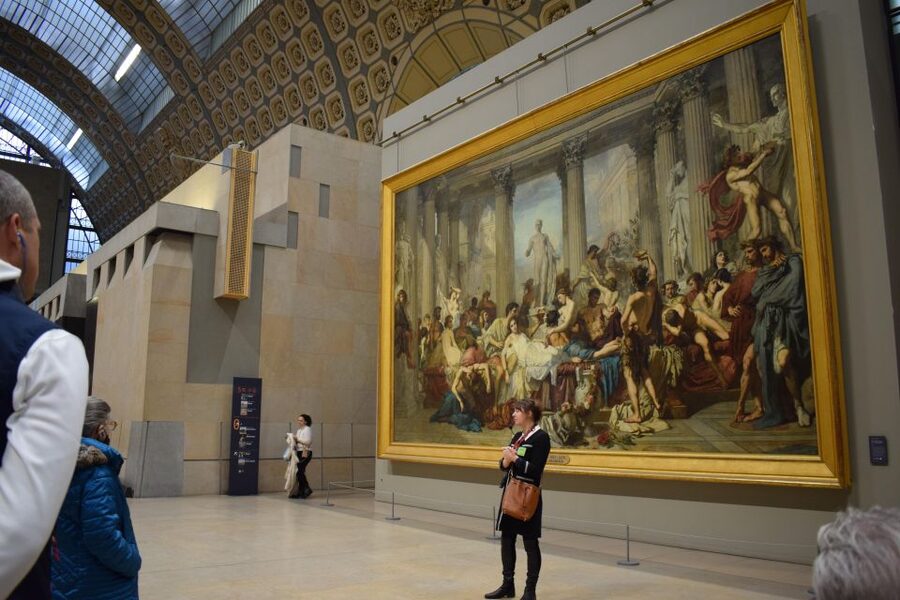
After Impressionism, Orsay doesn’t stop. You move into the more experimental energy of post-Impressionism and the artists who pushed beyond it.
You’ll see works tied to Cézanne, Van Gogh, Gauguin, and Matisse in the broader arc. I like that the guide explains the influence between movements instead of treating each artist as a standalone event.
Van Gogh in particular benefits from this approach. If you only see him as a headline name, you can miss how his style fits into the larger moment—how ideas about color, structure, and expression were shifting across Europe.
And yes, the “technique” talk matters here. When a guide explains how artists built images, you start noticing patterns: how a scene is organized, how emotion shows up in choices of color and form, and how later modern art grows out of these experiments.
Orsay’s sculpture and art nouveau details (and why they’re not filler)
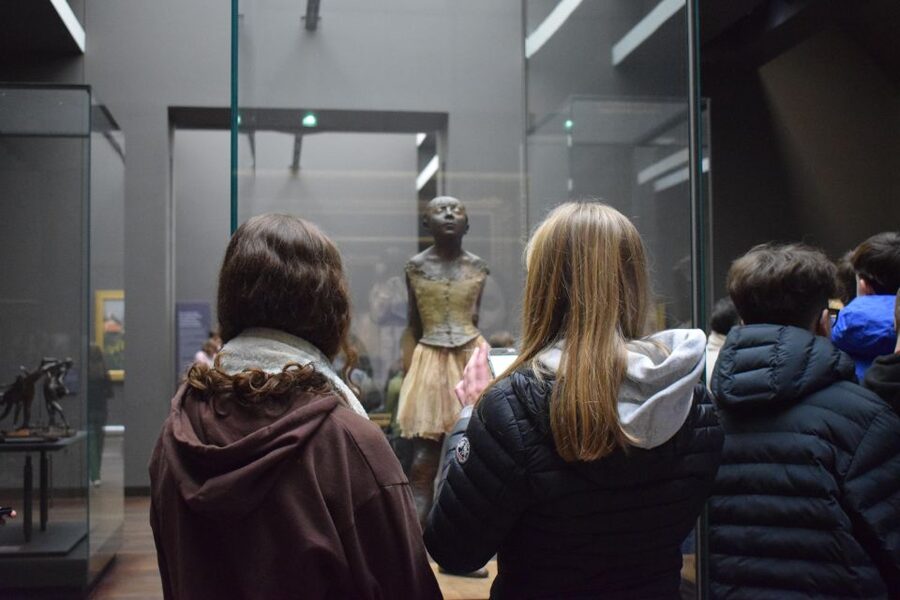
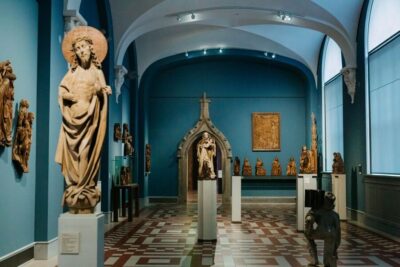
Even though this is an art-painting tour, it doesn’t ignore the rest of the museum. You’ll also get time for Rodin sculpture and the art nouveau elements in the building’s world.
This is where the tour feels extra practical. If you’re only used to thinking of art as painting, you might walk past sculpture thinking it’s a break between bigger rooms. Your guide treats it as part of the same era’s thinking—what people wanted to see, how art interacted with taste and design, and how modern style grew across mediums.
And then there’s the original Lady Liberty included in the experience description. That kind of offbeat detail is exactly why a guided route beats a quick self-guided skim.
The Orsay Railway Station story that changes how you see the museum
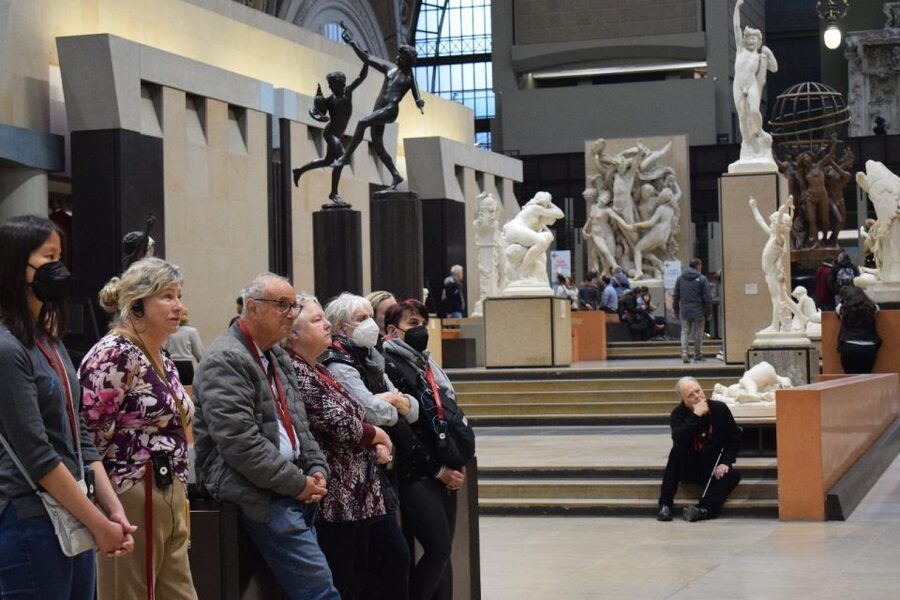
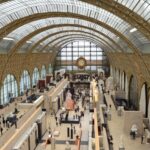
One of the tour’s promised themes is the history behind how an old Orsay Railway Station became a fine arts museum a few decades ago.
That backstory isn’t just trivia. It changes your body’s experience of the place. When you understand the building’s past, you stop seeing Orsay as only “a place that holds paintings.” You see it as a transformation—an old industrial structure repurposed into a home for art.
Guides tend to do a great job tying this into the overall sense of modernity in the art itself. Orsay is modern energy trapped in a historic shell. When your guide points that out, it clicks fast.
Small-group dynamics: why you’ll hear your guide and see the same thing
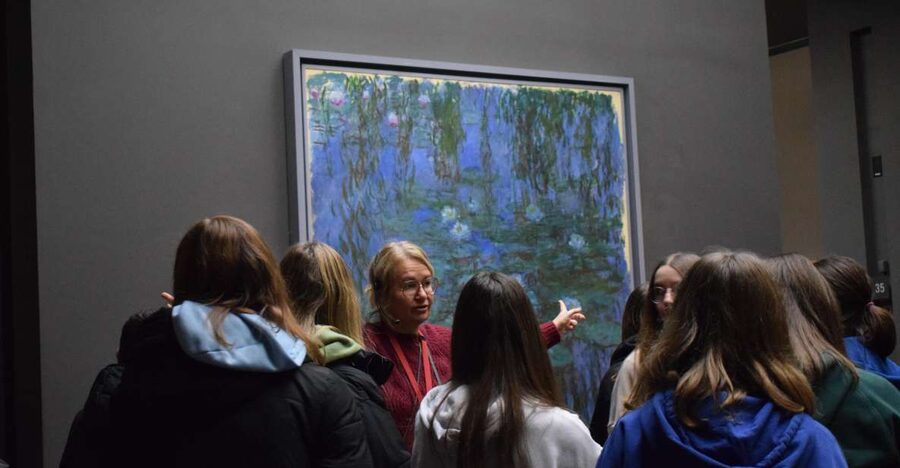
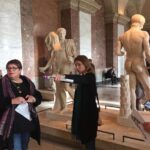
The tour is offered as private or small groups, and that small size shows up in the experience. Multiple guides got praised for keeping the group organized through crowds, and for staying attentive to each person’s pace.
I like that you’re not stuck with a guide talking at the front while you try to wave at a painting over someone’s shoulder. In the groups that ran around 6, people had time to ask questions. In smaller groups, it gets even easier to linger.
Some guides also used extra tools (like an iPad) to show details you can’t fully grasp from a distance. That’s helpful in a museum where a painting can look different depending on where you stand and how much light hits the surface.
One caution: in crowded galleries, even the best guide can’t control noise. A tight group helps, but if you’re sensitive to sound, consider choosing a less busy day if you can.
What to bring, and what will slow you down
Keep your visit simple. You’ll need a passport or ID card, and tickets are personal. If you’re bringing kids up to 17, they also need photo ID.
Leave the bulky stuff at the hotel. The tour does not allow luggage or large bags, and it also flags backpacks and umbrellas. That’s not about being fussy—it’s about moving through museum security and tight corridors without turning the group into a luggage convoy.
In some rooms, speaking may be restricted. Your guide will warn you ahead of time, so don’t assume every gallery works like a classroom discussion.
Also: if you’re planning your day around another major museum, remember that strikes can happen in France, including at Orsay. If that affects operations, the provider notes alternatives or you can make changes to your booking or get a refund before the 24-hour cut off.
Price and value: $102 for two hours—what you’re actually paying for
At $102 per person for a two-hour guided experience, the question isn’t just whether it’s “worth it.” It’s whether you’ll get back time and understanding.
Here’s the value logic I’d use:
- You’re paying for entry tickets plus interpretation. That’s two things: logistics and meaning.
- You’re paying to compress art history into a route you can handle in two hours.
- You’re paying for a guide who can adjust to the group and help you focus on the right masterpieces first.
In reviews, guides were often praised for navigating crowds and leading people close to major artworks. That’s a real time saver. If you’ve ever stood 10 rows back in a crowded gallery, you know how quickly “free time” becomes “lost time.”
If you like art but don’t want the mental work of building a personal itinerary, this tour tends to be a good fit. If you already know Orsay well and love wandering, you might not need a guide. But for most first visits, you’ll feel your money translate into clearer looking.
Who should book this Orsay small-group tour
This works best if you:
- want the big Impressionist and post-Impressionist hits without skipping the “why”
- prefer small groups so you can ask questions and stay close to the guide
- like art history that connects paintings to the real world—political and social context shows up in the way the guides explain change
It’s less ideal if:
- you use a wheelchair or need mobility accommodations. The activity is noted as not suitable for wheelchair users.
- you’re expecting a fully tailored pace. While private tours may be possible for those with mobility impairments, the shared semi-private format can’t slow down or modify pace.
Language-wise, you can choose among English, French, Spanish, Italian, and German.
Should you book this Orsay tour or go it alone?
I’d book it if you’re visiting Orsay as a top priority and you only have limited time. Two hours is enough to see a lot, but it’s not enough to randomly bump into meaning. This tour gives you both: the paintings and the thread connecting them.
I’d also book it if you hate waiting in lines or spending your best museum energy figuring out where to go next. The ticket setup and the guide’s crowd strategy can turn a stressful visit into a smooth one.
Skip it only if you already have a strong Orsay plan and you’re the type who loves long, self-paced wandering without interpretation. If that’s you, a self-guided day might fit. But if you want clear art history, close viewing, and a guided route through the eras, this one is a smart use of your time in Paris.
FAQ
How long is the Musée d’Orsay small-group tour?
The tour lasts 2 hours.
What’s included in the tour price?
You get entrance tickets to the Orsay Museum, a local guide, and a guided museum tour.
Where do we meet the guide?
Meet in front of the museum by the huge elephant statue. Your guide will be holding a Connecting France sign.
Which languages are available for the live guide?
The live tour guide is available in English, French, Spanish, Italian, and German.
Can I skip the security line?
The tickets allow quick access, but the security line cannot be skipped.
What identification do I need?
Bring a passport or ID card. Tickets are personal, and children up to 17 need a photo ID.
Is luggage or a large bag allowed?
No. Luggage or large bags are not allowed, and backpacks and umbrellas are also not allowed.
Is the tour suitable for wheelchair users or people with mobility impairments?
The activity is not suitable for wheelchair users. For mobility impairments, you may book a private tour, but the pace can’t be modified in shared semi-private tours.
What happens if Orsay has a closure due to strikes?
France can see strikes, and closures can happen without prior warning. You’ll receive alternatives to modify the booking to available slots or a walking tour option. If the alternative doesn’t work for you, you can cancel and receive a refund before the 24-hour cut off.
What’s the cancellation policy?
Free cancellation is available up to 24 hours in advance for a full refund.