REVIEW · LAS VEGAS
Paradox Museum in Las Vegas: Exit Reality, Enter Fun Illusions
Book on Viator →Operated by Paradox Museum Las Vegas · Bookable on Viator
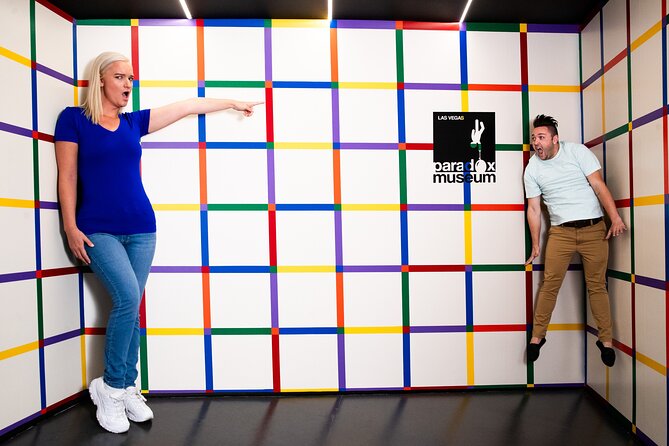
Reality takes a funny turn here. Paradox Museum is packed with 90+ interactive optical illusions that make your eyes question what your brain thinks is true. Expect upside-down rooms, mirror tricks, and photo moments designed to feel a little impossible.
I really like the photo-ready setup throughout the museum. You’re not just looking at tricks—you’re standing in them, and the exhibits are made for clear, funny pictures. I also like that it works for a wide range of ages, from little kids to grandparents, so it’s not one of those Vegas stops that only works for one age group.
One thing to consider: a few displays can feel confusing if you want a clear explanation for the exact why behind each trick. If you’re the type who likes every detail explained, you may want extra patience as you figure out the best spot to stand.
In This Review
- Key Highlights You’ll Care About
- What Paradox Museum Feels Like (It’s a Vegas Illusion Playground)
- Ticket Time, Mobile Ticket, and How the Visit Really Works
- Upside-Down Rooms and the Photos That Make People Laugh
- Mirrors, Rotating Spaces, and When Your Brain Gets Tricked
- The Sofa Illusion and Other “Wait, What?” Moments
- How Long to Plan, and When to Go for an Easier Experience
- Who Paradox Museum Works Best For
- Price and Value: Is $33 Worth It?
- A Simple Step-by-Step Way to Get the Most Fun
- Should You Book Paradox Museum Las Vegas?
- FAQ
- How long does the Paradox Museum visit take?
- What does the ticket price include?
- Is hotel pick-up included?
- Do I need a physical ticket?
- Can I visit at any time after booking?
- Can I cancel or change my ticket?
Key Highlights You’ll Care About
- 90+ interactive illusions that actively involve you, not just your eyes
- Upside-down rooms and mirror areas that are perfect for quick laughs and longer looking
- Floor photo guidance (helpful camera spots) that keeps your pictures from turning into guesswork
- Family-friendly vibe that holds attention across multiple ages
- Indoor, daytime-friendly plan on the Strip when you want a break from heat and crowds
What Paradox Museum Feels Like (It’s a Vegas Illusion Playground)
Paradox Museum is one of those Las Vegas attractions that stays simple on purpose: you walk in, you follow the flow, and the museum keeps interrupting your sense of normal. One second you’re staring at something that looks straightforward, and the next second the room persuades you it isn’t. It’s part museum, part photo studio, part brain workout.
What makes it especially appealing is how hands-on it is. These aren’t just screens with facts or art you move past quickly. The exhibits are built around your position—how you stand, where you look, and when you take a photo. That’s why it’s fun even if you don’t care about illusion science. You can just enjoy the results.
And because it’s a fully indoor stop on the Strip, it’s also a smart switch for your day. You can use it as a midday reset when the Vegas sun is doing the most, or as an easy, controlled activity when you want something predictable and not too intense.
You can also read our reviews of more museum experiences in Las Vegas

Ticket Time, Mobile Ticket, and How the Visit Really Works
This is the kind of attraction that rewards planning lightly instead of overplanning. You prebook your preferred day, and then you can visit anytime during the opening hours. That means you’re not locked into a rigid tour schedule like you’d find with a guided walking tour.
The ticket itself is mobile, so you’re not hunting for paper. That’s practical in a city where you’re constantly bouncing between hotels, shows, and meals.
Time-wise, plan for about 30 minutes to 1.5 hours, depending on how long you want to stop for photos and how many exhibits you want to repeat for better angles. If you’re traveling with kids, you might slow down and re-check the same spots. If you’re a serious photo person, you may spend longer in the areas that are made for posing.
Hotel pickup isn’t included, so you’ll want to handle getting there on your own. The museum is also listed as near public transportation, which is useful if you’re trying to skip ride-share costs.
Upside-Down Rooms and the Photos That Make People Laugh
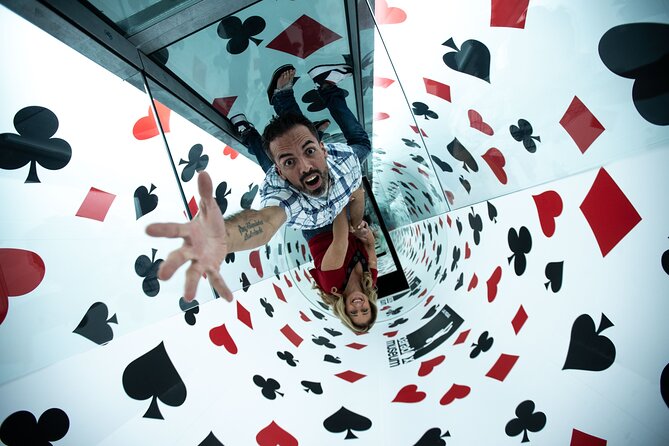
The big draw here is simple: you get optical illusions that look great in photos. One of the most memorable styles is the upside-down room look. You step into a space that flips the logic, so your body ends up framed in a way that makes the entire picture look like something from a prank magic show.
What I like about this style of exhibit is that it doesn’t require skill. You don’t need special equipment. You just need to find the right spot and take the photo. And if you’re traveling with family, this is one of the easiest ways to get everyone participating at once—kids can run into the scene, adults can pose, and nobody has to wait for a lecture.
A helpful detail: the museum uses camera sign points on the floor for many photo setups. That solves the common problem with illusion attractions—guessing where to stand. If you follow the signs, your pictures usually land cleaner and faster, which helps if you’re trying to keep a group moving.
If you care about getting the best shot, give yourself small moments. Snap one, step back, adjust your angle, and try again. These illusions often benefit from the exact placement, so a second attempt is usually worth it.
Mirrors, Rotating Spaces, and When Your Brain Gets Tricked
Mirrors are a major part of the Paradox experience. There are sections that feel like a hall of mirrors, and the effect is more about perception than physics—your eyes try to make sense of what they see, but the setup keeps changing the rules of the room.
You’ll also find other moving or rotating-style exhibits, including a rotating wall area and a carousel-like illusion experience that’s great for photos and crowd-pleasing reactions. The payoff is that these spaces feel different from the straightforward upside-down rooms. Instead of one clear trick, you get layered confusion: reflections, angles, and movement all working at the same time.
This is where the museum becomes more than a quick photo stop. If you like figuring things out, this section rewards watching for a minute before you take pictures. Try a slow walk through the mirror areas. Look at how the reflections change as you move. Then pose after you understand what the space is trying to trick you into believing.
The Sofa Illusion and Other “Wait, What?” Moments
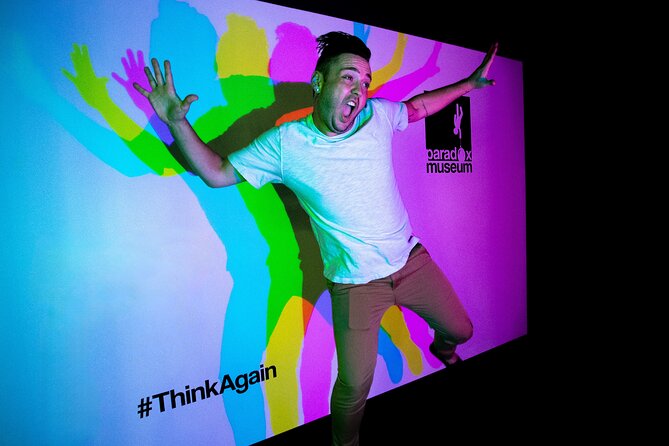
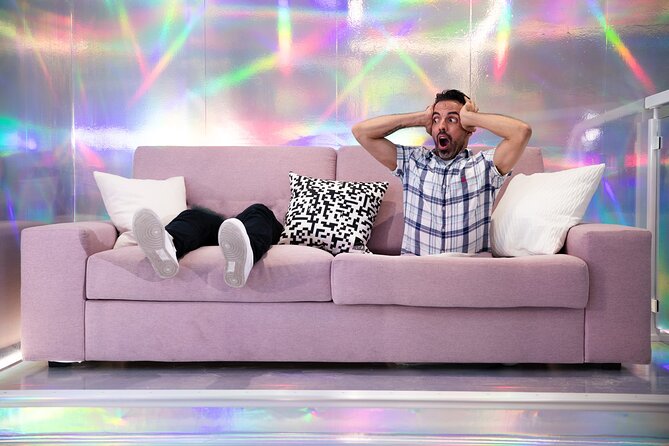
Some exhibits are built around body illusions that are instantly funny in a photo. One example type is the setup where a sofa appears to cut you in two in the picture. It’s dramatic, it’s easy to understand, and it makes for a memorable Vegas brag photo.
Then there are other impossible-feeling room styles, like shrinking-box concepts and smaller-scale areas where your camera perspective is the main character. These are the exhibits where the museum uses optical logic: you feel like you’re in a normal room, but your framing turns you into part of the trick.
If you’re traveling with kids, these are often the most satisfying moments because the results are obvious. Kids love things that change fast, and they don’t need the full explanation to enjoy the effect. Adults usually enjoy them too because they’re light, playful, and not overly technical.




How Long to Plan, and When to Go for an Easier Experience
You can do Paradox Museum on a quick timeline, but it’s also easy to turn it into a longer stop because so many exhibits are photo-driven. With the listed range of about 30 minutes to 1.5 hours, you have flexibility.
If you want the smoothest flow, aim for a time when it’s not packed. One of the best pieces of real-world advice you can take here is to pick a weekday if your schedule allows. That often means less waiting, which gives you more time to try different angles without feeling rushed.
Also, treat it like an indoor activity rather than a museum you must “finish.” If you find an exhibit that hits your sense of humor, spend a few extra minutes. If something feels confusing, move on. The best way to enjoy this kind of place is to follow what grabs you.
Who Paradox Museum Works Best For

Paradox Museum is a strong fit for families. It’s not just kid-friendly in theory—the experience is built so different ages can enjoy it at the same time. Even very young kids can have fun without understanding the trick, because the visual result is what matters.
It’s also good for multi-generational groups. If you’re visiting with grandparents or mixed ages, this is one of those activities where everyone gets a role: kids run the scenes, adults help with photos, and older guests can enjoy the mirror rooms at a comfortable pace.
For couples, it’s a playful way to do something off the usual Vegas list. It’s also a smart choice if you’re looking for a daytime indoor activity that doesn’t eat your whole day.
Most people can participate, and service animals are allowed, so it can work for more travelers than you might expect from a novelty attraction.
Price and Value: Is $33 Worth It?
At $33 per person, it isn’t cheap, but it also isn’t priced like a big, guided tour. The value comes from how much content you actually get and how long you can realistically spend there.
Here’s the practical value math:
- You’re paying for access to 90+ interactive illusions, not a single show.
- The exhibits are designed for repeat posing, which means you’ll leave with photos and memories, not just a quick look.
- The visit length can stretch up to about 1.5 hours, which matters if you’re trying to use time efficiently in Las Vegas.
Still, there’s a reasonable consideration. A few people feel the museum could add more exhibits or that the price should be lower. So if you’re the type who hates paying for attractions unless you get a lot of variety, you might want to treat this as a “best day” stop rather than a casual add-on.
My take: if photos and interactive play are your thing, $33 makes sense. If you prefer quiet galleries or guided explanations, you may feel the cost more strongly.
A Simple Step-by-Step Way to Get the Most Fun
If you want this to feel smooth instead of chaotic, use this approach:
- Start with the big, obvious photo areas first so you’re fresh and your group is energized.
- Follow the camera signs for fast placement on the picture spots.
- In mirror areas, walk first, then pose. It helps your photos because you’re not scrambling mid-shot.
- If you hit an exhibit that feels confusing, don’t get stuck. Move on, then come back if it still bothers you. Illusion museums are better with second passes.
This kind of plan helps you get the “I can’t believe that worked” moments without spending your whole visit in one spot.
Should You Book Paradox Museum Las Vegas?
Book it if you want an indoor, family-friendly Vegas activity that turns your photos into the main event. Paradox Museum is especially worth it if you like interactive exhibits, mirror rooms, and the idea of watching your brain get tricked in a harmless way.
Skip or reconsider if you need constant staff explanations for every detail, or if you only like attractions where the value is tied to a large number of distinct exhibits. At $33, you’ll want to be sure you’re coming for the interactive illusion experience—not just a quick look.
If your group includes kids, mixed ages, or anyone who enjoys goofy photo setups, this is one of the easier “yes” decisions on the Strip.
FAQ
How long does the Paradox Museum visit take?
The experience is listed at about 30 minutes to 1.5 hours, depending on how long you spend on photo moments and how many exhibits you explore.
What does the ticket price include?
Your purchase includes admission to the Paradox Museum in Las Vegas.
Is hotel pick-up included?
No. Hotel pick-up and drop-off are not included.
Do I need a physical ticket?
No. The museum uses a mobile ticket.
Can I visit at any time after booking?
You choose your preferred day, and then you can visit anytime during the opening hours.
Can I cancel or change my ticket?
No. The experience is non-refundable and cannot be changed for any reason.