REVIEW · PARIS
Invalides Museum – WWI & WWII – Guided Tour up to 8 guests
Book on GetYourGuide →Operated by Babylon Tours Paris · Bookable on GetYourGuide
The gold dome tells a story fast. I love the way this Invalides tour leads you straight to Napoleon’s tomb, then widens the lens to explain why the site exists in the first place. You get a guided walkthrough of the cathedral and memorial space, plus a museum stop that puts Napoleon’s victories and defeats into plain, visual context.
Two other things make it click: the sense of scale as you move from the big, formal courtyard to the intimate tomb area, and the focused time with a professional art historian guide. One catch: expect moderate walking, and it is not suitable for people with mobility impairments (and the semi-private option is not available for wheelchair users).
In This Review
- Key Points You’ll Care About
- Where the Tour Starts: The Invalides Courtyard and Louis XIV’s Plan
- The Cathedral Inside: Why Louis Built It for His Troops
- The Gold Dome Moment: Napoleon’s Tomb Up Close
- How the Museum Stop Works in Real Life (Artifacts, Maps, and Reconstructions)
- Getting the Value: Skip the Ticket Line and a Guide Who Keeps It Moving
- Group Format and Timing: What You Gain (and What You Can’t)
- What to Bring and Know Before You Go
- Which Guide Style Works Best for You?
- Should You Book This Invalides Tour?
- FAQ
- How long is the guided tour?
- Is skip-the-line access included?
- What group size is this tour for?
- What languages are offered?
- What will I see during the tour?
- Can I bring luggage or a large bag?
- Is the tour wheelchair accessible?
- What should I bring with me?
- What is the cancellation policy?
Key Points You’ll Care About
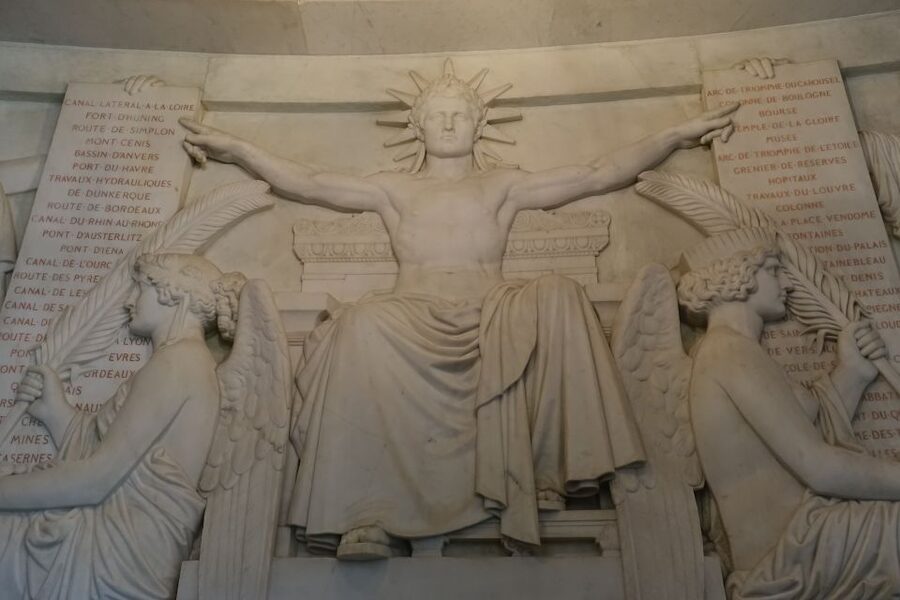
- Napoleon’s tomb under the gold dome: See it up close, not just from across the room.
- Origins of the Invalides complex: Hear how Louis XIV shaped it as a veteran’s hospital.
- A tight two-hour structure: Courtyard, cathedral, tomb area, then key museum galleries.
- Small group feel (up to 8): Questions stay in the conversation, not lost in a crowd.
- Professional art historian guidance: Built around artifacts, recreations, and military maps.
- Multiple language options: Tours run in French, Italian, German, English, Russian, and Spanish.
Where the Tour Starts: The Invalides Courtyard and Louis XIV’s Plan
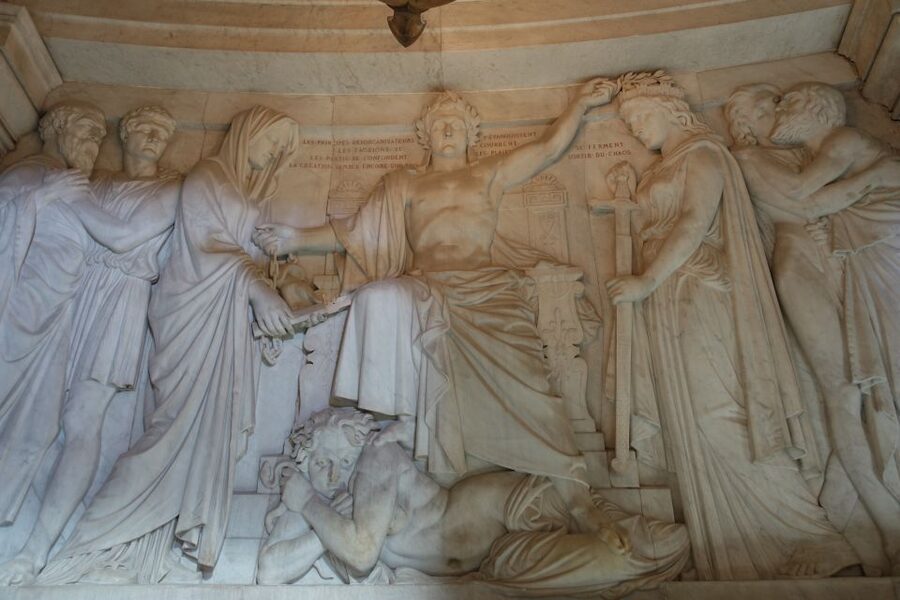
The Invalides is not just a museum building. It was designed as a statement. When you start out in the epic courtyard, your guide frames it as a 17th-century project tied to France’s power and its soldiers’ needs. King Louis XIV turned the site into a veteran’s hospital, and that changes how you read what you see next.
A courtyard like this also teaches you how to pace your eyes. You get architecture first—symmetry, scale, and the controlled grandeur of a royal program. Then the guide connects it to the people who were meant to live and recover here after battle. That link matters, because the Invalides stops feeling like a tomb complex only for kings. It becomes a place built to house the aftermath of war.
If you’re the type who likes cause-and-effect in history, you’ll appreciate the flow. The tour doesn’t treat Napoleon as a standalone legend. It ties him to what came before, including the Sun King’s role in French military history. That groundwork makes the later tomb visit feel less like a photo stop and more like a chapter in a longer story.
You can also read our reviews of more guided tours in Paris



The Cathedral Inside: Why Louis Built It for His Troops

After the courtyard, you head into the cathedral that Louis XIV built for his former troops. This is one of the tour’s best transitions, because it moves you from civic monument to sacred space. The cathedral’s tone is different—quiet, formal, and designed for reverence. Your guide uses that mood to explain why the building was made for the people who returned from war, not just for ceremony.
This is where I think the guided format earns its keep. Without a guide, it’s easy to treat a cathedral visit as architecture appreciation. With a guide, you start noticing details with purpose: who was honored, how memorials function, and why the site’s meaning grows over time.
One practical note: some rooms have quiet or restricted rules for speaking. If your group likes to chat, you’ll want to follow the signal your guide gives you so you don’t get asked to tone it down.
The Gold Dome Moment: Napoleon’s Tomb Up Close
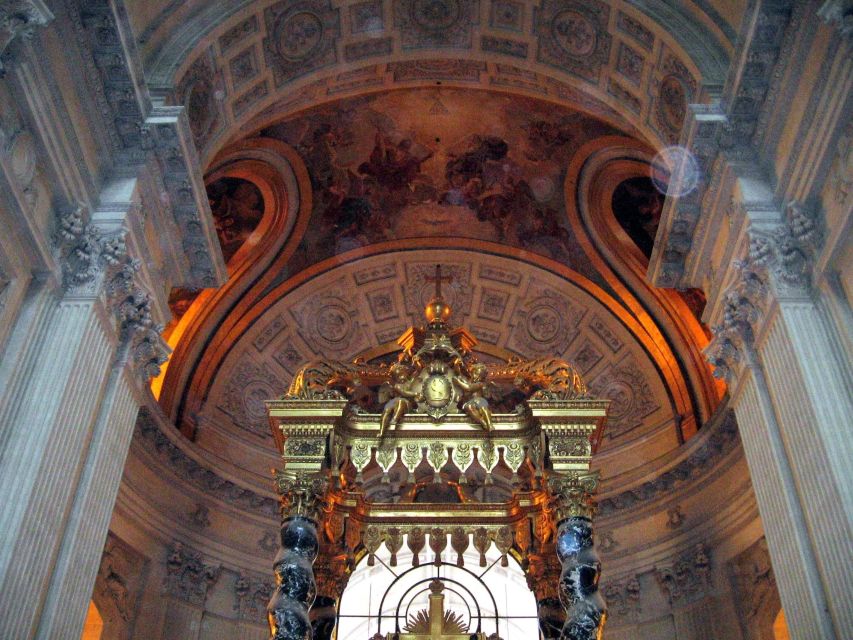
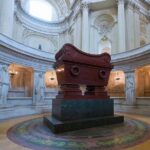
Then comes the moment you came for. The tour brings you to the magnificent gold dome area where Napoleon’s remains are interred. This part lands differently once the Louis XIV context is in your head. You’re not just seeing a famous tomb—you’re seeing how France chose to present an emperor’s legacy long after exile.
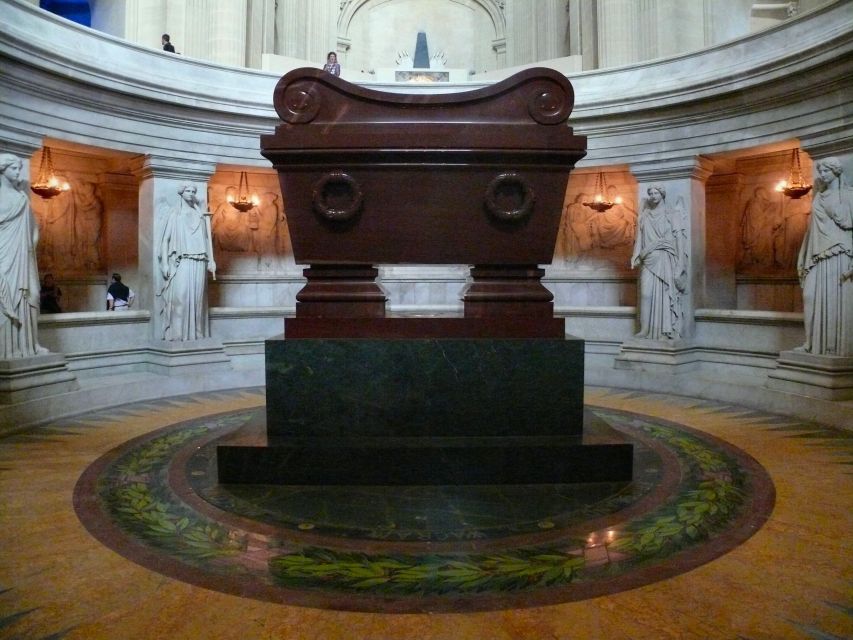
Your guide walks you through the tomb itself and also points out the tombs of those closest to him. That matters because the story is not only about one person. It’s about a network of memory—how a nation decides who belongs in the inner circle of history.
A couple reviews highlight the emotional pull here, and I can see why. Up close, Napoleon’s tomb is more than a landmark. It’s a physical anchor for the ideas you’ve heard since school: conquest, overreach, fall, and then return of legacy. Your guide also ties the narrative to Napoleon’s arc: brilliant general, audacious emperor, then the end in exile, followed by the final resting place under the dome.
How the Museum Stop Works in Real Life (Artifacts, Maps, and Reconstructions)
After the tomb area, you shift into the museum portion. This is where the tour becomes more than a sightseeing loop. The guide uses artifacts, recreations, and military maps to show Napoleon’s wins and defeats as a chain of decisions rather than a blur of dates.
The big advantage of this approach is clarity. Maps in particular help you understand why movements mattered. You don’t just hear that there was a battle; you see the strategic logic behind it. Artifacts and recreations then make those points tangible. It turns abstract military history into something your brain can hold without effort.
Now, a balanced expectation check. Two hours is a highlight route. The Invalides collections are large, and you might leave wishing you had time to wander farther on your own. One reason to consider that: even with a great guide, the museum galleries of military items can be extensive. If your priority is deep museum time rather than a focused overview, plan to return later.
Still, for first-timers, this format is ideal. It gives you the headline story, the visual proof, and the emotional anchor—without requiring an all-day commitment.
Getting the Value: Skip the Ticket Line and a Guide Who Keeps It Moving
Let’s talk value, because $156 per person for two hours is not a bargain. The good news is that what you’re paying for is not just words. The package includes entrance fees and skip-the-line access, plus a professional art historian guide. You also get a private or small group format.
That skip-the-line piece is a real quality-of-life upgrade. At a site like the Invalides, time spent waiting is time you lose in the places you actually want to stand in front of. With a guided route, you also avoid the common problem of wandering in the wrong order and missing the connection between courtyard, cathedral, tomb area, and museum focus.
The small group size—maximum 8—also changes how you experience the tour. When you can actually ask a question and get a straight answer, you remember more. Several guides have earned strong praise for answering questions clearly and keeping the atmosphere engaging, whether the group includes history lovers or someone bringing a teenager who wants facts.
Language options are another plus. The tour runs in French, Italian, German, English, Russian, and Spanish. If you’re traveling with mixed language comfort, you’ll likely find a time that fits.
You can also read our reviews of more museum experiences in Paris



Group Format and Timing: What You Gain (and What You Can’t)
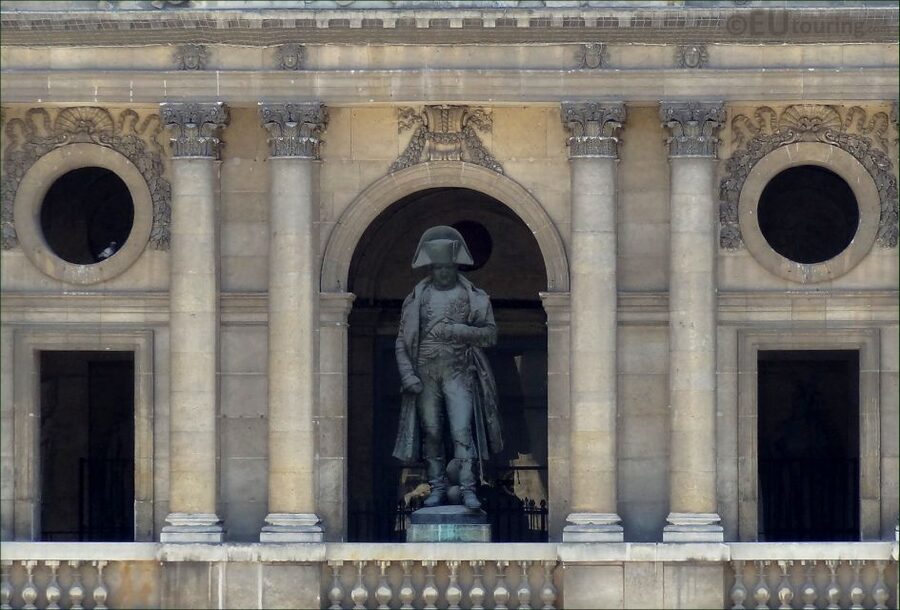
This is built as a two-hour walking tour with skip-the-line entry. The route is designed to hit the key beats: courtyard history, Louis XIV’s cathedral, Napoleon’s tomb and related memorials, then a museum segment with Napoleon’s story through objects and maps.
So what you gain is momentum. You don’t have to plan every turn in advance. Your guide sets the order and connects the dots, which is exactly what you want on a limited schedule.
What you can’t get is unlimited museum wandering. If your goal is to spend hours in the galleries of military items, you’ll likely want extra time before or after the tour. Think of this as a guided framework that helps you choose what to see next.
There’s also one operational detail to keep in mind: occasional closures can happen without warning from the museum management. If a delay becomes significant (more than 1 hour from tour start time), you’ll receive an alternative instead. In those situations, refunds or discounts may not be available.
What to Bring and Know Before You Go
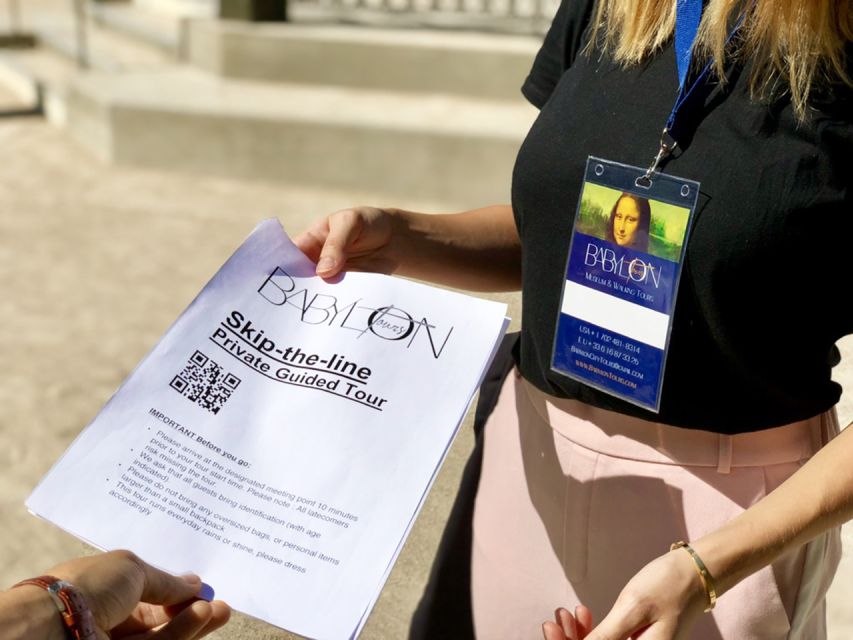
Here’s the practical checklist so the tour stays smooth.
Bring: a passport or ID card.
Don’t bring: luggage or large bags.
The tour involves moderate walking. That may be fine for many people, but it’s worth taking seriously if your legs get tired fast. Also, this experience is not suitable for people with mobility impairments, and wheelchair access is not offered as a general option for the semi-private format.
Inside, expect some room rules. Some specific areas require quiet or restrict speaking right there. It’s not the time to do a running commentary with your group.
Meeting point can vary depending on the option booked, so double-check your exact location before you head over.
Which Guide Style Works Best for You?
One of the quiet strengths here is that the experience is led by different guides, and you can feel the human differences in their style. Some guides focus on architecture and the memorial program. Others lean harder into narrative storytelling about Napoleon and his era. Either way, the goal stays the same: give you enough context to understand why the Invalides looks the way it does and why Napoleon matters here.
You might notice that guides have strong rapport with families too. A number of people have highlighted guides like Emilie, Florent, Mathieu, and Anatole for turning Napoleon-era history into something that actually holds attention. If you’re bringing a teenager, that matters.
Also, if you like practical tips, pay attention during small pauses. One guide’s outside recommendation for a hot chocolate stop (Angelina) has been singled out as a memorable treat afterward. You don’t need it to enjoy the tour—but it’s a fun extra if your schedule allows.
Should You Book This Invalides Tour?

Book it if you want a tight, high-impact introduction to the Invalides: Louis XIV’s purpose for the site, Napoleon’s tomb under the gold dome, and a museum segment that explains the man and his military story with maps and artifacts. It’s also a smart choice if you prefer a small group format where questions are welcome and the route keeps you from wasting time.
Skip or rethink it if you need step-free or mobility-friendly access, since this is not suitable for mobility impairments. Also reconsider if you hate walking or want a long, independent museum session—this is built for 2 hours of guided highlights, not all-day exploration.
If you can handle a bit of walking and you want the Invalides to make sense quickly, this tour is a strong use of your time in Paris.
FAQ
How long is the guided tour?
The tour lasts about 2 hours.
Is skip-the-line access included?
Yes. Entrance fees and skip-the-line access to the museums are included.
What group size is this tour for?
It’s limited to a maximum of 8 guests per guide for a more intimate experience. Private and small group options are available.
What languages are offered?
Guides offer tours in French, Italian, German, English, Russian, and Spanish.
What will I see during the tour?
You’ll cover the Invalides courtyard and learn about its origins under Louis XIV, visit the cathedral, see Napoleon’s tomb under the gold dome, and spend time in the museum with Napoleon-focused artifacts, recreations, and military maps.
Can I bring luggage or a large bag?
No. Luggage or large bags are not allowed.
Is the tour wheelchair accessible?
Wheelchair tours are available only on request, but this tour is not suitable for people with mobility impairments, and the semi-private option is not available for wheelchair users.
What should I bring with me?
Bring a passport or ID card.
What is the cancellation policy?
Free cancellation is available up to 24 hours in advance for a full refund.