REVIEW · NEW YORK CITY
9/11 Memorial Tour with Optional Museum and One World Access
Book on Viator →Operated by Experience NYC™ · Bookable on Viator
9/11 history hits differently with a guide. This tour takes you through the Ground Zero area in a tight route built for understanding, reflection, and quick context. You’ll move from landmarks tied to first responders to the memorial itself, with upgrade options for the 9/11 Museum and One World Observatory.
I especially like how the guide brings the area to life with clear storytelling and personal perspectives. I also like that you’re not stuck in one place: you get stops at St. Paul’s Chapel, the 9/11 Memorial Pools, and the surrounding World Trade Center complex so you can connect the geography to what happened.
One consideration: the experience requires good weather, since most of it is outdoors walking. If weather turns bad, you’ll be offered a different date or a full refund, so plan for flexibility.
In This Review
- Key highlights you’ll feel right away
- A $36 guided walk that turns Ground Zero into a story
- Where the tour starts near City Hall (and why it’s smart)
- St. Paul’s Chapel: the first stop for refuge and recovery
- FDNY Ten House and the 9/11 Memorial Wall: honoring the first responders
- The Oculus: architecture with a message about rebirth
- One World Trade Center: looking up with context
- The 9/11 Memorial pools: where the names become the main event
- Survivor Tree: resilience you can actually see
- Upgrade option 1: 9/11 Museum access (self-guided, with your guide setting you up)
- Upgrade option 2: One World Observatory access (views plus perspective)
- The real value: why a guided route matters here
- Price and time: what you’re really buying
- Who this tour suits best
- Should you book this 9/11 Memorial Tour?
- FAQ
- How long is the 9/11 Memorial tour?
- What does the $36 ticket include?
- Where does the tour start?
- Does the guide go inside the museum or observatory?
- How long do the museum and observatory add-ons take?
- Is there a limit on group size?
- Is the tour offered in English?
- What happens if weather is poor?
Key highlights you’ll feel right away
- Small-group pacing (max 25) that helps you stay oriented as the site changes from stop to stop
- Guided meaning at the hardest places like the memorial pools and names carved into stone
- First-responder stops like St. Paul’s Chapel and FDNY Ten House that set the tone early
- World Trade Center symbolism in context at the Oculus and One World Trade Center
- Upgrade options that don’t add guided time inside (museum and observatory are self-guided)
A $36 guided walk that turns Ground Zero into a story
At $36 per person, this tour is a value play for NYC. You’re paying for an expert guide to help you read the site—where things are, why they matter, and what you’re looking at—rather than just showing up and hoping it all “clicks.”
The basic tour time is usually about 2 to 5 hours, depending on which add-ons you choose. That matters because the most emotional parts of the experience are also the most visually dense, and you’ll want time to pause at the memorial pools and then decide how much longer you want to stay inside the museum and up at the observatory.
It’s also run in English, with a mobile ticket and a small group size (up to 25). Service animals are allowed, and it’s near public transportation, which helps if you’re pairing this with other NYC plans that day.
You can also read our reviews of more museum experiences in New York City



Where the tour starts near City Hall (and why it’s smart)
The meeting point is at Broadway & Warren Street, near the City Hall Subway Station on the R & W lines. Getting started in this part of Lower Manhattan is practical: it gives you a clean entry into the World Trade Center area without wasting time.
Your guide starts with a setup—history of the surrounding area and what to expect as you move toward Ground Zero. That orientation step sounds small, but it changes everything. Once you understand what the streets once were like, the memorial design makes more sense. You’ll also feel less rushed, because you’ll know what the next stop is meant to teach you.
Plan to arrive a few minutes early so you’re not scrambling right before you begin.
St. Paul’s Chapel: the first stop for refuge and recovery
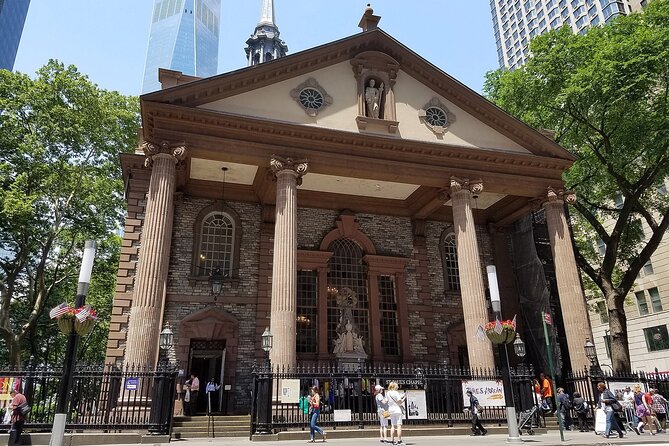
Your first major stop is St. Paul’s Chapel, and you get it for free. This is one of the quiet power points in the route. The chapel served as a refuge for first responders after 9/11, and your guide explains why that mattered and how it became a place of healing and support.
What I like about this stop is its emotional pacing. You’re not yet at the memorial pools. You’re learning about what happened immediately after—the human scale of survival, care, and urgency—so when you later see the names at the memorial, it doesn’t feel abstract.
The drawback? This stop can feel intense. Even if you’re prepared, you should give yourself permission to pause. If your group is chatty or you move too quickly, you’ll miss what the guide is pointing out.
FDNY Ten House and the 9/11 Memorial Wall: honoring the first responders

Next up is FDNY Ten House, again free to enter. This is tied to the firefighters who were among the first to respond, and the route connects it to the 9/11 Memorial Wall honoring firefighters who sacrificed their lives.
The way this stop works is simple: you’re not just learning names and dates. You’re looking at a specific community of responders, which makes the memorial later feel personal rather than distant.
Timing here is short—about 5 minutes—so treat it like a “meaning snapshot.” If you want to linger, you can ask your guide how to take your time at the longer stops. But for the best experience, don’t skip the guide’s interpretation at this part of the route.
The Oculus: architecture with a message about rebirth
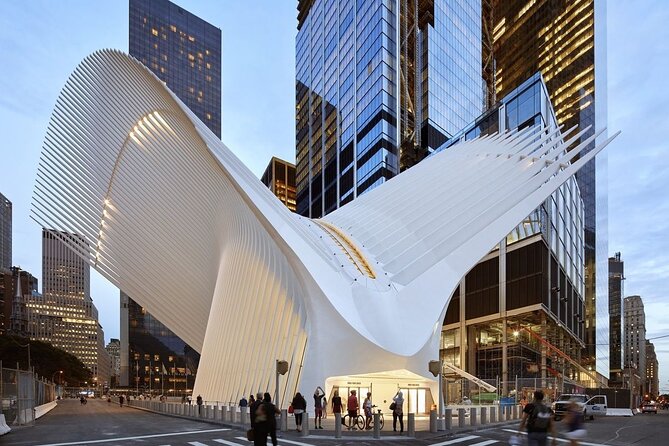
Then you’ll reach The Oculus, the striking transportation hub and shopping center. The guide explains how it was built to replace the destroyed PATH station, and how that connects to the deeper significance of rebuilding.
This is where the tour does something smart: it shows you the difference between a memorial (purpose is remembrance) and a rebuilt city (purpose is movement and daily life). You can look at the Oculus and think it’s just impressive design, but the guide gives you the reason it was shaped this way—so it reads like recovery, not just construction.
Again, this stop is short (about 10 minutes). If architecture isn’t usually your thing, don’t worry—your guide will translate what you’re seeing into what it means.



One World Trade Center: looking up with context

You’ll also stop at One World Trade Center (Freedom Tower). You’ll stand where you can see it clearly and learn about its construction, design, and symbolism—especially its place as the tallest building in the Western Hemisphere.
This stop tends to create two reactions. Some people feel awe at the scale. Others find it uncomfortable. A good guide helps you hold both reactions at once by grounding the design details in the story of what was rebuilt and why.
This part is brief—about 5 minutes—but it’s useful. When you later go to the observatory (if you choose the upgrade), your eyes will already know what you’re looking at.
The 9/11 Memorial pools: where the names become the main event
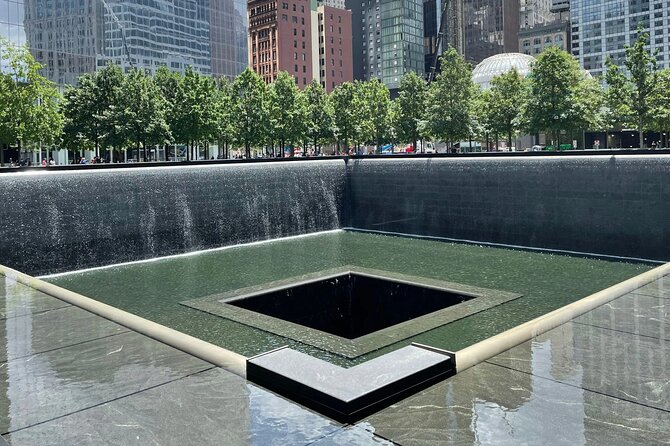
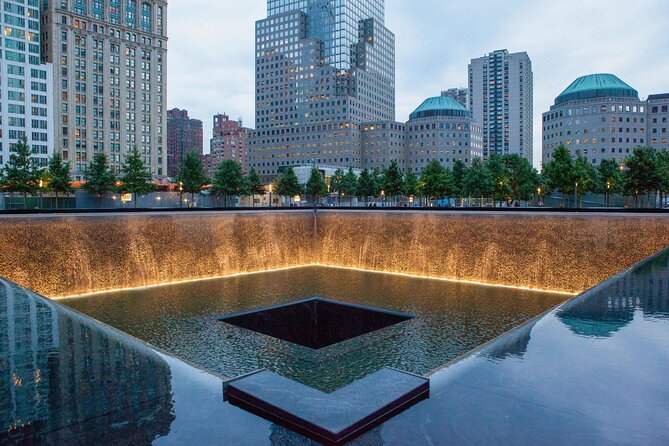
Now for the centerpiece: the 9/11 Memorial Pools. This stop is included and takes about 15 minutes. The twin reflecting pools sit in the footprints of the Twin Towers, and the guide shares the history of the memorial design and the significance of the inscribed names.
This is the moment where the guided value is easiest to justify. Without a guide, you can still visit the pools, but you might miss the design logic—how the space guides your attention and how the memorial’s layout helps you process scale and loss.
One practical tip: plan to slow down. Even if the timing says 15 minutes, treat it like 15 minutes to stand still, read names, and breathe. You’re not racing anyone here.
Survivor Tree: resilience you can actually see
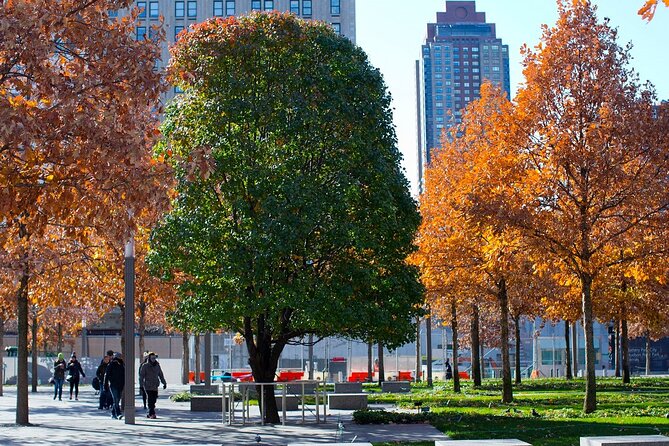
After the pools, you’ll see the Survivor Tree, a Callery pear tree that withstood the destruction of 9/11 and became a symbol of resilience. You’ll get about 5 minutes here, and admission is free.
This is one of those stops that changes the feel of the entire tour. The memorial is about remembrance; this is about continuity—life that persisted where so much was lost.
If you’re traveling with kids or teens, this is often a highlight because it’s visual and concrete. It’s also a reminder that the story isn’t only about catastrophe.
Upgrade option 1: 9/11 Museum access (self-guided, with your guide setting you up)
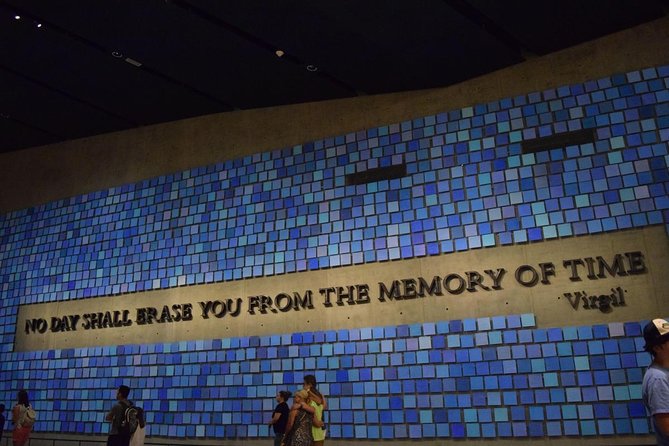
If you choose the Tour + Museum option (or Full Access), your group continues with access to the 9/11 Memorial & Museum for about 1 hour 30 minutes. Your tour guide sets you up, and then you explore exhibits on your own.
Important: you won’t get a guide inside the museum as part of this package. That’s not a flaw—it just changes how you should plan. If you want maximum meaning, go in with the context you’ve already received from the earlier stops. That way, the artifacts, personal stories, and multimedia presentations land harder because you understand what day you’re stepping into.
What you can expect, based on the information you’re given: artifacts, personal stories, and multimedia presentations that explain events and the aftermath. This is where you’ll likely spend time if you want a deeper timeline and more detail than the outdoor stops provide.
Practical note: because it’s self-guided, pace yourself. There’s a lot to take in, and you’ll enjoy it more if you pick a few areas to focus on rather than trying to absorb everything.
Upgrade option 2: One World Observatory access (views plus perspective)
If you choose Tour + One World Observatory (or Full Access), you’ll add about 1 hour 30 minutes of time at the observatory. Like the museum, your access is included, but it’s self-guided once you arrive.
You’re going up to the top of the tallest building in the Western Hemisphere, which sounds like pure skyline sightseeing—but the guide’s earlier stops give you a key difference. The views don’t float in space; you’re looking at the city’s present from the heart of its recovery story.
This is a good upgrade if you like a visual “wrap-up” at the end of a heavy tour. The observatory gives you breathing room: you shift from reading and remembering into seeing how the city functions now.
The real value: why a guided route matters here
This isn’t a “check the box” tour. It’s a learning-and-reflection route built around how you process difficult history.
The biggest praised strength here is storytelling—especially personal perspectives. Guides with names like John Quinn, Liz, JM, Jared, Maya, and Garrett have been noted for being friendly, prepared, and willing to share personal context. That’s what makes the stops feel connected instead of scattered.
Here’s how to get the most out of that:
- Listen for the “why” behind what you see (a chapel as a refuge, a building as a replacement, pools as the footprint)
- Pause when the guide points out names or specific details at the memorial pools
- If you’re overwhelmed, it’s okay to take a slower path and ask for a moment
That emotional honesty is part of the value. You’re not learning history like a report. You’re learning it like a place you can stand inside.
Price and time: what you’re really buying
You’re paying $36 per person, and what you get depends on your chosen option. In every case, the guided portion covers the Ground Zero and memorial route, with the memorial pools included.
Where the price becomes even more sensible is when you select add-ons. The museum and observatory tickets are included in the upgrade options, but you’re not paying extra just to have someone stand next to you inside. You’re getting access plus the right context first—then exploring at your pace.
Time is the trade-off. Add the museum or observatory, and your total time becomes closer to the longer end of the 2 to 5 hour range. If you only have a short window in NYC, consider choosing just one upgrade so you can still enjoy the rest of your day.
Who this tour suits best
This is a strong fit if you want:
- A guided walking route that helps you understand Ground Zero quickly
- Meaningful stops beyond just the memorial pools
- Optional add-ons if you want either the museum depth or the observatory views
If you’re traveling with kids or teens, you’ll likely appreciate the Survivor Tree stop and the clear structure of short, focused segments.
If you hate guided groups and prefer to wander alone, this may feel a bit structured—especially because you’ll be moving stop to stop on a set route. But the guide’s job here isn’t to entertain you. It’s to help you read the site.
Should you book this 9/11 Memorial Tour?
I’d book it if you want a guided route that makes the memorial and nearby landmarks easier to understand, with optional museum and observatory access to deepen the day. For the price, you’re buying context, pacing, and a guided explanation at the exact points where visitors usually need it most.
I’d think twice if you’re extremely sensitive to emotional content or if you’re traveling during a time when weather could be unpredictable, since the tour requires good weather. Also, if your goal is a fully guided museum or fully narrated observatory experience, note that the upgrades are self-guided once inside.
If you can handle that—and you’re willing to slow down at the memorial pools—this is one of the better ways to experience Ground Zero with the time you actually have in NYC.
FAQ
How long is the 9/11 Memorial tour?
The total duration is listed as approximately 2 to 5 hours, depending on which upgrades you select.
What does the $36 ticket include?
The price includes an expert NYC tour guide and the guided Ground Zero & 9/11 Memorial portion. Access to the 9/11 Museum and One World Observatory is included only if you choose those specific options.
Where does the tour start?
The meeting point is at Broadway & Warren Street, near City Hall Subway Station (R & W lines), in New York City.
Does the guide go inside the museum or observatory?
No. The tour includes access, but the museum and observatory parts are self-guided rather than guided inside.
How long do the museum and observatory add-ons take?
Each add-on is listed as about 1 hour 30 minutes.
Is there a limit on group size?
Yes. The maximum group size is 25 travelers.
Is the tour offered in English?
Yes, the tour is offered in English.
What happens if weather is poor?
The experience requires good weather. If canceled due to poor weather, you’ll be offered a different date or a full refund.