REVIEW · MEXICO CITY
National Museum of Anthropology: a journey into Mexico’s past – English lang.
Book on GetYourGuide →Operated by Hector Balderas Iglesias · Bookable on GetYourGuide
That first look at carved gods and painted animals can feel like a puzzle. This tour teaches you how to read that puzzle through symbolism and cosmology. You’ll connect the dots between what ancient people represented and how they thought the universe worked, not just what they built.
Two things I really love: the focus on worldview (why the sun, moon, and animal imagery mattered), and the way Hector turns museum time into an interactive, almost classroom-style experience. A solid drawback to consider is that you’ll stand for long stretches and the explanations can get cosmological, so it is not a great fit if you want a quick, kid-friendly museum stroll.
If you’re the type who asks why snakes, eagles, jaguars, or even certain “duality” themes show up again and again, you’ll have a better time here than wandering alone.
In This Review
- Key moments that make this tour worth it
- Entering Chapultepec: Starting With the Museum’s Big Picture
- Mural of Duality and the Umbrella: How Symbols Explain a Universe
- Teotihuacan Room: From Artifacts to City Ideas
- Mexica (Aztec) Room: Reading Power, Status, and Cosmology
- Pakal Replica: Why Maya Royal Imagery Still Feels Alive
- How the Tour Actually Flows (and Where You Get Breathing Room)
- English-Language Guide Experience: Hector Balderas Iglesias in Real Mode
- Price and Value: Why $75 Can Be a Smart Use of Museum Time
- Who This Tour Is Best For (and Who Might Prefer Something Else)
- Practical Tips Before You Go (So You Enjoy the Learning Part)
- Should You Book This Tour at the National Museum of Anthropology?
- FAQ
- How long is the tour?
- What does the $75 per person price include?
- Where do I meet the guide?
- What language is the tour offered in?
- Is this tour wheelchair accessible?
- What parts of the museum are visited?
- Is food included?
- Is it suitable for children and teens?
- What should I bring?
- What are the main restrictions during the tour?
Key moments that make this tour worth it
- Mural of Duality: you get the worldview behind the museum’s biggest visual statement.
- The umbrella: a small object with big symbolic meaning, explained clearly.
- Teotihuacan room focus: you see the city’s ideas, not just its artifacts.
- Mexica (Aztec) room context: symbols tied to social power and cosmology.
- Pakal replica: Maya royal imagery placed into a wider sun-and-time way of thinking.
- Hector’s iPad support: reconstructions and extra visuals help you interpret what you’re seeing.
Entering Chapultepec: Starting With the Museum’s Big Picture
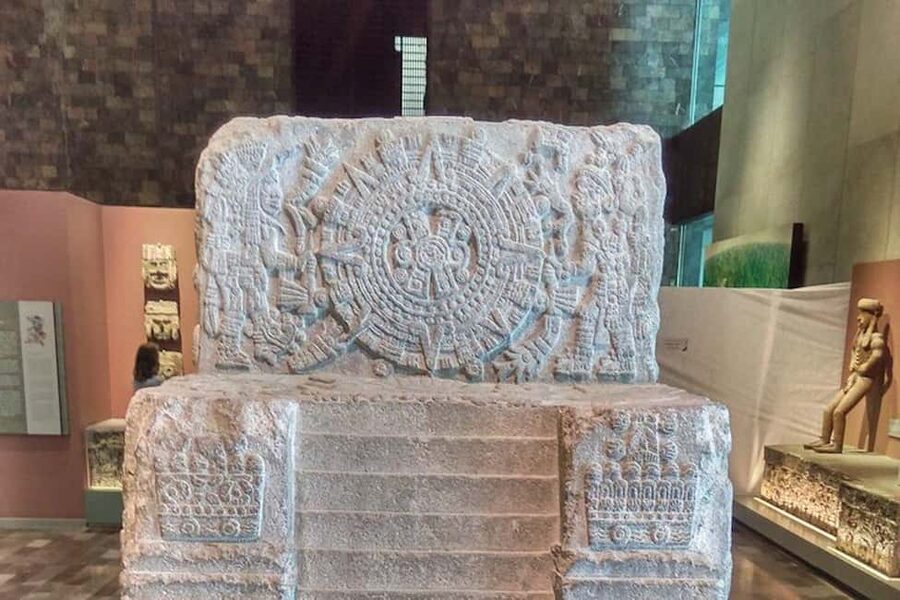
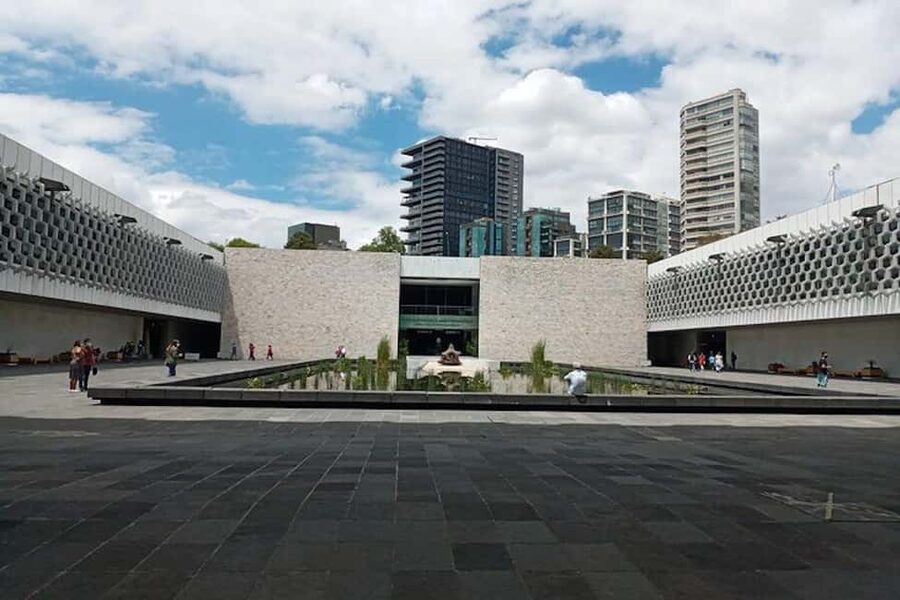
This experience begins at the Museo Nacional de Antropología, in the Bosque de Chapultepec area. The museum itself is famous and huge, so the biggest win is starting with a plan. Instead of hoping you’ll randomly hit the right rooms and interpret the right carvings, you walk in with a guide who knows what to point at and why.
You meet near the Mexican flag at the museum entrance. That matters because museum layouts can be confusing on a first visit. With a guided start, you spend less time walking in circles and more time learning the museum’s main themes.
The tour is 3 hours in English, in a private group format. That combo is practical: you’ll get more back-and-forth and less “watch-and-copy” lecturing. I also like that it includes an admission ticket to the museum’s permanent exhibitions and that it’s described as skipping the ticket line. When you’re paying for a guided experience, that kind of time saved matters.
You can also read our reviews of more museum experiences in Mexico City

Mural of Duality and the Umbrella: How Symbols Explain a Universe
The first major stops are the ones that set the tone. You begin with the Mural of Duality, described as a vision and explanation of worldview. “Duality” sounds abstract until someone anchors it. Here, you’re meant to understand how ancient Mexican cultures framed the universe in paired forces—ways of thinking that show up repeatedly across art, ritual imagery, and iconography.
Then you move to the umbrella, another featured explanation tied to worldview. Umbrella imagery shows up across Mesoamerica in different contexts, and the tour’s approach is the key: you’re not simply looking at a nice object behind glass. You’re learning what it could represent and why it would matter in how people pictured the world.
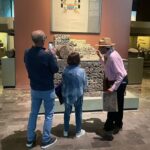
This is also where Hector’s teaching style really helps. In the reviews, people mention the tour feels interactive and even a bit like a college class. That matters because museum labels can be hit-or-miss, and a guide who prompts you to interpret what you see (instead of just supplying facts) helps the meaning stick.
Teotihuacan Room: From Artifacts to City Ideas
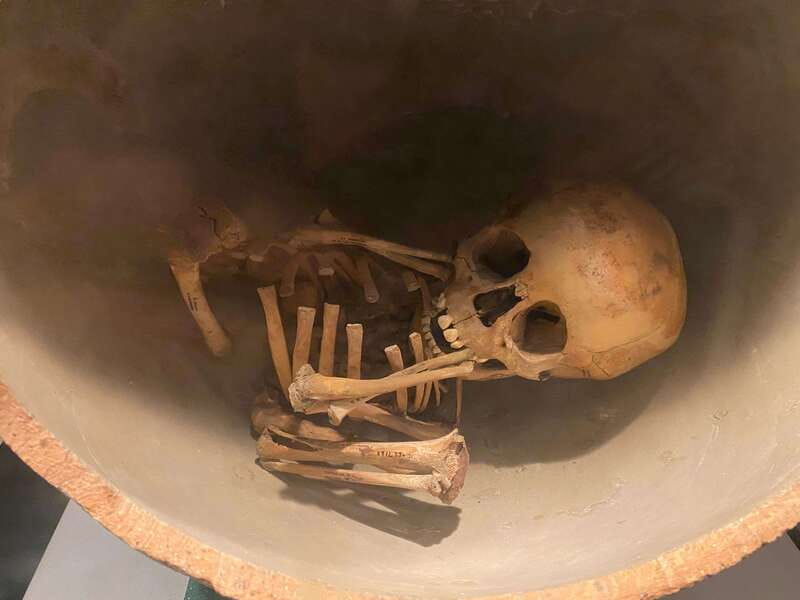
Next comes the Teotihuacan Room, with an explanation focused on what you’re seeing and what it likely meant to people of that era. Teotihuacan is often treated like a history headline: a great city, impressive architecture, big influence. The problem is that you can miss the “how did they think?” part.
This tour tries to solve that. You’re shown artifacts and visual systems in a way that connects to the worldview thread running through the whole experience. Instead of treating objects as isolated pieces, you’re encouraged to understand why imagery and design choices repeat and what those choices might communicate about social order, ritual life, and cosmic structure.
A practical note: this is not a sit-down, short-attention-span tour. You’re on foot and standing. So if you like information but start getting restless in museums, bring patience and comfortable shoes. You’ll be learning for a while.
Mexica (Aztec) Room: Reading Power, Status, and Cosmology
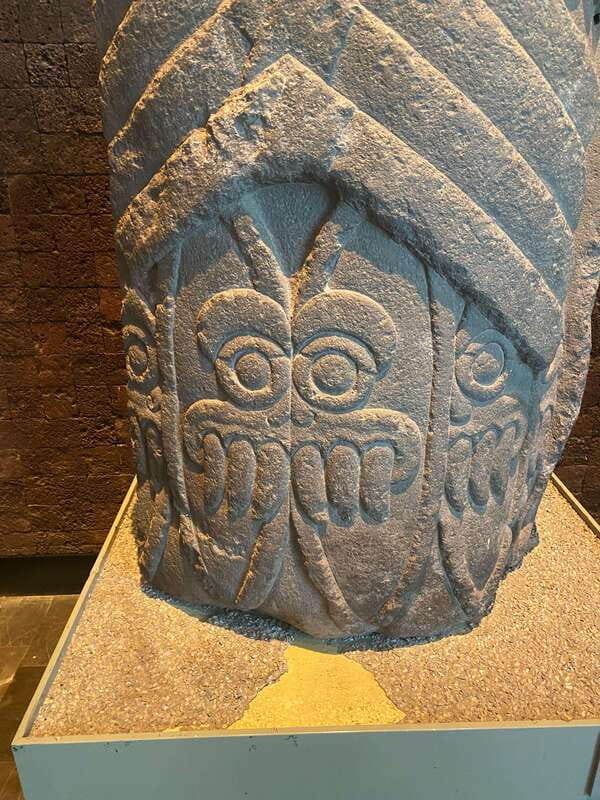
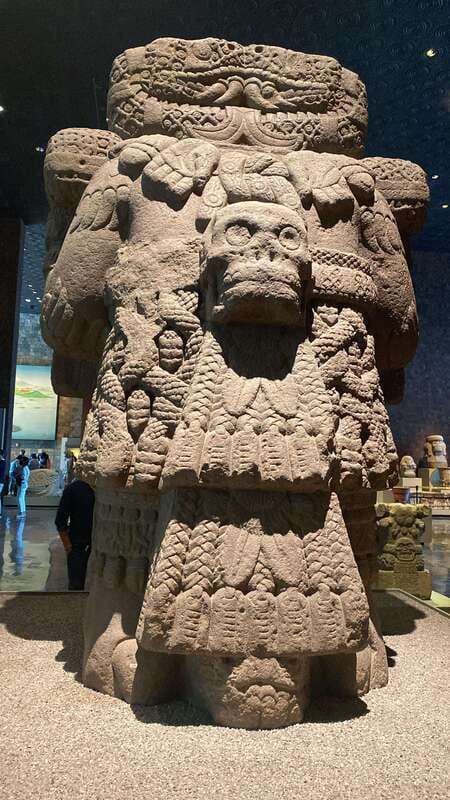
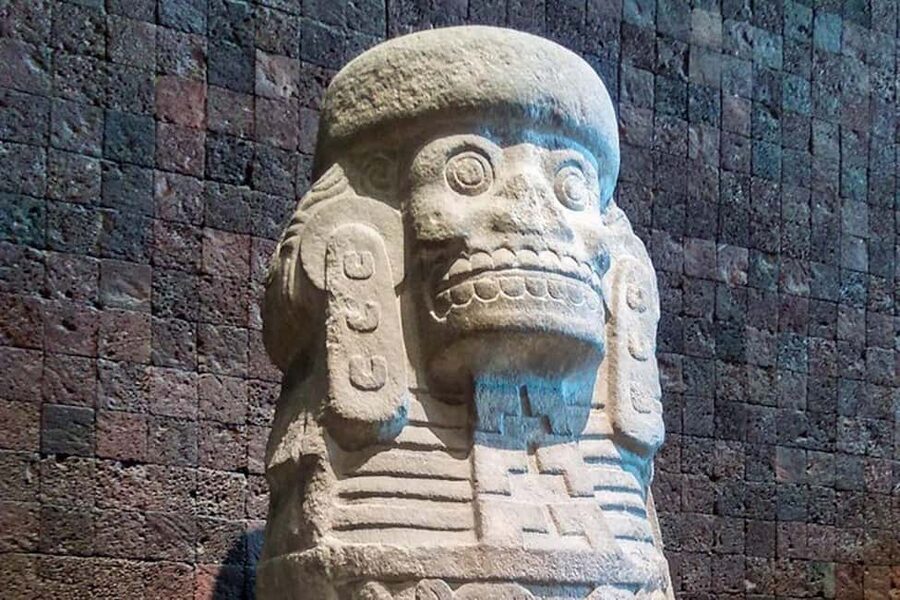
After Teotihuacan, you hit the Mexica (Aztec) Room, again with a guided explanation. This is often where people expect the tour to become “Aztec story time.” It does get story-like, but the deeper value is in the symbolism. The tour is built around questions like why certain animals appear in representations, why specific motifs show up in outfits or paintings, and what the sun and moon represent in Mesoamerican thinking.
You’ll likely feel the difference between:
- seeing an Aztec-style object, and
- seeing how that object participates in a larger system of meaning.
That’s the tour’s core promise: it wants to change your context. One of the highlights is described as femininity in Mesoamerica, which fits with this symbolic approach. It’s not only about male-warrior imagery. It’s about how gender and social roles can show up in the visual language of cosmology and culture.
If you come in with the attitude of, I want to understand why these images mean anything beyond decoration, this room is a strong reason to book.
Pakal Replica: Why Maya Royal Imagery Still Feels Alive
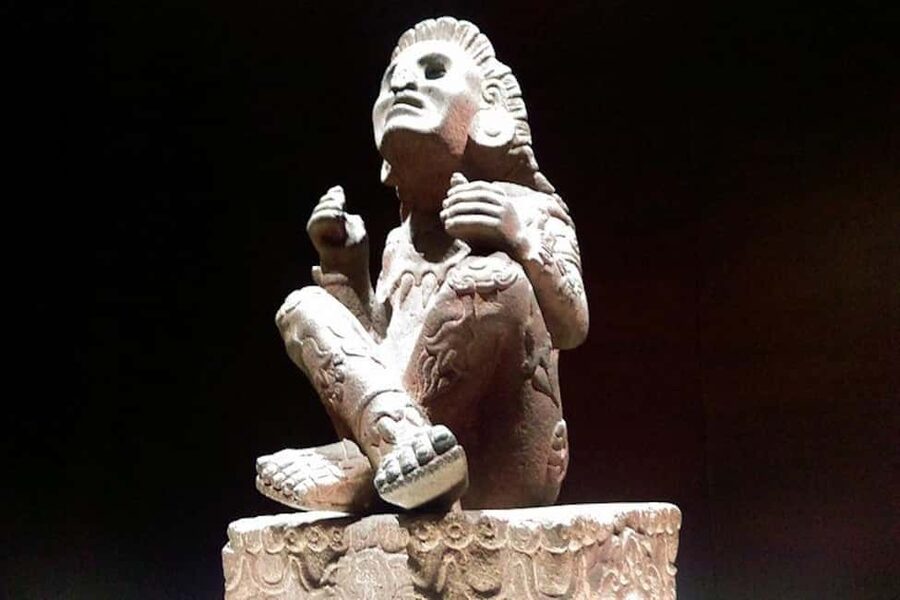
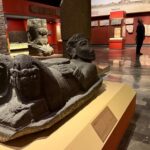
One of the standout inclusions is a replica of the tomb of Pakal the Great, explained during the tour. Pakal is a name people recognize, but the tour likely matters most for how it teaches you to read the imagery. With a tomb replica, you get a chance to see how Maya royal power was presented through symbolism tied to time, the cosmos, and cycles.
A big advantage here is that you’re not left alone with the idea of a famous ruler. You’re guided through what the imagery is doing. That also pairs with the tour’s overall focus on interpreting how people represented animals, time, and celestial objects.
In the reviews, people mention Hector uses an iPad for additional visuals and reconstructions. That kind of support can be a game-changer with tomb imagery, because details can be hard to parse from a distance. When a guide can point out what to look for, you stop guessing.



How the Tour Actually Flows (and Where You Get Breathing Room)
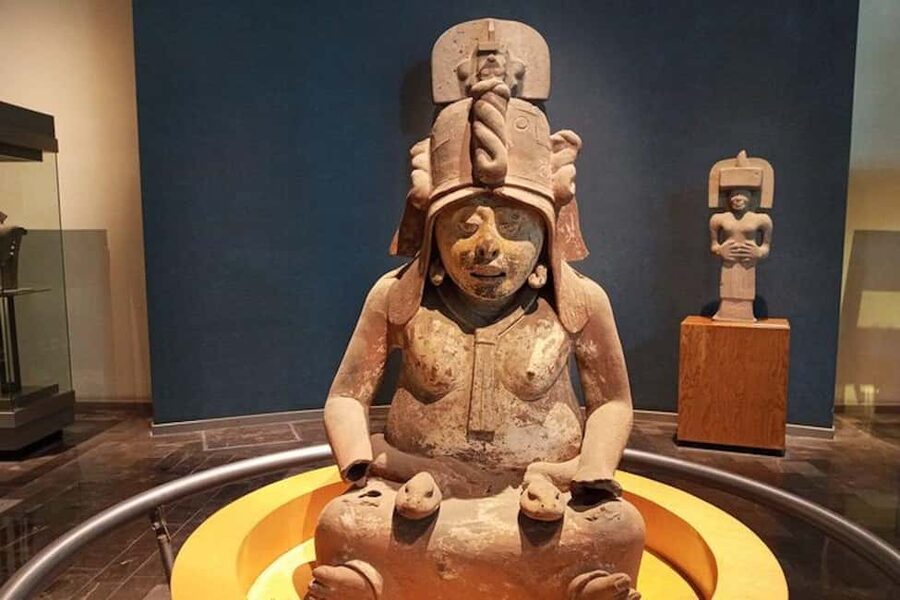
The itinerary is designed as a guided walking loop with a natural arc:
1) start at the museum entrance near the Mexican flag,
2) guided visits to the key rooms and featured works,
3) then free time at the end so you can look around more on your own.
That free time is important. You don’t want to leave every museum moment entirely dependent on the guide’s pacing. The idea is that your guided stops give you a mental framework. Then you can come back to other displays with better questions, and you’ll read labels differently.
The trade-off is that you should plan for standing. This tour isn’t presented as a relaxed “museum pace with occasional commentary.” It’s more like guided instruction with time to look. If you have mobility issues, the tour is listed as wheelchair accessible, which is good to know. Still, you’ll want to consider how your day handles long periods of standing for explanations.
English-Language Guide Experience: Hector Balderas Iglesias in Real Mode
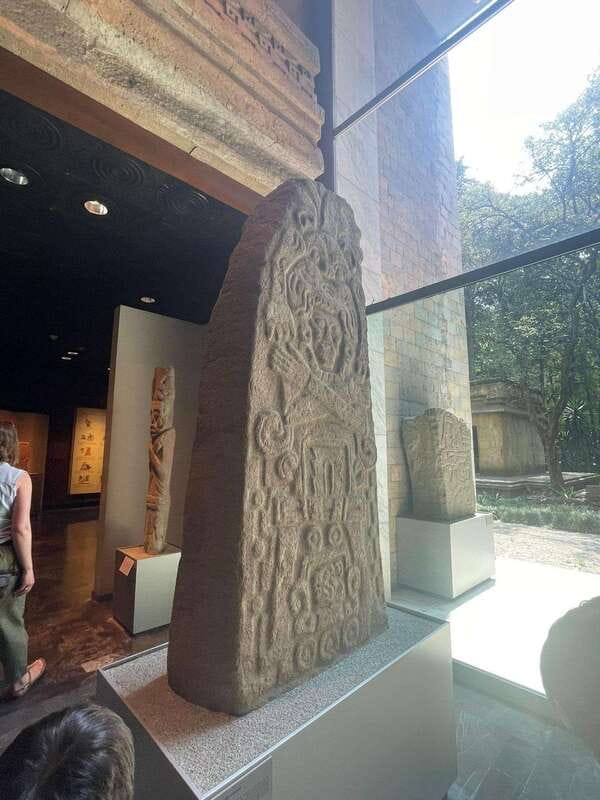
The live guide is English, and the experience provider listed is Hector Balderas Iglesias. In the reviews, people repeatedly praise him for being engaging and for explaining symbolism in a way that’s easier to understand than scanning labels.
Two practical strengths show up again and again:
- Hector orients you fast so you know what to look for.
- He uses visual support (including an iPad) to show reconstructions and extra images, which makes the museum less abstract.
One review also notes he used a laser pointer to highlight museum pieces that are less noticeable to the untrained eye. That tells me the guide’s job here is not just “talking,” it’s teaching your eyes where to land.
If you’re sensitive to overconfident tour guides who talk like they’re reciting, you’ll probably appreciate this style more. The feedback suggests he works like a teacher who wants you to interpret, not only memorize.
Price and Value: Why $75 Can Be a Smart Use of Museum Time
The price is $75 per person for a 3-hour experience. That’s not cheap, but it can be good value if you hate wasting museum visits.
Here’s why the math can work:
- The ticket to the museum’s permanent exhibitions is included.
- The tour is focused on major rooms and specific featured works, so you’re not paying for random wandering.
- It includes skip-the-ticket-line, which saves time you can spend learning.
Most importantly, this is a museum where self-guided viewing can leave you with nice photos but thin context. The description of the tour is very clear: it’s meant to give you ideology and worldview context so ancient Mexico stops feeling like disconnected “art history.”
So if you’re visiting Mexico City and only have one or two museum blocks, this guided format is a good way to get value out of limited time.
Who This Tour Is Best For (and Who Might Prefer Something Else)
This tour isn’t designed for everyone. It’s listed as not suitable for children under 16, because the explanations include cosmology and symbolism with more depth. That doesn’t mean it’s “boring for younger kids.” It means the tour is built for adults and older teens who can handle big ideas and long explanations.
You’ll be especially happy if:
- you like symbolism and you want your questions answered,
- you enjoy worldview and ideology, not only timelines,
- you want a guided framework before visiting other major sites in the region.
A key consideration is the pace of museum standing time. If you don’t do well standing for long periods, you might find the 3 hours tiring even if the content is interesting.
Practical Tips Before You Go (So You Enjoy the Learning Part)
This is one of those “bring the right basics and you’ll have a better day” tours.
- Wear comfortable shoes. You’ll be on foot and standing to listen.
- Wear comfortable clothes because you’ll be in one museum environment for a while.
- Leave room for the museum experience. Food and drinks are listed as not allowed during the activity, so plan your meal around it.
- Skip anything that turns into a hassle: no drones, no selfie sticks, no tripods, and no plastic bags.
Also, be respectful of the exhibit rules. You’re not allowed to touch the exhibits, and flash photography is not allowed. It’s standard museum behavior, but it matters here because this tour’s whole purpose is looking closely at meaning.
Should You Book This Tour at the National Museum of Anthropology?
Book it if you want more than a museum walkthrough. If you’re drawn to questions like why animals show up in imagery, why the sun and moon mattered, and how Mesoamerican cultures built complex social systems through worldview, this tour is structured to give you that context fast.
Skip it if you want a casual, quick visit with minimal standing and minimal cosmology talk. This experience is designed to change your view of ancient Mexico by giving you the lens to interpret what you see.
My go/no-go checklist:
- You’ll like it if you enjoy symbol decoding more than just dates.
- You’ll regret it if you need lots of sitting breaks.
- You should book early in your Mexico City planning if you want a stronger foundation for what you see later.
If that sounds like you, this is a very solid way to use 3 hours in a museum that can easily swallow a whole day.
FAQ
How long is the tour?
The tour duration is 3 hours.
What does the $75 per person price include?
It includes a guided walking tour of the museum, admission ticket to the museum and its permanent exhibitions, and time covering specific featured rooms and areas.
Where do I meet the guide?
You meet near the Mexican flag at the entrance of the museum.
What language is the tour offered in?
The tour is offered in English.
Is this tour wheelchair accessible?
Yes, the activity is listed as wheelchair accessible.
What parts of the museum are visited?
You’ll visit the Mural of Duality, the umbrella, the Teotihuacan Room, the Mexica (Aztec) Room, and a replica of the tomb of Pakal the Great, plus there is free time afterward.
Is food included?
No. Food and drinks are not included.
Is it suitable for children and teens?
It’s not suitable for children under 16 due to the cosmological explanations.
What should I bring?
Bring comfortable shoes and comfortable clothes.
What are the main restrictions during the tour?
You can’t bring pets, and food or drinks are not allowed. Professional cameras, selfie sticks, tripods, flash photography, drones, and touching exhibits are also not allowed.