REVIEW · MILAN
Milan: Leonardo3 The World of Leonardo Museum Entry Ticket
Book on GetYourGuide →Operated by Leonardo3 - The World of Leonardo · Bookable on GetYourGuide
Da Vinci was always half engineer, half artist.
That’s the feeling you get at Leonardo3 – The World of Leonardo, where his sketches turn into working mechanisms, 3D models, and tech you can actually interact with. It’s a small museum in a big, famous spot in Milan, yet it somehow packs in more than 200 machines and a high-tech treatment of the Last Supper.
What I like most is how clearly the exhibits connect Leonardo’s manuscripts to real engineering. Two big wins for me are the life-sized style models of his inventions and the computer screens that help you understand what’s happening (including language options tied to the displays). The other standout is the digital restoration of Leonardo’s Last Supper, presented as a visual experience rather than just a poster.
The only real catch is that the space can feel tight at times, so some interactive areas are a little harder to access if you’re short on time or going at a busy hour. Also, not every display always has audio; you may run into exhibits that are Italian-only in places even when you’re using the museum’s audio option.
In This Review
- Key things you’ll notice right away
- Leonardo3 in Milan: more than “Da Vinci stuff”
- Finding the entrance: Galleria Vittorio Emanuele II meets Piazza della Scala
- The heart of the museum: 200+ interactive 3D machines
- Manuscripts to machines: what the reconstructions teach you
- The digital Last Supper: seeing Santa Maria delle Grazie through tech
- Audio guide + screens: use the language options strategically
- Workshop time: mechanical dragonfly and kids’ build zones
- How long it takes: plan 2 to 3 hours, not 45 minutes
- Price and value: what $18 buys you in Milan
- Rules and practical gotchas (the stuff that matters on-site)
- Should you book Leonardo3?
- FAQ
- How long should I plan for Leonardo3?
- Is the audio guide included?
- What languages are available for the audio guide?
- Are food and drinks allowed inside?
- Are cameras allowed?
- Where do I enter and show my ticket?
- Do I get a discount at the bookshop?
- Should you book this entry ticket?
Key things you’ll notice right away
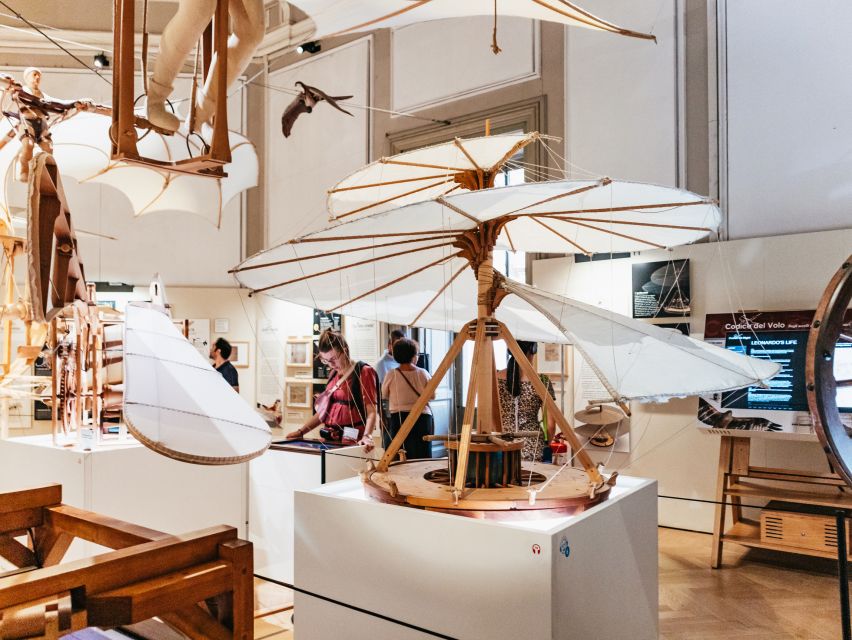
- 200+ interactive, 3D machine displays built from Leonardo’s ideas and reconstructions
- Fully functioning models that show how certain mechanisms are meant to work
- A digital Last Supper restoration that ties back to Santa Maria delle Grazie
- Family-friendly hands-on corners like a mechanical dragonfly and build workshops
- Options for audio in multiple languages, with interactive elements available in English and Italian
Leonardo3 in Milan: more than “Da Vinci stuff”
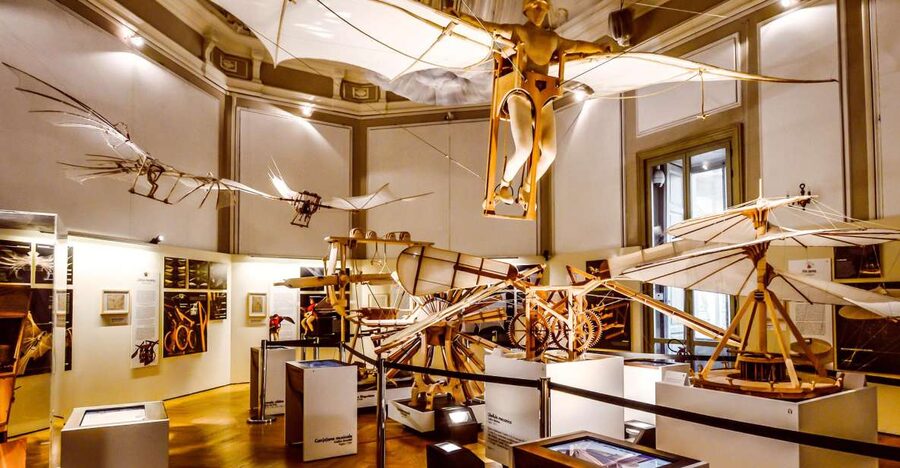
Most Da Vinci exhibitions focus on drawings, paintings, or big themes. Leonardo3 takes a different angle: it treats Leonardo like the prototyping genius he was. You don’t just look at concepts—you see what the concept becomes when someone tests it as a machine.
The museum’s strength is the way it makes cause and effect feel real. When a model moves, you can often spot the logic behind the movement: gears, linkages, airflow ideas, mechanical balance, and “how would you actually build this?” thinking. For people who enjoy science and how things work, it lands fast.
And for art lovers, the museum still gives you that “wait, he thought of this centuries ago” reaction—especially with the Last Supper section and the way it’s shown through restoration technology.
A few more Milan tours and experiences worth a look
Finding the entrance: Galleria Vittorio Emanuele II meets Piazza della Scala
This is one of those Milan stops that’s easy once you’re in the right building—but annoying if you’re searching from street level.
You enter through the Galleria Vittorio Emanuele II in Piazza della Scala. Your ticket is shown at the ticket office. A useful practical note: the museum can be a little tricky to find using navigation apps, so I’d give yourself buffer time to walk inside the galleria and locate the correct entrance.
If you’re combining this with other sights in the center, aim to arrive when you still have energy to wander. The museum isn’t huge, and once you start, you’ll want to keep moving rather than backtracking.
The heart of the museum: 200+ interactive 3D machines
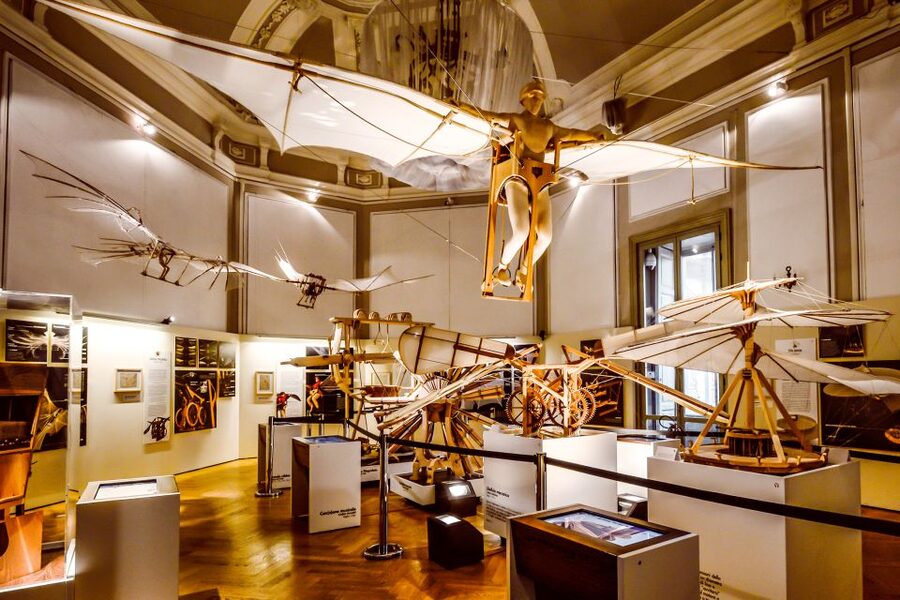
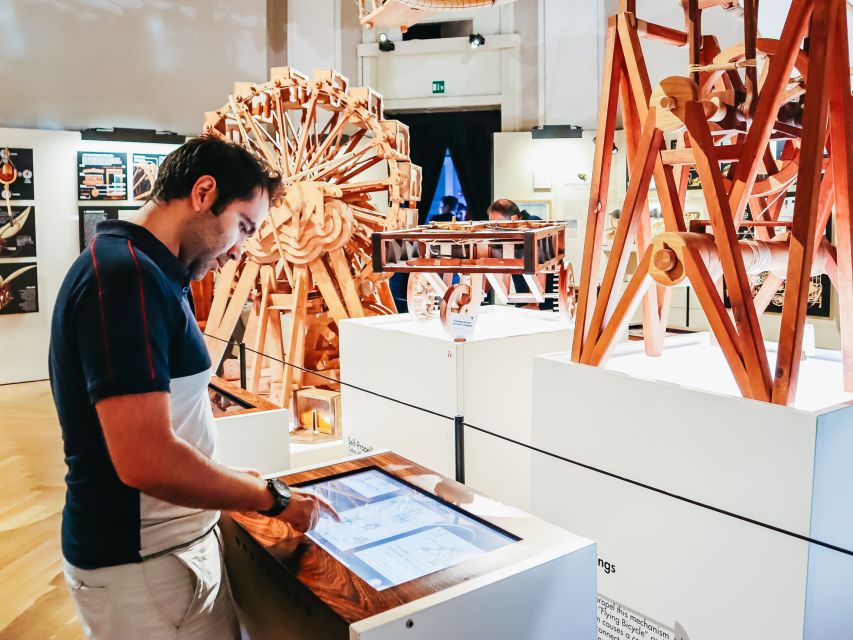
The headline here is scale: you’re looking at more than 200 interactive, 3D machines. That’s not just a number for marketing. The exhibits are designed so you’re constantly moving between “look at the idea” and “try to understand the mechanics.”
A few types of exhibits you can expect:
- Life-sized style models of inventions, so you get a sense of dimension
- Interactive screens alongside machines, where you can virtually build or view the engineering concept
- Working-style models that let you see motion and function, not just diagrams
One model people highlight is a mechanical dragonfly. Even if you’re not a gadget person, it’s one of those displays that makes the museum feel like a lab, not a lecture hall. You’ll also run into displays that attempt to explain how some ideas would have worked if built from Leonardo’s notes.
Manuscripts to machines: what the reconstructions teach you
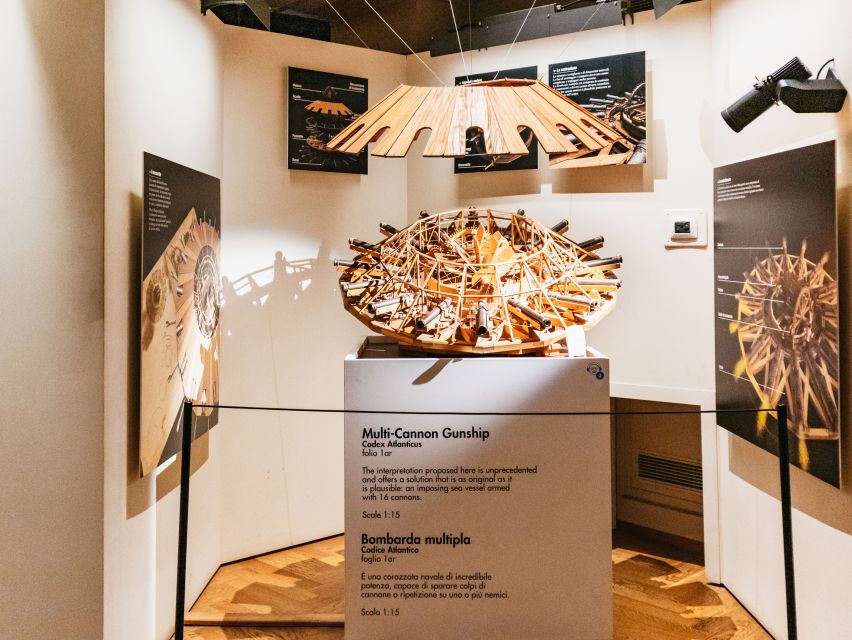
Here’s the part I think you’ll appreciate most: Leonardo3 doesn’t treat the reconstructions as trivia. It frames them as evidence—what happens when researchers study manuscripts and then test the underlying engineering.
You’ll see fully functioning machines created by studying Leonardo’s writing and drawings. That matters because it gives you a real sense of how his ideas were structured. It’s easy to admire Leonardo as a mythic genius; it’s harder (and more interesting) to see how his process turns into practical steps.
You’ll also encounter exhibits that touch on a range of Leonardo’s interests, including:
- war-related engineering concepts (like designs connected to vehicles and weapon systems)
- flight themes
- city and water ideas, including canal-building related concepts
- art and human study sections
Even when some machines are “reconstructions” rather than identical replicas, the museum’s value comes from how the explanations connect sketch → parts → mechanism.
The digital Last Supper: seeing Santa Maria delle Grazie through tech
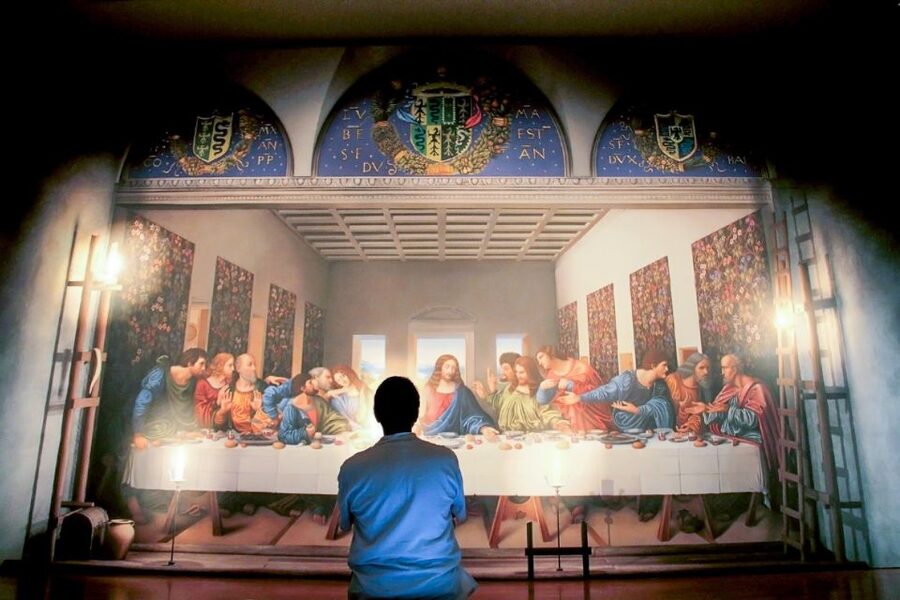
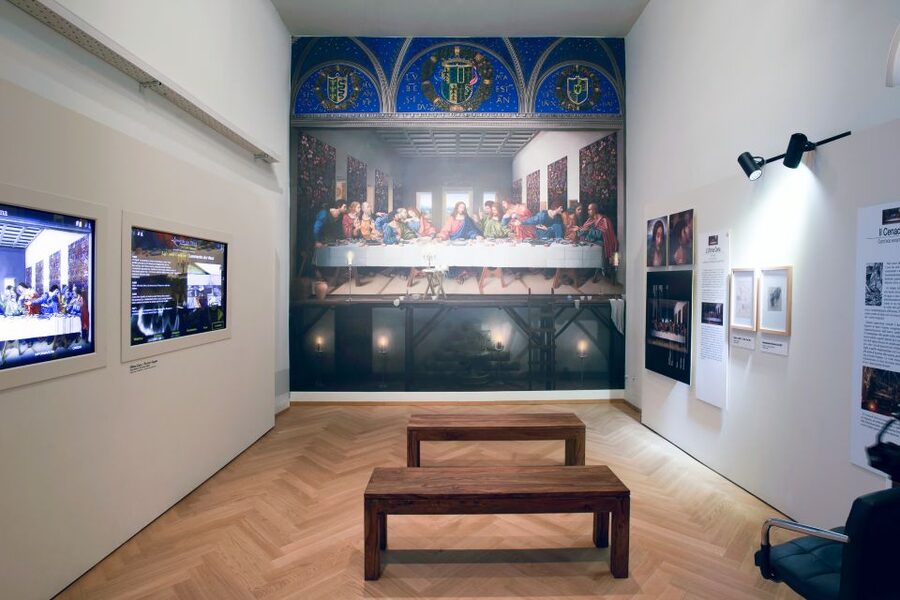
Leonardo3 includes a digital restoration of Da Vinci’s Last Supper. This is a big deal because the Last Supper itself is a separate ticket and a separate experience in Milan, tied to the church of Santa Maria delle Grazie.
In the museum, you’re not touring the real fresco. Instead, you get a tech-based restoration experience that helps you understand what you’re looking at and why it matters. You also get context for the painting, which makes it easier to connect the museum experience to the city’s real Leonardo anchor.
If the actual fresco is on your Milan list, Leonardo3 works as a warm-up. If you can’t get the fresco ticket, this section is still a strong reason to consider the entry.
You can also read our reviews of more museum experiences in Milan
Audio guide + screens: use the language options strategically
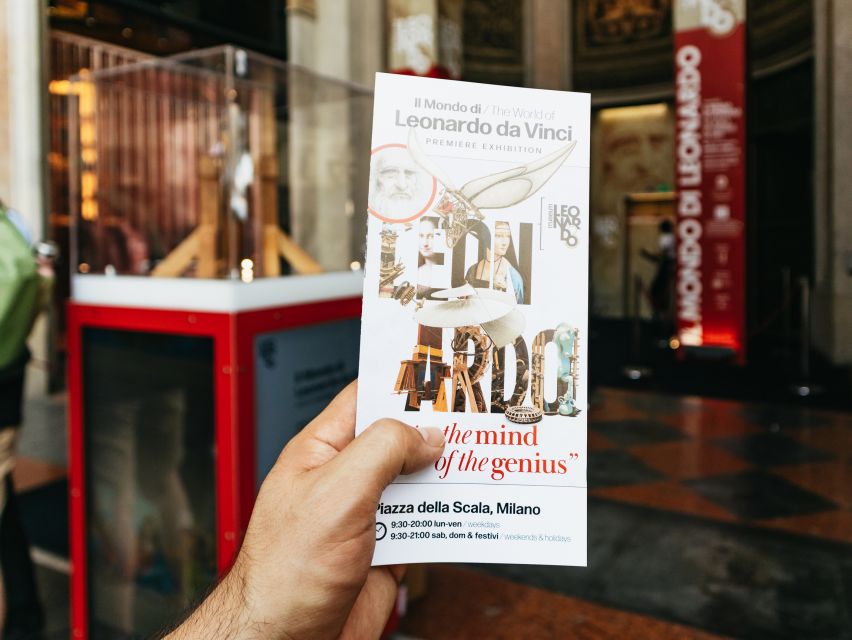
The audio guide is a big part of the value, especially in a museum that mixes visuals, models, and technical explanations.
Here’s what you should know:
- Interactive experiences are available in English and Italian
- Audio guides are available in Italian, English, Russian, German, French, Spanish, Portuguese, and Chinese
- The audio guide is included only if you select the option that includes it
I’d treat the audio guide like your “map.” Start early and let it steer you toward the exhibits that match your interests. If you’re only scanning, you’ll miss the point—Leonardo3 works best when you’re getting the “why” behind the “what.”
Also, be aware of a practical wrinkle: some displays may have audio gaps and may rely on text (in some cases, Italian-only). So if you’re sensitive to that, plan to spend a little extra time with the exhibits that come with stronger explanation support.
Workshop time: mechanical dragonfly and kids’ build zones
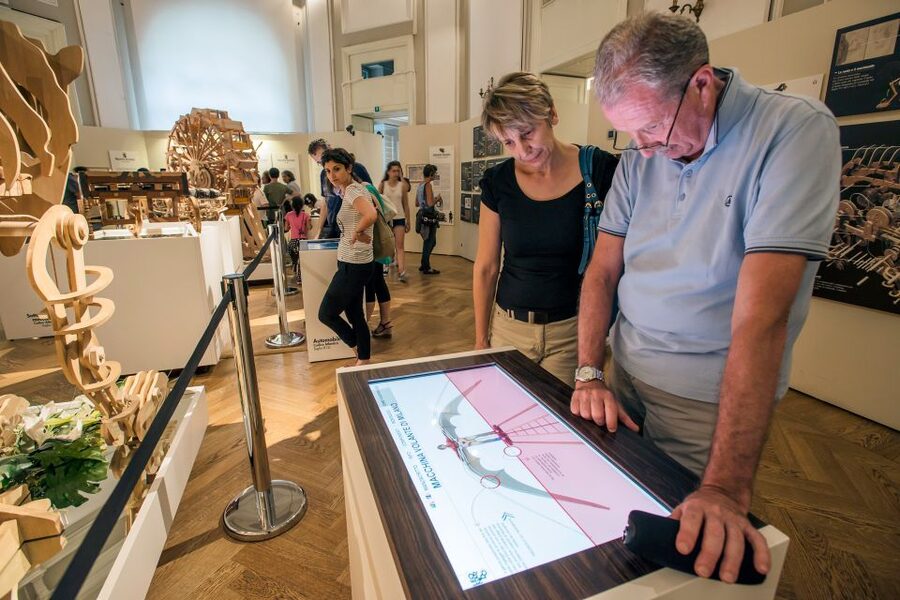
This museum is genuinely family-friendly, not just “a little fun on the side.”
Two hands-on workshop ideas you can expect:
- Kids can print an inventor’s certificate
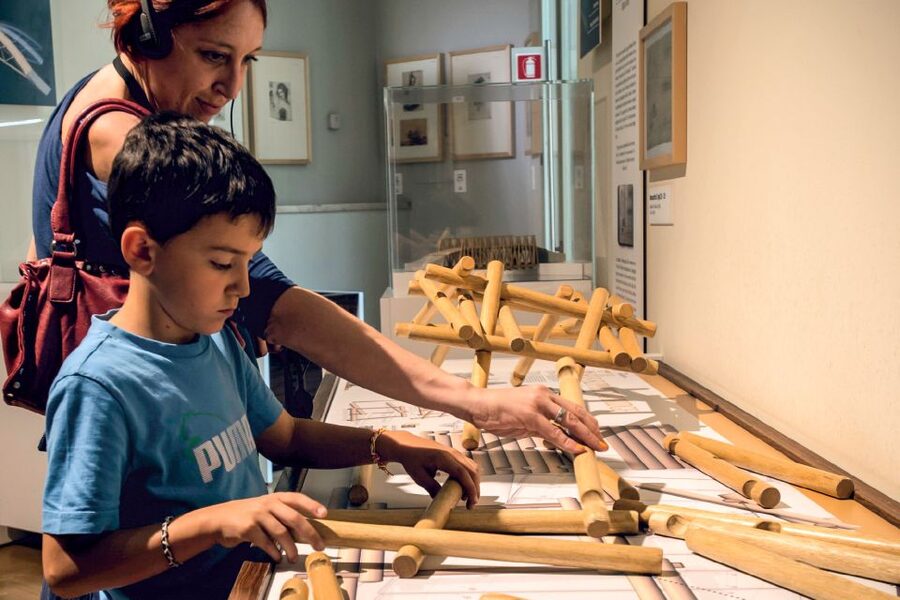
- Kids can assemble a self-supporting bridge using wooden parts
There’s also a play space for adults or older kids to construct inventions. Even if you’re traveling without kids, that area can be a nice way to rest your brain from reading and then re-enter the more technical sections with fresh energy.
And for younger visitors, the interactive models (including the mechanical dragonfly) help make Leonardo feel less like a name from a textbook and more like a maker with workable ideas.
How long it takes: plan 2 to 3 hours, not 45 minutes
The ticket is valid for 1 day, but your visit length is really up to you. The experience works in shorter bursts, yet most people get more out of it with time to wander and re-check the interactive machines.
A few useful pacing signals:
- Some people recommend at least 2–3 hours
- Others say about 1 to 1.5 hours is enough if you’re mainly scanning highlights
- With kids, you might find the visit stays engaging for around an hour, depending on how much they do hands-on
My suggestion: treat it as a main event, not a quick add-on. If you’re trying to fit it between two other Milan must-dos, pick one flexible slot where you won’t be pressured to rush.
Price and value: what $18 buys you in Milan
The entry ticket is listed around $18 per person. That sounds modest for Milan, especially considering you’re getting:
- museum entrance
- an audio guide if you choose the add-on option
- a 10% discount at the bookshop on books (when you show your GetYourGuide voucher)
Whether it’s good value comes down to your interests. If you like science, engineering, and how ideas become mechanisms, Leonardo3 is a strong buy for the time you spend. If you mainly want paintings and canonical artworks, you may find some reconstructions more “interpretation” than you expected—but even then, the machines and the Last Supper digital section are reason enough to visit.
One more value tip: the museum includes a bookshop discount, so if you’re the type who collects art/science books, factor that into your decision.
Rules and practical gotchas (the stuff that matters on-site)
A few on-the-ground limits are spelled out:
- Food and drinks are not allowed
- Cameras are not allowed
- The museum is wheelchair accessible
What this means in practice: plan to eat before or after your visit, and expect to rely on your memory and audio guide rather than phone photos.
Also, the museum can feel a bit tight. That’s not a dealbreaker, but it affects how comfortable it is to linger at interactive machines. If you don’t like crowded exhibits, pick a calmer time and be ready to move along rather than stopping in every nook.
If you’re carrying a larger backpack, there are toilets and lockers on site, which makes it easier to enjoy the hands-on areas without juggling your bag.
Should you book Leonardo3?
Book it if:
- you enjoy interactive, mechanical ideas and want Leonardo explained through how things work
- you’re traveling with kids or you want hands-on sections
- you can’t (or don’t want to) add the Last Supper fresco ticket, but you still want a strong Leonardo-focused experience
Skip it (or reconsider the timing) if:
- your travel style is mostly “quiet art galleries” with minimal hands-on tech
- you expect every display to have full audio support in your language
One extra reason to be decisive: a staff comment shared in one account said the museum was under threat of closing for a commercial change, with a petition circulating. That doesn’t guarantee anything, but it’s a solid reason to check current status and not put this off too long.
FAQ
How long should I plan for Leonardo3?
Most people are happy with about 1 to 1.5 hours, but you’ll get more out of it if you plan 2–3 hours, especially if you want to interact with the machines and workshops.
Is the audio guide included?
It’s included only if you select the option that includes the audioguide. Otherwise, you may just have access to the exhibits and any included materials.
What languages are available for the audio guide?
The audio guide is available in Italian, English, Russian, German, French, Spanish, Portuguese, and Chinese. Interactive experiences are available in English and Italian.
Are food and drinks allowed inside?
No. Food and drinks are not allowed in the museum.
Are cameras allowed?
No. Cameras are not allowed.
Where do I enter and show my ticket?
Enter through the Galleria Vittorio Emanuele II in Piazza della Scala, then show your ticket at the ticket office.
Do I get a discount at the bookshop?
Yes. You get a 10% discount at the bookshop on books when you show your GetYourGuide voucher at the counter.
—
Should you book this entry ticket?
If you want a Leonardo experience that feels like a working lab—machines, interactive screens, and a tech-based Last Supper—then yes, it’s an easy one to book. I’d only hesitate if you prefer classic, photo-friendly museum pacing, because Leonardo3 is stricter about cameras and the space can be a bit tight around the interactive displays.