REVIEW · MILAN
Milan: Leonardo3 The World of Leonardo Museum Entry Ticket
Book on GetYourGuide →Operated by Leonardo3 - The World of Leonardo · Bookable on GetYourGuide
Leonardo da Vinci never felt this mechanical. Leonardo3 – The World of Leonardo turns his notebooks into working, interactive builds, plus a digital restoration of The Last Supper. It’s a smart Milan stop if you like science, design, and the way ideas evolve.
What I like most is the hands-on focus: you get more than 200 interactive, 3D machines, including fully functioning models created from Leonardo’s manuscript studies. I also like that you can add an audioguide and choose from multiple languages, so the explanations land even when your Italian is still on draft version.
One thing to consider: the layout can feel a bit tight in places, and some interactive areas may be harder to reach if you’re traveling with limited mobility or if you prefer lots of personal space.
In This Review
- Key takeaways before you go
- Entering Leonardo3 from the Galleria Vittorio Emanuele II
- What your $18 Leonardo3 ticket actually includes
- Audioguides and language options: how to make it work for you
- 200+ interactive 3D machines built from Leonardo’s manuscripts
- Working models and the audioguide rhythm you’ll want
- Hands-on workshops: dragonfly-style fun and builder time
- The digital Last Supper restoration in Milan: what to expect
- How long to plan and how to pace the rooms
- Rules that matter: cameras, food, and what to bring
- Value for money: why Leonardo3 feels like a good deal
- Who should book Leonardo3 (and who might want a different plan)
- Should you book Leonardo3 in Milan?
- FAQ
- How much is the Milan Leonardo3 ticket?
- How long is the ticket valid?
- Where do I meet for Leonardo3?
- Does the ticket include an audioguide?
- What languages are available on the audioguide?
- Are cameras allowed inside?
- Are food and drinks allowed?
- Is Leonardo3 wheelchair accessible?
- Is transportation to the museum included?
- Is there any discount at the bookshop?
Key takeaways before you go
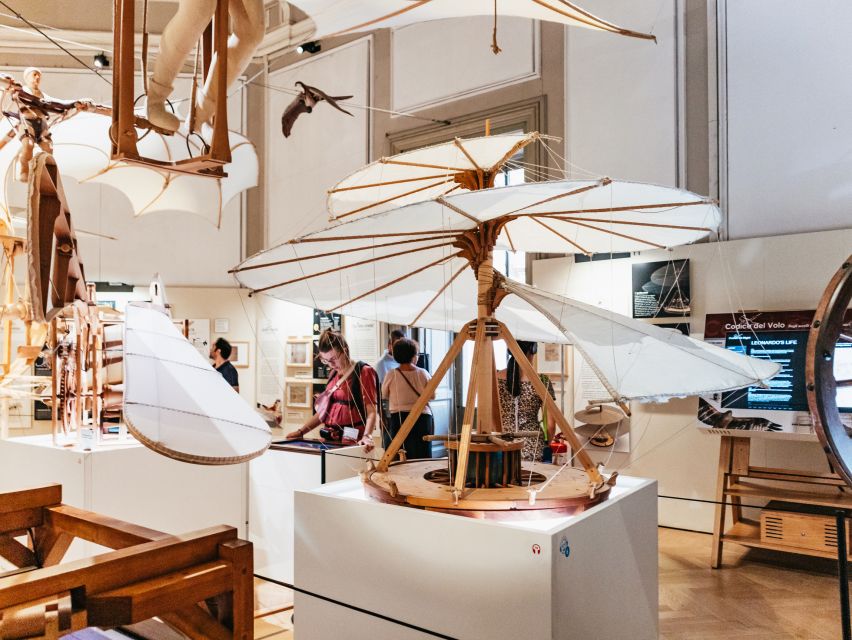
- 200+ interactive, 3D machines that let you see how Leonardo thought, not just what he sketched
- Working models made from studies of his manuscripts, so the exhibits have real engineering logic
- Digital restoration of The Last Supper, tied to the wall painting in Santa Maria delle Grazie
- Multi-language audioguides plus interactive experiences offered in English and Italian
- Hands-on workshops for kids and the kid-at-heart, including bridge-building and inventor certificates
- Clear rules: no food and drinks, and no cameras, which keeps the experience focused
Entering Leonardo3 from the Galleria Vittorio Emanuele II
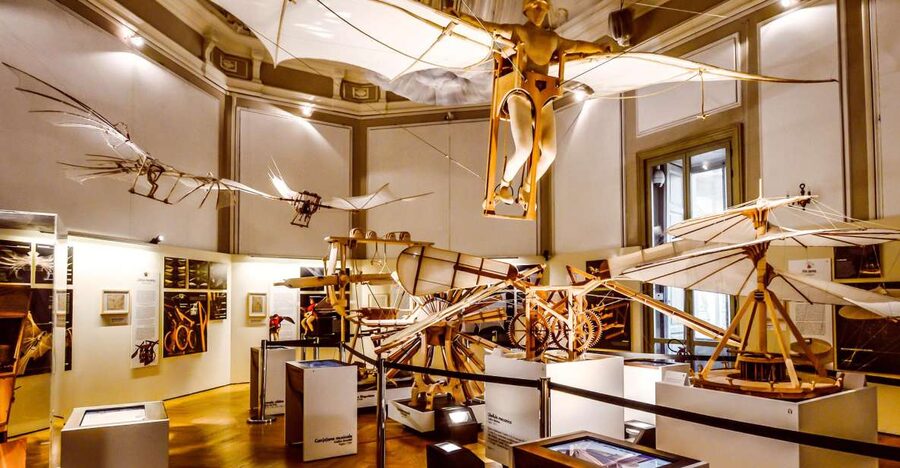
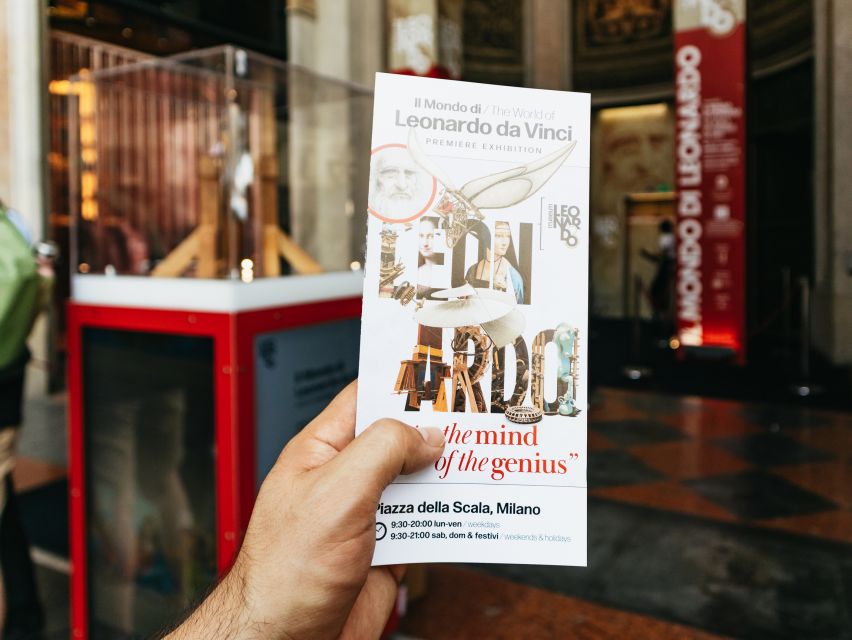
Your Leonardo3 visit starts with an easy Milan landmark. You enter through the Galleria Vittorio Emanuele II in Piazza della Scala, then show your ticket at the ticket office. That means you’re not hunting through side streets, and you’re already in one of the city’s most photogenic shopping arcades.
Plan to arrive a little early so you can get your bearings before the museum doors open. The meeting point also helps you connect the visit to a simple walk afterward—think Piazza della Scala, the surrounding blocks, and the general “center Milan” feel.
At the end, you return to the same meeting point. In other words, it’s a self-contained museum experience rather than a hopping-around tour.
A few more Milan tours and experiences worth a look
What your $18 Leonardo3 ticket actually includes
The price is $18 per person, and the ticket is valid for 1 day. Starting times depend on availability, so check the schedule when you book.
What you’re paying for is not just “a room with posters.” The ticket includes museum entrance fees, and you can choose an option with the audioguide if you want the extra context as you move through the exhibits. There’s also a 10% discount at the bookshop on books when you show your GetYourGuide voucher.
Not included matters for planning:
- No transportation to and from the museum
- No souvenirs are included (though you can buy them)
- Food and drinks aren’t allowed inside, so you’ll want to grab snacks beforehand
A small but practical note: your best value comes from treating the audio option as part of your visit plan. If you like understanding the “why” behind each model, the audioguide helps you keep up with the big ideas without slowing you down too much.
Audioguides and language options: how to make it work for you
This museum is built for people who want explanations, not just visuals. The interactive experiences are available in English and Italian, and audioguides are available in Italian, English, Russian, German, French, Spanish, Portuguese, and Chinese.
If you’re choosing between “read as you go” or “listen while moving,” I’d pick listening. It keeps your attention on the machines and animations rather than on scanning labels.
Also, plan on how you’ll use the audioguide. Don’t feel like you have to start it the moment you walk in. You can wait until you reach the first bigger cluster of machines, then turn it on and let it guide your pacing. That tends to make the experience feel smoother.
200+ interactive 3D machines built from Leonardo’s manuscripts
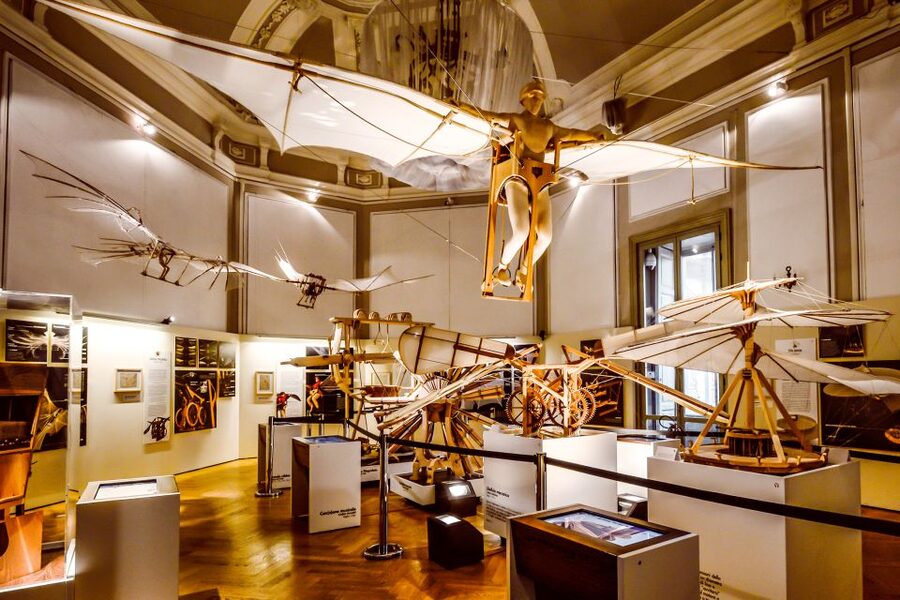
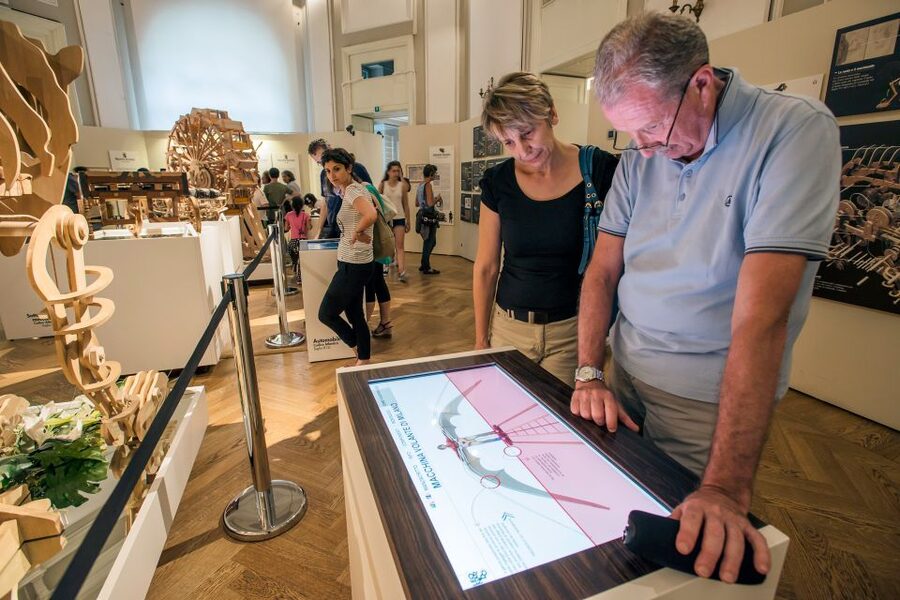
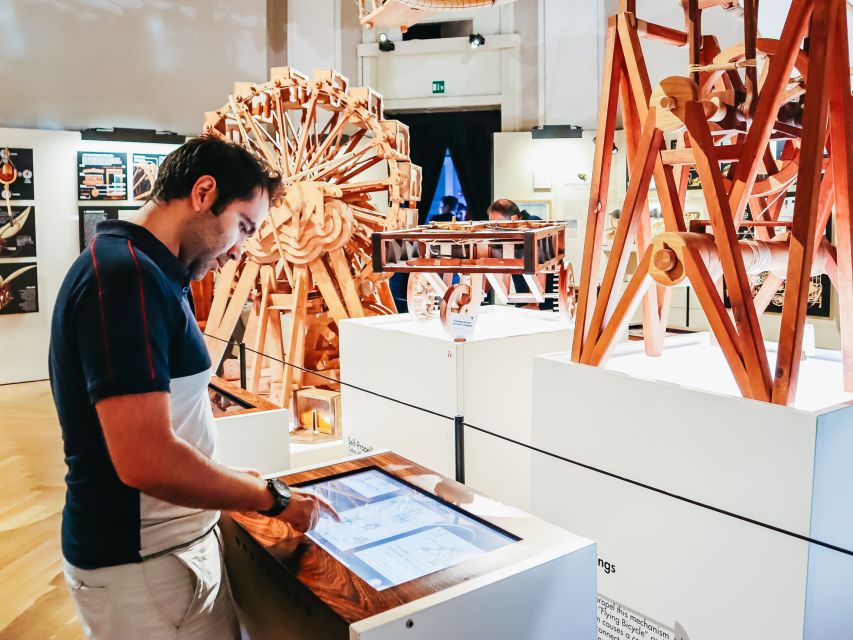
The heart of Leonardo3 is the claim you’ll keep hearing in different ways: Leonardo’s genius as an inventor. The exhibits include more than 200 interactive, 3D machines, many presented as fully functioning recreations.
Here’s why that matters. Leonardo’s original notebooks can be fascinating but hard to interpret on your own. Leonardo3 tries to bridge that gap by translating his research into models you can actually watch, activate, and understand. You’ll see the connection between the sketches and the mechanics—how concepts become motion, and how motion becomes a working device.
Expect the museum to cover a wide spread of Leonardo’s interests. You’ll run into themed areas such as flying ideas, canal-building, and military-related inventions, along with other engineering and artistic topics. Even if your favorite part of Leonardo is the science side (or the art side), you’ll likely find something that clicks.
One more thing I appreciate: the exhibits don’t just show finished hardware. The museum also focuses on the process—how the team studied manuscripts and then built reconstructions based on that research. That gives you a stronger sense of Leonardo as a working mind, not only a famous name.
Working models and the audioguide rhythm you’ll want
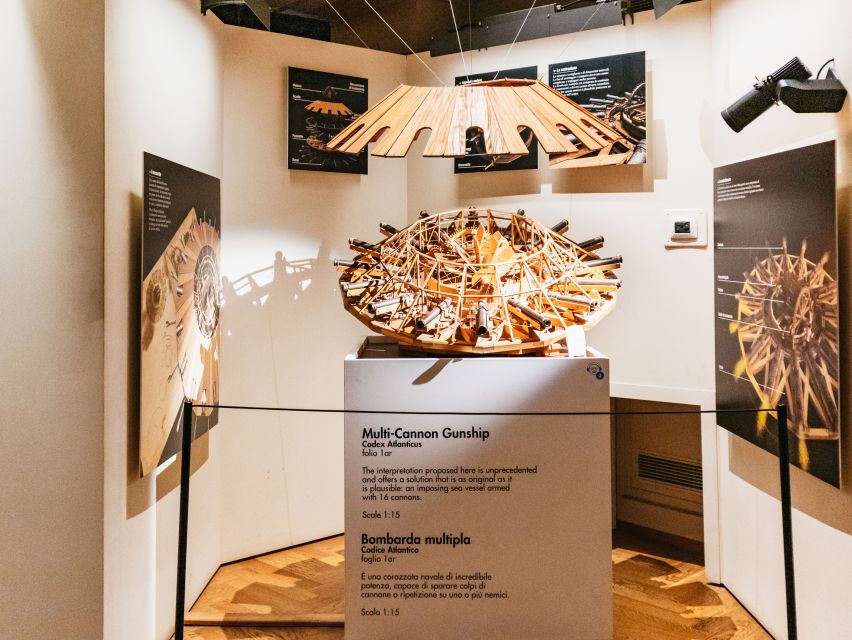
As you move from room to room, the best strategy is to let the audioguide set your rhythm and then “test” the machines yourself. The interactive displays are meant to be touched, activated, and explored, not just stared at from a distance.
Some exhibits include digital elements—like animated explanations or reconstructions—while others offer physical models you can observe closely. If a display looks busy, focus on one question: what problem is the machine trying to solve? Once you pin that down, the details become easier to follow.
Also, don’t underestimate how much you can learn from simply watching how the models operate. You’ll pick up patterns in Leonardo’s thinking: structure, balance, motion, and the way he iterates from idea to prototype.
And yes, the exhibit includes a wide range of machine types, including something as fun as a mechanical dragonfly. It sounds whimsical, but it reinforces a serious point: small mechanisms can embody big principles.
You can also read our reviews of more museum experiences in Milan
Hands-on workshops: dragonfly-style fun and builder time
Leonardo3 gives you more than museum looking time. There are workshops built for active participation, including activities designed especially for kids, but honestly enjoyable for adults too.
Depending on what’s available during your visit, you might encounter:
- A workshop area where kids can print an inventor’s certificate
- A hands-on build space where you can assemble a self-supporting bridge using wooden parts
This is the portion of the day that turns Leonardo3 from educational to memorable. When you build something yourself, Leonardo’s engineering mindset becomes easier to feel. You start noticing how parts relate, how weight shifts, and why certain designs hold while others don’t.
Even if you’re traveling solo, it’s worth making time for these stations. They break up the heavier content rooms and give your brain a reset.
The digital Last Supper restoration in Milan: what to expect
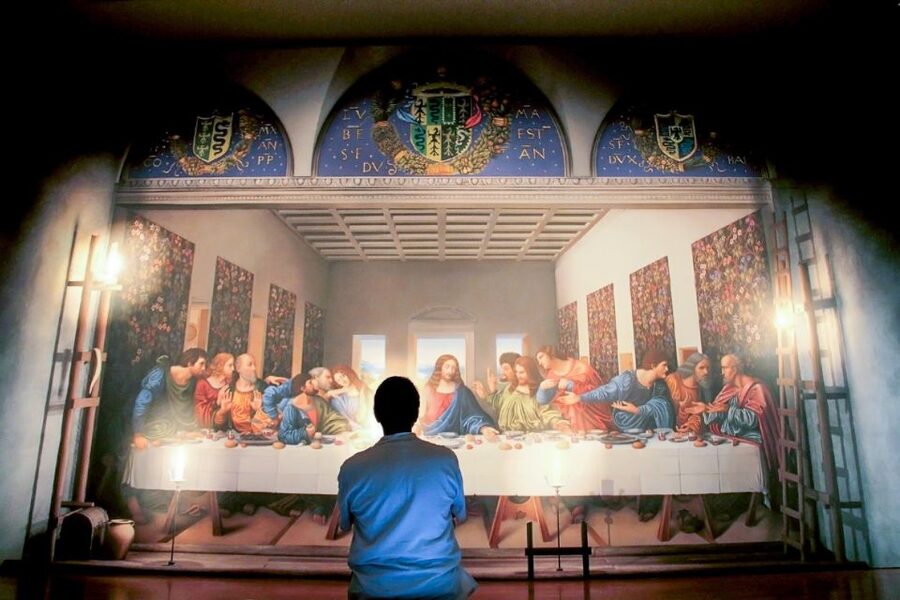
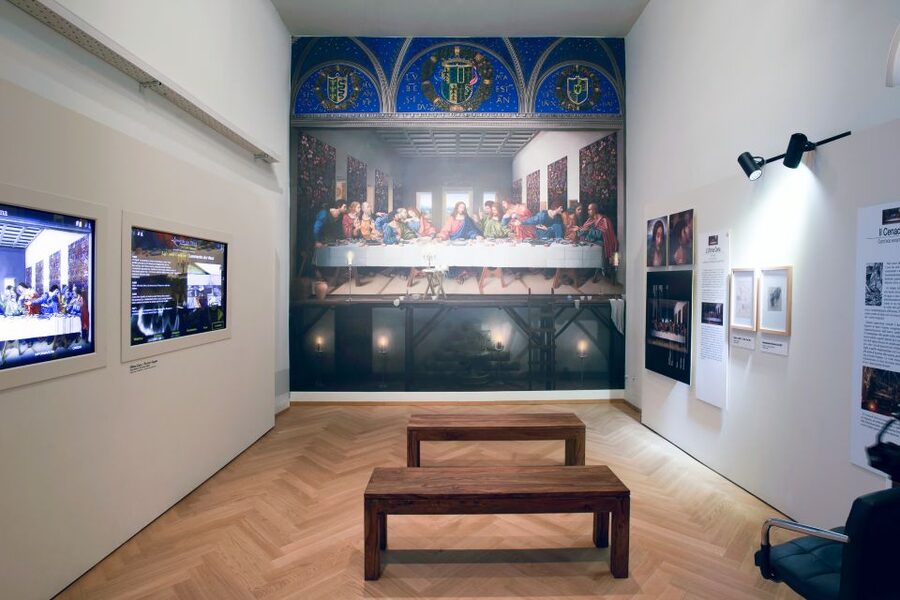
Leonardo3 includes an immersive, digital restoration connected to Leonardo da Vinci’s The Last Supper, the famous wall painting in the church of Santa Maria delle Grazie. Instead of trying to compete with the real thing, it offers a museum-style interpretation through digital reconstruction.
How to approach it: treat it as a guided experience in how restoration and interpretation work. The museum presents details in a way that helps you see layers you might miss if you were only observing from a distance.
If your main trip includes the actual Santa Maria delle Grazie visit, this Leonardo3 stop still earns its keep. You’ll get a different perspective—one more focused on explanation and visualization, not on strict “viewing-only” etiquette.
Also, if the real Last Supper timing doesn’t work for your schedule, Leonardo3 offers an alternative way to connect with the artwork in a less logistically stressful setting. You’re still seeing a Leonardo masterpiece experience, just in a different format.
How long to plan and how to pace the rooms
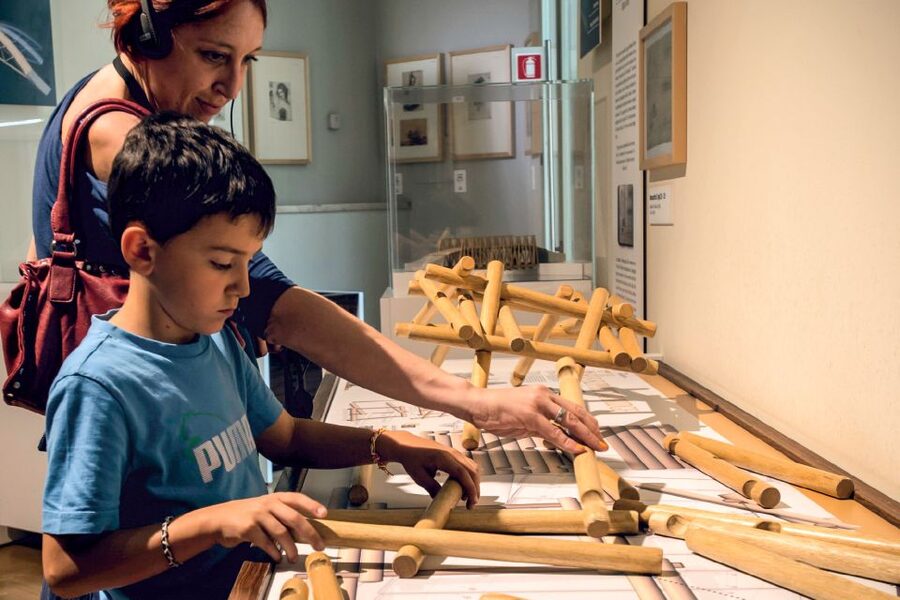
Your ticket is valid for 1 day, but the practical question is how much time you’ll need inside. Based on how the experience is set up—lots of interactive machines, plus the option to use the audio guide and the workshop areas—I’d plan on about 1 to 2 hours as a baseline.
If you want to slow down, read more, and spend time with the hands-on builds, give yourself extra time. The museum is designed for exploration, and a rushed visit can make it harder to appreciate how the exhibits connect back to Leonardo’s methods.
One more pacing tip: do a first pass with your audioguide on, then do a second look at the displays you keep gravitating back to. That creates a “loop” where you understand a machine, watch it again with new context, and then move on.
And yes, you may encounter tighter spaces between certain exhibits. If you’re sensitive to crowded indoor areas, aim to visit at a less-busy starting time, if that option is available when you book.
Rules that matter: cameras, food, and what to bring
This museum runs with a focused rule set:
- No food and drinks
- No cameras
So come prepared. If you’re traveling with children, plan a snack break outside before you enter. For photos, be mindful that you won’t be able to record the exhibits yourself. That shifts the visit from “content gathering” to actual observation, which honestly works well here.
In terms of what to bring, you’ll mainly want comfort: wear shoes you can stand in, and bring a light layer if you get chilly easily. The museum can run warm, and that can affect how long you’ll want to linger at each station.
Wheelchair access is available, too, so your route should be manageable if you need it.
Value for money: why Leonardo3 feels like a good deal
At around $18 per person, Leonardo3 is priced in a way that makes sense for a Milan museum day. You’re not just buying an hour of viewing; you’re buying an interactive, multi-format exhibit experience—machines, digital restoration, audioguides, and workshops.
The value gets better if:
- You select the audioguide option so you understand what you’re seeing
- You bring at least some curiosity about engineering ideas, not just art history
- You’re traveling with kids and want a place where they can actively do something, not just watch
The bookshop discount also nudges the value upward a bit. If you pick up a Leonardo book afterward, you’re getting 10% off with your voucher.
Is it perfect? No museum is. But for a one-day “Leonardo stop” in Milan, this is one of the more practical ways to connect Leonardo’s manuscripts to real-world mechanics.
Who should book Leonardo3 (and who might want a different plan)
Leonardo3 is a great fit if you:
- Love interactive science and engineering
- Want to see Leonardo’s inventions in functional form
- Prefer learning through hands-on builds and guided explanations
- Travel with kids who need active attention
You might consider pairing it with other Milan classics if you want a fuller day. Leonardo3 is focused, and it works best when you let it be the main event rather than squeezing it into a jammed schedule.
If you only care about the single most famous artwork itself, you may find you still want the real experience at Santa Maria delle Grazie. But even then, Leonardo3’s digital restoration and the surrounding context can help you appreciate what you’re looking at in a deeper way.
Should you book Leonardo3 in Milan?
Yes, you should book Leonardo3 if you want Leonardo da Vinci translated into working concepts you can watch, test, and understand. The interactive 3D machines, the option for a multi-language audioguide, and the workshop builds make it more than a typical museum ticket.
Before you commit, think about two things: whether you’re okay with the no-camera, no-food rules, and whether you’re interested in inventions as much as art. If that sounds like your kind of day, Leonardo3 is a smart use of your time in Milan.
And if you’re trying to make the most of limited time, this ticket gives you a concentrated dose of Leonardo—one that’s easy to fit into a central location without extra transit planning.
FAQ
How much is the Milan Leonardo3 ticket?
The ticket price is listed as $18 per person.
How long is the ticket valid?
The ticket is valid for 1 day. You’ll need to check availability to see starting times.
Where do I meet for Leonardo3?
Enter through the Galleria Vittorio Emanuele II in Piazza della Scala, then show your ticket at the ticket office.
Does the ticket include an audioguide?
The museum entrance is included, and an audioguide is included if you select the option with it.
What languages are available on the audioguide?
Audio guides are available in Italian, English, Russian, German, French, Spanish, Portuguese, and Chinese.
Are cameras allowed inside?
No, cameras are not allowed.
Are food and drinks allowed?
No, food and drinks are not allowed.
Is Leonardo3 wheelchair accessible?
Yes, the activity is wheelchair accessible.
Is transportation to the museum included?
No, transportation to and from the museum is not included.
Is there any discount at the bookshop?
Yes. There’s a 10% discount at the bookshop on books when you show your GetYourGuide voucher at the counter.