REVIEW · MILAN
Milan: “Museo Teatrale Alla Scala” Guided Tour
Book on GetYourGuide →Operated by Hidden Experiences · Bookable on GetYourGuide
La Scala has a way of pulling you in fast. In this Museo Teatrale alla Scala guided tour, you get a focused look at the theatre’s famous stage and the museum collections that explain how opera actually gets made. I especially like how the tour pairs the theatre interior with the stories of performers tied to it, and how the museum shows instruments, costumes, and set designs as tangible proof of the legend.
One thing to keep in mind: on some days, rehearsals and private events can limit your visit so you see the museum only instead of the full theatre route. That said, the tour still runs at 1.5 hours, includes entry and headsets, and Milan’s central location makes it easy to fit into a day that already includes the Cathedral and Vittorio Emanuele Gallery.
In This Review
- Key highlights worth your time
- La Scala in 90 Minutes: what you actually see and why it matters
- Meeting at the Museo Teatrale alla Scala: where to find your guide fast
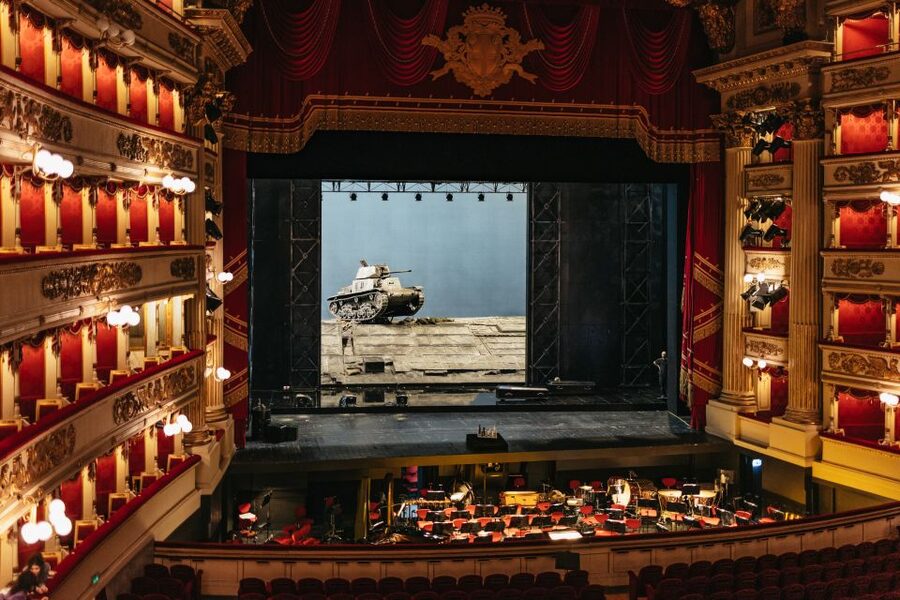
- The theatre interior: boxes, architecture, and the people behind the stage
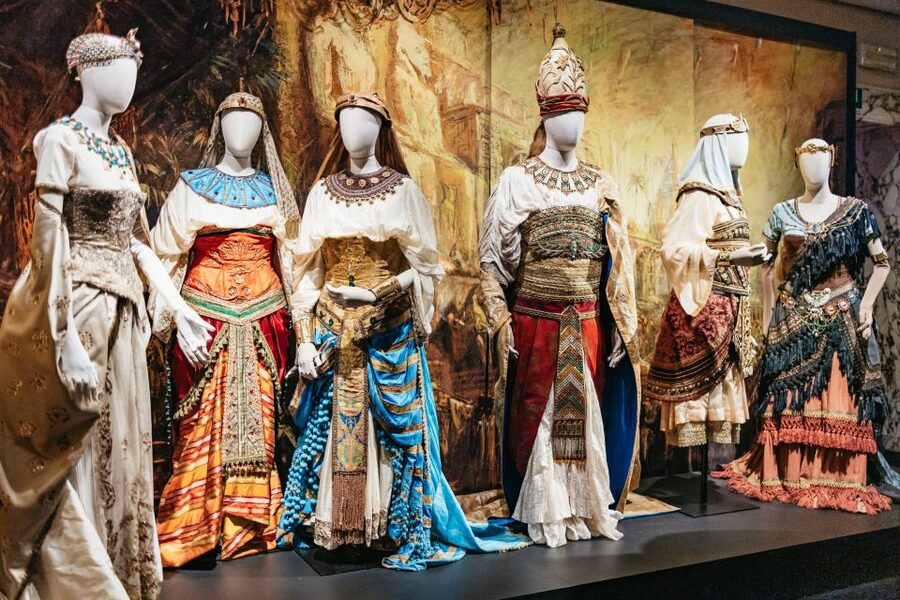
- The museum galleries: costumes, instruments, and set designs that make opera tangible
- Rehearsals and private events: the day-of surprises you can plan for
- Price, group size, and how to get the best value for $44
- Should you book this tour: for opera lovers, first-timers, and skeptics
- FAQ
- How long is the La Scala Theatre and Museum guided tour?
- What’s included in the price?
- Where do I meet the guide?
- What languages are available for the live guide?
- Is the tour wheelchair accessible?
- Are large bags or luggage allowed?
Key highlights worth your time
- La Scala’s stage in context: you hear how the theatre’s early years and major performances shaped what you’re looking at today
- The elegant interior, up close: boxes, architectural details, and the feeling of the hall
- Artifacts that explain the art: instruments, costumes, and set designs tied to notable productions
- Stories with named performers: Verdi, Rossini, Luciano Pavarotti, and Maria Callas come up for a reason
- Headsets for clarity: they help you catch the guide’s details without craning your neck
- A possible rehearsal bonus: occasionally you may catch a brief moment when activity is happening inside
La Scala in 90 Minutes: what you actually see and why it matters
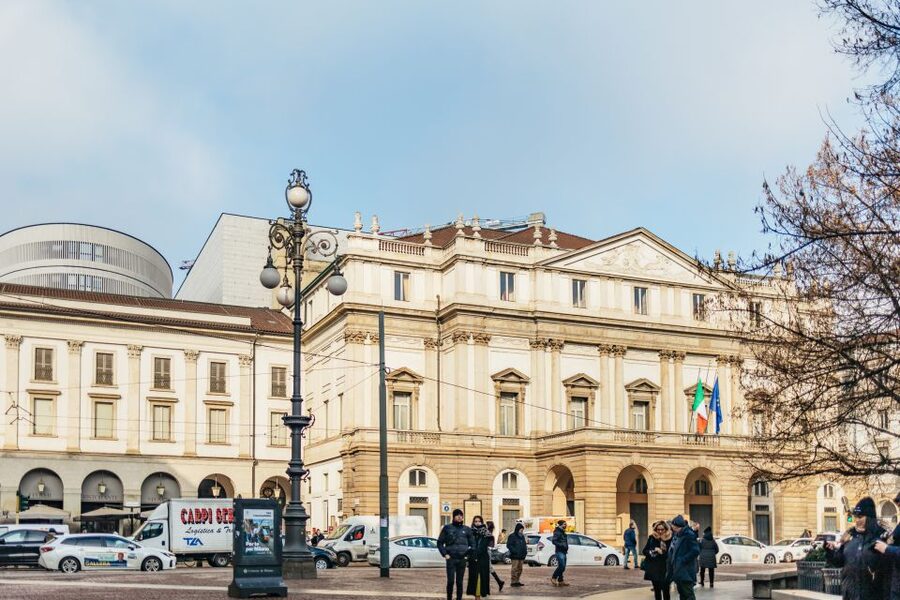
This is a short tour by design. At 1.5 hours, you’re not trying to “cover everything.” Instead, you get a tight route that explains what you’re seeing in the theatre and why the museum collections matter, especially if you’re not an opera-life insider.
The core payoff is the pairing: you look at the performance space first, then you walk into the La Scala Museum to connect the building to the things that made famous productions work. That shift—from seats and boxes to costumes, instruments, and stage designs—helps you understand opera as a craft, not just a title list.
The tour also targets history in a practical way. You’re guided through the theatre’s early years and the performances that made La Scala a cultural anchor in Milan, and you hear stories tied to huge names like Giuseppe Verdi, Gioachino Rossini, Luciano Pavarotti, and Maria Callas. The point isn’t name-dropping. It’s building a mental map so that when you see a display case or a theatre detail, it clicks into place.
If you’re hoping to sit through a full opera night, this won’t replace that. But it’s a strong alternative when you want the building experience and you don’t want to gamble on what’s onstage during your dates.
You can also read our reviews of more guided tours in Milan
Meeting at the Museo Teatrale alla Scala: where to find your guide fast
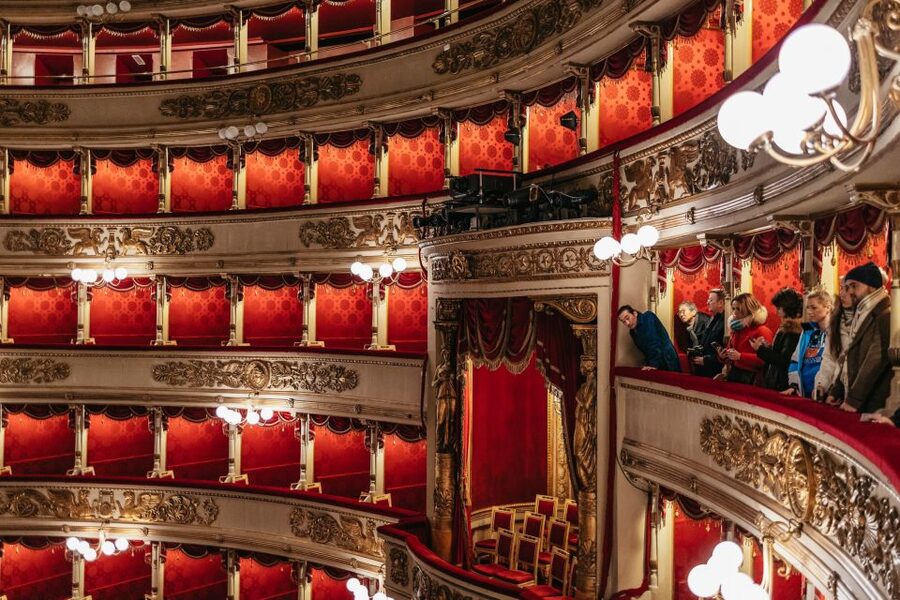
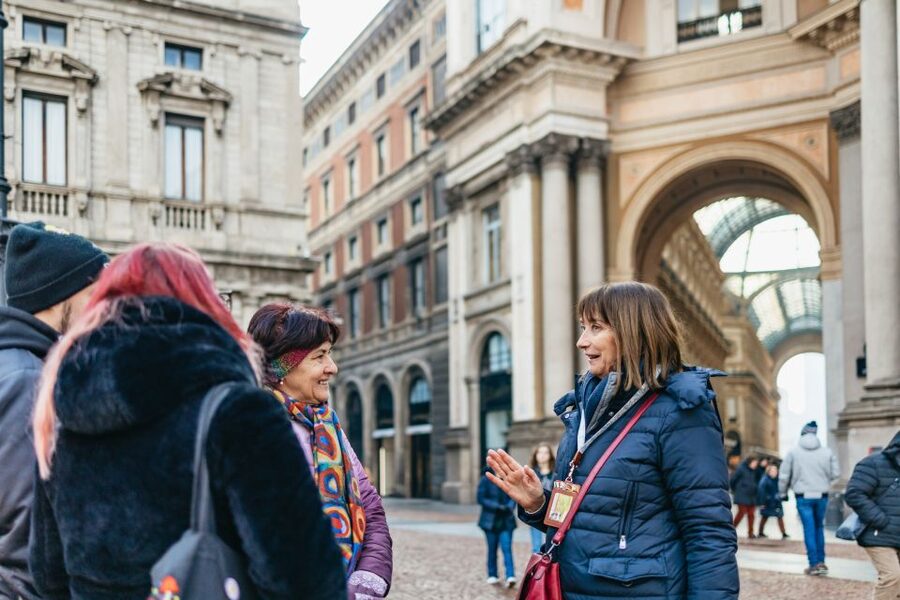
You meet at the front of the La Scala Theatre Museum entrance. Look for the guide carrying the Hidden Experiences purple flag or board. This matters more than it sounds, because La Scala is in a busy, central zone and you’ll want to start on time.
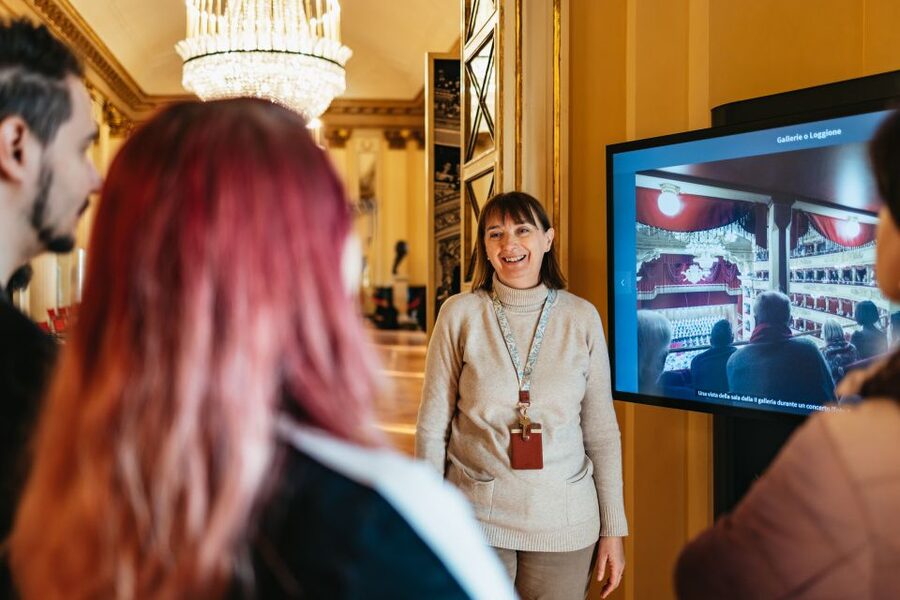
The good news is that the tour is built for clear communication. Headsets are included, so even if you’re in a group or the room is echoey, you can follow the guide’s explanations without playing catch-up. Multiple guides get praised for keeping the pace engaging, including examples like Fabio and Simone, plus guides such as Alice and Giorgio who are singled out for turning museum time into story time.
Timing is also straightforward: you select a starting time based on availability, and the tour runs about 1.5 hours. There’s no long wander-through shopping streets. It’s a concentrated visit that fits well with a “Milan classics” plan.
One practical note: large bags and backpacks must be checked into the cloakroom, and oversize luggage isn’t allowed. If you’re traveling light, you’ll sail through. If you’re not, plan a little extra time to handle storage before you join the group.
The theatre interior: boxes, architecture, and the people behind the stage
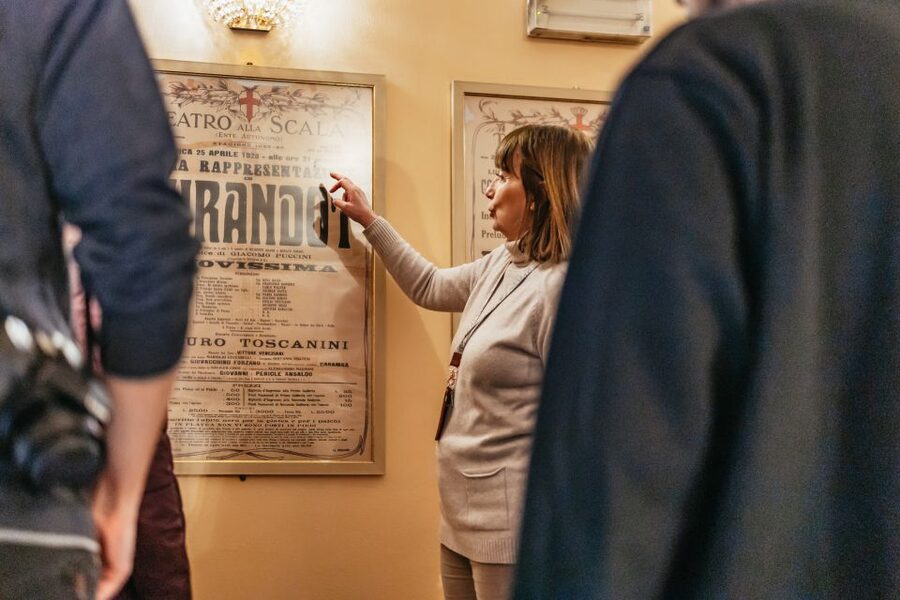
The theatre portion is where your imagination starts working. From the start, you’re guided through the space and its design, then you’re given the human stories that made it famous. This is where you get that feeling that the building is more than a venue—it’s an institution.
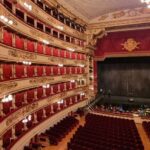
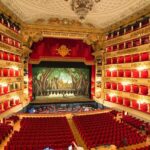
You’ll spend time in the hall and hear about what makes La Scala’s interior special, including how the layout and details create an intimate sense of proximity. In reviews, people mention moments like seeing the theatre lights on and watching activity during rehearsals, which helps explain why La Scala feels different from purely “architectural sightseeing.”
A big theme is performance history as lived experience. The guide connects famous composers and performers to what you’re seeing, so Giuseppe Verdi and Gioachino Rossini aren’t just two marble names—they become part of the story of why La Scala mattered. Luciano Pavarotti and Maria Callas also come into the conversation, helping you connect iconic artistry to the stage that framed it.
You may also get a peek into how the theatre works day-to-day. Some visits include access to areas like lodges or short glimpses of rehearsal activity when schedules allow. That kind of moment turns the tour from “museum content” into something closer to a backstage snapshot, even without being a full production tour.
If the day is busy with rehearsals or private events, remember that the theatre segment might be shortened. Still, the theatre focus is a major reason this tour lands so high for people who care about opera and ballet.
The museum galleries: costumes, instruments, and set designs that make opera tangible
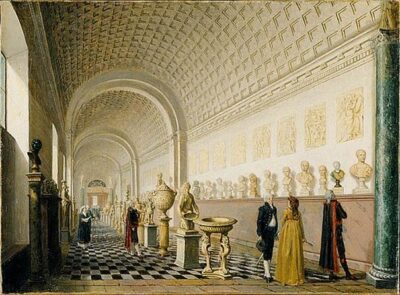
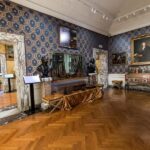
The La Scala Museum is where the tour turns visual and hands-on, even though you’re still in display mode. You’ll see items that explain performance as a team effort: musical instruments, costumes, and set designs connected to major productions.
This is the part that helps you understand what you’ve heard in the theatre. When you’re told about famous performances and legendary artists, the museum then gives you the physical references: the tools, looks, and visual building blocks that created the shows.
One reason this museum earns consistent praise is that the artifacts don’t feel random. The tour frames them so they connect back to the theatre you just visited. That includes the museum’s collection of private artifacts that point to how La Scala shaped culture over time—not just locally, but in the wider world of music and performance.
Some displays get called out for specific impact in reviews, including the mention of a Liszt piano, plus attention to ballet costumes and other visual pieces. If you’re into craft—how costumes move, how instruments are preserved, how stage design communicates emotion—this museum time is the best use of your money.
You should also go in with a small mindset shift: don’t treat it like a “look and move” checklist. Treat it like a story. When the guide points out how a set design or costume piece was used, you’ll understand it faster and you’ll remember it longer.
Rehearsals and private events: the day-of surprises you can plan for
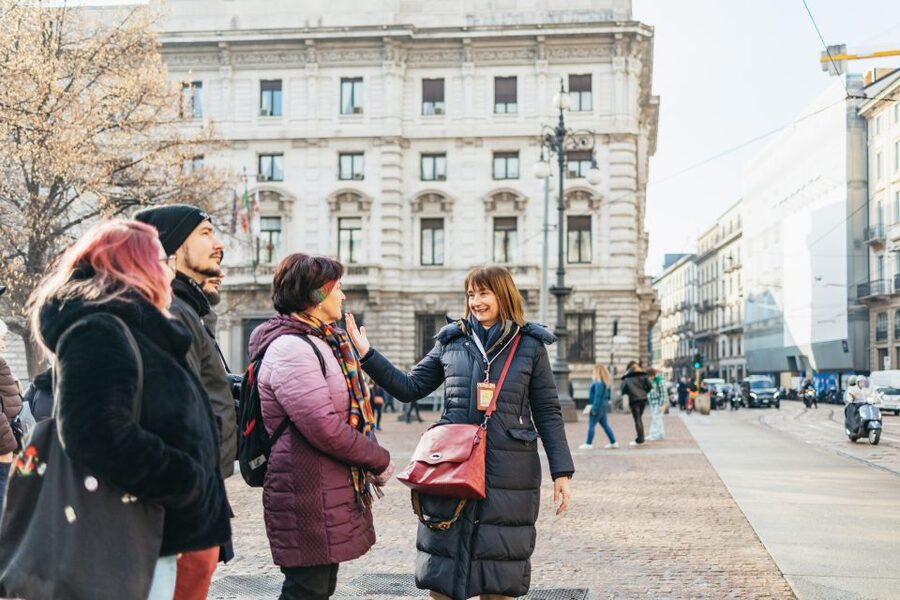
La Scala is an active working theatre. That’s why you should expect a little variability, even on the same tour.
The tour information is clear that rehearsals and private events can affect what’s accessible. In some cases, your visit may be limited to the museum only. That’s the main drawback, and it’s worth factoring into your expectations.
The upside is that when things line up, you can get the kind of moment people remember for years: a glimpse of rehearsal from a box, or a brief look at an orchestra rehearsal in motion. Reviews mention scenarios like catching a short rehearsal window, plus visits where people were able to see part of activity happening behind the scenes (even if only for a few minutes).
Because you can’t guarantee those moments, treat them as bonuses, not the centerpiece. Your dependable core is the theatre-and-museum narrative with guided interpretation, plus headsets and included tickets.
If your dates are tight and you’re mainly after the building experience, this tour still makes sense. If you’re specifically trying to time your visit to catch lots of rehearsal action, you’ll want to set expectations and accept that some days are more museum-focused than theatre-focused.

Price, group size, and how to get the best value for $44
At $44 per person for 1.5 hours, this sits in the “good value” zone—especially if your goal is to experience La Scala without buying an opera ticket at main-house prices. Several reviews make the same point in different ways: when the stage schedule isn’t a fit, or ticket prices feel steep, a guided theatre-and-museum visit becomes the practical way to experience La Scala’s atmosphere.
What makes the cost feel fair isn’t just entry. It’s the guide-led structure and the included headsets. For a place this packed with cultural meaning, the difference between walking in alone and walking in with a guide is noticeable. People praise guides for pacing, answering questions, and making the material feel connected instead of like a list.
Group size also affects value. Reviews mention small groups, even near-private experiences. When the group is small, you get more chances to ask questions and you can steer the tour toward what you care about, like architecture, opera history, or ballet visuals.
To get the best value, pick your language carefully. The tour guide is offered in French, Italian, English, German, and Spanish, and people clearly respond to guides who explain in a way they can fully follow. If you’re comfortable in more than one language, choose the one where you think in real time, not the one you studied years ago.
Finally, plan around the luggage rule. If you’re carrying a big backpack, factor in the cloakroom stop. It’s not a deal-breaker, but it can affect your arrival rhythm if you’re moving fast through central Milan.
Should you book this tour: for opera lovers, first-timers, and skeptics
Book it if you want a guided, structured way to see La Scala’s theatre and museum in one tight window, and you like the idea of learning how performance history connects to real objects—costumes, instruments, set designs—inside the Museo Teatrale alla Scala.
It’s also a smart choice for first-timers. You don’t need to know every composer or opera title. The tour is set up to build context as you go: theatre first, then museum artifacts that make the context visible.
Book it if you care about ballet too. Reviews point out moments like ballet rehearsal visibility on some days and attention to ballet costumes in the museum collection. Even if you prefer opera, ballet fans often leave with a broader view of what La Scala produces and preserves.
Where you might hesitate is if your main goal is a full theatre-only experience with guaranteed access to rehearsal activity. Some days are museum-only, and the rehearsal bonus isn’t promised.
If you’re deciding between this and trying to rely on what’s happening in the building when you arrive, this tour wins on predictability. You’ll get the guided narrative either way, and on lucky days you may add that extra layer of seeing activity in progress.
FAQ
How long is the La Scala Theatre and Museum guided tour?
The tour lasts about 1.5 hours.
What’s included in the price?
The price includes entry tickets to the La Scala Theatre and Museum, the guided tour, and headsets so you can hear the guide clearly.
Where do I meet the guide?
Meet in front of the entrance to the La Scala Theatre Museum and look for the guide holding the Hidden Experiences purple flag or board.
What languages are available for the live guide?
The guide is available in French, Italian, English, German, and Spanish.
Is the tour wheelchair accessible?
Yes. The theatre and museum are accessible to wheelchairs and strollers.
Are large bags or luggage allowed?
Oversize luggage is not allowed. Large bags and backpacks must be checked into the cloakroom.