REVIEW · MILAN
Entrance to the Leonardo da Vinci Science and Technology Museum
Book on Viator →Operated by National Museum of Science and Technology Leonardo da Vinci · Bookable on Viator
Leonardo plus science, all in one. I like two things a lot here: the Da Vinci galleries with famous models and writings, and the big science halls that take you from space to particle physics. The possible drawback: if you’re hunting for lots of pure Leonardo artwork, the museum is broader than just him.
This is a great museum stop when you want serious ideas without a chore. You’ll redeem your ticket at Via San Vittore, 21, then spend anywhere from 1 to 3 hours (I’d plan closer to 3 if you like to read and watch videos). One extra practical note: timing matters. There’s a real risk of being nudged out as closing approaches, so don’t leave it to late afternoon.
In This Review
- Key Points Before You Go
- Tickets That Get You Into the Museum Fast
- The 16th-Century Monastery Setting: Why the Building Matters
- Da Vinci Galleries: Models, Manuscripts, and the Big Ideas
- The Science Floors: Space, Energy, Transport, and More
- Interactive Style, Digital Displays, and How to Pace Yourself
- Realistic Time: 1 to 3 Hours Without Rushing
- Best Time to Go: Don’t Get Caught Near Closing
- Who Should Book This Ticket (and Who Might Be Disappointed)
- Accessibility and Getting There in Milan
- Should You Book This Ticket?
- FAQ
- Where is the ticket redemption point?
- What’s the price per person?
- How long does the visit take?
- Is the museum admission included?
- What language is offered?
- When is the museum open?
- Do I get confirmation after booking?
- Are service animals allowed?
- How far in advance should I book?
- What is the cancellation policy?
Key Points Before You Go
- Ticketed entry to a major science museum in Milan, with admission included.
- Da Vinci galleries built around famous models, drawings, manuscripts, and historical installations.
- Hands-on style exhibits plus digital displays and labs on subjects like energy, transport, genetics, and particle physics.
- Lots to see in a large building, so build in time instead of rushing.
- Choose your time slot wisely, because the museum can feel stricter near the end of the day.
Tickets That Get You Into the Museum Fast
You’re not signing up for a guided lecture here—you’re buying ticketed access to the Leonardo da Vinci Science and Technology Museum. The price is $15.69 per person, and in my view it’s good value because the venue is wide-ranging. You’re paying for a full museum experience, not a quick room.
You’ll usually book in advance—on average, people reserve about 15 days ahead. That’s a sensible move in Milan. It also means you can focus on what you actually care about inside: the Da Vinci section, then the science floors that surround it.
The experience is listed in English, and after booking you should receive confirmation at the time of purchase. If you’re doing this as part of a packed itinerary, having your entry squared away ahead of time removes stress.
You can also read our reviews of more museum experiences in Milan



The 16th-Century Monastery Setting: Why the Building Matters
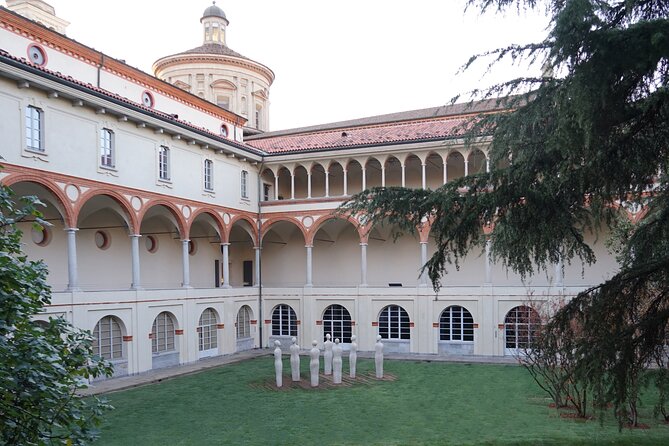
This museum isn’t in a generic box. It sits in the cloisters of a 16th-century Olivetan monastery. That alone changes the feel of your visit—less like you’re marching through a theme park, more like you’re moving through real historic spaces.
As you walk through, notice how the museum uses the architecture. The galleries and exhibit areas don’t just dump objects in one place; they guide you through a “then-and-now” story: past inventions, industrial progress, and the science behind today’s technology.
It’s also a practical win. The museum is large, but the setting helps break up the visit so it doesn’t feel like one endless hall.
Da Vinci Galleries: Models, Manuscripts, and the Big Ideas
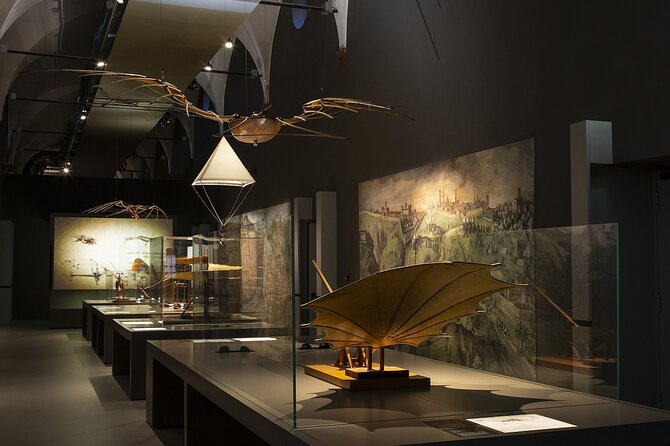
The Da Vinci area is the headline, and it’s built for people who like engineering thinking. Don’t expect this to be a tiny room of famous paintings. It’s more about how Leonardo worked—observed nature, turned ideas into drawings, and then engineered solutions.
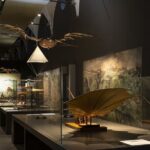
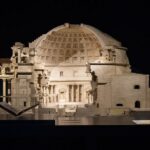
One of the most impressive parts is the scale of the Da Vinci presentation. You’ll see a scenographic journey featuring 170 historical models along with works of art, ancient volumes, and installations. This is the museum’s way of showing Leonardo as an engineer and humanist—not only a genius painter.
I love that the exhibits connect multiple ways of thinking. You’re not just looking at a pretty sketch. You’re seeing drawings and models that explain the logic behind the design. Even if you’re not a hardcore history nerd, the learning hits faster because the displays show how ideas could work in the real world.
One caution: if your mental picture is Leonardo-focused like a dedicated Leonardo museum, you may feel the Da Vinci section is not the whole experience. The museum is clearly centered on broader science and technology history, and the Leonardo portion is only one important layer.
The Science Floors: Space, Energy, Transport, and More
After the Leonardo-focused galleries, the museum widens the lens. You can spend a lot of time here because the museum organizes topics like a science curriculum: what science studies, what technology builds, and how humans tested ideas over time.
You’ll find displays and digital installations (and in some areas, labs) touching:
- Astronomy and space
- Energy and materials
- Transport
- Nutrition
- Genetics and biotechnology
- Particle physics
What makes this section fun is the mix of scales. Some exhibits are clearly about today’s tech and scientific concepts, while others are built around historical technology you can almost feel in your hands.
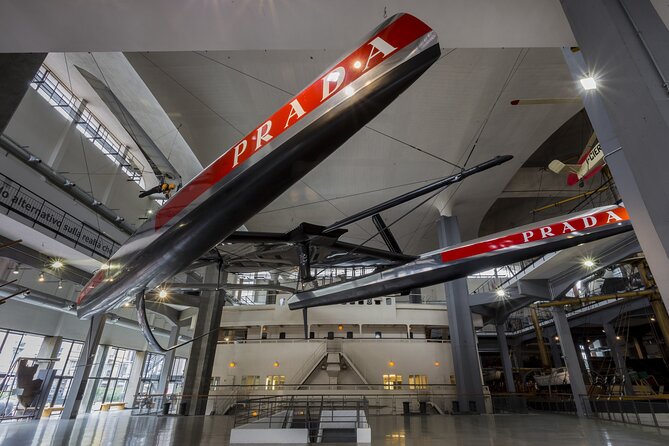
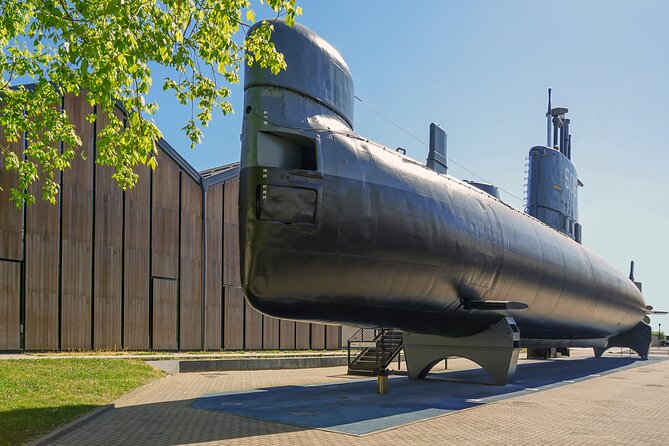
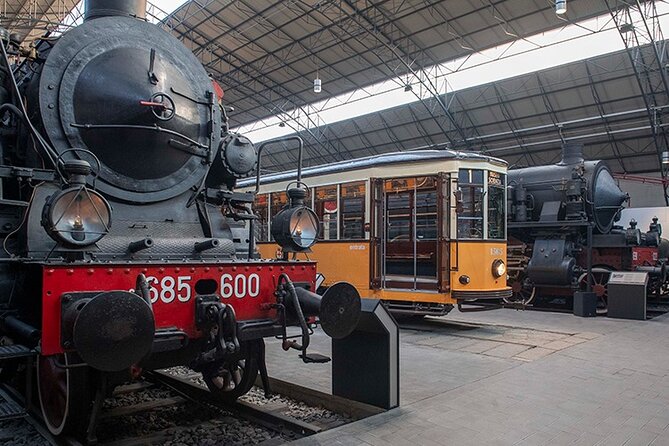
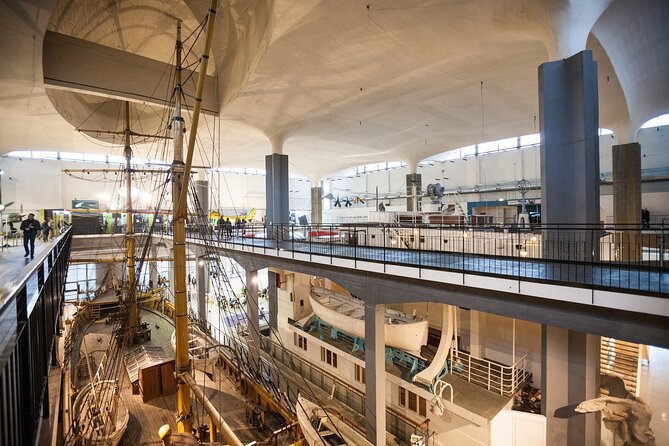
A few standouts mentioned inside the museum experience are the steam trains, the AC72 Luna Rossa catamaran, and several dramatic vehicles and prototypes: the schooner brigantine Ebe, the transatlantic Conte Biancamano, the submarine Toti, and the launcher Vega. There’s also a special object—the only fragment of the Moon in Italy—which is the kind of thing you can’t replicate anywhere else in Milan.
If you enjoy science through objects, this is where you’ll smile. It turns textbook subjects into real “look at this” moments.
Interactive Style, Digital Displays, and How to Pace Yourself
The museum feels designed for more than passive looking. There are interactive elements, videos, and a lot of digital installations. Even if you usually skip screens in museums, here the videos and visuals help you understand what you’re looking at—especially in areas tied to complex science topics.
The flow inside helps too. Several exhibits use floor arrows to guide you, which makes the route easier to follow when the building is large. That’s a small thing, but it affects your whole experience. Less wandering equals more time looking at the good stuff.
Still, pacing is key. If you try to “see everything” in under two hours, you’ll end up speed-reading. I recommend treating it like a real museum: pick your priorities and accept that you can’t read every panel.
A good strategy:
- Start with the Da Vinci galleries if Leonardo is your main reason for coming.
- Then pick 2–3 science topics to go deeper on.
- Save time for the big objects (ships, trains, launcher models, and the Moon fragment).

Realistic Time: 1 to 3 Hours Without Rushing
The ticket experience is listed at 1 to 3 hours, and that range is real—because the museum is large, but you can tailor your pace.
If you only have 1 to 1.5 hours, focus on the Da Vinci galleries plus one science zone that interests you most. You’ll miss plenty, but you’ll get the core payoff.
If you want a satisfying visit, aim for about 3 hours. Many people end up staying longer because there’s so much to see, especially if you stop for videos and model displays. A longer visit is also helpful if you’re traveling with kids or you’re the type who likes to read labels.
If you want to do a full sweep, plan for extra time beyond 3 hours. The building doesn’t feel small, and the exhibits are spread out.
Best Time to Go: Don’t Get Caught Near Closing
Here’s the practical tip I’d actually bet your day on: avoid the late slot. One late-arrival problem comes up when people schedule close to the end of the day. You may arrive around the last stretch and then get asked to leave as closing approaches.
The museum has set opening hours for the listed period (Tuesday through Friday), and the venue clearly operates on a strict schedule. Even when the posted time seems generous, the experience can tighten up near the end.
So if you’re choosing between morning/early afternoon vs. late afternoon, pick early. You’ll walk in calmer, you’ll have more time for the Da Vinci models and the science exhibits, and you won’t have to feel like you’re racing the clock.
Who Should Book This Ticket (and Who Might Be Disappointed)
This ticket is a great match if you:
- love science and engineering
- enjoy models, drawings, and “how it works” displays
- want a museum that mixes Leonardo with the broader story of technology
It’s also strong for older kids and teens who can stay engaged with technical content and interactive stations. The museum is more engineering-forward than family-activity-light.
If you mostly want Leonardo, with a heavy focus on Leonardo’s work specifically, you might find yourself wanting more than this offers. The museum’s main identity is science and technology history, with Leonardo as a key spotlight. That’s not bad—it’s just different from what some people expect when they see the Leonardo name in the title.
If you’re doing a Milan highlights plan, it can also be a smart add-on. The museum is a common pairing when you’re already near major sights, and it fits well as a “science break” between culture stops.
Accessibility and Getting There in Milan
The museum is near public transportation, which matters in a city where walking between sights can add up fast. Most people can participate, and service animals are allowed.
The ticket redemption point is straightforward: Leonardo da Vinci Museum of Science and Technology, Via San Vittore, 21, 20123 Milano MI. That’s the kind of address you can plug into your map app without drama.
Should You Book This Ticket?
Book it if you want a science-forward museum where Leonardo is front and center through models and ideas. The museum delivers a lot for the price: interactive-style exhibits, major scientific topics, and that memorable mix of historic vehicles and space-related displays.
Skip it (or adjust your expectations) if your only goal is to see lots of Leonardo artwork and nothing else. Here you’ll get Leonardo, but you’ll also get the bigger story of technology and scientific development.
If you can only spare a couple hours, still go—but choose your priorities so you don’t leave feeling like you hurried past the best parts.
FAQ
Where is the ticket redemption point?
You’ll redeem your ticket at Leonardo da Vinci Museum of Science and Technology, Via San Vittore, 21, 20123 Milano MI, Italy.
What’s the price per person?
The price is $15.69 per person.
How long does the visit take?
The duration is listed as approximately 1 to 3 hours.
Is the museum admission included?
Yes. Admission to the museum is included with this experience.
What language is offered?
The experience is offered in English.
When is the museum open?
The listed opening hours are Tuesday to Friday, 10:00 AM to 3:30 PM, during 01/02/2026 to 01/26/2027.
Do I get confirmation after booking?
Yes. Confirmation is received at the time of booking.
Are service animals allowed?
Yes, service animals are allowed.
How far in advance should I book?
On average, this is booked 15 days in advance.
What is the cancellation policy?
Free cancellation is allowed up to 24 hours in advance for a full refund.