REVIEW · NEUES MUSEUM
Berlin: Neues Museum Entry Ticket
Book on GetYourGuide →Operated by Distributor: GetYourGuide Tours & Tickets GmbH · Bookable on GetYourGuide
The Nefertiti bust is worth the trip. With Neues Museum skip-the-line entry, you get straight into one of Berlin’s most dramatic museum spaces, plus an audio guide that helps you make sense of what you’re seeing. I like that it’s simple and time-saving, especially if the weather is doing its usual Berlin thing.
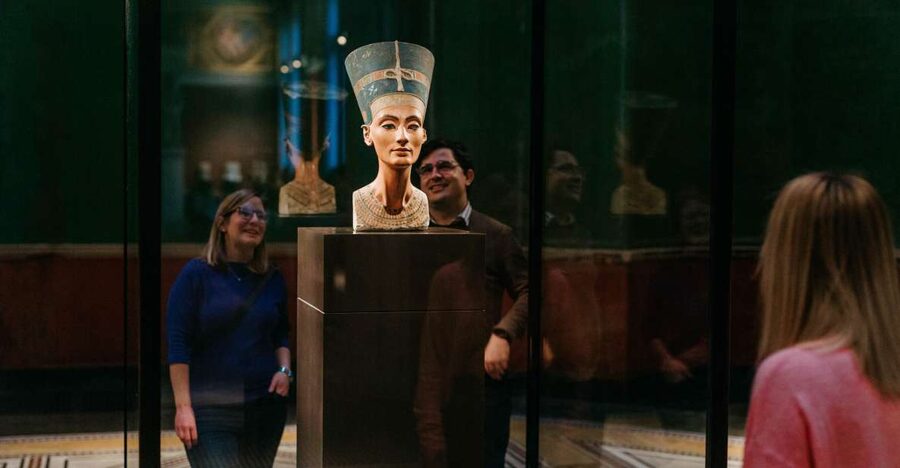
What really makes the ticket shine is the Egyptian collection—the famous Nefertiti bust, the Green Head, and other standout pieces come with helpful context. One possible consideration: some visitors find parts of the exhibition lighting a little dim in the display cases, so you may need to take your time and adjust your viewing angle. Also, remember backpacks aren’t allowed, and cloakroom space is limited.
In This Review
- Key highlights at a glance
- Entering the Neues Museum fast at the James Simon Gallery
- What 15 minutes really means (and why it isn’t your visit length)
- The building and the atmosphere: David Chipperfield’s museum space
- Egyptian Museum highlights: Nefertiti, the Green Head, and more
- Prehistory and Early History: a walk across the Old World
- The Antique Collection: Helios and Roman-era presence
- Replica artifacts and 19th-century collecting: how to read the museum
- Audio guide tips: use it like a tool, not a background track
- Timing the day: where this fits on Museum Island
- Practical stuff you’ll want to know before you go
- Backpacks and lockers
- Wheelchair access
- Photo expectations
- Lighting in display cases
- Who this ticket is best for
- Should you book the Neues Museum ticket?
- FAQ
- Where is the meeting point for entry?
- How long is the ticket valid?
- Can I stay inside the museum longer than 15 minutes?
- What’s included with the ticket?
- Which languages are available for the audio guide?
- Are backpacks allowed in the exhibition?
Key highlights at a glance
- Three collections, one ticket: Egyptian Museum, Antique Collection, and Museum of Prehistory and Early History
- Famous works in the same walk: Nefertiti, Priam’s Treasure, and Roman-era pieces like Helios
- Audio guide included: available in Spanish, English, French, German, and Italian
- Good support for self-guided pacing: seating and a clear route help you slow down when you want
- Lockers help you travel light: but there’s limited space, and backpacks are not allowed
Entering the Neues Museum fast at the James Simon Gallery
You’ll start at the visitor entrance of the James Simon Gallery, on Bodestrasse, right by Berlin’s Museum Island core. That location matters because it puts you right in the thick of the action. You’re not hunting for an office, a side entrance, or a confusing check-in line—you’re guided to where you need to be, then you move on.
This isn’t a guided tour where someone corrals you with a megaphone. It’s admission plus an audio guide, so you control your pace. That’s a good match for a museum like the Neues Museum, where you’ll likely want to linger at key objects (like Nefertiti) and then wander slower through the rooms that catch your eye.
Price-wise, at about $16 per person, you’re paying for museum access and an audio guide—so your money goes directly toward the things you actually use inside the building. You’re not paying extra for a separate tour company to shepherd you around.
What 15 minutes really means (and why it isn’t your visit length)
The ticket is described with a 15-minute validity window tied to when you activate it. Translation: don’t wait until the last second to start using your entry process. Once activated, you’re allowed into the museum experience for the time it specifies.
The good part is that the museum visit itself is flexible. You can stay inside as long as you like. In other words, that 15-minute rule is about entry control, not about cutting you off after a quarter hour.
So here’s the strategy that works best: use your ticket timing to get in efficiently, then plan on taking your time once you’re inside. Many people find it’s not a 30-minute stop—it’s the kind of museum where rooms connect and you keep noticing new details.
The building and the atmosphere: David Chipperfield’s museum space
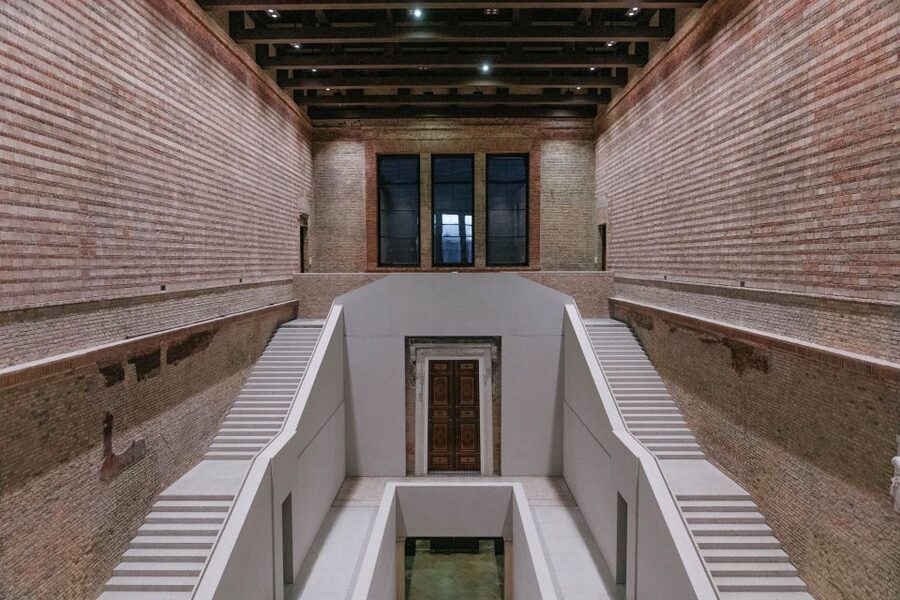
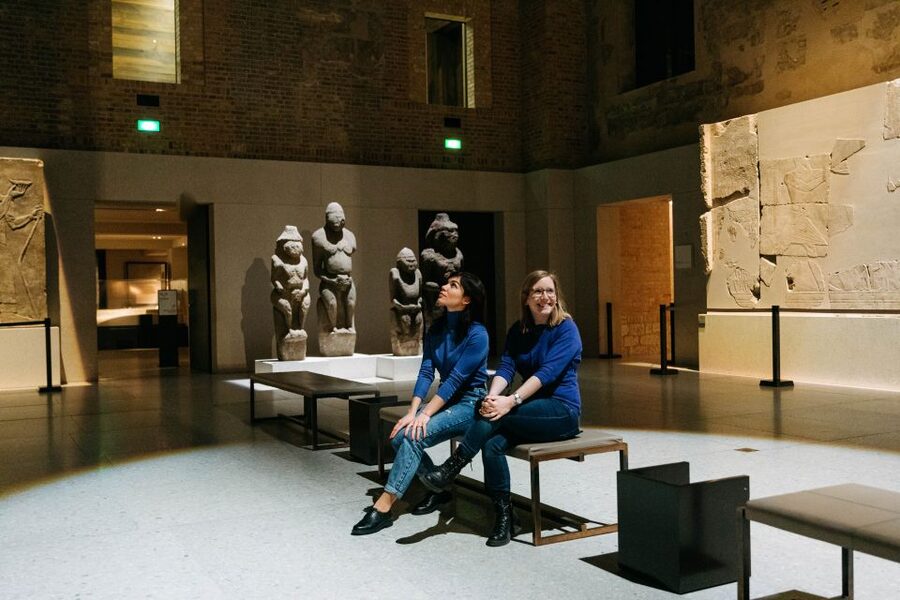
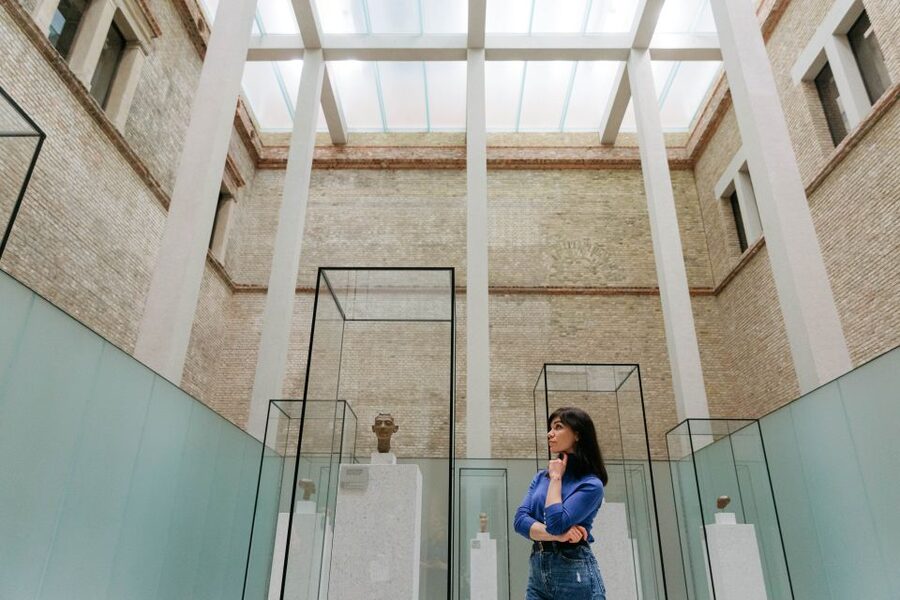
Even if your priority is the Egyptian highlights, the Neues Museum building itself is part of the experience. People consistently mention the remodeling by David Chipperfield and the way the architecture supports the collections—especially the main stairs and the sense of volume as you move between rooms.
This is one of those museums where you feel the space around you: tall ceilings, big rooms, and displays set up so you can read, pause, and look. You’ll also find seating along the route, which helps if you want breaks without losing your rhythm. That’s a small detail, but in real-world museum terms, it makes a difference.
If you’re coming on a rainy day, having timed entry (and the smooth access the ticket supports) is also a big win. Less standing outside means you arrive calmer and start seeing sooner.
Egyptian Museum highlights: Nefertiti, the Green Head, and more
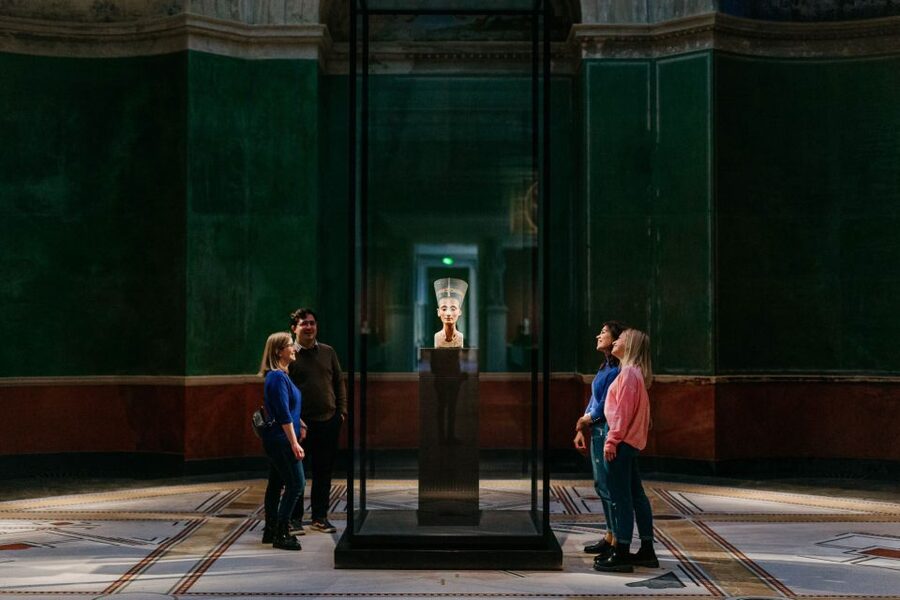
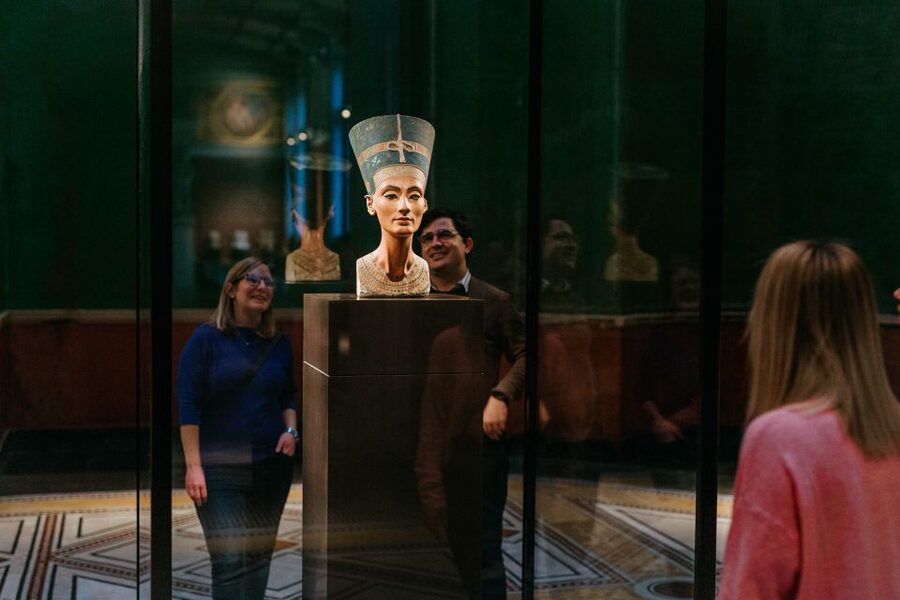
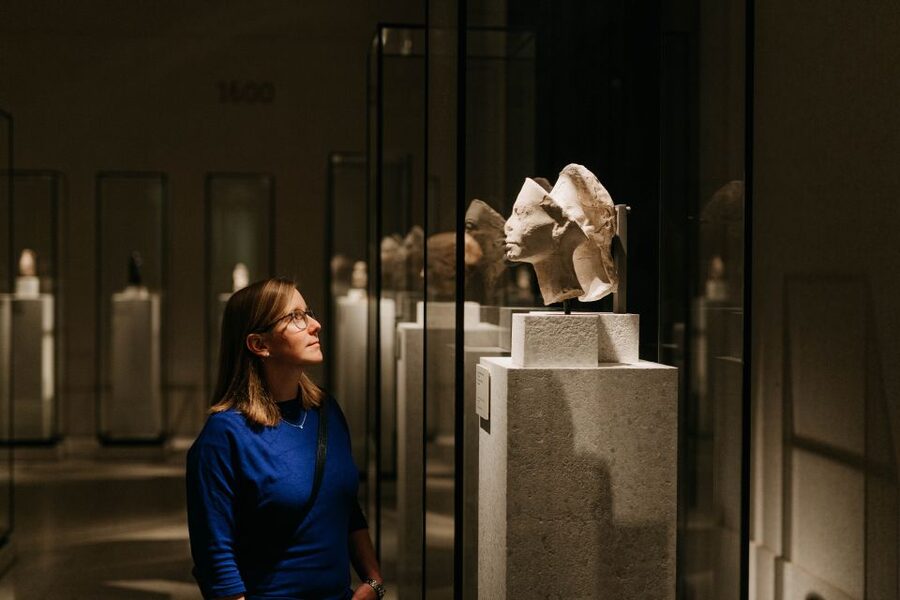
If you’re picturing Nefertiti before you arrive, you’re not imagining things. The Neues Museum is famous for her bust, and it’s consistently the exhibit that people plan their whole visit around.
With the included audio guide, that object turns from a photo you’ve seen online into something you can actually understand. The audio doesn’t just name the piece—it helps you connect it to the broader collection context. That makes the experience more than a quick stop.
Beyond Nefertiti, you can also look for:
- The Green Head, another standout among the Egyptian artifacts
- Priam’s Treasure, connected to Heinrich Schliemann’s collection—this one gives you a bridge into later ancient history and archaeology
- A replica of an Egyptian sarcophagus, so you can visualize how these objects were used
You’ll also encounter familiar “wow” elements such as the Berlin Gold Hat and statues connected to ancient Egyptian and related antiquities. These objects matter because they show how collecting and displaying ancient material developed—especially as museums in Europe formed in the 19th century.
One practical note: photography rules can be restrictive, and experiences vary depending on where you stand. Some people have found ways to photograph from farther back behind a marked line, while others note that taking photos of Nefertiti isn’t allowed. So don’t count on full freedom—plan to spend time looking first, then check what the museum allows in the moment.
Prehistory and Early History: a walk across the Old World
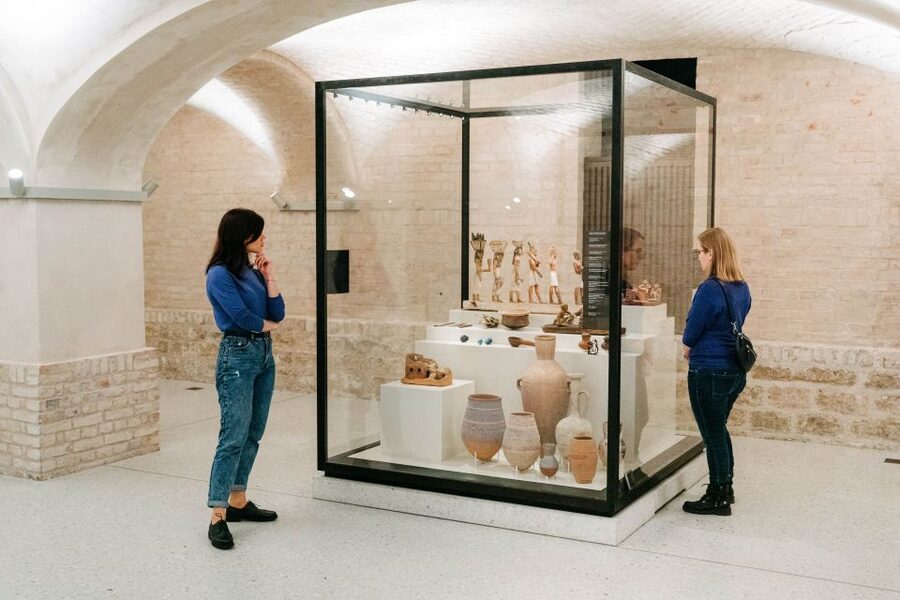
One of the neat surprises in the Neues Museum is that you don’t only get Egypt. You get a 19th-century view of how people studied art, museums, and technology—plus a large sweep of prehistory and early history.
The museum’s structure helps you follow development over time and space, from regions like the Middle East out toward parts of the Atlantic, and from North Africa into Scandinavia. That’s a broad concept, but the way the rooms are set up makes it feel more navigable than you’d expect.
As you move through this section, your audio guide is your best friend. It helps you connect what you’re seeing—tools, objects, and cultural artifacts—to the “why it matters” behind the display. And because this area spans geography, it’s where the museum feels most like a learning experience, not just a greatest-hits album.
If you like to understand the big picture (how cultures changed, traded, and adapted), this is the part that can keep you going long after you planned to “just see Nefertiti.”
The Antique Collection: Helios and Roman-era presence
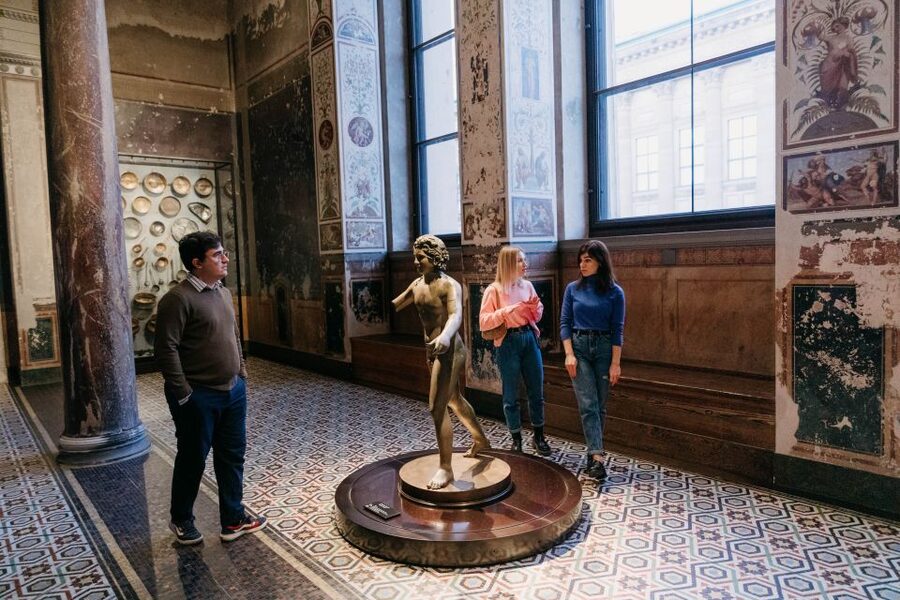
When you switch from Egyptian and prehistory themes into the Antique Collection, you’ll notice a different rhythm. Roman and classical pieces come through with their own visual energy, including surviving statues tied to the sun god Helios.
You might also spot the statue of the Xanten Boy, another highlight noted among the collection favorites. These objects are useful as anchors because they help you see how the museum connects later antiquity to earlier worlds.
This is also where the museum’s mission—understanding 19th-century collecting and presentation—feels most tangible. You’re not only looking at ancient artifacts. You’re also looking at how museums decided what to save, how to arrange it, and how to tell visitors a story about it.
That makes the Antique Collection a strong choice even if you usually prefer older or “mystery” objects. It’s less about one famous headline piece and more about consistent context.
Replica artifacts and 19th-century collecting: how to read the museum
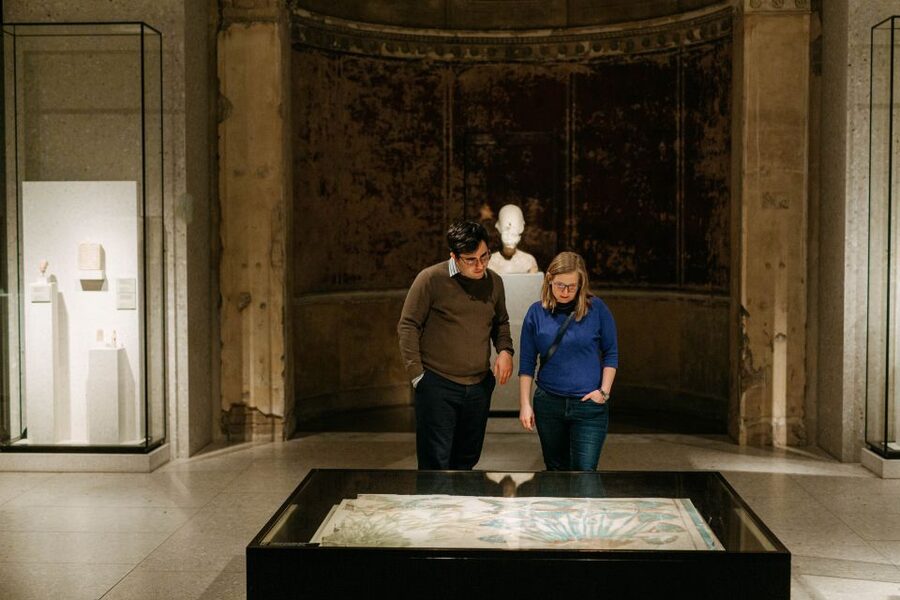
Some of the most interesting moments happen when the museum gives you something like a replica or a display that explains how artifacts were gathered and reconstructed.
For example:
- The Egyptian sarcophagus replica helps you grasp what the real object would have looked like in its original cultural setting.
- Priam’s Treasure connects archaeology to famous European collectors and 19th-century discovery stories.
- The overall 19th-century framing gives you a sense of how museum culture formed—how people viewed Egyptian art, prehistoric remains, and antique objects in the same institutional world.
If you like museums that teach you how knowledge was made—not just what objects are famous—this “meta” layer is a real value.
Audio guide tips: use it like a tool, not a background track
Because the ticket includes an audio guide, you should treat it as part of your route plan, not as optional noise. People often mention that audio guide collection spots are right after you enter, making it easy to start immediately.
A few practical tips based on common on-site experiences:
- Start the audio when you enter your first room, so you don’t waste time later remembering what you’re looking at.
- If you notice any audio spots sounding missing or being updated in your language, don’t panic—just keep moving and let the route guide you visually.
- If lighting is dim in certain display areas, pause close to the case and listen. Sometimes the audio provides exactly the interpretation you’d miss just by glancing at the object.
Also, because you can stay as long as you like, you can go “fast and furious” through the big headlines and then circle back for slower listening. Self-paced museums are great like that.
Timing the day: where this fits on Museum Island
This ticket only covers the Neues Museum. Entry to other Museum Island museums isn’t included here, so you’ll need to decide what you want to add later if you have time.
Still, it’s a smart anchor stop because it covers multiple big themes:
- Egyptian art and artifacts (hello Nefertiti)
- Prehistory and early history across a wide geography
- Antique collection highlights tied to classical worlds like Helios
So if you’re short on time in Berlin, this ticket gives you a high-value “three-part” museum experience in one building.
And if you’re doing a longer Museum Island day, this works well as either your opener (hit Nefertiti early before your legs tire) or your closer (when you’re already “museum-brained,” it’s easier to absorb the context).
Practical stuff you’ll want to know before you go
Here are the key real-world details that can change your experience:
Backpacks and lockers
Backpacks aren’t allowed in the exhibition. There are limited locker and cloakroom options, so travel with a day bag if you can. People who used lockers described it as a helpful extra, especially because it lets you see the museum without managing bulky items.
If you’re arriving with a lot of stuff, plan extra time for checking it—especially in busy seasons.
Wheelchair access
The whole building is wheelchair accessible, and this makes the museum feel more welcoming for a wider range of visitors.
Photo expectations
Photography rules—especially around Nefertiti—seem to be sensitive. Some visitors report no freedom to photograph, while others mention photo access from farther back behind a line. The safest plan is to assume you may need to follow posted rules closely and be ready to put your phone away and just look.
Lighting in display cases
A small but real complaint shows up: some showcases can feel too dark. If you care about seeing fine details, bring patience. Stand at a better angle. Use your audio guide to understand what you’re looking at, even if the case lighting is less than perfect.
Who this ticket is best for
I’d recommend this ticket if:
- You want to see the Nefertiti bust and you don’t want your day derailed by queues
- You like museums where you can self-pace instead of being rushed
- You’re interested in how museums present history—from Egypt to prehistory to Roman-era objects
It’s also a good fit if you’re traveling with family or friends who have different speeds. Since the visit is self-guided and you can stay as long as you want, it’s easier to regroup.
If you only care about one single artifact and nothing else, you might feel tempted to rush. But even if you start with a single headline goal, the rest of the collections are strong enough that a slow visit usually makes the whole ticket feel more worth it.
Should you book the Neues Museum ticket?
Yes, you should book this ticket if you want efficient entry into a top-tier museum and you’d rather spend your time looking than waiting. The value is clear: for about $16, you get museum admission to a building packed with major highlights plus an audio guide in multiple languages.
You might skip it or plan differently if you’re extremely sensitive to dim exhibit lighting and you need perfect visibility for every case. But even then, the combination of Egyptian, prehistory, and antique collections—and the strong self-guided layout—usually balances out that concern.
FAQ
Where is the meeting point for entry?
You enter through the visitors’ entrance of the James Simon Gallery, Bodestrasse, 10178 Berlin.
How long is the ticket valid?
The ticket is valid for 15 minutes from the first activation.
Can I stay inside the museum longer than 15 minutes?
Yes. You can stay in the museum for as long as you like.
What’s included with the ticket?
The ticket includes entry to the Neues Museum and an audio guide.
Which languages are available for the audio guide?
The audio guide is available in Spanish, English, French, German, and Italian.
Are backpacks allowed in the exhibition?
No. Backpacks are not allowed in the exhibition, and locker and cloakroom space is limited.