REVIEW · DORTMUND
Dortmund: German Football Museum
Book on GetYourGuide →Operated by Deutsches Fußballmuseum · Bookable on GetYourGuide
Football fans, this is your kind of day. Dortmund’s German Football Museum turns big moments into hands-on exhibits, and I especially like the Sky Reporter Room where you get to act like a commentator. I also enjoy the museum’s time-travel feel, including the build-up to the Miracle of Bern experience. One catch: food and drinks aren’t included, so plan for your half-time break.
With around 1,600 exhibits, there’s enough variety to keep you busy without feeling stuck in one section. You’ll even get a chance to play—grab a ball and try your luck on the small field area.
Still, if you’re the type who wants a guided explanation for every stop, you may feel a little direction-light since no guide is included.
In This Review
- Key highlights you’ll actually care about
- A one-day football plan in a museum with 1,600 exhibits
- Logistics in plain terms
- The Miracle of Bern experience: rewinding a defining moment
- 3D cinema with the 2014 champions: a big-screen reset
- Become a commentator in the Sky Reporter Room
- Grab a ball and prove it: the interactive playing field
- Scenography that mixes fans, referees, amateurs, pros, and women’s football
- Half-time break planning: food is on you
- Value check: is $23 per person a fair deal?
- Who should book this Dortmund museum day
- Should you book the German Football Museum?
- FAQ
- How long can I visit the German Football Museum?
- What does the ticket cost?
- Where is the meeting point for this experience?
- Is food and drinks included?
- Do I get a guide with this experience?
- Does this ticket let me skip the ticket line?
- Is free cancellation available?
- Can I reserve now and pay later?
Key highlights you’ll actually care about
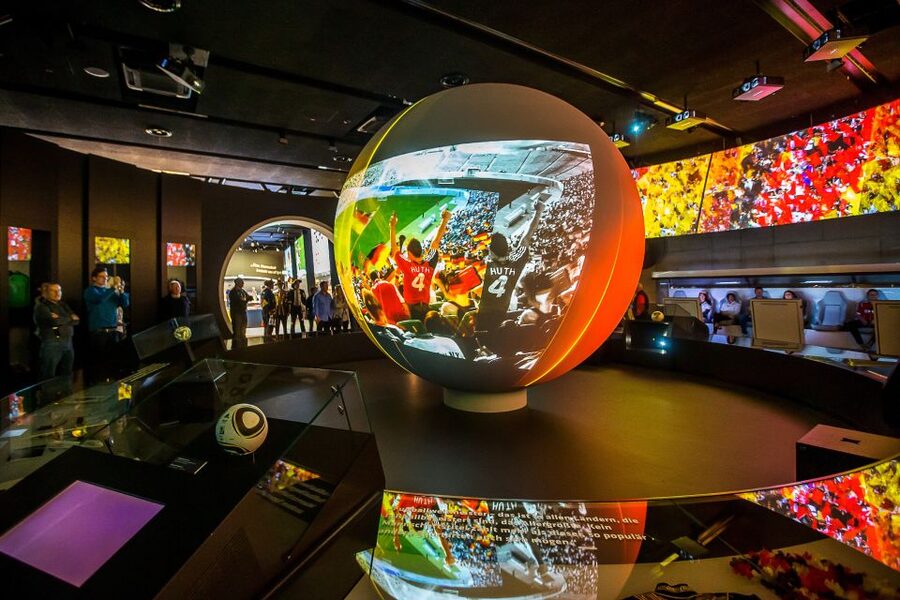
- Sky Reporter Room fun: step into the commentator role and do it yourself
- Time-travel football moments: including the Miracle of Bern experience
- 3D cinema with 2014 champions: a big-screen stop built for visual impact
- Interactive mini playing field: a hands-on area where you can kick a ball
- Big-scope football storytelling: men’s and women’s football plus referees/amateurs/pros in the same world
A one-day football plan in a museum with 1,600 exhibits
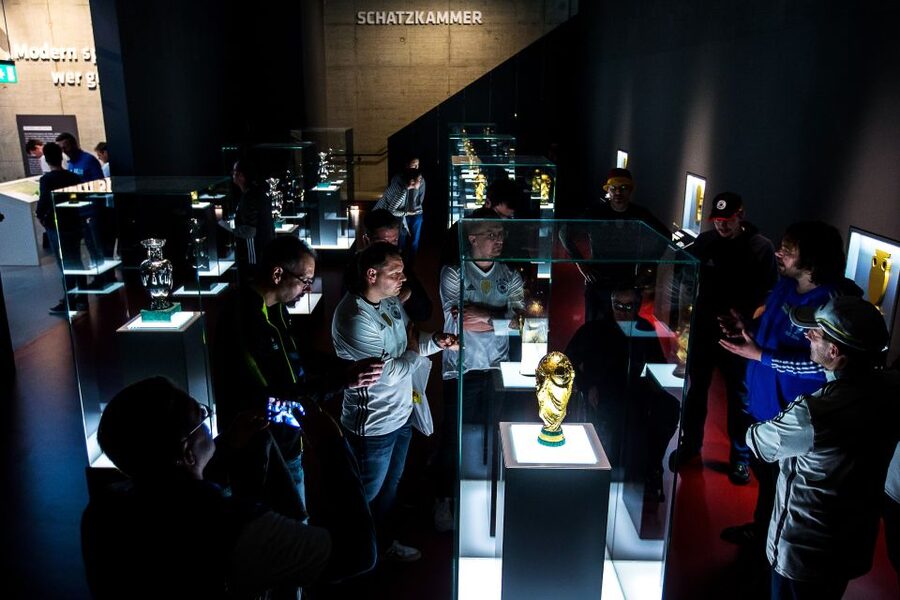
This is a one-day visit built around “do it, see it, react to it” rather than just reading placards. The museum is modern, with roughly 1,600 exhibits, so you’ll want to pace yourself. Plan on wandering first, then choosing your must-do experiences once you’ve gotten your bearings.
What makes it work for a full day is that the exhibits aren’t all the same. You get large-format storytelling (like major-match moments), screen-based experiences (the 3D cinema), and interactive zones (like the reporter cabin and the ball-kicking area). That mix is why the museum feels fun for different ages at the same time.
You can also go with a simple rule: spend less time in the “I’ll look at this later” parts and more time in anything that lets you participate. If you like action and performance—commentating and playing—this place rewards you.
You can also read our reviews of more museum experiences in Dortmund

Logistics in plain terms
You’ll start at Platz der Deutschen Einheit 1, 44137 Dortmund, and you can skip the ticket line. Since it’s priced at $23 per person (for access), you’re paying for admission plus a lot of interactive space. Expect to supply your own snacks.
The Miracle of Bern experience: rewinding a defining moment
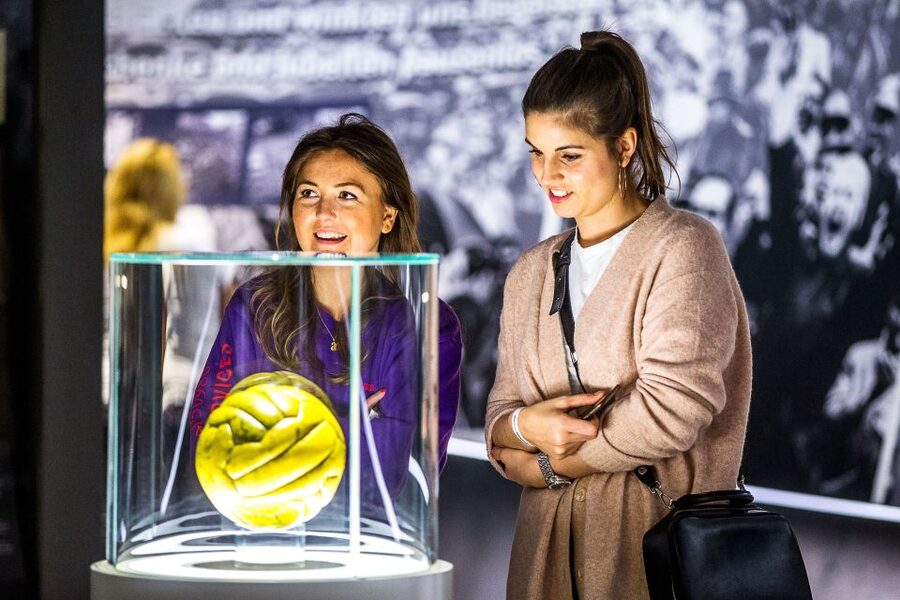
One of the headline experiences here is the chance to travel back in time to the Miracle of Bern. Even without extra explanation, that kind of exhibit format usually aims for emotional clarity: it’s not just a timeline. It’s built to make you feel like you’re watching history unfold in the moment.
For you, that matters because football museums can sometimes get stuck in facts-only mode. This one uses scenography and event-style presentation to keep the story moving. If you like being swept into a match narrative—who, when, what changed—that’s where you’ll likely spend your “wow, that’s cool” time.
The drawback? These kinds of “event” exhibits can feel less meaningful if you skip the surrounding context. If you’re not naturally drawn to this specific story, you’ll still have plenty to do, but I’d at least spend a little time around it so the moment lands.
3D cinema with the 2014 champions: a big-screen reset
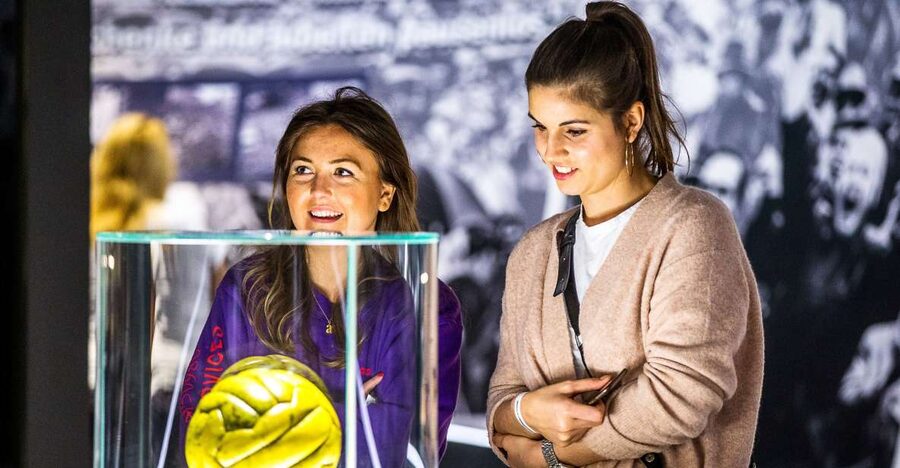
Another must is the 3D cinema, where you can meet the world champions of 2014. This is one of those museum features that changes the pace. Instead of moving through rooms, you pause, sit, and let the visuals do the heavy lifting.
If you’ve ever found museum text tiring, this is your break from reading. The 3D element also helps kids and adults stay engaged at the same time, since the experience is designed to be seen—not decoded.
Practical tip: treat the cinema as an anchor stop. Once you know when you’ll fit it in, you can build your day around it, rather than letting the whole museum blur into one long walk.
Become a commentator in the Sky Reporter Room
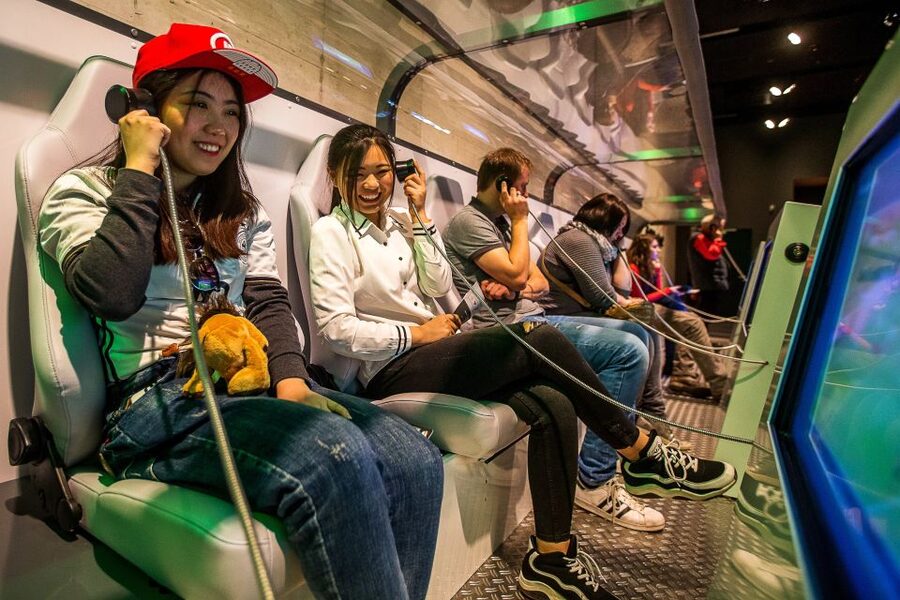
If you want the most “I’m doing this” moment, target the Sky Reporter Room. The museum lets you become a commentator yourself, which is rare. Most places let you watch commentary. Here, you get the chance to perform.
This is great value because it turns passive interest into an activity. You’ll also get a sense of how broadcast energy works—timing, hype, and how language shapes what the viewer feels. Even if you’re not a big media person, it’s a fun change from exhibition browsing.
How to make the most of it: don’t rush. Give yourself a little time before and after to absorb what’s around it. That way the reporter cabin becomes part of a larger story about football culture, not just a quick gimmick.
Grab a ball and prove it: the interactive playing field
The museum includes a small playing field in a multifunctional arena where children can kick a ball just like adults. That “just like adults” line matters because the space is designed to feel like football, not a toy corner.
For you, the key is that this part turns the museum into something physical. You’re not just learning about the sport—you’re participating in it. It’s also likely the easiest way to bring kids in without fighting for attention.
Two considerations:
- If you’re visiting with kids, this will probably become the favorite stop, so plan extra time.
- If you don’t want to engage in hands-on activities, you might find this zone shorter than the screen and narrative parts.
Either way, it’s one of the clearest examples of what makes this museum worth your time: the interactive element isn’t tucked away. It’s part of the main flow.
Scenography that mixes fans, referees, amateurs, pros, and women’s football
A big strength here is that the museum’s presentation tries to unite different sides of the game. The scenography connects fans and referees, amateurs and professionals, and women’s and men’s football. That’s not just inclusive language—it shapes the way the exhibits are arranged and how the story feels.
Why that matters: football culture isn’t one lane. If you only focus on stars and match highlights, you miss the full ecosystem. When the museum brings referees and amateurs into the same exhibition world as pros, you get a more complete picture of how football functions.
It’s also part of why the museum works for mixed groups. Someone who cares about technique or rules may connect with the referees angle, while a traditional match-history fan can still chase big moments.
Half-time break planning: food is on you
Food and drinks are not included in your ticket, but the museum does note that for your half-time break there will be a variety of dining options. That’s a good sign—you won’t be stuck searching the entire area at the last minute.
Still, I’d treat this as a planning moment, not an afterthought. If you’re trying to stay on schedule, pick your food break early enough that it doesn’t swallow your best energy hours. Also, since no guide is included, having a rough plan for when you’ll eat helps keep the day from slipping.
Quick approach that works: decide roughly when you’ll want your break (midday for many people), then keep your must-dos—like the reporter room and 3D cinema—either before or after.
Value check: is $23 per person a fair deal?
At $23 per person for access, the value comes from the balance of experiences. You’re not just paying to walk through displays. You’re paying for:
- a huge number of exhibits (about 1,600),
- a major screen experience (3D cinema),
- an interactive performance (Sky Reporter Room),
- and hands-on participation (kick a ball area).
Add in the skip-the-ticket-line benefit and the fact that it’s valid for 1 day, and you get a flexible museum block where you can go at your own pace. If you’re the kind of person who enjoys interactive museums, this price makes sense quickly.
If you’re only interested in one small portion—say, just reading match stories without using the interactive features—you may feel the cost more. In that case, you might want to weigh whether you’ll actually spend time in multiple zones.
Who should book this Dortmund museum day
This fits best if you:
- like football-themed experiences that don’t rely only on text,
- want an activity angle (commentating and kicking),
- are traveling with mixed ages (kids and adults can find different entry points),
- and care about a broad view of football culture, including women’s football and referees.
It may be less ideal if you:
- want a formal guided tour explaining every exhibit,
- dislike interactive stations and prefer strictly quiet viewing,
- or plan to spend only a short time inside.
The museum has a “match-day pacing” feel. So if you enjoy that energy, you’ll likely enjoy the whole flow.
Should you book the German Football Museum?
Book it if you want a full, one-day football experience that includes interactive fun, a major 3D moment, and a big narrative time-travel style presentation. The admission price looks reasonable when you consider how many different types of stops you can hit in the same day.
Skip or rethink if you’re hoping for a lecture-style tour with a guide leading you step-by-step. Since no guide is included, you’ll be doing the curating in your own head—choosing what to prioritize.
If you’re on the fence, a simple decision test helps: will you spend time in the Sky Reporter Room and the ball-kicking area? If yes, this is a strong match for your day.
FAQ
How long can I visit the German Football Museum?
Your ticket is valid for 1 day, so you can use that time to explore at your own pace.
What does the ticket cost?
The price is listed as $23 per person.
Where is the meeting point for this experience?
The meeting point is Platz der Deutschen Einheit 1, 44137 Dortmund.
Is food and drinks included?
No. Food and drinks are not included, but there will be dining options for your half-time break.
Do I get a guide with this experience?
No. A guide is not included.
Does this ticket let me skip the ticket line?
Yes. The experience includes skip the ticket line.
Is free cancellation available?
Yes. You can cancel up to 24 hours in advance for a full refund.
Can I reserve now and pay later?
Yes. There’s a reserve now & pay later option, where you can book your spot and pay nothing today.