REVIEW · BOSTON
Boston Tea Party Ships and Museum Admission
Book on Viator →Operated by Boston Tea Party Ships and Museum · Bookable on Viator
Boston’s tea revolt story is told up close, on the water. You get hands-on reenactment on replica tea ships and then a museum stop built around rare artifacts like the Robinson Half Chest. It’s the kind of history experience that moves at a good clip, so you leave with real context instead of just dates.
My two favorite parts are the live, in-character guides (including named performers like Oliver and Steve in the storytelling team) and the order of events—Boston builds from protest to confrontation to war. There’s also a fun payoff at the end with tea and scones in Abigail’s Tea Room.
One thing to consider: this is partly outdoors and built around stairs and moving between ship and museum spaces, so plan accordingly if you have mobility limits or dislike crowds.
In This Review
- Quick highlights before you go
- The story works because it’s in order, not random facts
- Boarding the Beaver and Eleanor: history you can feel under your feet
- The tea-throw moment: why it lands even if you hate gimmicks
- Inside the museum: rare objects and the Robinson Half Chest
- Meeting House storytelling: December 16, 1773, set up like a scene
- Abigail’s Tea Room: the fun landing without the hard sell
- Price and value: is $35 worth it for one hour?
- Who should book this, and who might want a different style?
- Timing in Boston: where this fits into your day
- Should you book the Boston Tea Party Ships and Museum tour?
- FAQ
- What is the duration of the Boston Tea Party Ships and Museum tour?
- How much does it cost?
- Is museum admission included?
- Is the tour offered in English?
- Where does the tour start?
- Do I need to check in before the tour?
- Is the experience wheelchair and stroller accessible?
- Are service animals allowed?
- When is the museum closed?
- What if the weather is bad?
Quick highlights before you go
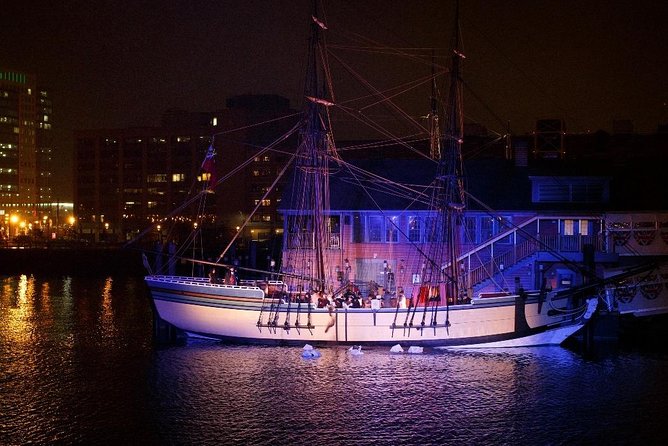
- Replica tea ships you board: Step onto the brig Beaver and Eleanor as the story unfolds in sequence.
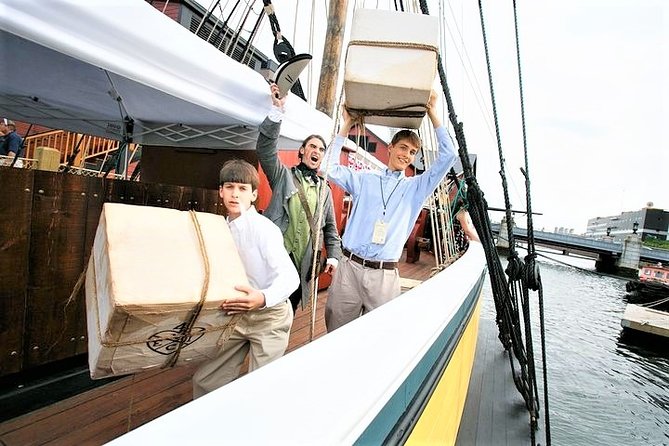
- Tea-throw reenactment: You get to throw tea into Boston Harbor as part of the program.
- The Robinson Half Chest: See one of only two remaining tea chests linked to that night.
- Film-based momentum: Let it Begin Here ties in Paul Revere and the fighting that followed.
- A character-led lesson: Guides in period dress keep the tone lively, not lectures-only.
- Tea time at the end: Abigail’s Tea Room is a calm landing after the action.
The story works because it’s in order, not random facts
What makes this tour click is the pacing and sequence. You start with the night of December 16, 1773, then you’re guided back through the pressure that led there—British tea taxes, resistance, and how tensions escalated until protest became open conflict. That “in order” structure matters. Instead of treating the Boston Tea Party as a one-night stunt, you understand why it happened and what it helped set in motion.
The program also leans into the daily reality of 18th-century Boston, not just the slogan-level version. You’ll hear how people talked, organized, and justified their actions—plus what came next. If you’ve visited other Revolutionary-era sites and felt like they were separate stops, this tour stitches the cause-and-effect together in a way that’s easy to remember.
English-language narration and a guided group flow keep you from getting lost in the details. At roughly one hour, it’s short enough to fit into a busy day, but packed enough to feel like a real experience rather than a quick photo stop.
You can also read our reviews of more museum experiences in Boston

Boarding the Beaver and Eleanor: history you can feel under your feet
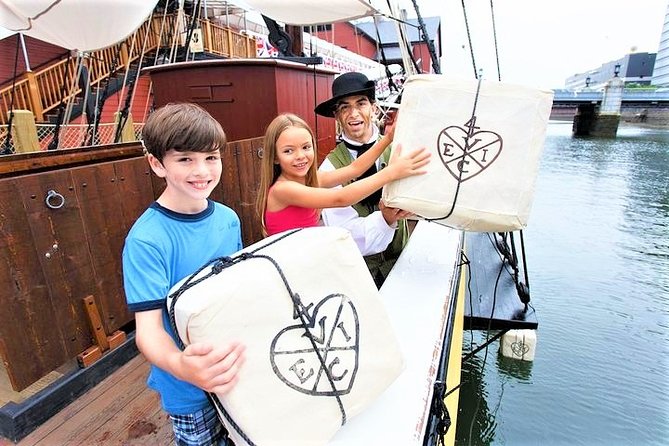
The heart of the visit is stepping onto the restored tea ships. You board the replica brig Beaver and Eleanor, and you don’t just look at them—you’re placed into the action as the program reaches the reenactment moment.
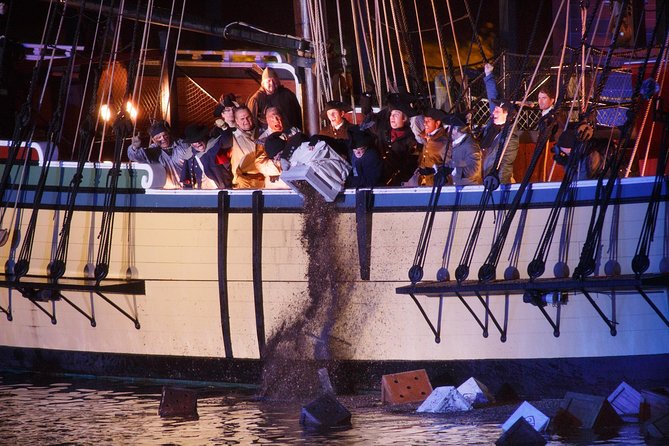
This is where the tour earns its reputation for fun-with-purpose. The movements are guided, and the staff helps you participate without turning it into chaos. You get a clear cue when it’s time to throw tea into Boston Harbor, and the setting does the rest. Being on deck, seeing the harbor, and hearing the story in real space turns the event from a worksheet into something your brain can store.
Practical note: this part of the experience is physical in the simplest ways—walking around, changing levels, and spending some time outside. If you’re traveling with a stroller, the experience is described as stroller accessible, but you should still expect uneven deck areas and crowd flow. If you’re using a wheelchair, the tour is listed as wheelchair accessible. Still, I’d plan around the day’s walking and any steps between ship and museum areas.
The tea-throw moment: why it lands even if you hate gimmicks
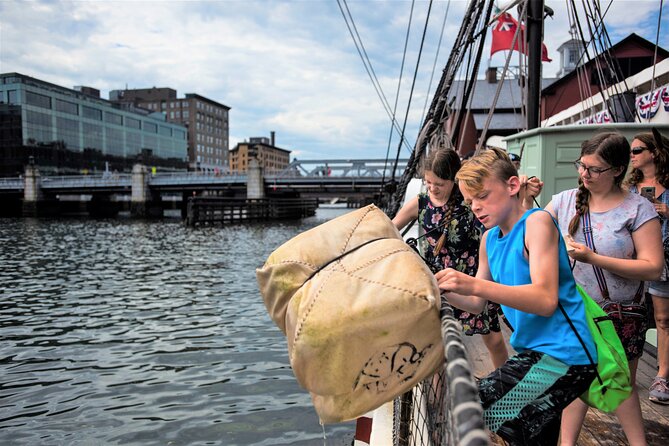
Yes, it’s a reenactment. But it’s not random theater. The tea-throw is staged as a protest action—one with stakes, not just spectacle. Guides frame it as part of a bigger political argument, so the moment feels like history in action, not a carnival prop.
The tour also gives you time to see the ships as ships, not just as backdrops. You’re on the water, close to the working shape of the vessels, and that physicality helps. Even if you already know what happened, you’ll likely notice things you’d never pick up from a plaque: ship layout, deck scale, and how limited space would have felt for people.
One helpful detail: the program is set up so you’re not left guessing what’s going on. You’re ushered through the experience, and the guide narration carries you from the story setup to the reenactment cues to the next indoor segment.
Inside the museum: rare objects and the Robinson Half Chest
After the ship segment, the museum portion is where you slow down just enough to absorb the artifacts. The big draw is the Robinson Half Chest, described as one of only two remaining original tea chests connected to the Boston Tea Party night.
Seeing the chest in person matters. It’s one thing to read about tea chests; it’s another to stand in front of the wooden box that survived when so much was destroyed. This is the moment that usually turns a playful reenactment into a grounded understanding. You can connect the reenactment with the real object and walk away with a more concrete mental image of what was at stake.
The museum also uses a film called Let it Begin Here. It blends multimedia storytelling with key Revolutionary-era beats, including Paul Revere’s midnight ride and the lead-up to the fighting often described as the shot heard round the world. The film doesn’t pretend to be the only truth on every historical nuance, but it gives you a sense of urgency and momentum—how fast events moved in that era.
A detail you might hear during the program: a note about how Revere’s warning may have focused on the Regulars coming out rather than a dramatic British call-out. It’s the kind of small story correction that makes the overall visit feel smarter, not just louder.
Meeting House storytelling: December 16, 1773, set up like a scene
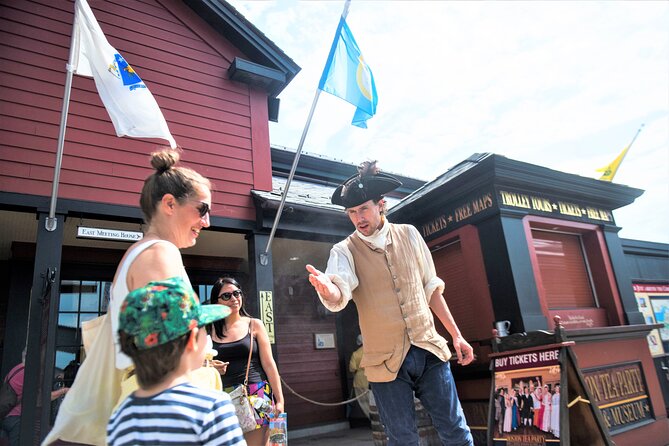
Before you board, the tour begins with a storytelling setup at the Meeting House. This is where the evening of December 16, 1773 gets framed. Guides and performers step into roles tied to the Sons and Daughters of Liberty, and you’re positioned to understand what people believed they were doing.
This segment is useful even if you already know the headline. It sets tone and purpose: protest against tea taxes, crowd organizing, secrecy, and the sense that people were crossing a line. Then it hands you off to the ship part when it’s time to participate.
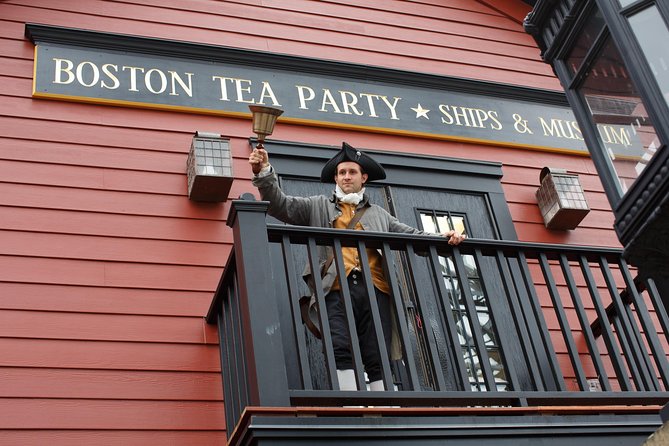
This is also where you’ll feel the “live cast” style of the tour. Multiple performers in period dress make the story feel human-scale. In recent experiences, performers named Oliver and Steve were highlighted for their delivery, and you can expect that same energy from the acting team.
Abigail’s Tea Room: the fun landing without the hard sell
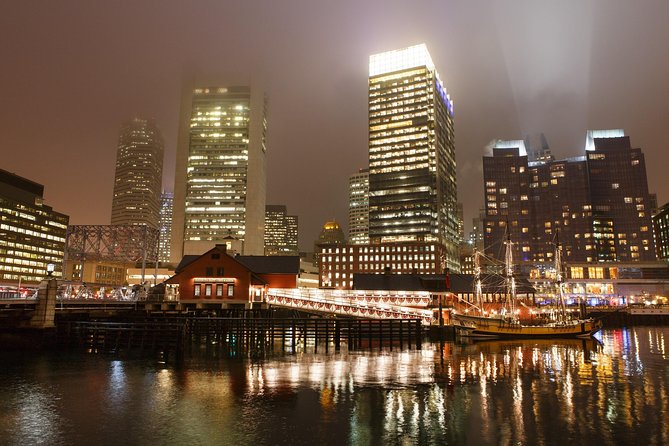
At the end, the tour stops at Abigail’s Tea Room for a tea break. The timing is smart. After walking, participating, and watching the film, you get a calm moment to reset. It’s not required to understand the history, but it makes the experience feel complete—like a whole day’s worth of feeling, packed into about an hour of guided time plus food.
This part is also good for families and for people who want a practical souvenir. You can grab a scone and tea, then check out the nearby shop at your own pace. If you’re planning to keep exploring Boston afterward, this break helps you avoid the “rush and crash” feeling that can hit right after tours.
Price and value: is $35 worth it for one hour?
At $35 per person for about an hour, the value is in what you get packed together: guided narration, admission to the Boston Tea Party Ships and Museum, skip-the-line access, the ship reenactment, museum exhibits, and the film. Many attractions charge separately for the ticket plus experiences; here, the experience is the product.
So the question isn’t just the dollar amount. It’s whether you’ll use the included elements. If you want hands-on participation and a guided story that ties the event to what came next, this price lines up well.
If you prefer self-guided museum time only, you might feel like an hour is too short and the reenactment too staged. One concern that comes up for some people is that the tour style can feel a bit scripted. My advice: lean into it. The payoff is higher if you’re willing to treat the performance as a teaching method, not as a flaw.
Who should book this, and who might want a different style?
This tour fits best if you fall into one of these groups:
- History lovers who want more than plaques, with story structure and hands-on participation.
- Families looking for an experience that keeps kids engaged without turning into pure chaos.
- Visitors who want a quick, memorable Revolutionary-era stop that doesn’t require deep prior knowledge.
It may be less ideal if you:
- Want a quiet museum-only visit without active participation.
- Get frustrated by indoor/outdoor transitions and moving between spaces.
- Have trouble with stairs and uneven ship decks (even though the overall experience is listed as wheelchair and stroller accessible).
It’s also worth planning around weather since the experience requires good weather. The core experience depends on being outside for at least part of the program.
Timing in Boston: where this fits into your day
The tour runs around one hour, and it ends back at the starting point at 306 Congress St. That makes it easy to slot between other downtown sights. It’s also popular, with tickets commonly booked about a month in advance on average. If you’re traveling in peak season or school breaks, grab your time slot early so you can choose a schedule that matches your day.
One more practical tip: arrive early enough to check in 15 minutes before your tour time. If you miss the check-in window, seats can be reallocated. That rule matters because the acting and ship boarding flow depends on everyone timing correctly.
Should you book the Boston Tea Party Ships and Museum tour?
Yes—if you want Revolutionary history that you can actually do, not just read. The strongest reason to book is the combination of ship reenactment + artifact viewing + film storytelling in a single guided package. It’s a focused experience built for people who want meaning, not just memorization.
Hold off if you’re the type who prefers quiet, slow museum wandering only, or if you dislike weather-dependent outdoor activities and physical movement. In that case, you might be happier with a more traditional museum visit on your own.
If you can do some walking and you’re game for guided participation, this is one of Boston’s most efficient ways to understand why the Boston Tea Party mattered.
FAQ
What is the duration of the Boston Tea Party Ships and Museum tour?
The experience is about 1 hour (approx.).
How much does it cost?
It costs $35.00 per person.
Is museum admission included?
Yes. Admission to the Boston Tea Party Ships and Museum is included.
Is the tour offered in English?
Yes, the experience is offered in English.
Where does the tour start?
The meeting point is 306 Congress St, Boston, MA 02210, USA.
Do I need to check in before the tour?
Yes. All guests must check in on-site 15 minutes prior to the tour time, or they may be considered a no-show.
Is the experience wheelchair and stroller accessible?
The experience is listed as wheelchair and stroller accessible.
Are service animals allowed?
Yes, service animals are allowed.
When is the museum closed?
The museum is closed on Thanksgiving and Christmas Day. It can also close for private events.
What if the weather is bad?
The experience requires good weather. If it is canceled due to poor weather, you’ll be offered a different date or a full refund.