REVIEW · BOSTON
Lexington & Concord 250th Birthday Tour with Concord Museum Entry
Book on Viator →Operated by GreatBostonTours · Bookable on Viator
Shots echo long before Lexington Green. This is a guided day trip that strings together Concord Museum admission and a real walk on the Battle Road Trail—both are built to make April 19, 1775 feel close. One thing to plan for: the air-conditioned transport is small, and that can mean tight legroom.
I like how this tour treats the Revolution like a story you can walk through, starting with Boston’s intellectual centers and ending at Concord’s key moments. You ride comfortably with a local guide, stop often for photos and questions, and get a clear rhythm: parks and monuments, then a trail, then a museum stop that helps you anchor all the names and places. If you’re sensitive to cramped seating, bring patience (and maybe a stretch ritual).
Key points you’ll feel on the day
- Concord Museum entry included, so you’re not racing to find tickets after the fact
- Battle Road Trail (about 2 hours) gives you actual walking time along the route
- Lexington Green and Visitors Center stops are free, plus they set the scene fast
- Air-conditioned, small-vehicle touring reaches sites that big buses can’t
- 250th-anniversary framing for 2025, including trail and museum updates
In This Review
- Why April 19, 1775 makes more sense with a guide’s route
- Boston prep stops: MIT, Harvard Square, and Tory Row set the stage
- Lexington Green: where the story turns into a place you can stand on
- Lexington Visitors Center (plus the 2025 museum update nearby)
- Battle Road Trail: the 2-hour walk that makes the chase visible
- Concord-area stops: Alcott, Emerson, and the Revolution around you
- Concord Museum entry: why the last stop helps everything click
- Price and comfort: is $159 worth it?
- Pickup timing and avoiding the morning scramble
- Should you book this Lexington & Concord 250th tour?
- FAQ
- How long is the Lexington & Concord tour from Boston?
- Is admission to the Concord Museum included?
- Do I need to pay for tickets at Lexington Green, the Visitors Center, or Battle Road Trail?
- Is lunch included in the price?
- Where are the pickup spots in Boston?
- Is the Concord Museum open on all days?
Why April 19, 1775 makes more sense with a guide’s route
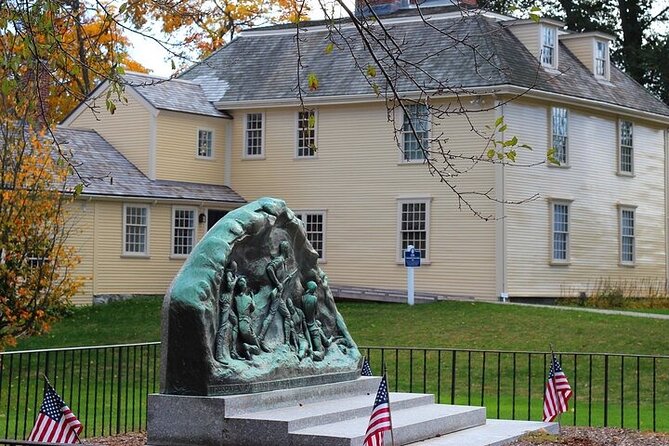
The Revolution can sound like a list from a textbook: dates, battles, famous quotes. What makes this day tour work is the way it builds cause-and-effect. You start with Boston-area clues—where leaders planned, where officers stayed, and where messengers moved—then you slide into Lexington, then you move to Concord, where the events start to click as a chain.
You’ll get plenty of “wait, that connects” moments. The guide’s job isn’t just saying facts; it’s helping you visualize movement across neighborhoods and rural backroads, and then tying that movement to what happened on the ground.
A practical note: this is a long day (about 8 to 9 hours). It’s paced for seeing many stops, not for lingering for half your afternoon at one site. If you want a relaxed, slow-museum vibe, you might want to pair this with one extra independent stop afterward—but you’ll still come away with a solid big-picture map.
Boston prep stops: MIT, Harvard Square, and Tory Row set the stage
Before you even reach Lexington, you’re in Boston’s thinking-and-planning world. The route includes a pass by MIT, where you can spot the iconic dome and see how modern institutions sit right next to Revolutionary-era stories. It’s a quick reminder that the region kept evolving, even as the nation was being born.
Then the tour leans into Harvard Square. You’ll see the older college campus tied to 1637, and you’ll hear how George Washington’s forces used old dorm spaces to garrison officers during the Siege of Boston after the Battle of Bunker Hill. This isn’t just trivia—it helps you understand that military strategy depended on access to real buildings, not just battlefields.
From there, you follow the footsteps of William Dawes as part of the ride connected to the alarm—messaging that mattered because it was time-sensitive. You’ll also get the view of the Boston Common, where Washington assumed command of the Continental Army under the Great Elm Tree. That’s one of those anchor moments: you’re standing in a place that functioned like command center territory.
And then comes Washington’s Headquarters on Brattle Street (Tory Row), where the plan for the Siege of Boston was worked out over several months. Even if you’re only passing by, the sequencing matters. By the time you hit Lexington, you’re not starting from zero—you’re starting from context.
You can also read our reviews of more museum experiences in Boston


Lexington Green: where the story turns into a place you can stand on
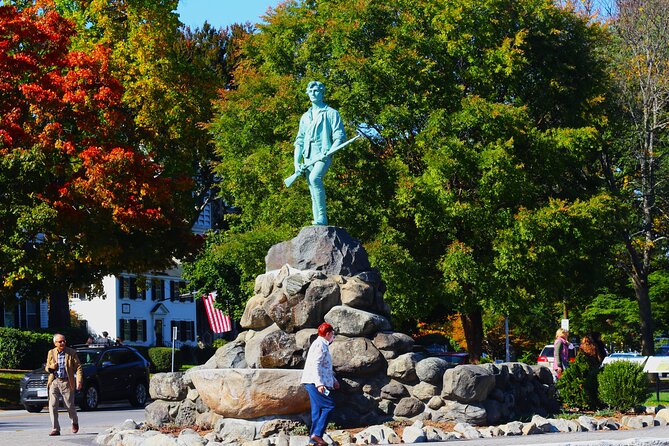
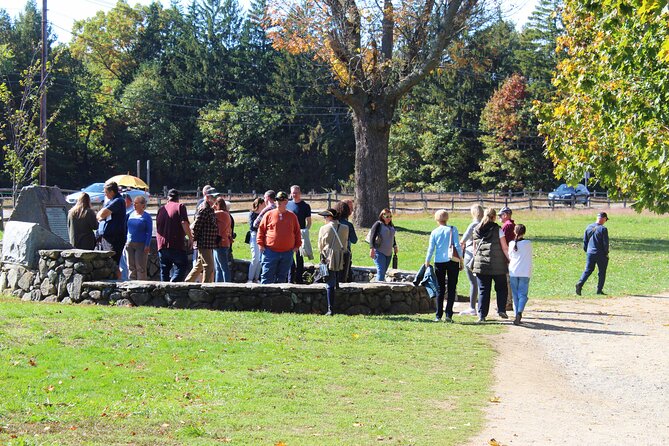
Lexington Green is the emotional reset. The Battle Green is described as the oldest military burial site in America, and the focus is on the morning of April 19, 1775: 77 Minutemen under Captain John Parker were killed when they faced the British forces.
Even if you’ve read about the opening shots before, this is where the information gains weight. You’re not just learning about a clash; you’re standing in a community space marked for remembrance. The stop is about 45 minutes, and that’s just enough time to take in the setting and absorb the guide’s connections without making you feel hurried.
The tour also keeps one smart thing in mind: you get the battlefield story first, then you get the interpretation. That way, when you shift to the next stop, the museum-style details don’t feel random. They feel like the “how it looked and how it unfolded” explanation.
Lexington Visitors Center (plus the 2025 museum update nearby)
Right after Lexington Green, you move to the Lexington Visitors Center. Here, the emphasis is on the battle’s morning as a sequence: the guide points you toward a battle diorama and displays that depict what happened on April 19, 1775, including the confrontation between 77 Minutemen and about 700 Redcoats.
This is where the tour helps you convert “memory” into “understanding.” You may know the broad story, but the diorama-and-displays format can clarify where people were and how the day unfolded.
There’s also a 2025 update worth planning around: the tour notes a new adjacent Town of Lexington history museum, opening in time for America’s 250th Birthday. Since this is specifically flagged for 2025, it’s likely part of what you’ll want to look for if your trip lands in that anniversary window.
This stop is also about 45 minutes. In other words, you’re not stuck for ages in one room, and you’re not leaving before you’ve had a chance to understand what you just saw outside.
Battle Road Trail: the 2-hour walk that makes the chase visible

The Battle Road Trail is one of the best reasons to book this tour. It’s completely renovated for 2025 and runs about five miles, connecting historic sites from Meriam’s Corner in Concord to the eastern boundary of the park in Lexington.
You’ll get roughly 2 hours on the trail—enough time to feel the terrain and picture movement, without turning it into a marathon. Much of the trail follows remnants of the original road route, while in other areas it follows the route of the Minute Men, crossing farming fields, wetlands, and forests.
That mix matters for your brain. A road you can walk along helps you “measure” distances and think about logistics: speed, visibility, and how quickly events could escalate.
Expect to see homes and taverns that have been renovated and landscaped for the 250th season. It’s the kind of detail that can make history feel less like a diagram and more like people living their daily lives—up until the day everything changed.
Practical tip: wear shoes you can walk in for two hours. Even if you’re not doing all five miles, you’ll likely cover enough ground for comfort to matter.
Concord-area stops: Alcott, Emerson, and the Revolution around you

Once you get into Concord, the tour shifts from battlefield mechanics into the people and places that shaped how we remember the Revolution.
You’ll see the homestead of Louisa May Alcott, author of Little Women. That’s a curveball in the best way. It reminds you that Revolutionary events didn’t just end in 1783—they rippled forward into literature, identity, and the stories families told about who they were.
You’ll also see the home of Ralph Waldo Emerson, the poet who helped enshrine collective memory tied to Paul Revere and the American Revolution. Even if you’re not an Emerson scholar, the connection is useful: it shows how 1775 became part of American myth-making, not only American military history.
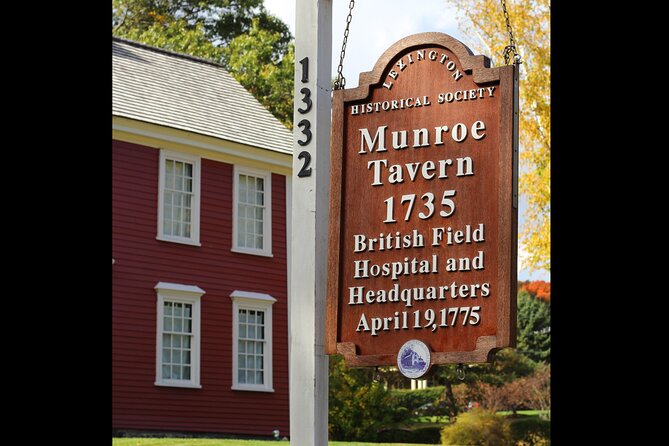
The tour also references a place tied to a secretive shadow government being established to challenge British Rule, along with a temporary field headquarters for British Red Coats on April 19, 1775. That combination of covert planning and frontline proximity is exactly what makes Concord feel different from Lexington. Lexington is the ignition; Concord becomes the turning point where plans and power collide in real time.
If you like photos, this portion delivers. It’s the kind of route where a picture isn’t just scenery—it’s a breadcrumb to a story your guide is actively narrating.


Concord Museum entry: why the last stop helps everything click
You’ll finish at the Concord Museum with admission included (about 1 hour). This is the moment where the tour gives you anchors: collections from the Colonial Era and the American Revolution, plus exhibitions tied to Henry Longfellow and the literary society.
Why this matters: by the time you arrive, you’ve already walked and stood in multiple locations. A museum stop then becomes more than a building with artifacts—it becomes a place where you can connect the faces, symbols, and objects to the places you just visited.
The museum time is timed for clarity, not for exhaustion. You should leave feeling like you understand both the battlefield and the broader “how the culture carried these events forward” angle.
One booking detail to be aware of: the museum may be closed on Mondays. The tour notes that Monday closures have happened due to staffing issues, and other attractions can be added to replace the museum time until Mondays are available again. If you’re set on a Monday departure, double-check your specific date and what substitution is planned.
Price and comfort: is $159 worth it?

At $159 per person, you’re paying for a guided, full-day route with air-conditioned transportation and included admission to the Concord Museum, plus water. Lunch isn’t included, so plan for that yourself.
Here’s how I’d think about value. You’re basically buying three things:
1) Guided interpretation across multiple Revolutionary-era sites
2) Transportation that gets you from Boston into small-area historic stops
3) One included ticket (Concord Museum), which would otherwise add cost and time
If you’re the kind of traveler who wants the story explained while you’re standing in the right places, this price can feel fair—especially for a day that includes multiple time-specific stops.
Comfort is the trade-off. The vehicle is a smaller shuttle/van setup, and when it’s full, legroom can be tight. Some people report crammed seating or needing awkward positioning in the back. The tour keeps air conditioning going, but the amount of airflow can depend on how the unit is set, and if you’re sensitive to temperature, bring layers.
If you’re traveling with older relatives or you need extra room, consider that before booking. This is small-vehicle history touring, not a roomy sightseeing coach.
Pickup timing and avoiding the morning scramble
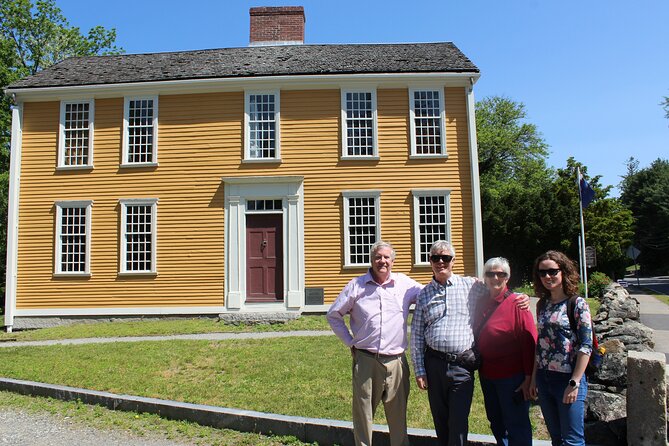
The tour starts at 8:00 am from Boston. Pickup is offered, and you must choose one of four pickup spots. The guide will meet you at a bus with the Great Boston Tours logo, and your pickup times are specific:
- 8:05 AM: 1 Central Wharf – New England Aquarium
- 8:25 AM: 8 Park Plaza – State Transportation Building
- 8:35 AM: 138 Saint James Ave – Fairmont Copley Plaza Hotel
- 8:50 AM: 39 Dalton Street – adjacent to the Sheraton and Hilton
Build a buffer into your morning. Construction and street access can shift where the pickup happens, and the tour notes that pickup info is sent in advance when that happens.
Also: this is a mobile-ticket experience, and the confirmation happens at booking time. If you like being organized, set a reminder for your pickup window the night before.
Should you book this Lexington & Concord 250th tour?
Book it if you want a guided day that connects Boston planning spaces to the events of April 19, 1775, and you care about understanding rather than just seeing plaques. The included Concord Museum entry is a smart finish, and the Battle Road Trail stop is the kind of experience that turns dates into geography.
Skip it (or plan to compromise) if you’re very uncomfortable in tight vehicles or you’re expecting coach-bus space. The small shuttle style is part of how the tour reaches certain historic back roads, and that comes with the downside of limited seating room.
One more decision lever: if your trip falls on a Monday, confirm the Concord Museum status for your date since Monday closures have been an issue. If the museum isn’t available, substitutions can still help, but it’s worth verifying expectations up front.
FAQ
How long is the Lexington & Concord tour from Boston?
It runs about 8 to 9 hours, starting at 8:00 am.
Is admission to the Concord Museum included?
Yes. Concord Museum admission is included in the tour.
Do I need to pay for tickets at Lexington Green, the Visitors Center, or Battle Road Trail?
No. The tour lists admission tickets for Lexington Green, Lexington Visitors Center, and Battle Road Trail as free.
Is lunch included in the price?
No. Lunch is not included.
Where are the pickup spots in Boston?
You pick one of four spots: 1 Central Wharf (8:05 am), 8 Park Plaza (8:25 am), 138 Saint James Ave (8:35 am), or 39 Dalton Street near Sheraton and Hilton (8:50 am).
Is the Concord Museum open on all days?
The tour notes that Concord Museum can be closed on Mondays due to staffing issues, and other attractions may be added until Mondays are available again.