REVIEW · MADRID
Madrid: Thyssen Museum Guided Tour with Skip-the-Line Entry
Book on GetYourGuide →Operated by Fun and Tickets · Bookable on GetYourGuide
Art history, minus the waiting. This Thyssen-Bornemisza guided tour is built for people who want context fast, with skip-the-line entry and a live guide connecting big names like Degas, Renoir, and Van Gogh to the bigger story of European painting.
My favorite part is how the tour doesn’t just show you art. It gives you the why behind the brushstrokes, so you can look at a painting and know what to notice. One consideration: at 105 minutes, it’s a smart overview, not a slow, room-by-room masterpiece marathon.
In This Review
- Key points to know before you go
- Skip-the-line at Thyssen-Bornemisza: what you gain for $55
- Getting there: Starbucks by Fuente de Neptuno is your easy starting point
- Entering fast: how the separate entrance changes the whole visit
- What you’ll see in 105 minutes: a guided sweep of European painting history
- Room-to-room emphasis: how the guide turns paintings into stories
- Using the audio guide without losing the thread
- Who this tour suits best (and where it might not)
- Practical pacing tips: get more out of your 105 minutes
- Should you book this skip-the-line Thyssen tour?
- FAQ
- Where do I meet the guide for this tour?
- How long is the tour?
- What languages are available?
- What’s included with the ticket?
- Are backpacks allowed inside?
- Is the tour suitable for young children?
Key points to know before you go
- Skip-the-line entry uses a separate entrance, so you lose less time to museum queues
- Two layers of guidance: live guide plus included audio guide with headphones (Spanish or English)
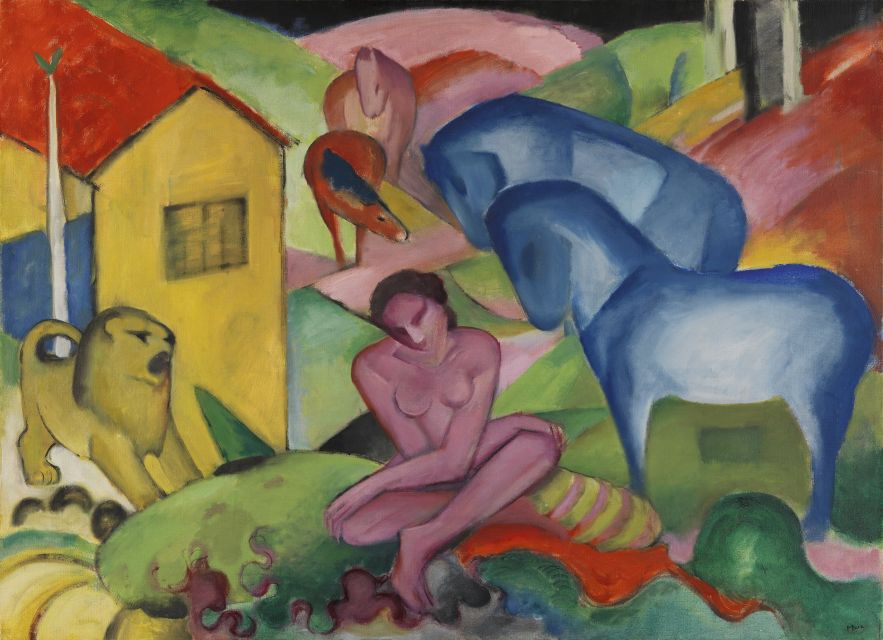
- Big-time artists in rotation: you’ll see work tied to names like Monet, Van Gogh, Rembrandt, Rubens, and Caravaggio
- A sweep across styles: from earlier movements through expressionism and even pop art themes
- You learn the collection itself: the guide explains stories behind the paintings and the Thyssen collection
- Meet near Fuente de Neptuno at a Starbucks 10 minutes before start for an easy handoff
Skip-the-line at Thyssen-Bornemisza: what you gain for $55
Paying $55 per person for a 105-minute guided museum experience can feel like a lot until you think about what you’re buying. You’re not just buying access to the galleries. You’re buying two practical advantages: time saved and interpretation delivered.
The time-saver is real. Museums like the Thyssen can mean standing around while you could be inside learning what you came for. With skip-the-line entry, you start the visit with momentum instead of frustration. When you only have a slice of time in Madrid, that matters.
The interpretation part is what makes the price feel justified for most people. The tour is designed to help you read paintings instead of just viewing them. You get talk-time about meaning, technique, and the historical currents that shaped what artists painted over the centuries.
That said, it’s still a short tour. If your goal is to spend an entire afternoon lingering in your favorite corners, this format won’t replace unstructured time. But as an efficient way to get your bearings and see key works, it’s strong.
You can also read our reviews of more guided tours in Madrid


Getting there: Starbucks by Fuente de Neptuno is your easy starting point

Your meeting point is very specific: the guide waits at a Starbucks near the museum, at the Plaza de Canovas del Castillo, known as Fuente de Neptuno. Plan to show up early because the guide is scheduled to be there 10 minutes before the start time.
This kind of meeting point is actually helpful. You’re not wandering around trying to find a group sign. You know what landmark to aim for, and once you meet your guide, the rest is straightforward: you follow them into the museum and get the benefit of the organized entrance.
A couple practical notes from the experience setup:
- Wear comfortable shoes. You’ll be moving room to room.
- Security rules mean no backpacks. If you’re traveling light, great. If you brought a bag with you, you’ll want to plan what you’ll actually carry in.
Entering fast: how the separate entrance changes the whole visit
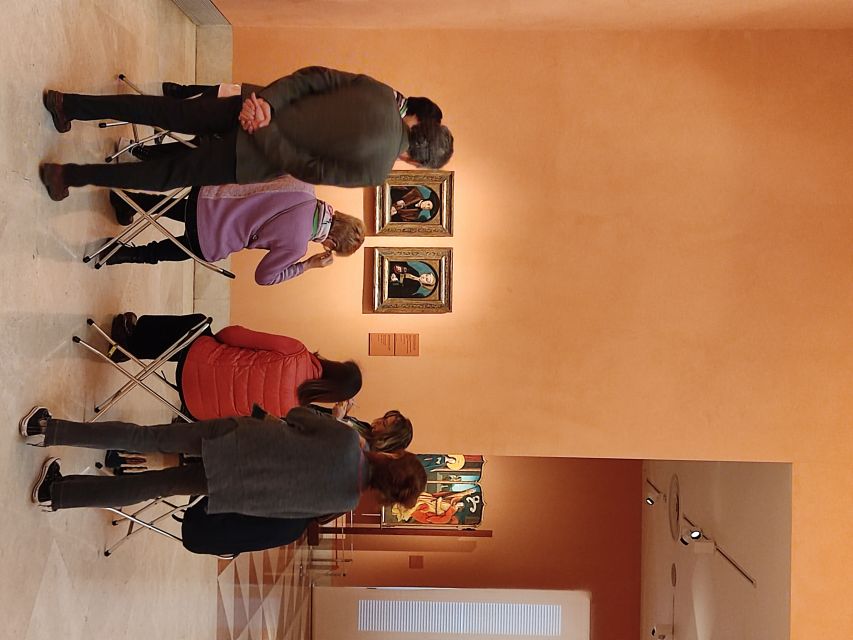
The Thyssen-Bornemisza has a reputation for being a pleasure to tour, but the first step can still be annoying: queues. This tour is built to avoid that moment entirely.
With skip-the-line entry through a separate entrance, you’re not stuck waiting for your group ticket while other visitors funnel in. That shifts the visit mentally. You walk into the museum with energy instead of impatience, and you start paying attention right away.
Once inside, the guide keeps the pacing tight. The goal is to give you a guided sweep of the collection without turning the experience into a long lecture. You’ll move through galleries while the guide explains how painting ideas changed over time, and where the artist’s choices fit into the bigger picture.
What you’ll see in 105 minutes: a guided sweep of European painting history
This tour covers a large time window. You’re looking at European painting across centuries, using the Thyssen’s collection as your storyline. Even though you’re seeing “highlights,” the approach isn’t random. The guide connects paintings by themes: art movements, subject matter, and how style evolves.
Here’s the range of what you’re likely to encounter:
- You’ll be pointed toward iconic names such as Monet, Van Gogh, Rembrandt, and more
- You’ll also hear about works linked to Rubens and Caravaggio
- The tour aims to cover styles from earlier traditions up through expressionism and even pop art themes
What I like is that you’re not only taught to recognize famous artists. You’re taught how to notice patterns: how painting styles reflect their time, and how subject choices work like visual arguments.
The tour also calls out themes that show up again and again, like outdoor scenes and everyday storytelling. It specifically mentions frequent attention to Dutch school themes from the 17th century and American school themes from the 19th century. That’s a helpful lens because it gives you categories to file what you see in your head, instead of leaving you with a pile of disconnected images.
Room-to-room emphasis: how the guide turns paintings into stories
A good museum guide doesn’t just deliver facts. They help you look. This tour leans heavily into that, and the results show up in the standout feedback.
Many guides praised here bring extra context and clear English, plus an engaging style that keeps you awake. Names mentioned include Louis, Luis, David, Rodrigo, Laura, Ana, Marisol, and Anna, and the common thread is interpretation: why a painting looks the way it does, what it’s doing, and how it fits the period.
You’ll get a mix of:
- Artist context: stories behind the people behind the work
- Painting context: what was happening culturally and artistically when it was made
- Style context: how movements shift from one room to the next
One detail I appreciate is the sense that the guide is training your attention. Some guides even ask for opinions about what you think you’re seeing. That turns the tour from a one-way talk into a conversation, which helps the information stick.
It’s also worth noting the collection angle. Several people highlight the story of the Thyssen family and how their collecting shaped what the museum holds. Even if you’re not obsessed with collectors, that gives the visit a spine. You start seeing the museum as a curated narrative rather than a random set of masterpieces.
You can also read our reviews of more museum experiences in Madrid



Using the audio guide without losing the thread
This tour includes an audio guide with headphones, offered in Spanish and English. In theory, that could become distracting. In practice, it can help you if you use it the right way.
My practical approach:
- Listen to your live guide first while you’re standing in front of a painting.
- Use the audio for quick reinforcement on moments you want to remember later.
- Don’t switch your attention fully away from the guide. The live part is where the pacing and the connections happen.
Because this is a guided tour, the audio works best as a support tool. It’s there to back up what you’re hearing, not to replace the storytelling.
Also, since you’re moving through multiple rooms in a short time, the audio becomes useful if you want to revisit concepts later in the day while your memories are fresh.
Who this tour suits best (and where it might not)
This is a strong fit if:
- You want a guided overview with real context, and you like learning while you walk
- You have limited time in Madrid and want a high-impact museum visit
- You’re interested in a wide span of Western painting and want help making sense of styles
It’s especially good for first-time Thyssen visitors, because you’ll get your bearings fast. The tour’s job is to connect the collection’s timeline into a coherent path, and that makes the rest of the museum (if you go back later on your own) feel much easier to navigate.
Where it might not land as well:
- If you’re looking for advanced, highly technical art-historical breakdowns on every single movement and artist, you may find the structure feels more like an introduction than deep scholarship.
That doesn’t make it a bad tour. It just means you should match it to your goals. Think of it as a smart orientation plus highlight reel, not a graduate-level seminar.
Practical pacing tips: get more out of your 105 minutes
You’ll cover a lot, so your preparation matters.
First, arrive with energy. Once you’re inside, the guide is moving. If you spend the first ten minutes trying to figure out what room you’re in, you lose the advantage of the tour’s tight structure.
Second, wear shoes that work for walking and standing. Even if the museum isn’t a marathon, you’ll still spend plenty of time moving between galleries.
Third, bring a simple plan for your attention. Pick 2-3 artists you most want to focus on, and let the guide connect everything else around them. That way, you’re not trying to memorize everything. You’re learning the connections, which is what makes the tour useful.
Finally, be ready for the tour to be a bit interactive. Some guides encourage group discussion, which can improve your recall later. If you’re shy, that’s okay too. You’ll still benefit from the explanations.
Should you book this skip-the-line Thyssen tour?
I’d book it if you want a high-value introduction to the Thyssen-Bornemisza. The combination of skip-the-line entry, live guided interpretation, and included audio makes it a practical choice when your schedule is tight. The strongest part is the way the guide turns famous artworks into stories you can actually use while looking.
I wouldn’t prioritize it if you’re the type who wants to live in one room for hours, or if you’re specifically hunting for very advanced analysis. In those cases, you might prefer a longer independent visit and choose only a short add-on where you most want explanations.
If you’re visiting Madrid and you want one museum experience that helps you see the art with context rather than just as decor, this tour is a very sensible bet.
FAQ
Where do I meet the guide for this tour?
You meet at a Starbucks in the Plaza de Canovas del Castillo, known as Fuente de Neptuno. The guide is waiting 10 minutes before the start time at the Starbucks door.
How long is the tour?
The guided experience lasts about 105 minutes (around 1.5 hours).
What languages are available?
The live tour guide and the audio guide are available in Spanish and English.
What’s included with the ticket?
You get skip-the-line entry, a live guided tour, and an audio guide with headphones.
Are backpacks allowed inside?
The tour notes that due to high security measures, you should not bring backpacks.
Is the tour suitable for young children?
It is not suitable for children under 3 years.