REVIEW · PLIMOTH PATUXET MUSEUMS
Plymouth: Plimoth Patuxet Museums – 3 tickets available
Book on GetYourGuide →Operated by Plimoth Patuxet Museums · Bookable on GetYourGuide
History here talks back fast. Plimoth Patuxet Museums pairs the Indigenous Historic Patuxet Homesite with an English 17th-century village where you can talk and participate, not just watch.
I also love how the day is built around first-person interpretation, from the people representing their community and culture for over 12,000 years to English village residents living their routines. One caution: there’s no audio tour, so you’ll rely on English films with subtitles and written translated maps.
In This Review
- Key things I’d focus on
- Starting at Henry Hornblower Visitor Center: a self-guided day you can shape
- Historic Patuxet Homesite: Indigenous heritage first, not as an add-on
- The 17th-Century English Village (1627, and 1621 in November)
- Craft Center and Davis Gallery: hands-on skills and rotating exhibits
- Plentiful Café and retail: what to do when you need a breather
- Mayflower II: climb aboard a 1620s crossing experience (plan for steps)
- Plimoth Grist Mill on Town Brook: waterpower, ecology, and grind demos
- Seasonal festivals that change the vibe of your day
- How long to plan: the “right” amount of time avoids museum fatigue
- Price and value: what $35 buys you, and what the add-ons add
- Who should book, and who might want to rethink
- Should you book Plimoth Patuxet Museums?
- FAQ
- How long should I plan for Plimoth Patuxet Museums?
- What’s included with standard admission?
- Can I visit Mayflower II or the Grist Mill on different days?
- Is there an audio tour available?
- Is Mayflower II ADA accessible?
- Where do I park?
- What seasonal events should I look for?
Key things I’d focus on
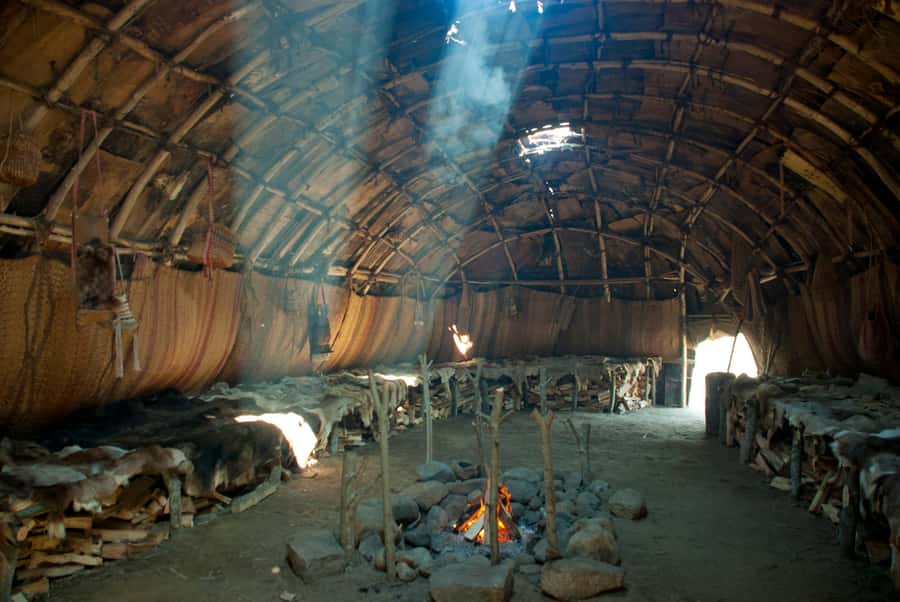
- Historic Patuxet Homesite centers Indigenous life before European arrival, and connects it to today
- English Village is living history, with activities like garden help, games, chores, and militia drills
- You’ll join in when roles allow, instead of only standing and observing
- No audio tour means more reading and subtitles (plan for that)
- Working Grist Mill on Town Brook shows waterpower in action and lets you buy cornmeal and grits
- Optional Mayflower II lets you climb aboard and compare the ship experience with life on land
Starting at Henry Hornblower Visitor Center: a self-guided day you can shape
Your visit begins at Plimoth Patuxet Museums, Henry Hornblower Visitor Center, 137 Warren Avenue in Plymouth. The setup is refreshingly simple: you exchange your e-voucher for admission on site, then move at your own pace across the campus.
This is also where the “10 days” idea matters. Your ticket window is longer than the visit itself, and multi-exhibit tickets can be used on different days—as long as you hold onto the receipt you get when you exchange your voucher for entry at the second location. That flexibility is handy if you’re pairing this with other Plymouth stops or if weather changes your plans.
Before you wander, do the orientation film in the museum theaters. It’s in English with subtitles, and you’ll also see translated written maps (not audio). It’s a small detail, but it changes how you experience the grounds: you’ll get more out of the day if you’re willing to read signage and prompts as you go.
Parking is part of the good-news list. At Plimoth Patuxet, parking is free, while the waterfront area has metered options. That’s useful if you’re also adding Mayflower II or the Grist Mill, both a few miles north in the Downtown Waterfront District.
Historic Patuxet Homesite: Indigenous heritage first, not as an add-on
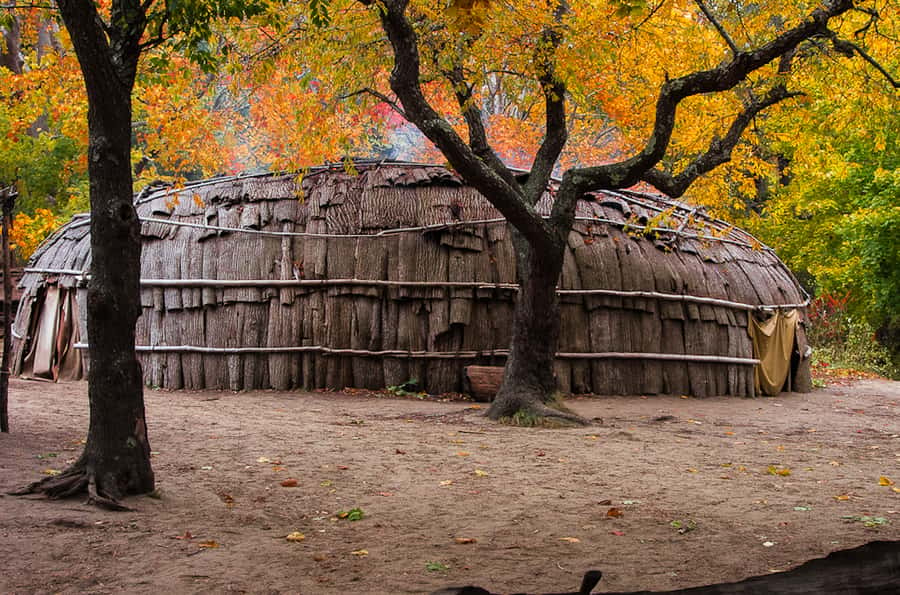
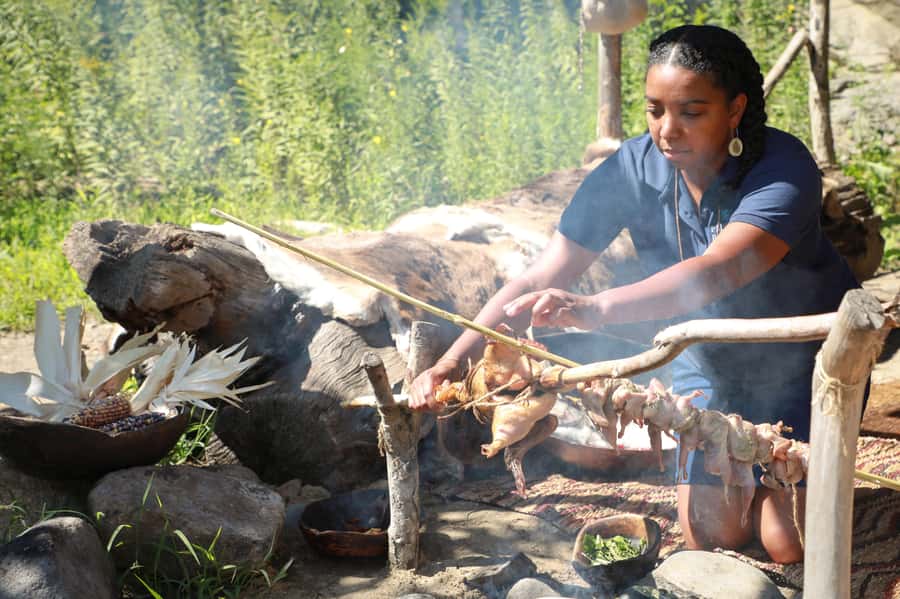
If you’re trying to understand Plymouth honestly, start with the Historic Patuxet Homesite. The whole point here is perspective. The people you meet represent their community and culture, sharing what life has meant here for over 12,000 years.
This is where you’ll get the clearest message that Indigenous people were in the Northeast long before Europeans arrived, and they’re still here today. That framing isn’t buried in a side display—it’s presented through first-person interpretation. If you came expecting a one-sided Pilgrim story, this section quietly resets what the history means.
Practically, this stop works best when you slow down and ask questions. The interpreters aren’t there just to recite facts; they’re sharing stories about daily life, place, and continuity. Even if you only spend a short time here, you’ll likely leave with a better sense of how the landscape shaped community life—and how the arrival of Europeans disrupted more than just geography.
And yes, this is also one of the best places to bring kids. The conversation is direct, and the explanations are designed to help people make sense of the time period without treating Indigenous heritage like a “theme.”
The 17th-Century English Village (1627, and 1621 in November)
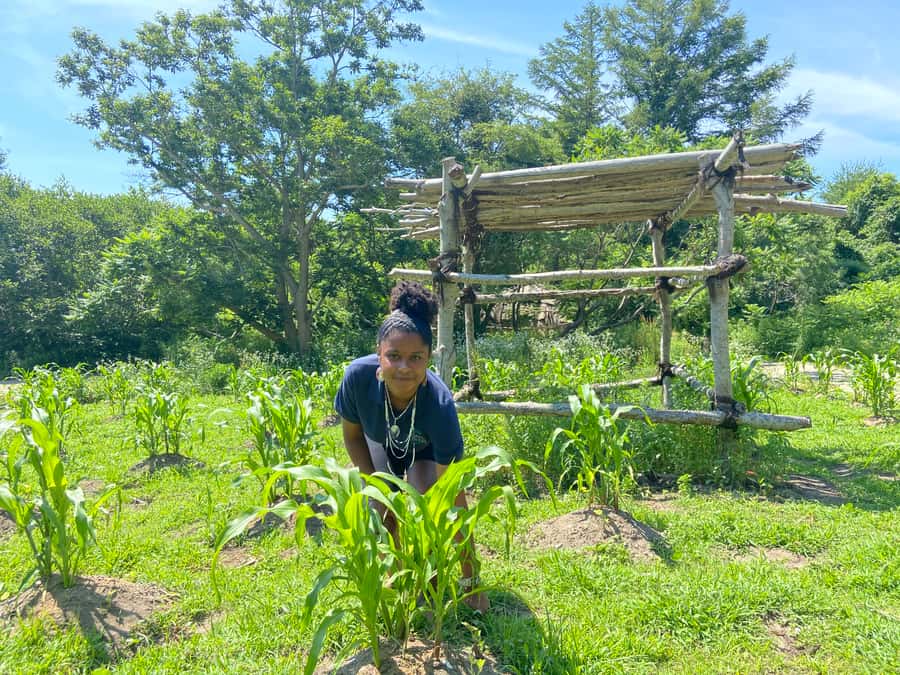
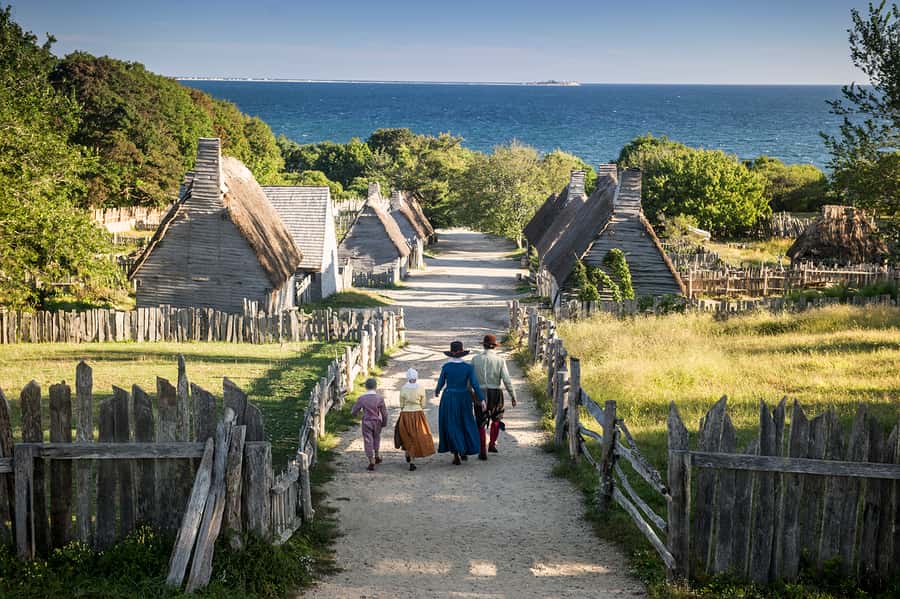
Next comes the 17th-Century English Village, built as a recreation of the early Pilgrim settlement. The big difference is that you’re not watching costumed actors perform in a ring. Guests are living history here—sometimes you’ll be able to lend a hand in the garden, learn a dance, sing along, play games, help with chores, and even participate in a militia drill when the moment fits.
The year is part of the pacing. In general, the village interpreters portray life in 1627. But if you visit in November, the year changes to 1621 for the First Harvest Feast, known to America as the First Thanksgiving. That means you’ll notice the day’s emphasis shift toward celebration and preparation, not just routine.
One detail I really like: you can get close to heritage animals. There’s a rare breed animal program, and you might see cows, sheep, goats, and possibly pigs and chickens depending on the program day. It adds realism to the environment without turning the museum into a petting zoo vibe.
If you want to maximize value, time your visit so you catch multiple presentations. The English Village runs ongoing activity, with residents introducing what they’re doing and why. Some presentations may be more interactive than others, so it helps to stay flexible and hang around when something catches your attention.
Craft Center and Davis Gallery: hands-on skills and rotating exhibits
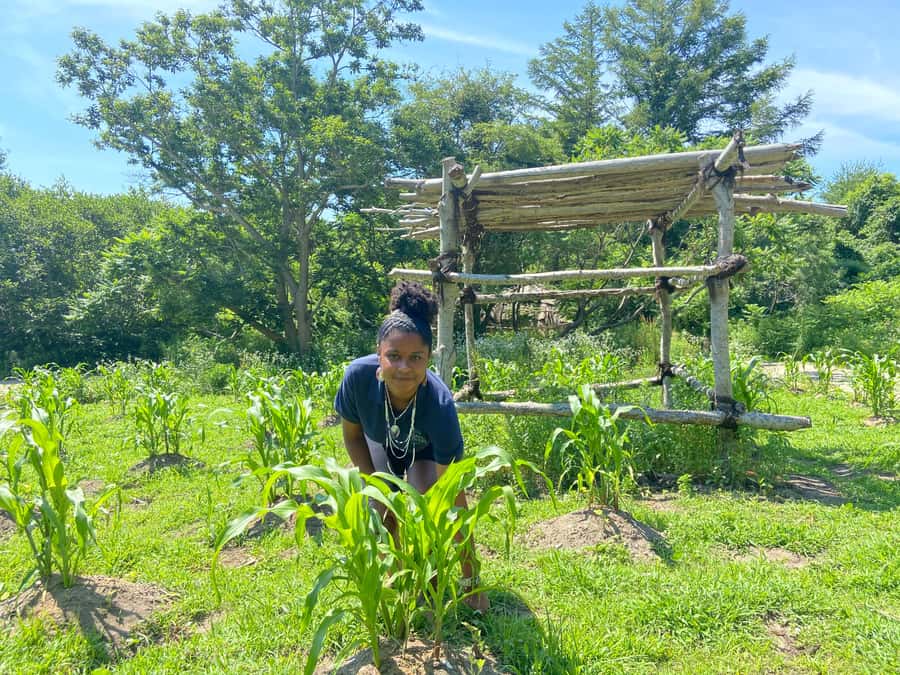
Between the living history zones, the Craft Center gives your brain a useful break. Here, you can watch reproduction 17th-century European pottery work and explore other artisan exhibits that rotate seasonally. That rotating element matters because it keeps you from feeling like you’re repeating the same message at every stop.
If you’re the type who likes the “how did they do that?” side of history, this section is a strong match. It’s not only about objects—it’s about skills being revived and passed along, which adds context to what you see in the village and homesite.
Also included is the Davis Gallery Exhibit. It’s a quieter setting than the English Village, so I’d use it as your reset point before you head into the more dynamic, outdoor parts of the campus.
Plentiful Café and retail: what to do when you need a breather
The day’s flow is easier if you plan for food and souvenirs. The Plentiful Café is open 11am–4pm. It offers 17th-century tastings alongside modern favorites, which is a fun compromise. You can try something old-school without turning your day into a strict food challenge.
The museum also has four retail stores, including Plimoth Artisan-made items and New England Artisan goods. I like this setup because it helps you keep the story going after you leave. You’re not just buying a trinket—you’re supporting the kinds of crafts that connect to what you saw in the Craft Center.
Tip: take advantage of the café window. A short sit down can turn your afternoon into a stronger experience, especially if you’re visiting during a busy season.
Mayflower II: climb aboard a 1620s crossing experience (plan for steps)
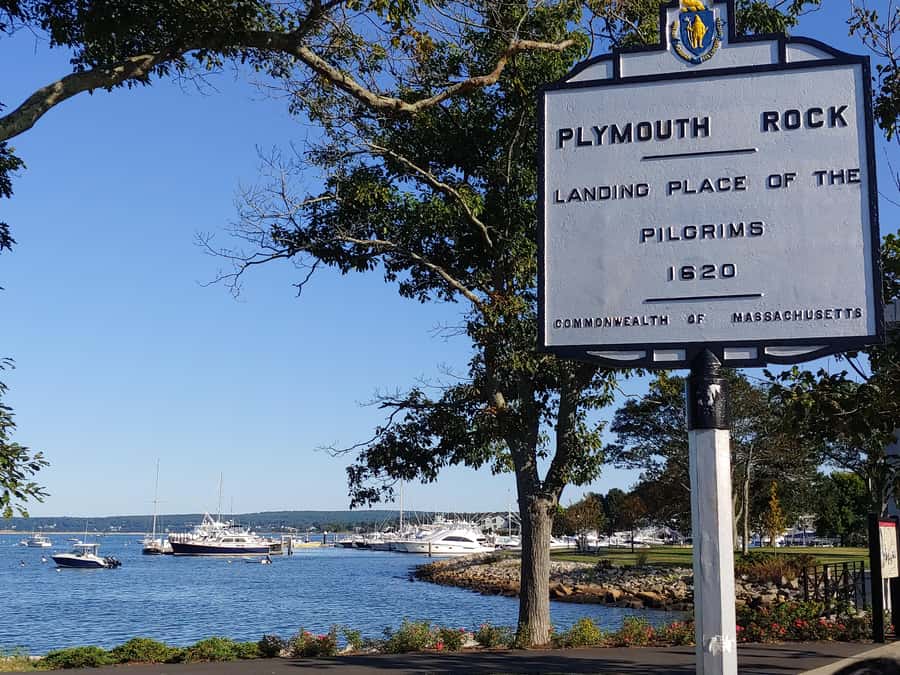
If you add the Mayflower II, you’ll visit it in the Downtown Waterfront District, about three miles north of the main campus. The experience here is more concentrated—think “what it felt like to cross” rather than wandering a whole living museum.
You’ll be able to climb aboard. Modern-day guides are on hand to share stories about 1620 and the history of the ship. The ship is also listed on the U.S. Register of Historic Places, which gives it a special weight compared to a generic museum model.
Time-wise, plan around 30 minutes for Mayflower II—often including nearby stops like Plymouth Rock and Cole’s Hill if you’re doing the full, close-by loop. That makes it easy to fit into a day without draining your energy.
Accessibility note matters here: the Mayflower is not ADA accessible. There’s a ramp and stairs, and wheelchairs may access and view the ship from the inside exhibit dock area. If you or someone in your group has mobility limits, consider this stop part of the planning conversation rather than an afterthought.
Still, even in a shorter visit, the Mayflower II experience hits hard. It gives you a tangible sense of why life on land after the landing was so complicated—space, choices, and hardship all show up in the physical details.
Plimoth Grist Mill on Town Brook: waterpower, ecology, and grind demos

The Plimoth Grist Mill is the other big optional add-on, also about three miles north from the main campus. This is where the museum shines for people who love science with story.
The mill is a working reproduction built by Pilgrim John Jenney, located on the original location along Town Brook. Instead of pretending the waterpower is a simple “cool backdrop,” the mill shows it as a system: water, motion, and grain turning into real output.
The experience is described as both STEM and history. That pairing is what makes it click. You’re learning why it works—then you’re seeing it work. If you enjoy cause-and-effect, you’ll get a lot out of the way they connect the mill to the ecology of Town Brook.
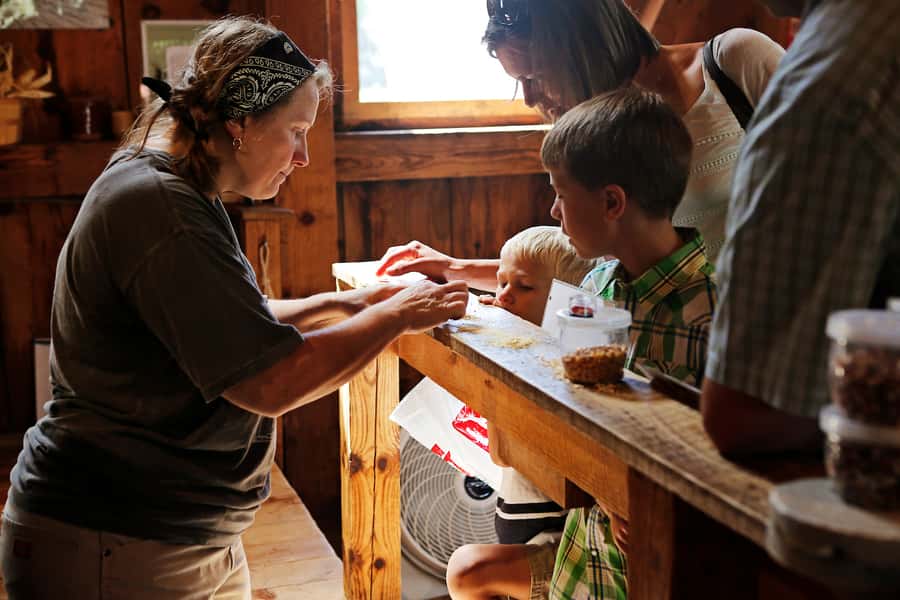
During the working demonstrations, cornmeal and grits are available for purchase. One standout detail from an actual visit: people loved watching the mill go into action, including a demonstration grinding blue corn. Even if the exact grain varies by day, the core experience stays the same—this is a mill that runs, not a display that sits still.
Time-wise, budget 30–45 minutes.
Seasonal festivals that change the vibe of your day
One underrated way to get more value is to time your visit around seasonal events. The museum includes events with admission, and the theme shifts by month.
- April: Herring Run Festival at the Plimoth Grist Mill
- June: Strawberry Thanksgiving at the Historic Patuxet Homesite
- August: Green Corn Festival at the Historic Patuxet Homesite
- October: Indigenous Peoples Weekend
- November: Grist Mill Grain Fest, plus American Thanksgiving
And remember the English Village’s year shift in November to 1621 for the First Harvest Feast. If you’re traveling in late fall, that combination can make the place feel less like a static museum and more like a seasonal community story.
How long to plan: the “right” amount of time avoids museum fatigue
You’ll get the best experience by matching time to your goals. The museum’s recommendation is:
- Plimoth Patuxet: 2–3 hours (some people go longer)
- Mayflower II: about 30 minutes
- Plimoth Grist Mill: 30–45 minutes
Here’s the practical reality: the main campus involves multiple emotional “modes.” Historic Patuxet Homesite calls for thoughtful listening. The English Village often moves faster because it’s interactive and active. If you cram too much, you might rush past the parts that actually deepen your understanding.
So I suggest a simple approach:
- If you want the full living history feel, plan 2–3 hours at Plimoth Patuxet.
- Add Mayflower II only if you can give it a calm, focused 30 minutes.
- Add the Grist Mill if you want a hands-on, working-history moment to balance all the people-and-stories.
Price and value: what $35 buys you, and what the add-ons add
At $35 per person, the ticket price is all about value through included experiences. Your admission covers self-guided time with key exhibits:
Historic Patuxet Homesite, 17th-Century English Village, Craft Center, and Davis Gallery Exhibit. Optional upgrades can bring in Mayflower II and/or Plimoth Grist Mill.
If you’re deciding whether to add the package options, think of it this way:
- Campus-only gives you the deepest living history, built around conversation, routine, and place.
- Adding Mayflower II helps you connect the ship story to the settlement story.
- Adding the Grist Mill adds a working technology piece—waterpower, grain, and an everyday economy.
From a value perspective, the best “bang for your buck” is whichever combo helps you see a fuller loop: arrival (Mayflower II), daily survival (village and homesite), and production (grist mill). If you love details and hands-on demonstrations, you’ll feel the add-ons working in your favor quickly.
Who should book, and who might want to rethink
This is a great fit if you:
- enjoy living history where interpreters answer questions
- want both the English Pilgrim story and Indigenous heritage
- like active learning and short, purposeful participation
- have kids who do better when they can move and ask questions
It might be less satisfying if you prefer history that’s mostly quiet reading, because you’ll spend a lot of time in outdoor spaces and in conversation-based interpretation. Also, since there’s no audio tour, you’ll want to be comfortable reading signs and using the orientation films with subtitles.
Finally, if mobility is a major concern, remember the Mayflower has stairs and isn’t fully ADA accessible. The exhibit dock area is an option, but climb aboard plans should be thought through ahead of time.
Should you book Plimoth Patuxet Museums?
Yes, I’d book it—especially if you care about accuracy and firsthand storytelling. The strongest reason is how the day links Indigenous life before European arrival to the English village experience, all while keeping the history human through people in character and real activities.
If you can, I’d seriously consider the Mayflower II and/or Grist Mill add-ons. The campus gives you the context. Mayflower II gives you the arrival. The grist mill gives you the tools and everyday mechanics of survival.
Just go in with the right expectation: this isn’t a fast sightseeing stop. It’s a place where you do a bit of listening, a bit of reading, and (often) a bit of participating—and that combination is exactly what makes it worth your time.
FAQ
How long should I plan for Plimoth Patuxet Museums?
Plan for about 2 to 3 hours at Plimoth Patuxet. Many people spend longer, but this is a good baseline.
What’s included with standard admission?
Standard admission includes self-guided admission to Historic Patuxet Homesite, the 17th-Century English Village, the Craft Center, and the Davis Gallery Exhibit.
Can I visit Mayflower II or the Grist Mill on different days?
Yes. Multi-exhibit tickets can be used on different days. Keep the receipt you receive when you exchange your voucher for admission to use at the second location.
Is there an audio tour available?
No audio tours are available. There are orientation films in English with subtitles and written translated maps.
Is Mayflower II ADA accessible?
The Mayflower is not ADA accessible. There is a ramp and stairs, and wheelchairs may access and view the ship from the inside exhibit dock area.
Where do I park?
Parking is free at Plimoth Patuxet. There is metered parking on the Plymouth waterfront.
What seasonal events should I look for?
The museum includes events with admission such as Herring Run Festival (April), Strawberry Thanksgiving (June), Green Corn Festival (August), Indigenous Peoples Weekend (October), and multiple events in November including Grist Mill Grain Fest and American Thanksgiving.