Donatello’s David is closer than you think. In an hour at Florence’s Bargello Museum, you’ll get skip-the-line entry and a guide’s narration through headsets, so the art lands fast and clearly. It’s a focused way to see the museum’s key sculpture highlights without turning your visit into a scavenger hunt.
I particularly like the way the tour targets the big names you came for, including Michelangelo’s Bacchus, the Tondo Pitti (Madonna with Child relief), Brutus, and David-Apollo—then shifts to early Renaissance stars like Donatello and Verrocchio. I also like the pace and structure: it’s long enough to understand what you’re looking at, but short enough to keep you from feeling crushed by marble and wall text.
One consideration: the second floor is devoted to glazed terracotta by Andrea and Giovanni Della Robbia, and parts of that area can be affected by renovation. That happened to one group, so if seeing every terracotta display is your main goal, keep your expectations flexible.
In This Review
- Key highlights to expect
- Bargello Museum: a prison turned into a sculpture showdown
- Entering the museum with guaranteed skip-the-line flow
- Michelangelo on the ground floor: Bacchus, Brutus, and David-Apollo
- The early Renaissance switch: Donatello and Verrocchio
- Second floor Della Robbia terracotta: Andrea and Giovanni
- How long is enough? Making the most of a one-hour sculpture sprint
- Price and value: what you’re really paying for
- Who should book this Bargello tour
- Should you book this tour or do Bargello on your own?
- FAQ
- How long is the Bargello Museum tour?
- Is skip-the-line entry included?
- What’s included in the price?
- Does the tour include transportation or meals?
- Where does the tour start and end?
- What if I arrive after the tour start time?
Key highlights to expect
- Skip-the-line entry with reservation helps you start without waiting, even in peak season (unless the museum has delays or strikes).
- Headsets are included, which makes a big difference in a museum where people naturally cluster around sculptures.
- A tight, art-historical route in about one hour keeps the tour from dragging.
- Michelangelo’s Bargello “greatest hits” are front and center: Bacchus, Tondo Pitti, Brutus, and David-Apollo.
- Donatello and Verrocchio get clear context, including Saint George, the Lion, and the David, plus Verrocchio’s influence.
- Second-floor Della Robbia terracotta is a major payoff—just know renovation can affect coverage.
Bargello Museum: a prison turned into a sculpture showdown
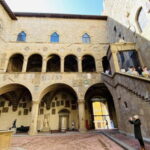
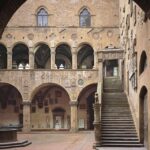
The Bargello Museum is the kind of place that makes you look twice at the building before you even reach the art. Your guide starts by explaining its shift from power and control—first the headquarters of the Capitano del Popolo, later the Podesta—then into police leadership and finally a prison. That backstory matters because it frames the museum as something more than a quiet gallery. It’s a real Florentine structure that ended up housing some of the city’s most serious sculpture.
I like that the tour doesn’t toss facts at you. It sets the scene so the sculptures start to feel tied to Florence’s civic life and power—not floating in a vacuum. You’ll also get a clear route to follow through the rooms, which is a big help in a museum where you can easily wander too long in the wrong wing.
And because you’re in a group with headsets, you don’t have to strain your voice or constantly lose the guide when other people step in front of you. It’s a small detail, but it changes the experience.
You can also read our reviews of more museum experiences in Florence
Entering the museum with guaranteed skip-the-line flow
This tour includes entrance with reservation and skip-the-line access guaranteed (with the usual real-world exceptions if the museum is delayed or strikes). That’s worth paying for, especially if you’re squeezing museums into a day that also includes the Duomo area, Uffizi, or Accademia.
With a group size capped at 25, you’ll usually have room to move rather than being stuck in a tight bottleneck. The tour also runs about one hour, which affects how you plan your day. Instead of committing half your morning to searching for the right sculptures, you get a timed route that tells you what to prioritize at Bargello.
One thing to watch: you need to arrive on time. If you arrive after the tour start time, you won’t be able to join, and you won’t be refunded or rescheduled. So I’d treat the meeting time like a train departure: arrive early enough to settle your ticket and find the group.
Michelangelo on the ground floor: Bacchus, Brutus, and David-Apollo
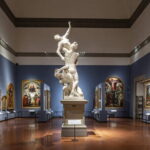
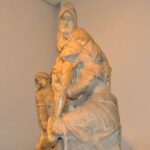
The core of the tour starts on the ground floor with Tuscan works from the 16th century, and your guide builds momentum by spotlighting several of Michelangelo’s standout sculptures.
Here are the pieces you’ll focus on:
- Bacchus
- Tondo Pitti (a relief showing the Madonna with Child)
- Brutus
- David-Apollo
Seeing these in a guided sequence helps you notice differences you’d probably miss if you wandered alone. Michelangelo’s range is the point: he’s not only doing one style or one theme. You get the sense of his artistic goals changing by subject—myth and human drama on one hand, sacred imagery on the other. Even the way a guide points out what to look for—pose, surface treatment, expression—can completely change what you notice in a sculpture.
Your guide also brings in other major artists on this floor, including:
- Bartolomeo Ammannati
- Benvenuto Cellini
- Giambologna, with Flying Mercury as a highlight
And then there’s a layer that many visitors overlook: the Carrand collection, including precious ivories and bronzes with examples from Roman and Byzantine traditions. If you like learning how collections shape what museums emphasize, this is where you feel the Bargello’s personality. It’s not only famous statues. It’s also a place where materials and objects—ivory and metal—tell their own story.
Value-wise, the paid guide time earns its keep here. Bargello’s power can be quiet if you don’t have a route and someone to interpret. With the guide, you get a guided lens that helps you understand why these works mattered to Florence and why they still matter now.
The early Renaissance switch: Donatello and Verrocchio
After the ground-floor works, the tour shifts you into the early Renaissance section. This is where the title of the experience clicks: you’ll get guided explanations of Donatello’s major works, including:
- Saint George
- the Lion
- the David
This doesn’t mean you’ll only stare at one sculpture and call it a day. The tour approach is more useful than that. Your guide frames what these works represent and how Donatello fits into the larger Renaissance story—especially the relationship between artists, workshop culture, and the evolving idea of what sculpture should do.
Verrocchio also comes into the conversation. Even if you’ve heard the name before, guided context helps you connect the dots: what changes across generations, what techniques and ideas carry forward, and why these artists are repeatedly linked in Florence.
This segment is where you’ll likely feel the tour’s “face-to-face” promise most. Donatello’s pieces tend to reward close looking. A guide helps you spend that close time well instead of just walking from one marker to the next.
Second floor Della Robbia terracotta: Andrea and Giovanni
The second floor is devoted to glazed terracotta by Andrea and Giovanni Della Robbia, and it’s a different kind of pleasure than marble. Terracotta brings warmth, color, and a slightly more immediate emotional effect than stone can. The glazing also creates a surface that changes with light, which is part of why these works can feel so lively.
Your guide brings the attention to what you’re looking at and how this medium fits into the Renaissance world of religious imagery and artistic innovation. If sculpture is only ever marble in your mind, this part gently proves you’ve been missing a major side of Italian art.
That said, keep the renovation possibility in mind. One review mentioned that part of the second-floor area was closed, which meant the Della Robbia-focused experience wasn’t fully available for that group. You can’t plan for every museum change, but you can plan your mindset: if part of the wing is unavailable, ask the guide what you can still see and focus on the works that remain accessible.
How long is enough? Making the most of a one-hour sculpture sprint
One hour sounds tight. In practice, it’s a smart length for Bargello, because the museum’s value is concentrated if you know what to prioritize. Your guide leads you through major rooms and highlights. You’re not asked to read a wall for 60 minutes.
The headsets help a lot. With them, you can keep your eyes on the sculptures instead of turning your head every time someone steps into the group. It also means you can hear the details the guide shares about technique, symbolism, and historical placement—even if you’re standing a little off to the side.
Group size matters too. With a maximum of 25 travelers, it’s large enough to be lively but not so huge that you lose the guide completely. If you’re traveling in Florence during a busy stretch, that balance helps.
A practical tip: wear comfortable shoes and expect museum floors and stairs. Bargello isn’t known for wide, open walkways between every display. If you’re staying flexible, you’ll enjoy the concentrated pacing rather than fighting the crowds.
Price and value: what you’re really paying for
At $58.87 per person for about one hour, this tour isn’t a bargain in the budget sense. But it is strong value if you care about understanding what you’re seeing instead of just ticking names off a list.
Here’s what you’re buying beyond the guide’s voice:
- Official certified guide
- Radio system / headsets
- Reserved entrance with skip-the-line access
- A route built around major masterpieces, including Michelangelo’s key sculptures and Donatello’s celebrated works
If you were to do Bargello solo, you could certainly get in and browse. But solo browsing often turns into guesswork: which sculptures matter most, what to notice first, and how the different floors connect into a single story. Paying for the guided route helps you avoid that fog.
Also, the timing matters. One hour lets you keep your day moving. That’s useful if you’re juggling Uffizi, the Accademia, or a long walk around Oltrarno.
In short: this is a good fit when art interpretation is your goal, not just proximity to famous statues.
Who should book this Bargello tour
This tour is a strong match if you:
- love sculpture and want guided context for Donatello, Michelangelo, Verrocchio, and the Della Robbia
- prefer a set route so your time at Bargello doesn’t turn into wandering
- like hearing details through headsets rather than trying to stay in perfect speaking distance
- want a relatively short commitment in the middle of a busy Florence itinerary
It can work for families too. One review specifically praised the guide’s ability to accommodate a family with younger children, which suggests the tour can adapt to mixed attention spans.
It may be less ideal if you want total control over every room for a long, independent museum day. Bargello is worth repeated visits if you really love it. But this particular experience is built for focused learning in a limited window.
Should you book this tour or do Bargello on your own?
I’d book it if you want a guided, high-impact visit with skip-the-line entry and headsets, and you’re mainly there for the sculpture highlights that the tour focuses on. The route makes Bargello feel readable, even if you’re not an art scholar.
I’d think twice if your must-see item is specifically the second-floor Della Robbia terracotta and you’d be deeply bothered by partial closures. Renovation can happen, and while you can’t predict it perfectly, it’s smart to accept that museum conditions may shift.
If you’re aiming to get a real understanding of why these works mattered in Florence—and not just where they’re located—this is the kind of ticket that pays off quickly. For Bargello, speed with context is a good deal, and this tour is set up for exactly that.
FAQ
How long is the Bargello Museum tour?
It runs about 1 hour (approx.).
Is skip-the-line entry included?
Yes. Skip-the-line access is guaranteed, including during peak season, except in the event of delays or strikes by the museum management.
What’s included in the price?
You get an official certified guide, a radio system to hear the guide (headsets), and an entrance ticket with reservation for the Bargello Museum.
Does the tour include transportation or meals?
No. Hotel pickup/drop-off, food, and transportation to or from attractions are not included.
Where does the tour start and end?
It starts at Museo Nazionale del Bargello, Via del Proconsolo 4, 50122 Firenze FI, Italy, and ends back at the same meeting point.
What if I arrive after the tour start time?
If you arrive after the tour start time, you won’t be able to join, and you won’t be refunded or rescheduled.