
REVIEW · FLORENCE
Florence: Museo Galileo Entry Ticket
Book on GetYourGuide →Operated by Museo Galileo · Bookable on GetYourGuide
Galileo’s tools make science feel human. This Museo Galileo ticket gets you into one of Florence’s most satisfying science museums, with Galileo’s original instruments and a huge Medici-and-Lorraine collection built around real problem-solving. You’ll walk through 18 themed rooms and see how early astronomers, navigators, and instrument makers did serious work without computers.
My favorite part is the range: you get astronomy tools alongside practical instruments tied to weather, time, and measurement. The other big win is pace—you can take your time through the rooms and stop when something clicks. One consideration: the museum leans on a phone-based audio/app setup, and a few people found the directions for that could be clearer at the start.
In This Review
- Key Takeaways Before You Go
- Why Museo Galileo Feels Different Than Most Florence Museums
- Price and What You Actually Get for Around $20
- Planning Your Timing: Hours, Tuesday Cutoff, and How Long to Stay
- Getting In Smoothly With Your Entry Voucher
- First Floor Highlights: Medici Collections and the Science of Precision
- Galileo’s Original Instruments: Thermometers, Microscopes, and Weather Tools
- Second Floor Highlights: Lorraine Instruments and the Physics Behind Motion
- Clocks, Sextants, Octans, and the Tools Behind Everyday Science
- Audio Guide and Labels: How to Get More Than You Expect
- Crowds, Seating, and Bathroom Reality Check
- Who Should Book This Entry Ticket (and Who Might Skip It)
- Should You Book This Museo Galileo Entry Ticket?
- FAQ
- How long is the Museo Galileo ticket valid?
- What is the price per person?
- What does the ticket include?
- Is a guided tour included?
- Do I need to pre-book?
- How do I use my confirmation voucher at the museum?
- Is the museum wheelchair accessible?
- What are the Tuesday opening hours?
- Can I cancel for a full refund?
- Can I reserve now and pay later?
Key Takeaways Before You Go
- 18 themed rooms across two floors means plenty of variety, not a one-theme museum
- Medici Collections on the first floor focus on classic sky-measuring tools and precision devices
- Galileo originals let you see instruments tied directly to his scientific world
- Lorraine instruments upstairs shift into mechanical, electrostatic, and pneumatic applications
- Self-paced exploring works well if you give yourself at least a couple hours
- Tuesday hours end early on some visits, so plan your timing carefully
Why Museo Galileo Feels Different Than Most Florence Museums
Florence has plenty of art. Museo Galileo is the change of rhythm that still fits the city. Instead of paintings and frescoes, you get scientific instruments—objects that were made to measure the world, test ideas, and help people make decisions.
I like how the museum makes science feel physical. Instruments are not just diagrams behind glass. You see devices for measuring angles, tracking the sky, timing events, and even handling meteorology and experiments. If you have any curiosity about how technology grows from one breakthrough to the next, this place clicks.
It also has a quieter vibe than some of the headline museums. Several visitors noted it was less crowded, which matters in Florence. When a museum has space, you can actually read, look closely, and compare instruments room to room without feeling rushed.
A few more Florence tours and experiences worth a look

Price and What You Actually Get for Around $20
This entry ticket is priced at about $20 per person, with a booking fee included. For that money, you are not buying a lecture or a guided storyline. You are buying access to a large collection built across multiple floors and themed rooms.
The value comes from the structure: you are seeing a timeline of scientific thinking through objects. The Medici and Lorraine Grand Dukes treated science and art research seriously, and the museum reflects that. You also get Galileo’s original instruments on top of the wider historical collection—so it’s not just one famous name.
If you’re the kind of traveler who likes to roam at your own speed, the price makes sense. If you want a live guide who explains everything step-by-step, note that a guided tour is not included with this ticket.
Planning Your Timing: Hours, Tuesday Cutoff, and How Long to Stay
The ticket is valid for 1 day, so you can build it into a Florence day without stress. That said, opening hours can affect your plan. The museum is only open until 1:00 PM on Tuesdays, so don’t treat it like any other museum if you’re visiting midweek.
In terms of time, I recommend planning for at least 2 hours, and closer to 3 if you’re a science nerd or you like reading every label. Some visitors reported doing well with about an hour, but others spent several hours and wished they had more time. The collection rewards patience because you keep noticing connections between instruments.
A smart strategy is to schedule it when your brain is still fresh—either earlier in the morning or during a quieter part of the day. If you’re doing Uffizi later, Museo Galileo can be a good switch in pace between art-heavy stops.
Getting In Smoothly With Your Entry Voucher
This is one of the easiest tickets in Florence-style “prove you’re you” tourism. On the day of your visit, you show your confirmation voucher at the museum and then enter.
Many people said the process was straightforward: show the voucher, get admitted, and go. That’s the whole point of pre-booking. You’re buying time and reducing friction, especially if your schedule is tight.
One thing to double-check: while some bookings work like day admission rather than strict timed entry, the activity notes that you should check availability for starting times. So, look closely at your confirmation so you know whether you’re tied to a window or just a day of entry.
Museo Galileo also solves a scheduling problem: it sits two minutes from the Uffizi, so pairing them is the natural move. FlorenceExplorer.com sorts the Uffizi timed-ticket options by review count if you want the art half of that double-bill locked in first.
First Floor Highlights: Medici Collections and the Science of Precision
On the first floor, the museum focuses heavily on the Medici Collections in 11 rooms. This is where the instruments feel like sky-navigation tools and precision instruments you could imagine in a workshop.
You’ll encounter familiar-sounding objects made in the language of observation:
- Quadrants and astrolabes for measuring the position of celestial objects
- Meridians and dials that help convert angles into knowledge
- Compasses and armillary spheres built for tracking and modeling the heavens
What I love here is the mix of practical measurement and visual clarity. These instruments are built to solve a specific task, so you can understand why each part matters even if the history details aren’t your favorite.
There’s also a museum-layer that’s easy to miss at first: some rooms include real works of art made by famous Tuscan and European artists. That pairing makes sense in Florence. The same families funding art also invested in the tools of science, and the museum shows that connection.
Another cool historical detail: the Medici instruments were first displayed in the Stanzino delle Matematiche in the Uffizi Gallery. At this museum, you’re basically seeing that courtly investment in science given a space of its own.



Galileo’s Original Instruments: Thermometers, Microscopes, and Weather Tools
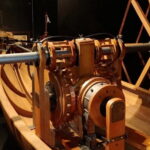
A major reason to visit is the section devoted to Galileo Galilei’s original instruments. This is not just a portrait-of-a-genius museum. It’s object history.
Expect to see items such as thermometers, microscopes, and meteorological instruments. That mix matters. It’s easy to think Galileo only equals telescopes and astronomy. Here, you see how his thinking connects measurement across different parts of life and nature.
Some visitors also mentioned copies used for learning how motion and mass relate—small reminders that the museum doesn’t treat science like a distant museum topic. It tries to make the ideas understandable through related objects and demonstrations.
And yes, there are fun human moments in the collection too. One visitor mentioned Galileo’s missing finger as an amusing detail. The point isn’t the joke. It’s that these instruments belong to real people with real lives.
Second Floor Highlights: Lorraine Instruments and the Physics Behind Motion
On the second floor, you shift from Medici observation tools into a different style of science: instruments tied to mechanical action and physical forces. This area is mostly associated with the Lorraine family, and you’ll see 10 rooms devoted to their work.
The museum describes applications used for mechanical, electrostatic, and pneumatic work. In plain terms, you’re seeing the physics of how forces move things—and how people built devices to harness those forces. If you like engineering logic, this floor is where you’ll slow down.
You’ll also see sections devoted to mechanical clocks, plus navigational instruments like sextants and octans. Those aren’t just astronomy accessories. They’re tools for real-world measurement at sea and in travel, where getting angles right means getting your bearings right.
Even if you don’t know the technical vocabulary, the museum layout helps. Tools look like tools, not abstract art. You can compare shapes and mechanisms and start to sense how one instrument type evolves into another.
Clocks, Sextants, Octans, and the Tools Behind Everyday Science
The museum’s later rooms connect science to daily life and practical work. You’ll run into pharmaceutical and chemical apparatus, along with weights and measures.
That’s a big deal because measurement is the backbone of experiments. If you can’t standardize, you can’t compare results. Seeing tools tied to weights and measures side by side with clocks and navigational instruments gives you the bigger picture: the same drive that measures the sky also measures medicine and commerce.
It’s also where I found the museum easiest to connect to modern life. Your world is built on instruments. The difference is that Galileo’s era had to invent and refine the hardware to get to the same kinds of answers we now chase with screens.
Audio Guide and Labels: How to Get More Than You Expect
This is one area where planning helps. A number of visitors mentioned using an audio guide through a phone/app, and they recommended bringing ear buds. One review even said earphones could be bought at the front desk, which is handy if you forget.
The downside: a couple of people felt the app guide wasn’t super intuitive and wanted clearer help at the front desk or better labeling. So here’s my practical advice:
- Start by reading the room info first.
- If you’re using audio, set it up right at the beginning so you don’t lose time hunting for the right track.
Also, if you’re not into apps, plan on relying on the labels and room structure. The museum still works as a self-paced walk, just with a little less hand-holding.
Crowds, Seating, and Bathroom Reality Check
Even in a smaller museum, comfort affects how much you enjoy it. A few reviews mentioned it was less crowded and recommended going early, which helps you take in details without shoulder-to-shoulder pressure.
On the comfort side, some visitors noted limited seating. If you plan to stay for 3+ hours, it’s smart to pace yourself and take breaks when you can. And yes, one review mentioned the bathrooms weren’t clean, which is the kind of detail you only learn from real visits. Not a deal-breaker, but worth knowing.
Bottom line: you can absolutely make this a relaxing museum day. Just don’t expect lots of benches every 30 feet.
Who Should Book This Entry Ticket (and Who Might Skip It)
This ticket is best for you if:
- you like science history, astronomy, and measurement tools
- you enjoy hands-on learning through objects, even if nothing is truly hands-on
- you want a calmer stop away from Florence’s loudest lines
It’s also a good fit for families with curious kids. One review described a 10-year-old who stayed fascinated. The museum is visually engaging, and the instrument theme gives kids something concrete to latch onto.
You might skip it if you only want art in Florence and get impatient with long self-guided museum reading. Also, if you strongly prefer guided narration and explanations from a person, remember that a guided tour isn’t included with this ticket.
Should You Book This Museo Galileo Entry Ticket?
I’d book it if you want a smart, high-value Florence detour that still feels Italian: Medici-level research culture, real instruments, and a museum that’s laid out for self-paced exploring.
Do it especially if you can visit on a day that isn’t Tuesday afternoon. Check the hours first. Then give yourself at least 2 hours so you don’t rush through the instrument rooms and miss the connections.
If you’re on the fence, treat it as a low-risk decision: the museum is wheelchair accessible, the ticket is for 1 day, and the entry process is straightforward once you have your voucher.
FAQ
How long is the Museo Galileo ticket valid?
The ticket is valid for 1 day.
What is the price per person?
The price is listed as $20 per person (including a booking fee).
What does the ticket include?
It includes entry to Museo Galileo and a booking fee.
Is a guided tour included?
No. A guided tour is not included with this entry ticket.
Do I need to pre-book?
This option is an entry ticket you should pre-book, and on the visit day you use your confirmation voucher to enter.
How do I use my confirmation voucher at the museum?
Show your confirmation voucher at the museum on the day of your visit.
Is the museum wheelchair accessible?
Yes, it is wheelchair accessible.
What are the Tuesday opening hours?
On Tuesdays, Museo Galileo is only open until 1:00 PM.
Can I cancel for a full refund?
Yes. Free cancellation is available up to 24 hours in advance.
Can I reserve now and pay later?
Yes. You can reserve now & pay later, with the option to pay nothing today.