REVIEW · FLORENCE
Duomo Museum & Baptistry: Cathedral Complex & Bell Tower
Book on Viator →Operated by Florence and Global Small group tours · Bookable on Viator
You’ll see Florence’s spiritual core up close. This small-group tour pairs a guided museum visit with the Duomo complex highlights, plus time for the dome climb and photo stops. I love the Opera del Duomo Museum for its lineup of true heavy-hitters, and I like that you get headsets so you can actually hear the guide over the crowds. One thing to keep in mind: it does not include a guided visit inside the main Cathedral, so plan for extra lines if you want that interior experience.
The best part for me is the way the tour connects art to place. You start behind the Cathedral at the museum, then step into Piazza del Duomo to orient yourself, then finish at the Baptistery—right where Florence worship and civic identity meet. The dome climb is the payoff: you learn what you’re seeing while you’re climbing, not after.
The possible drawback is simple: the complex is confusing on busy days. If you arrive late or your meeting point isn’t crystal clear to you, you can waste time before the tour even starts. Also, this experience is built for people with moderate fitness since climbing involves stairs and some exertion.
In This Review
- Key Points Worth Planning Around
- Duomo Complex, Simplified: What You’re Actually Buying
- Opera del Duomo Museum: Michelangelo, Ghiberti, and the Old Face of Florence
- Piazza del Duomo: Learn the Layout Before You Wander
- Battistero di San Giovanni: Why the Mosaics Feel Like a Time Machine
- The Guided Dome Climb: Best Views and Real Brunelleschi Context
- Price and Logistics: Why It’s Fair, and Where It Can Trap You
- Guides Make the Difference: What You Can Expect in a Small Group
- Practical Tips: Wear, Bring, and Time Your Day
- Who Should Book This Tour (and Who Might Prefer Another Plan)
- Should You Book This Duomo Museum & Baptistry Tour?
Key Points Worth Planning Around
- Opera del Duomo Museum highlights: original treasures and the Sala del Paradiso reconstruction of the Cathedral’s old façade.
- Ghiberti and Michelangelo moments: the Gates of Paradise are displayed here, plus major works like Michelangelo’s Pietà Bandini.
- Guided context while you climb: you learn Brunelleschi’s dome story as you go up for close-up views.
- Baptistery interior with gold mosaics: 1,000+ square meters of 13th-century mosaics you can see up close.
- Small groups: max 19 travelers (and the operator aims for even smaller groups) so you can ask questions.
- Self-guided add-ons: Santa Reparata crypt and, if you choose it, the Giotto Bell Tower climb are included as separate tickets.
Duomo Complex, Simplified: What You’re Actually Buying
This is a 2 hours 15 minutes experience built around Florence’s big three: the Cathedral complex buildings, the museum behind them, and the dome climb experience. You get a 1.5 hour guided portion focused on the Opera del Duomo Museum and the Baptistery, with headsets to keep communication clear. Then you’re guided through the outdoor space of Piazza del Duomo so you understand how everything lines up.
You’re also getting tickets that let you extend the visit a bit on your own. The tour includes self-guided entry for the Crypt of Santa Reparata, and the Giotto Bell Tower climb is included only if you select that option. All self-guided parts are valid for 72 hours, so you can fit them around your day rather than rushing.
The tour price is $76.88 per person, which adds up quickly if you try to piece it together yourself. Here, the value comes from the guide’s explanations plus included entry fees for the included monuments, and from avoiding some of the trial-and-error that can happen in this specific complex.
You can also read our reviews of more museum experiences in Florence
Opera del Duomo Museum: Michelangelo, Ghiberti, and the Old Face of Florence
The tour starts at the Museo dell’Opera del Duomo, which sits just behind the Cathedral. This museum matters because it preserves the original works that helped define Florence’s religious art—and because it shows you the Cathedral complex as a whole, not just one building.
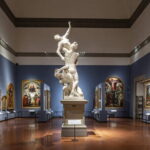
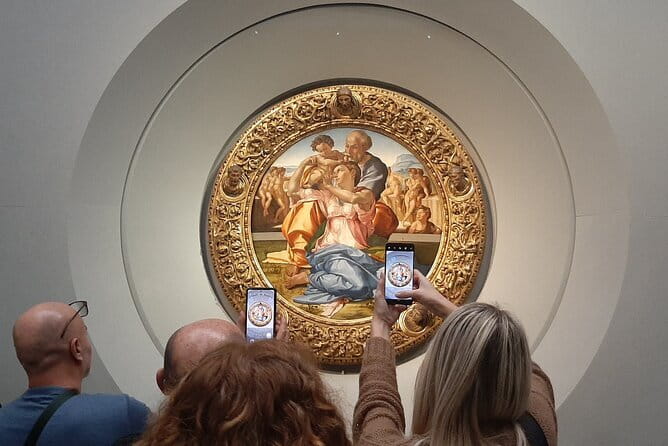
The biggest draw is the Sala del Paradiso. It’s a huge hall with a life-size reconstruction of the Cathedral’s original 14th-century façade. The point isn’t just to look—it’s to understand what the façade used to be, and why it was such a statement in its day. You’ll also see 40 statues by famous artists, including names like Donatello, which helps you connect the museum pieces to the larger Duomo story.
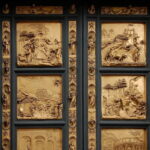
Across from the façade reconstruction, you’ll find the original Gates of Paradise by Lorenzo Ghiberti. These bronze panels are a big deal because they’re the ones people later protected by moving them indoors. If you’ve only heard about the doors in photos, seeing the real panels here makes the whole reputation feel more grounded.
Other high points that fit the tour’s “why this matters” approach:
- Michelangelo’s Pietà Bandini, created for his own tomb.
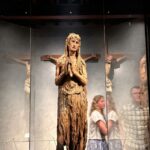
- Donatello’s Penitent Magdalene, a wooden work with unsettling realism.
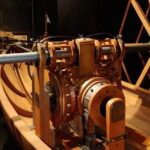
- A Brunelleschi’s Dome gallery with original tools and wooden models from the 15th century, which is perfect if you like how things were actually built.
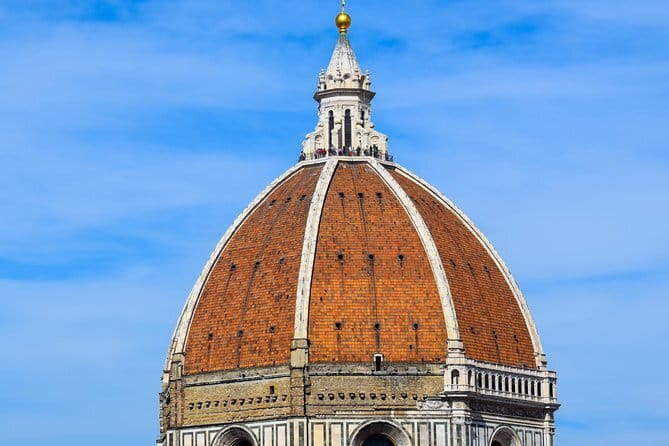
The museum visit ends at the Brunelleschi Terrace, giving you a close-up view of the dome. It’s one of the best places to start forming the mental picture that makes the climb feel more meaningful later.
Piazza del Duomo: Learn the Layout Before You Wander
After the museum, the tour shifts to Piazza del Duomo, Florence’s historic crossroads where Medieval roots meet Renaissance ambition. You only spend about 15 minutes here, but that time is used well: it’s not a random walk. It’s orientation.
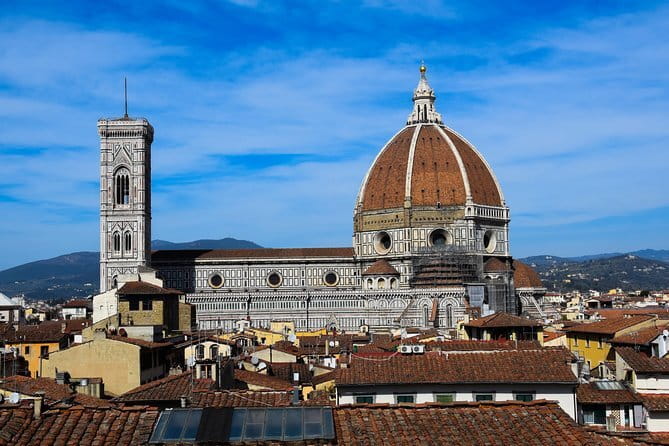
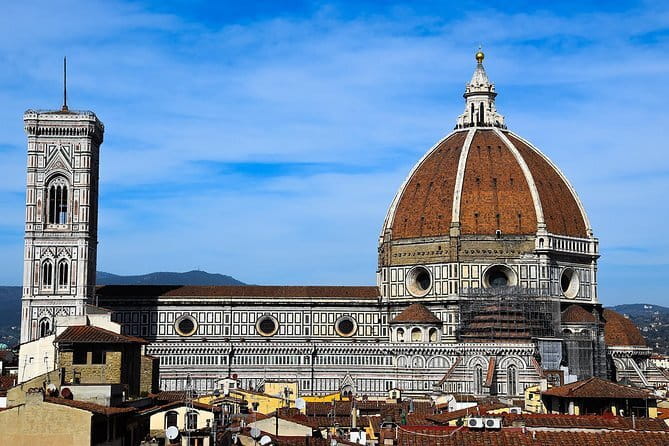
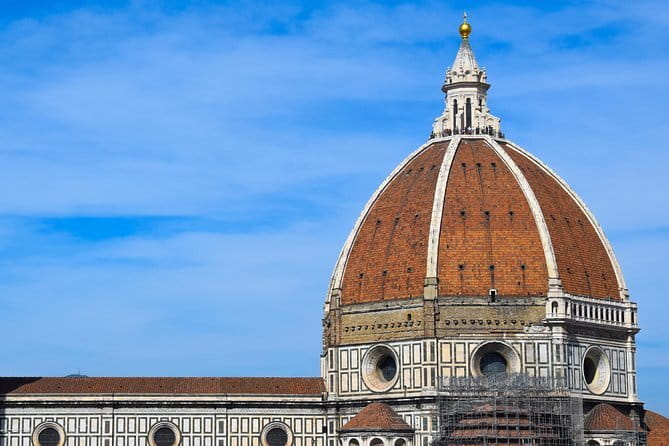
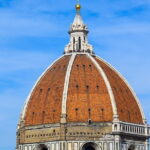
This square is dominated by the Cathedral with its red-tiled Brunelleschi dome—an instantly recognizable symbol of Florence. You also get to look at the exterior marble patterning in white, green, and pink, which ties the complex together visually.
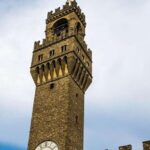
At the side is Giotto’s Bell Tower, and in front sits the Baptistery of San Giovanni. When you understand the geometry of the space early, it’s easier to appreciate the complex later on your own, especially if you go back for photos at different times of day.
Practical note: this is also the busiest part of the whole area. Even if your guide keeps the pace tight, expect crowds and street noise. If you’re the type who gets stressed in tight spaces, keep your camera ready but don’t try to “solve Florence photography” while you’re still getting your bearings.
Battistero di San Giovanni: Why the Mosaics Feel Like a Time Machine
The Baptistery of San Giovanni is one of the oldest buildings in Florence, built in an octagonal form and covered with white and green marble. It’s basically the pre-Renaissance heartbeat of the complex, and the tour uses that contrast to frame what you’ll see next.
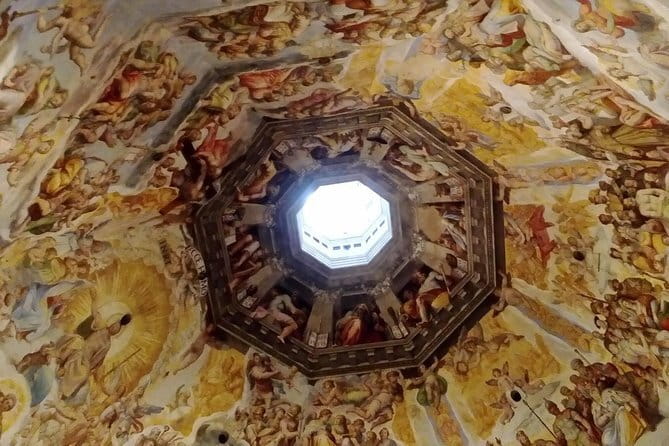
Inside, the Baptistery is famous for its ceiling mosaics: over 1,000 square meters of 13th-century golden mosaics. When the light hits the gold leaf, the effect is unforgettable even if you don’t usually care about religious art. The ceiling shows scenes tied to the Last Judgment and other biblical moments, so the building feels like it’s doing storytelling from above.
Then there are the bronze doors. The Baptistery is known for the Gates of Paradise again, and the tour specifically connects the doors to the idea that Lorenzo Ghiberti’s work was so admired that Michelangelo compared it to the entrance to heaven. It’s also worth knowing that this is where many notable Florentines—including Dante—were baptized, which helps you see the Baptistery as a civic space, not just an architectural one.
Your guided time here is about 30 minutes. That’s short enough to avoid fatigue, but long enough for the guide to point out what you should actually look for so you don’t just end up staring without absorbing anything.
The Guided Dome Climb: Best Views and Real Brunelleschi Context
If you only do one “stairs moment” in Florence, I understand the temptation to skip it. But this one is built to pay off.
A guided climb up Brunelleschi’s dome is one of the tour’s biggest promises, and it’s also where you’ll feel the difference between doing the Duomo complex as checkboxes versus doing it as a story. As you climb, you learn the history behind how Brunelleschi’s dome was conceived and engineered. That matters because from the ground, the dome is pretty—but from above, it becomes a geometry lesson.
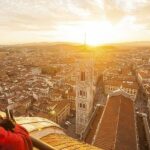
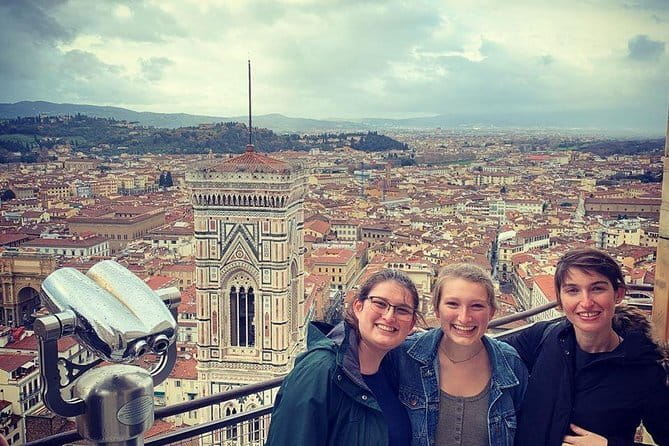
And yes, the views are the payoff. You get an elevated look over Florence that makes the whole area snap into place: rooftops, church towers, and the way neighborhoods fan out beyond the historic core. Several people in past experiences specifically praised the walk-up for being manageable and for offering rest stops along the route—so if you’re not expecting a brutal climb, you’ll likely be relieved.
What to do to make the climb easier:
- Wear tennis shoes with grippy soles.
- Bring a light layer. Wind can make exposed spaces feel colder than you expect.
- If you’re sensitive to crowds, take slower breaths at the chokepoints; the line rhythm is real, even with a guided experience.
Price and Logistics: Why It’s Fair, and Where It Can Trap You
Let’s talk money honestly. At $76.88 per person, this tour isn’t the cheapest way to see the Duomo area. If your main goal is a quick photo and a few quick stops, a self-guided approach can cost less.
So where does the value come from here?
You’re paying for:
- A guided museum experience at the Opera del Duomo Museum.
- A guided look at the Baptistery’s most important interiors and artistic context.
- Headsets for clear narration in a noisy outdoor complex.
- Included entry fees for the monuments that are part of the guided experience.
- Tickets for the Santa Reparata crypt (self-guided), plus optional Giotto Bell Tower climb (self-guided) depending on your selection.
The “trap” is what’s not included. The Cathedral interior is not part of this tour. The interior is free, but it typically involves lining up. If you want that interior, you’ll need to budget time separately and decide where you can tolerate extra waiting.
Another practical issue is meeting point clarity. The complex is so big that even small ambiguity can turn into a frantic search for a flag, a specific door area, or the right entrance. If you’re serious about minimizing stress, arrive a little early and make sure you know exactly which location your voucher points to.
Guides Make the Difference: What You Can Expect in a Small Group
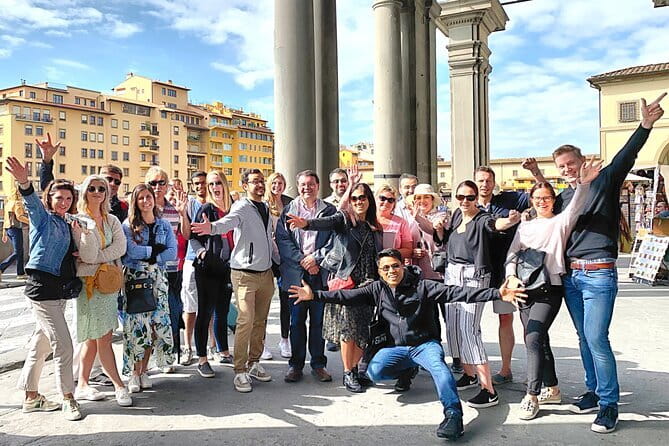
This is a small group experience, with a maximum of 19 travelers and an operator approach aimed at even smaller groups. That helps in two ways: you move through the spaces without losing your group, and you can ask questions without yelling.
Past experiences also highlight how much the narration affects enjoyment. Guides like Silvia and Francesco have been praised for strong subject passion and clear explanations, including details about Brunelleschi, Michelangelo, Ghiberti, and the Medici context. That’s the difference between walking past art and understanding why it earned its reputation.
There’s one caution: not every group runs at the same pace. A few people experienced rushed moments or felt line time took away from their museum time. You can reduce that frustration by going in with expectations: you’re dealing with famous sites, security checks, and crowd flow. The best outcome comes when you stay flexible and focus on the key stops your guide is targeting.
Practical Tips: Wear, Bring, and Time Your Day
This is a physical visit with stairs and indoor/outdoor transitions, so moderate fitness is recommended. Think “comfortable but not couch mode.”
A few practical tips that will improve your odds of a smooth day:
- Wear shoes you’re happy to climb in. Not boots you only use once a year.
- Plan a buffer around your schedule. The Duomo complex can run behind when crowds spike.
- If the weather turns windy or cool, don’t assume you’ll be fine in light layers. Exposed parts of the climb and plaza can feel sharp.
- Use your self-guided tickets within the 72-hour window for smarter timing. If you visit again the next day when the crowd level is different, you may enjoy the crypt and bell tower more.
If you’re choosing between dome climb and other additions, prioritize what you want the most: the dome climb is the tour’s signature view moment, and the Opera del Duomo Museum is the art-history brain of the day.
Who Should Book This Tour (and Who Might Prefer Another Plan)
You’ll likely love this if:
- You want guided art context at the museum and Baptistery, not just wandering.
- You want the “big view” from above and you like learning while doing.
- You prefer a small group so you can actually hear explanations through headsets.
- You’re interested in how Florence’s religious art relates to politics and major artists.
You might want a different plan if:
- Your top priority is the Cathedral interior itself. This tour skips a guided interior visit.
- You hate stairs or you’re planning to move slowly all day. The climb is a core part of the experience.
- You’re very sensitive to meeting-point confusion and you can’t arrive early.
Should You Book This Duomo Museum & Baptistry Tour?
I’d book it if you want a high-impact Duomo day without turning Florence into a navigation project. The Opera del Duomo Museum portion is strong because it covers the works you’ve heard about—Ghiberti’s Gates of Paradise, Michelangelo’s Pietà Bandini, Donatello pieces—and it adds the Brunelleschi dome context before you climb. Then the Baptistery delivers the gold mosaics in a guided, time-efficient way.
Skip the “book and forget” mindset, though. Know what’s included and what’s not: the Cathedral interior isn’t the focus here, and the area is crowded. If you arrive prepared, wear the right shoes, and give yourself a little patience, this tour is a solid value way to understand Florence’s most famous complex in one go.