REVIEW · BRANSON
Branson Veterans Memorial Museum Admission
Book on Viator →Operated by Veterans Memorial Museum Branson · Bookable on Viator
History hits different when names are on walls. With this pre-purchased admission, you can drop in when it suits you during opening hours and spend time in the Veterans Memorial Museum at your own pace. I like the clear, hall-by-hall way the museum walks you through 20th-century conflicts, and I really value the personal stories and the names of the men and women who were killed in action. One thing to consider: the content can be very sobering, so plan your visit like a mindful stop, not a quick sprint.
This is a self-guided museum experience in Branson, usually about 1 hour for most people, with more time possible if you read closely. The museum is designed for education and remembrance, and it’s set up so you can move through World War I, then onward through later conflicts without feeling rushed. With a maximum of 50 travelers and a smaller-group feel, it’s also easier to pause, take in a hall, and keep your bearings.
In This Review
- Key Highlights You’ll Feel Right Away
- A Prepaid Ticket You Can Use During Open Hours
- Walking the Wars: How the 10 Halls Are Organized
- Names on the Walls, Real Stories, and Why You’ll Feel This Museum
- Stop 1: The Veterans Memorial Museum (Your Self-Guided Journey)
- Time It Right: 1 Hour Works, 2 Hours Feels Better
- Cameras, Comfort, and How to Keep the Visit Respectful
- Accessibility and Family Visits in Branson
- What’s Included, What Isn’t, and How to Plan Your Day
- Group Size Matters More Than You Think
- Price and Value: What You’re Paying For
- Should You Book This Branson Veterans Memorial Museum Admission?
- FAQ
- How long should I plan to spend at the museum?
- Can I use my admission ticket anytime during opening hours?
- What are the museum’s opening hours?
- Is this admission for a guided tour?
- Are cameras allowed inside the museum?
- Is the museum accessible and are service animals welcome?
- Is there a gift shop or beverages on site?
- What is the cancellation policy?
Key Highlights You’ll Feel Right Away
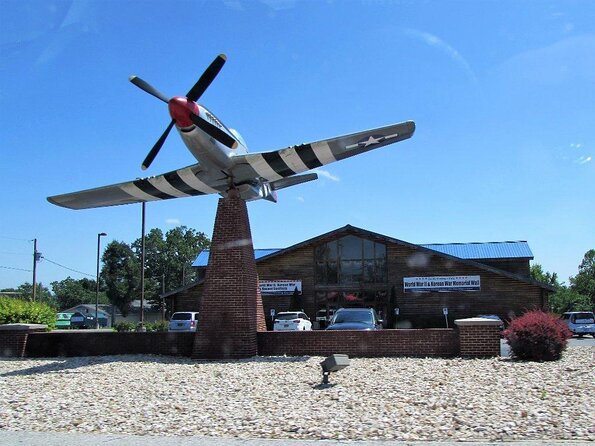
- 10 halls covering 20th-century conflicts with a logical progression starting in World War I and moving forward
- Personal stories plus real names of the fallen displayed on walls across multiple wars and eras
- Artifacts you can actually see: uniforms, photos, medals, sculptures, murals, and thousands of memorabilia items
- Self-guided pacing so you can spend 20 minutes or 2 hours where a hall pulls you in
- Practical visitor setup with English exhibit descriptions, cameras permitted, and handicap accessibility
A Prepaid Ticket You Can Use During Open Hours
This is the kind of museum ticket that makes planning easier. You pre-purchase your admission, then you can go whenever the museum is open. That flexibility matters in Branson, where your day can shift fast based on traffic, weather, or how long you linger at another stop.
The museum is typically open 9:00 AM to 5:00 PM, Monday through Saturday, and it’s listed as open for the 2026 calendar year with specific exceptions. It’s closed on Christmas Day, and it may close early (at 3:00 PM) on Thanksgiving Day and Christmas Eve. If you’re visiting around those dates, it’s smart to plan earlier rather than later.
Most people spend about 1 hour, and the experience works well in that window if you skim and keep moving. If you slow down to read, you can easily go longer. The museum’s structure supports both styles: move hall to hall, then stop where something grabs you.
You can also read our reviews of more museum experiences in Branson

Walking the Wars: How the 10 Halls Are Organized
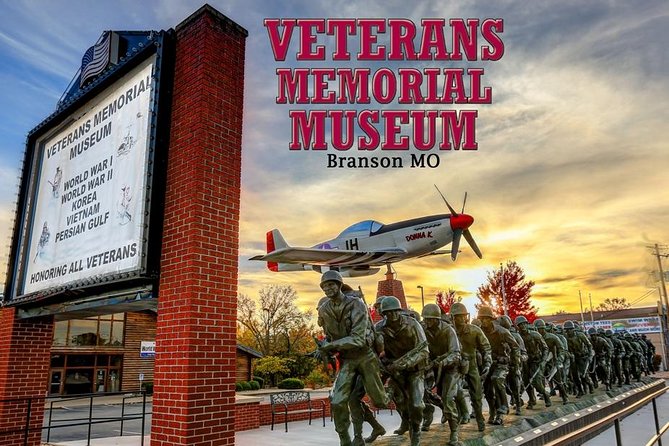
The museum is built around a series of ten halls that cover wars and conflicts fought during the 20th century. The flow is straightforward. You start with the World War I Hall, then continue through later eras in sequence. The museum specifically highlights World War II, Korea, Vietnam, Desert Storm, and other related conflicts as you move onward.
Each hall is more than a timeline. You’ll see a mix of display styles—sculpture, murals, historical artifacts, objects d’ art, and a large collection of authentic memorabilia. I like that it doesn’t rely on one single format. Some sections feel like a museum exhibit; others feel like a memorial space where you’re meant to slow down and reflect.
You’re also not limited to one branch or one front. The displays are meant to honor all branches of service, major battlefronts and campaigns, and even the industrial defense side of war. That broader approach helps you understand that military history isn’t only about the battlefield. War reaches into training, production, letters home, and everyday life too.
Names on the Walls, Real Stories, and Why You’ll Feel This Museum
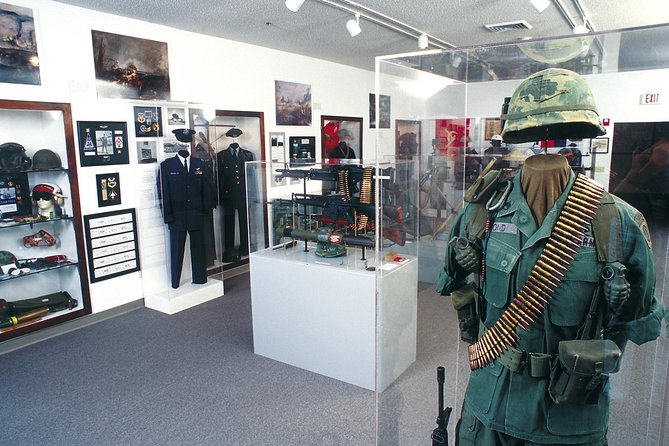
What hits hardest is the museum’s combination of big-picture conflict history with personal human detail. Many exhibits include help compiled with veterans and their families, which is one reason the museum can feel intensely direct. You’re not just reading about dates and outcomes. You’re seeing the lived pieces: uniforms worn, medals earned, letters written, and experiences shaped by service.
The museum includes displays that reflect a wide range of experiences, including time as a POW, home-front service, and the different roles people carried across wars. That matters because it shifts the museum from a single narrative to something closer to reality: people served in very different ways, and their stories don’t all sound the same.
Another powerful element is how the museum presents the names of those killed in action. The walls list names across conflicts including World War II, Korea, Vietnam, the Persian Gulf, and more recent conflicts of the 20th century. If you’re visiting for family history, that wall detail can make the whole experience feel personal in a way no other exhibit can.
One detail I’d highlight from what people remember most: you may spot specific, standout artifact stories like Box Car Willie’s uniform tied to Lecil Martin. That kind of named artifact helps history feel less abstract, especially for visitors who connect through individual people rather than general events.
Stop 1: The Veterans Memorial Museum (Your Self-Guided Journey)
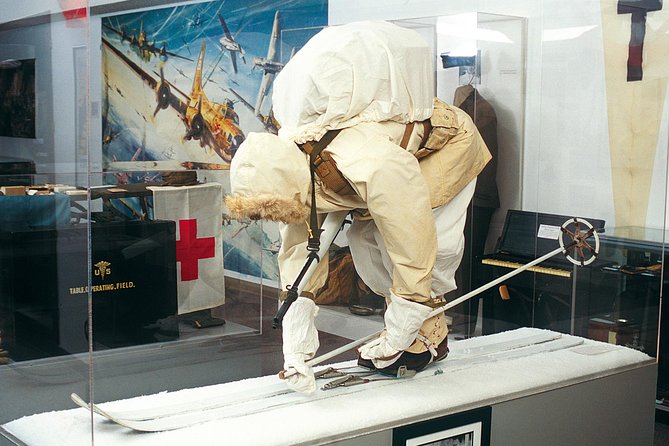
This admission is essentially your visit to one place, and it’s designed to be self-guided. That means you choose your route within the museum flow, but you’ll still benefit from the clear progression from one war-era hall to the next.
Here’s a practical way to approach Stop 1 so it doesn’t turn into museum fatigue:
- Start in World War I, then let the sequence guide you. The museum’s hall organization is meant to help you understand the evolution of conflicts over time.
- Pick one or two things per hall to focus on: an artifact group, a mural theme, or a story panel. Reading everything everywhere can be overwhelming fast.
- Pause for the names. If you’re trying to take something meaningful with you, spend extra time at the memorial wall sections for the conflicts listed there.
- Use the English descriptions printed with each exhibit to connect the object in front of you to the story it’s telling.
The museum is also designed as an educational center and an artistic memorial meant to endure for centuries. You feel that intent in the way exhibits are laid out and how the museum balances information with remembrance.
The biggest “drawback” in a self-guided format isn’t about confusion—it’s about choice. With no forced pace, some people end up rushing because they think they should see everything. If you’re more reflective, you’ll probably do better with a slower, two-wave approach: first pass to get the flow, second pass to linger.
Time It Right: 1 Hour Works, 2 Hours Feels Better
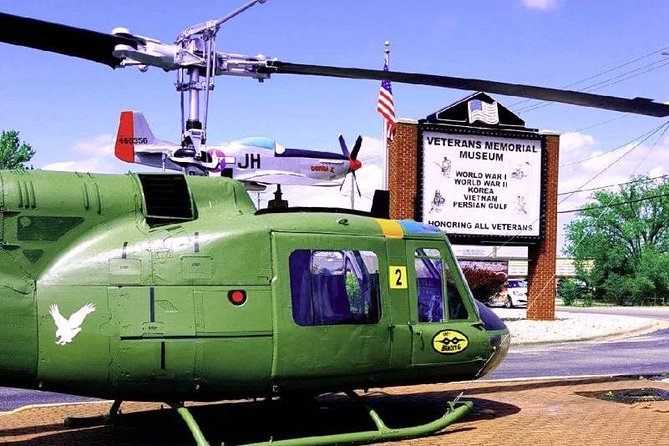
Admission is built for a flexible visit length. Most people spend about 1 hour, which usually means you’ll be skimming exhibit descriptions while still moving through multiple halls. That can be enough if you’re mostly interested in getting the broad story and seeing the key displays and memorial elements.
If you want a deeper experience—especially if you like reading story panels—plan more time. The museum is packed with photos, data, and artifacts. It’s also the type of place where stopping to look at names can expand your timeline without you noticing.
For me, the best rule is simple: if you’re planning your visit around other Branson stops, give yourself a buffer. This museum is the kind of place you may not want to rush, even when you think you can.
Also watch the calendar. If you’re going on Thanksgiving Day or Christmas Eve, the museum may close early at 3:00 PM, so you’ll want to arrive earlier.
Cameras, Comfort, and How to Keep the Visit Respectful
You’re allowed to bring a camera, and cameras are permitted throughout the museum. That’s helpful if you want to remember exhibit details, but I’d still treat photos as a tool, not the whole point. In a memorial space, it’s worth putting the camera down for a few minutes at the walls and letting the name sections land.
The museum is appropriate for all ages and includes English exhibit descriptions. That makes it easier for multi-generation groups to follow along without needing a guide to translate the story.
Because the content can be emotionally heavy, you’ll get the best experience if you go in with a calm mindset. Some halls can feel sobering, and that’s part of why the museum matters. Taking small breaks—standing outside a hall entrance for a minute, or moving to a different room when you need a reset—keeps the visit from feeling like a nonstop emotional load.
Accessibility and Family Visits in Branson
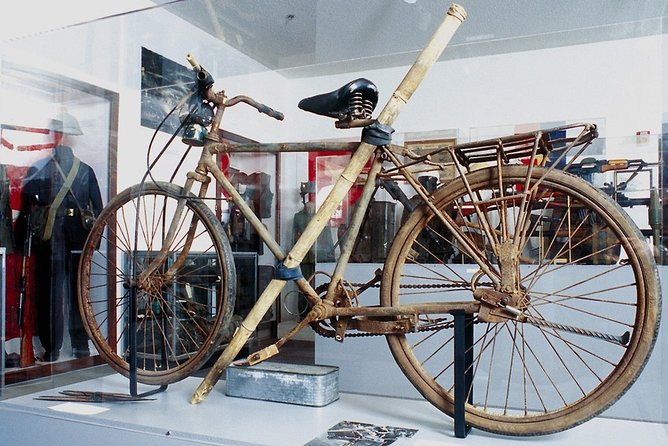
This isn’t a museum that feels out of reach for people with mobility concerns. It’s listed as handicap accessible, and service animals are allowed. It’s also near public transportation, which can help if you’re trying to plan a car-light day in Branson.
If you’re visiting with kids, you’ll appreciate that the museum’s exhibit descriptions are in English and the experience is structured across halls instead of one long corridor of information. That layout can make it easier for families to handle attention spans. It also works well for history buffs who want more than a quick overview.
One visitor detail that stands out: people sometimes come specifically to find a family member’s name on the wall and then connect that name to uniforms, photographs, and personal stories. That kind of visit can feel meaningful for adults and kids alike because you’re tying an artifact and a name to a real person.
What’s Included, What Isn’t, and How to Plan Your Day
Your admission covers entry. It includes fees and taxes, and your ticket gives you access to explore the exhibits during opening hours. The museum provides a gift shop on-site, but a key point for planning is that beverages (non-alcoholic) are not included.
That matters for comfort more than anything else. If you’ll be in the museum long enough to slow down, plan how you’ll manage water breaks. If you’re sensitive to long indoor walks, you might want a simple plan before you go so you’re not searching around mid-visit.
The gift shop being on-site is useful because you can pick up a memento without adding a separate stop to your day. It’s also a practical way to end your visit while you’re still mentally processing the halls.
Group Size Matters More Than You Think
This experience has a maximum of 50 travelers. Even though it’s self-guided, that cap helps you avoid a wall-to-wall crowd feeling in a memorial setting. A smaller number of people in the museum at once tends to make it easier to stop and read without feeling like you’re always stepping aside.
In practice, this means you can go at a steady pace, pause when you want, and still feel like the museum’s atmosphere remains intact.
Price and Value: What You’re Paying For
No price is listed here, so I can’t talk dollars. What I can say is what your admission actually buys: access to a carefully organized, 10-hall walkthrough of 20th-century military conflicts, including memorial wall sections and a mix of artifact-based exhibits and personal stories.
If you like museums that balance history with names, uniforms, and lived experiences, the value is strong. It’s also good for travelers who want flexible timing since you can go whenever it’s open.
If you’re only interested in a quick, light stop or you get drained by emotional content, you may find this is not the best use of your time. In that case, either shorten your visit or decide to pair it with something lighter afterward so your day doesn’t feel emotionally weighted.
Should You Book This Branson Veterans Memorial Museum Admission?
Book it if you want an educational, memorial-focused museum experience with clear hall organization and the kind of exhibits that make history feel real. It’s especially worth your time if you care about military history, family connections to the armed forces, or you want something that teaches through artifacts, photos, and names—not just dates.
Skip or rethink it if you’re looking for a playful, fast, casual attraction. This is remembrance-heavy. The self-guided format also means it’s on you to pace yourself and decide what to focus on.
My practical call: if you’ll be in Branson during open hours and you can spare at least an hour, this is a high-value stop that respects your time and gives you room to read, reflect, and move through the story in your own rhythm.
FAQ
How long should I plan to spend at the museum?
Most visitors spend about 1 hour. If you read the exhibit descriptions carefully and linger over the memorial wall sections, you may want closer to 2 hours or more.
Can I use my admission ticket anytime during opening hours?
Yes. You can go whenever you wish during the museum’s opening hours.
What are the museum’s opening hours?
The museum is listed as open Monday through Saturday from 9:00 AM to 5:00 PM. It is closed on Christmas Day, and it may close at 3:00 PM on Thanksgiving Day and Christmas Eve.
Is this admission for a guided tour?
No. This is self-guided, and descriptions of each exhibit are printed in English.
Are cameras allowed inside the museum?
Yes. Cameras are permitted.
Is the museum accessible and are service animals welcome?
Yes. The museum is handicap accessible, and service animals are allowed.
Is there a gift shop or beverages on site?
There is an on-site gift shop. Beverages (non-alcoholic) are not included.
What is the cancellation policy?
You can cancel for a full refund if you cancel at least 24 hours before the experience’s start time. If you cancel within 24 hours, the amount paid is not refunded.