REVIEW · KRAKOW
Auschwitz Birkenau Tour from Krakow: Private Transfer + Ticket
Book on Viator →Operated by DISCOVER CRACOW · Bookable on Viator
This is one of the hardest places in Europe to visit. The Auschwitz-Birkenau memorial tour from Krakow pairs admission with an organized route and door-to-door transport.
I especially like the private Krakow hotel pickup and drop-off. You get straight travel to Oświęcim without extra passenger stops, then you enter the memorial with a guide.
One drawback to consider: the experience can feel fast inside the camps. Several people note big groups and limited time to read more exhibits at Auschwitz I and Auschwitz II.
In This Review
- Key highlights to know before you go
- Door-to-door comfort: Krakow to Oświęcim without the hassle
- Auschwitz I: walking into Auschwitz and what you actually get to see
- The main trade-off at Auschwitz I
- Birkenau (Auschwitz II): the scale hits differently at Auschwitz’s larger camp
- Where Birkenau can feel intense (and why that’s normal)
- The planned timing: how a 7–8 hour day usually feels
- Private transfer value: what you gain, and what can go wrong
- What to bring, how to stay comfortable, and what rules to expect
- Choosing your pace: group size and hearing the guide
- Should you book this tour from Krakow?
- FAQ
- What’s included in the Auschwitz-Birkenau tour from Krakow?
- Is admission to Auschwitz-Birkenau included?
- Do I get picked up and dropped off at my Krakow hotel?
- How long does the tour take?
- Is the guide available in English?
- Is this tour private or shared with other groups?
- Where do we meet the guide at the camps?
- Is there a limit on bag size?
- How much walking should I plan for?
- Are there places to buy food and drink at Auschwitz?
Key highlights to know before you go
- Door-to-door private transfer from your Krakow hotel to the visitor center area near the camps
- Auschwitz I + Birkenau guided visit with admission included
- English-speaking guide offered (your tour language can be chosen)
- Arbeit macht frei gate entry plus key sites like barracks, gas chambers/crematorium areas, and the memorial
- Planned time blocks that make the day manageable, even if it means you won’t see everything at a slow pace
Door-to-door comfort: Krakow to Oświęcim without the hassle
A day trip to Auschwitz can feel like a logistics puzzle. This tour keeps it simple: you’re picked up from your Krakow hotel at your chosen time, then you’re driven directly toward Oświęcim without waiting around for other passengers.
That matters more than people expect. When you arrive tired, cranky, and confused about where to park or meet your group, the visit becomes harder emotionally. With the private transfer, you can focus on getting there, meeting the guide, and then following the plan into the memorial.
One practical note: if your hotel is in an area with restricted vehicle access, you might need to walk to the nearest safe pickup spot. It’s not unusual in central Krakow, and it’s smart to confirm the exact pickup location the day before.
A few more Krakow tours and experiences worth a look



Auschwitz I: walking into Auschwitz and what you actually get to see
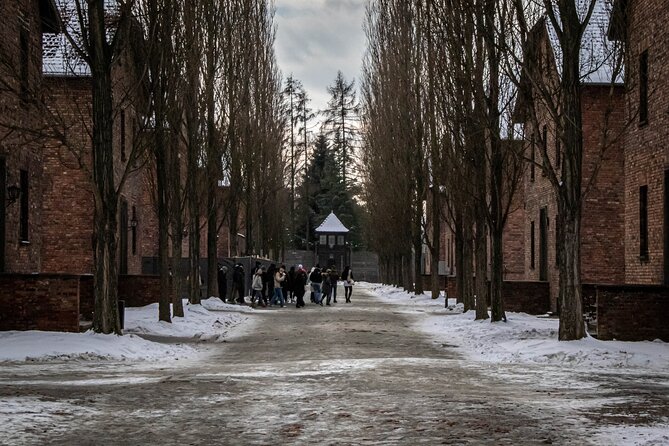
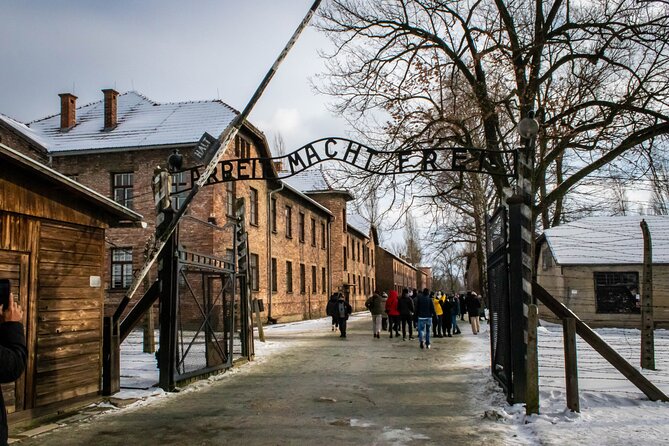
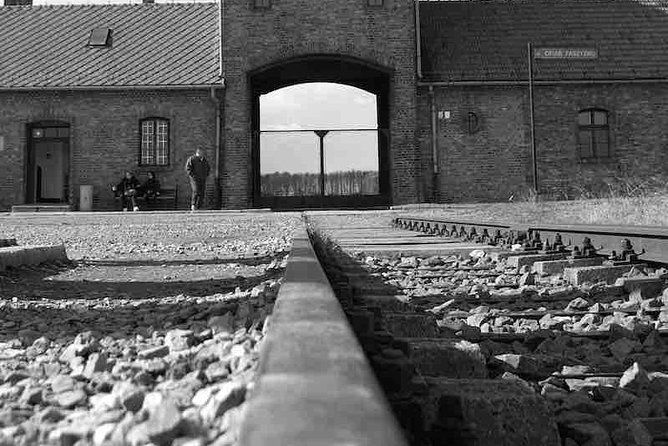
Most of your day’s meaning comes from Auschwitz I. This is where you start after arriving at the visitor center and joining your professional guide at the site. You enter through the gate marked with the chilling slogan Arbeit macht frei (Work sets you free), which sets the tone immediately.
From there, the tour route focuses on the areas that help you understand how the camp system worked—before you move to Birkenau. You’ll move through key museum buildings and exhibits that preserve the memory of those who were imprisoned there, then you’ll see original elements such as roads, fences, watchtowers, and the railway ramp area connected to arrivals.
The Auschwitz I visit typically includes barracks used as exhibition spaces, plus displays of original documents and items taken from prisoners upon arrival. The tour also points you toward places tied to the camp’s most brutal purpose, including the gas chamber and crematorium areas and the memorial context that follows.
The main trade-off at Auschwitz I
A few guests describe Auschwitz I time as limited—meaning you might not have much chance to read every plaque in depth. If you want to linger over photographs, names, and personal details at your own pace, you may find the guided structure a bit tight. In that case, plan for a more reflective visit by bringing your curiosity and expecting you’ll still leave wanting more.
Birkenau (Auschwitz II): the scale hits differently at Auschwitz’s larger camp
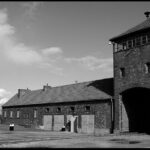
Then you shift to Birkenau—Auschwitz II, also called Brzezinka. This is the larger camp complex, roughly 3 kilometers from Auschwitz I, and it’s where the geography of the system becomes impossible to ignore.
Your guide explains that Birkenau began as a labor camp plan and then developed into a killing center. The tour covers the transformation over time and the reality that it was designed for mass incarceration on an industrial scale. You’ll also learn the purpose behind the camp layout, including the use of rail access for arrivals and the way prisoners were selected.
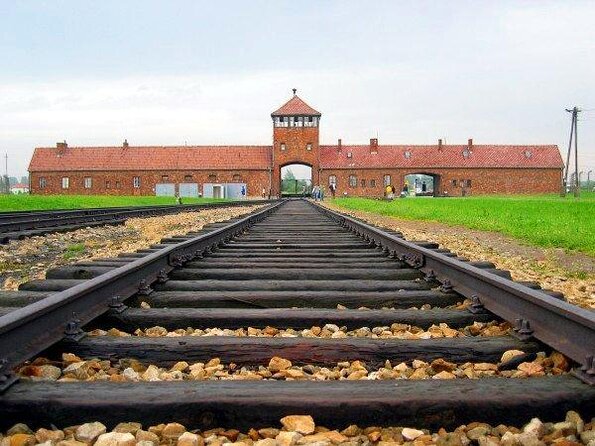
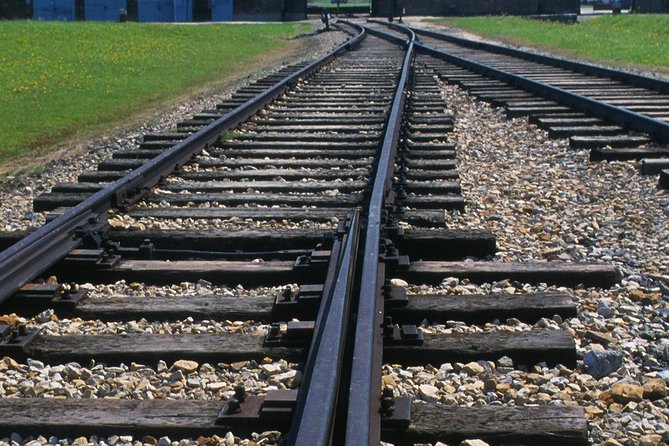
On the ground, the visit is about moving through preserved sections and seeing the camp’s design. You’ll walk past preserved barracks and key areas such as the rail ramp. The guide will also explain how selection worked, and you’ll see the proximity between selection points and the gas chambers and crematorium-related areas.
Where Birkenau can feel intense (and why that’s normal)
Birkenau is emotionally heavy and physically demanding. Even if you’re emotionally prepared, the sheer size of the camp and the bleak logic of the layout can feel overwhelming. Several people also warn about emotional reactions and the way the visit stays with you after you leave.
Wear shoes you trust. Expect uneven ground and a lot of walking. Some visits include stairs, and it’s smart to treat this like a long walking day in winter or summer, not like a quick museum stop.


The planned timing: how a 7–8 hour day usually feels
This is set up as a full day: about 7 to 8 hours total, including travel from Krakow and time inside both parts of the memorial. The itinerary structure is straightforward: pickup and direct drive to Auschwitz I, guided time at Auschwitz I, then transfer to Birkenau, guided time there, and return to your hotel in Krakow.
Based on the schedule you’ll be following, Auschwitz I gets around 1 hour 45 minutes guided time. Birkenau gets around 1 hour 30 minutes guided time. In between, there’s travel time plus short breaks for basics.
Here’s the key reality: the day is designed to cover the essentials. That’s great if you want a guided overview that you can handle without getting mentally overloaded. It’s less great if you’re the type who reads every label and wants slow, detailed time in every building.
Private transfer value: what you gain, and what can go wrong
The price—$214.32 per person—is not just paying for a car. You’re paying for a door-to-door workflow: your pickup and drop-off, private transport, admission included, and an organized guided tour of both Auschwitz I and Birkenau.
For many people, the private transfer is worth it because it reduces stress. You avoid long coach check-in routines, you avoid fighting for parking logistics, and you avoid the anxiety of finding your group in a high-pressure arrival moment.
That said, quality can vary. Some feedback highlights drivers who weren’t engaging, didn’t speak English well, or felt abrupt. Other feedback praises drivers for being on time, safe, and even helpful during the drive. So if this matters to you, look at it like this: the guided portion is the heart of the tour, but the transfer still shapes your day.
If you’re traveling with older family members, a child, or anyone who doesn’t love long walking or uncertain meeting points, private transport can be the difference between a manageable day and a frustrating one.
What to bring, how to stay comfortable, and what rules to expect
This visit is strict about what you can carry inside. The tour notes a bag-size limit: maximum dimensions for backpacks or handbags are 30x20x10 cm. If your bag is bigger, you may have trouble bringing it through, so pack light and plan ahead.
Also plan your clothing like a long outdoor walk. Bring layers for cold or heat, because the camp grounds don’t behave like a climate-controlled museum. And again: solid shoes matter. Uneven terrain and stairs can show up, especially once you’re moving through Birkenau.
On food: you might find options to buy food and drink on site, but service and lines can vary by the day and time. A practical move is to bring a small snack and water so you’re not stuck waiting when you need energy. That way, you keep your focus on the visit instead of hunting for a place to eat.
Finally, emotionally: expect the experience to hit hard. It’s normal if you feel shaken. One of the best ways to handle that is to avoid stacking your evening with plans afterward.
Choosing your pace: group size and hearing the guide
This kind of tour runs in a timed rhythm. You’ll use guided storytelling and likely rely on audio equipment so you can hear the guide as you move through corridors and outdoor areas. In a larger group, it can be harder to hear clearly in certain spots, especially when you’re walking and passing around corners.
Some people also felt the tour pace meant they only saw a portion of Auschwitz I and Auschwitz II areas—enough for context, but not enough for deep reading of every exhibit and memorial detail.
So ask yourself: do you want a structured overview, or do you want a slower, self-paced experience? If you want the second one, consider adding independent reading time on your own after the guided portion, or plan another Auschwitz-focused visit later with more time. The guided format is excellent for getting the full framework fast. It just isn’t designed for maximum lingering.
Should you book this tour from Krakow?
You should book it if you want a guided Auschwitz I + Birkenau day with admission and the comfort of private pickup and drop-off. It’s especially good for first-timers who want to understand what you’re seeing without piecing it together on your own.
I’d also recommend it for anyone who values reduced travel stress. The direct transfer from Krakow is a real convenience, and the itinerary timing keeps the day from ballooning into something that feels unmanageable.
You might want to think twice if you’re someone who needs a slow pace with lots of reading time inside museums, because the guided blocks are structured and won’t cover everything at an unhurried tempo. In that case, you may want a different format, or at least expect that this will be an overview that leaves you hungry for more context.
FAQ
What’s included in the Auschwitz-Birkenau tour from Krakow?
Hotel pickup and drop-off in Krakow, private transportation, and an English-speaking professional guide are included. Admission to the Auschwitz-Birkenau Memorial and Museum is also included.
Is admission to Auschwitz-Birkenau included?
Yes. The tour includes admission tickets for Auschwitz-Birkenau as part of the experience.
Do I get picked up and dropped off at my Krakow hotel?
Yes. You’re picked up from your hotel and returned after the tour ends.
How long does the tour take?
The total experience runs about 7 to 8 hours. The guided time at Auschwitz I is listed at around 1 hour 45 minutes, and the guided time at Birkenau is listed at around 1 hour 30 minutes.
Is the guide available in English?
Yes. English is offered, and the guide is described as English-speaking.
Is this tour private or shared with other groups?
This is described as a private tour/activity. Only your group will participate.
Where do we meet the guide at the camps?
After the drive to the visitor center area near Oświęcim, you join your guide at the camp’s visitor center.
Is there a limit on bag size?
Yes. The maximum size for backpacks or handbags is 30x20x10 cm.
How much walking should I plan for?
Expect a lot of walking, including moving through preserved areas and over uneven terrain. The visit includes many stairs.
Are there places to buy food and drink at Auschwitz?
There are restaurants/cafes on site at Auschwitz 1 and Birkenau where you can buy food and drink. Depending on timing, there may be queues, so having a snack plan can be helpful.