REVIEW · ATHENS
Athens: The Acropolis Museum Guided Tour
Book on GetYourGuide →Operated by ATHENS WALKING TOURS · Bookable on GetYourGuide
Acropolis Museum first, answers second. The Acropolis Museum puts you in the right mindset with glass floors and artifacts that explain what you’re about to see on the hill. I love how a good guide connects individual objects to the bigger story of Athens in its 5th-century BC peak.
My favorite parts are practical as well as beautiful: the 1st-floor Archaic Gallery in natural light, and the way the tour uses the museum’s votive offerings to Athena to show how religion shaped daily life. You don’t just look at things, you learn why people made them and what they meant.
The main drawback is the ticking clock. With just 75 minutes, it’s a highlights-first tour, not a slow wander, and if your schedule is tight you’ll want to arrive ready to move.
In This Review
- Key things I’d bank on before you go
- Why the Acropolis Museum belongs before the hill
- The modern building that makes ancient ideas easier to see
- What you’ll actually see on the 75-minute highlights tour
- The 1st-floor Archaic Gallery in natural light
- Votive offerings to Athena (and why they matter)
- Caryatid statues and the human touch
- Time-saving focus on the most important objects
- Glass floors, excavations, and the ancient neighborhood under your feet
- Panoramic Acropolis views: learning where everything sits
- Modern artifacts, repatriation, and why the collection feels like a whole story
- Price and value: what $41 gets you, and what you still pay separately
- Meeting point details: how to find your group without losing time
- The kind of guide you hope for (and what good ones do in 75 minutes)
- Timing advice that makes the whole Athens plan click
- Who should book this tour
- Should you book it? My straight answer
- FAQ
- How long is the Acropolis Museum guided tour?
- What does the $41 per person price include, and what extra should I expect?
- Is skip-the-ticket line service included?
- Where do I meet the tour staff?
- Is the tour offered in English?
- What should I bring?
- Are large bags allowed?
- Is it wheelchair accessible, and does the tour run in rain?
Key things I’d bank on before you go

- Skip-the-line support so you lose less time waiting and more time looking
- Natural light in the Archaic Gallery that makes stone details easier to spot
- Votive offerings to Athena that turn myth into something people actually practiced
- Glass floors and visible excavations that reveal an ancient neighborhood under the museum
- Modernist architecture by Bernard Tschumi and Michael Photiadis that frames the Parthenon visually
- Panoramic views of the Acropolis ruins that help you place everything in space
Why the Acropolis Museum belongs before the hill

If you ever felt like the Acropolis was impressive but hard to “read,” this is the fix. The museum is set up to explain the objects, the religion, and the timeline behind the stones. By the time you walk outside, you’ll recognize symbols and understand what each part was doing.
A guided tour matters here because the museum is full of small details that can look similar if you’re going solo. A good guide points out what to focus on, and why those pieces were made in the first place. It’s also one of the best places in Athens to slow down without feeling like you’re stuck behind a wall of text.
The tour also helps you avoid the classic mistake: taking photos first, learning later. Here, you get the context while you’re standing in front of the objects.
You can also read our reviews of more guided tours in Athens



The modern building that makes ancient ideas easier to see

One of the coolest things is the museum’s own “layout lesson.” The building is by Bernard Tschumi and Michael Photiadis, and it’s not just a box to hold artifacts. It’s designed to create sightlines and alignments that echo the Parthenon.
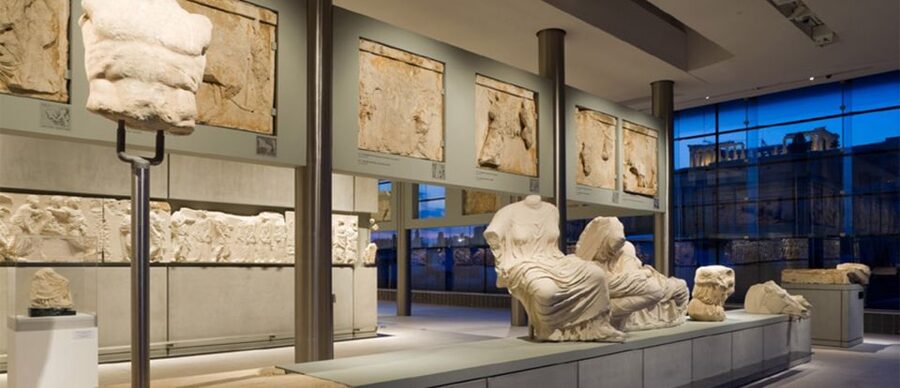
During the tour, you’ll notice the glass atrium built in alignment with the Parthenon. That means the architecture quietly does the storytelling for you. Instead of feeling like you’re switching locations every ten minutes, the museum keeps the Parthenon in your mental frame.
I also like that the museum doesn’t hide its engineering. You get modern structure + ancient meaning in the same breath, which is exactly what Athens feels like in real life: layers stacked on layers.
What you’ll actually see on the 75-minute highlights tour
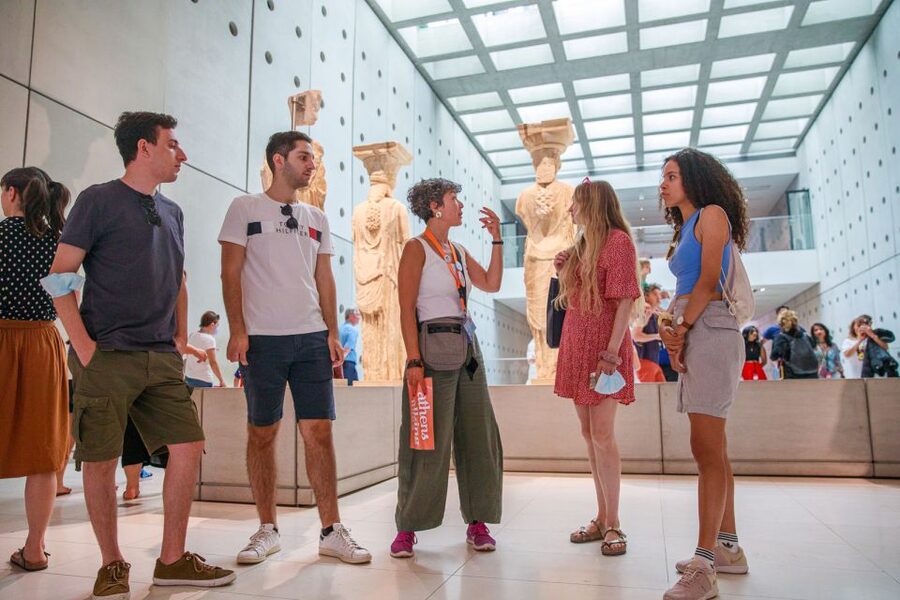
The tour is structured around what most visitors miss when they wander: the museum’s key galleries and the objects that “unlock” the rest of the building.
The 1st-floor Archaic Gallery in natural light
This is where the museum earns its reputation. The 1st floor Archaic Gallery is bathed in natural light, so the stonework reads better. You can better spot the shapes, wear patterns, and fine details that you’ll otherwise skim past.
A guide also helps you translate the vibe of the Archaic period into something you can picture. It’s not just art appreciation. It’s a stepping-stone to understanding how styles and ideas changed as Athens’ power and ambition grew.
Votive offerings to Athena (and why they matter)
You’ll spend time with religious dedications—votive offerings to Athena. This is where the tour gets especially satisfying because it connects myth to behavior. These offerings weren’t “random souvenirs.” They were expressions of gratitude, hope, and devotion in a city where religion wasn’t separate from public life.
If you want a one-sentence takeaway from this tour, it’s often this: when you see an offering to Athena, you’re seeing Athens talk to its own values.
You can also read our reviews of more museum experiences in Athens


Caryatid statues and the human touch
The tour also highlights statues of the Caryatids. Even if you’ve heard the name before, seeing them in the museum setting changes how they feel. You start thinking about people, craft, and repetition—how a city’s identity gets built into architecture.
Time-saving focus on the most important objects
In 75 minutes, you won’t see every corner of the museum. That’s by design. The guide points you to the pieces that best represent the story, so when you continue after the tour, your self-guided wandering makes sense.
Glass floors, excavations, and the ancient neighborhood under your feet
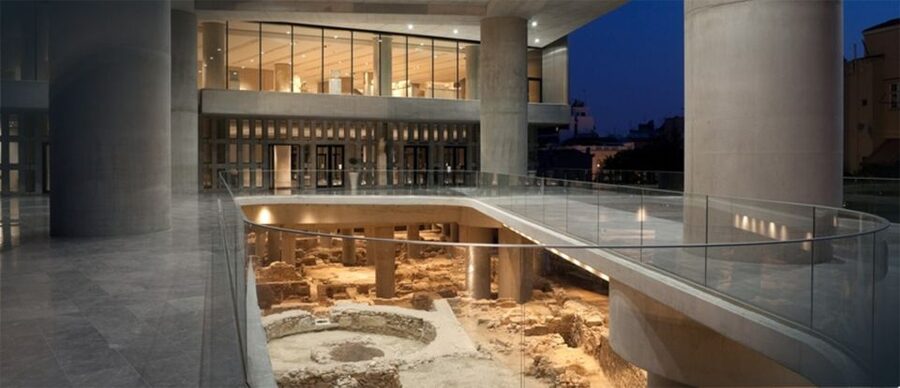
This is the part that feels almost unfair. While many museums display history behind barriers, this one shows it under glass.
The tour includes excavations made visible through stunning glass floors. You’re not just looking at artifacts; you’re seeing evidence of what sat there before the modern structure.
Even better, the museum uses a plexiglass floor and 3D exhibits to recreate what the area looked like during ancient times, including a neighborhood layout. It’s a smart way to turn “ruins as background” into ruins you can actually picture.
For me, this is the difference between saying, I saw an ancient site, and understanding, I walked through the footprint of daily life.
Practical tip: if you take photos, do it quickly during the guide’s explanation. Glass reflections can make images harder later, and you’ll want to prioritize the moment the guide points out the exact features.
Panoramic Acropolis views: learning where everything sits

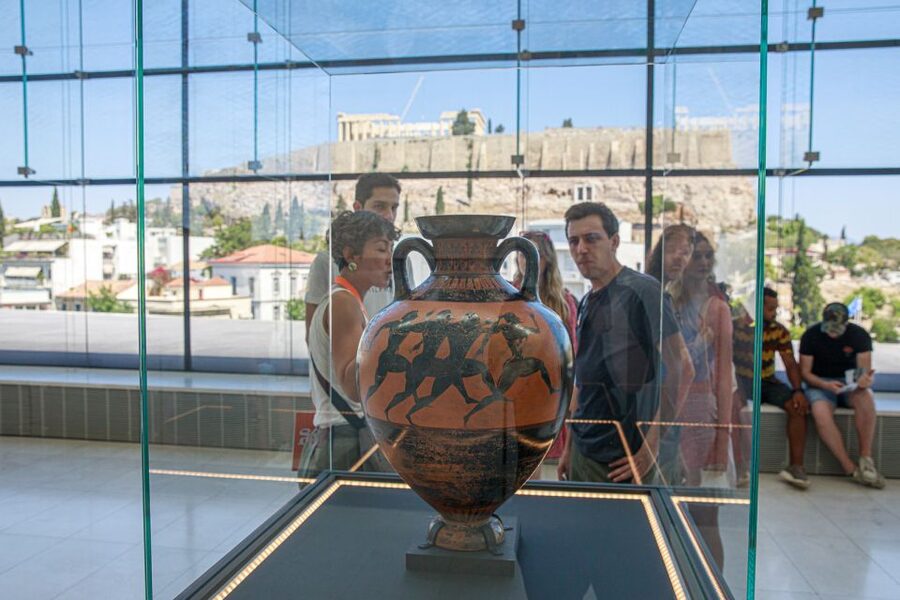
The museum doesn’t only work as a classroom. It also gives you panoramic views of the ruins of the Acropolis. This matters because the artifacts in your hands-on experience suddenly gain “place.”
Once you’ve seen the objects, the views help you match them to the hill. You start noticing how sightlines from the museum relate to the broader complex. That reduces confusion when you step outside, especially if you haven’t studied maps.
If you’re worried about heat, this is also a decent place to take small breaks. You can recharge your brain with views while staying in a controlled environment compared with long exposed outdoor walking.
Modern artifacts, repatriation, and why the collection feels like a whole story
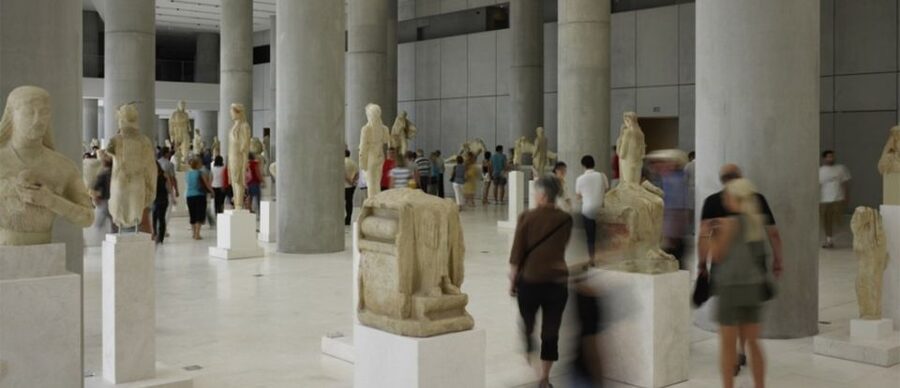
The museum’s collection isn’t random. The tour context explains that it includes items formerly held in other museums, in storage, or returned from foreign collections, with a focus on presenting the Acropolis story as coherently as possible.
That matters for your visit because you’ll feel like you’re watching one narrative, not disconnected fragments. In other words, the museum’s job isn’t only display. It’s interpretation and restoration of meaning.
So even when you’re just looking at a single object, you can understand why it belongs in this setting and why the museum tries to reunite pieces of a bigger cultural picture.
Price and value: what $41 gets you, and what you still pay separately
At $41 per person for a 75-minute guided experience, the value comes down to how much you’ll get from your time on-site. The tour includes a local licensed guide plus skip-the-ticket line service.
What it does not include is the entrance fee (about €20 per adult), plus food and drinks. So yes, you’ll budget a bit more than the $41. But the guide and the time saved can easily be worth it if you care about understanding what you’re looking at instead of guessing.
Here’s the practical way to think about it:
- If you’re the type who likes museum context, the guided hour usually pays off fast.
- If you’re only in Athens briefly and you want to do one “smart choice” at the Acropolis Museum, this is a strong contender.
- If you hate schedules and want to linger for a long self-guided walk, you might prefer to visit on your own and use an audio guide later.
Meeting point details: how to find your group without losing time
Meet at 3, Dionysiou Areopagitou St., at the Lukumades & Pilino stores. Your staff will be holding an orange Athens Walking Tours sign.
This meeting spot is at the beginning of the pedestrian walkway connecting from Hadrian’s Arch on Syngrou (also written as Siggrou) Ave toward the Acropolis area. That’s convenient, but it also means you should plan for a short walk, and you shouldn’t arrive right at the last second.
If you’re sensitive to being late, give yourself a small buffer. Some schedules can run into delays when the museum tour connects to an earlier Acropolis segment, so being early keeps your day calmer.
The kind of guide you hope for (and what good ones do in 75 minutes)
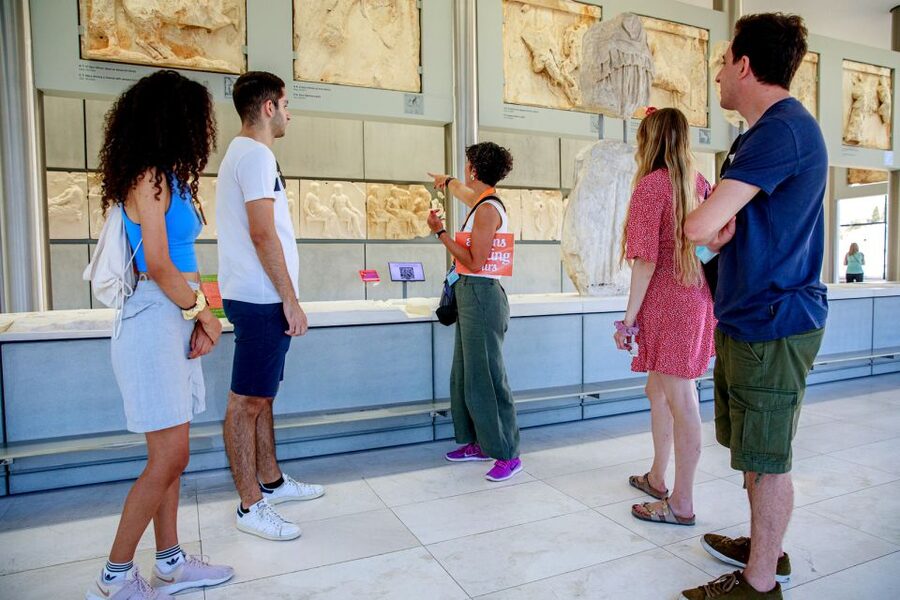
This tour tends to shine when the guide tells stories with clarity and pace. People have mentioned guides such as Dimitris, Natasha, Annie, Niobe, Margherita, and Apollo for being engaging, humorous, and easy to follow.
What you’re really buying is efficient explanation. In a short visit, a guide who can connect eras and locations helps you understand the whole Acropolis complex instead of collecting isolated trivia.
You might also notice different approaches:
- Some guides focus on architecture and how the museum is designed to align with the Parthenon.
- Others put more emphasis on religion and offerings.
- Some guides tailor explanations so even younger visitors can stay involved.
If you’re bringing kids, that flexibility can be the difference between a “museum day” and a “we actually had fun” day.
Timing advice that makes the whole Athens plan click
If you can choose when to do it, I’d do this before you head up to the Acropolis itself. The museum gives you a mental checklist of what to look for, which makes the outdoor visit feel less like random wandering and more like understanding.
In summer heat, consider an earlier start time when possible. The museum tour itself is shorter, but you’ll still appreciate cooler conditions and less crowd pressure on the walkway.
Also, keep your afternoon schedule forgiving if you’re doing multiple parts in one day. A later start can happen when the museum visit is planned as a follow-on stop.
Who should book this tour
I’d book this if you want:
- A guided overview that helps you understand what the Acropolis means, not just what it looks like
- A tour that uses the museum’s special features—glass floors, excavations, and plexiglass reconstructions
- An efficient way to cover major highlights in 75 minutes
You might skip it if:
- You prefer long unguided museum time and dislike groups
- You only want to take photos and don’t care about context
- You don’t want to pay for a guide when you can learn at your own pace
This is also a good fit for first-timers who want the fastest path to feeling confident on the Acropolis hill.
Should you book it? My straight answer
Yes—if your priority is understanding. For $41 plus the separate entrance fee, you get a licensed guide and a well-paced tour through the museum’s most meaningful “learning moments,” including Athena offerings, Archaic Gallery light, and glass-floor excavations.
If you’re the kind of visitor who can enjoy artifacts more by reading them slowly on your own, then go independently and spend extra time. But if you want your Acropolis visit to click immediately, this guided museum tour is the smartest setup you can buy in Athens.
FAQ
How long is the Acropolis Museum guided tour?
The tour lasts 75 minutes.
What does the $41 per person price include, and what extra should I expect?
The price includes a local licensed guide and a skip-the-ticket line service. Entrance fees are not included and are approximately €20 per adult. Food and drinks are also not included.
Is skip-the-ticket line service included?
Yes, skip-the-ticket line service is included.
Where do I meet the tour staff?
Meet at 3, Dionysiou Areopagitou St., at the Lukumades & Pilino stores. Staff will be holding an orange Athens Walking Tours sign.
Is the tour offered in English?
Yes, the tour is in English.
What should I bring?
Bring a passport or ID card and wear comfortable shoes.
Are large bags allowed?
No. Luggage or large bags are not allowed.
Is it wheelchair accessible, and does the tour run in rain?
Yes, the tour is wheelchair accessible, and it takes place in all weather conditions (rain or shine).