REVIEW · ATHENS
Ancient Athens tour: Acropolis, Parthenon and Acropolis Museum
Book on Viator →Operated by Athens Walks Tour Company · Bookable on Viator
Ancient Athens makes more sense with a guide. This tour strings the Acropolis together with the Acropolis Museum, so the sculptures and ruins you see outdoors become understandable as real objects in real time. You get a guided route designed for clear viewpoints, crowd flow, and a stop-and-learn rhythm that beats wandering lost in the heat.
I love how this experience leans on a licensed guide who can turn stone and myths into something you can picture. I also like the small-group feel, with guided moments at the big sites and breathing room to pause and look while the guide handles the how-and-why. You may even recognize names from past groups like Giannas, Selena, Afrofithi, and Bernardos, depending on who’s leading.
One drawback to plan for: entrance tickets (especially for the Acropolis) are often extra, and the walk involves moderate climbs on warm, sometimes slippery surfaces. Bring sunscreen and water, and wear shoes you trust.
In This Review
- Key things I’d clock before you book
- A 9:00 start that actually helps with crowds and heat
- Price and ticket reality: what you pay for, what you pay extra
- Entering the Acropolis: more than a view, it’s an urban plan
- Parthenon stops, but with the why behind the marble
- Theatre of Dionysus, Odeon, and the sound of public life
- Propylaea and Erectheion: where the details reward your effort
- Acropolis Museum: the moment things click
- What makes the guide matter on this route
- Practical tips that improve the whole day
- Who this tour is best for (and who might want a different plan)
- Should you book this Ancient Athens Acropolis + Museum tour?
- FAQ
- What time does the tour start?
- How long is the tour?
- Is this tour offered in English?
- Are entrance tickets included in the price?
- Where is the meeting point?
- Does the tour include the Acropolis Museum?
- What if I need a refund?
Key things I’d clock before you book
- Small group, max 20 helps you stay together without feeling herded.
- Licensed guide storytelling turns Parthenon-era design and daily life into something you can follow.
- Water provided for a sun-heavy climb.
- Museum time is built in so carvings you saw outside don’t stay a blur.
- Crowd audio support is often used (microphones/ear pieces), though sound can still vary—bring wired headphones if you want a backup.
- Real-world site pacing includes short, focused stops so you don’t burn out on stairs and glare.
A 9:00 start that actually helps with crowds and heat
This tour runs about four hours, starting at 9:00 am, and it’s designed around getting you onto the Acropolis while the day is still cooperative. That matters in Athens. Morning light makes the stones easier to read, and you’re less likely to feel like you’re negotiating bottlenecks just to take a photo.
The group size (up to 20) is a big part of the value. Large tours can feel like a moving wall—one person stops and everyone piles up behind them. Here, the guide’s job includes keeping the flow smooth, finding gathering spots, and letting you look closely without losing the thread.
You’ll also have breaks baked into the rhythm. The stops at major monuments are brief and purposeful, then you get a longer stretch to take the Acropolis in without constantly rushing.
You can also read our reviews of more museum experiences in Athens


Price and ticket reality: what you pay for, what you pay extra
The tour price is $72.59 per person, which mostly covers the licensed guide and the guided time on-site. Entrance fees are not automatically included unless you chose the ticket option at booking, and the schedule shows the Acropolis Museum time as included—so it’s smart to confirm what’s covered on your exact booking.
Here’s the ticket math to expect:
- Acropolis entry fee: €30 per person if you don’t have it arranged
- Acropolis Museum entry fee: €20 per person if you don’t have it arranged
If you arrive without tickets, the provided info says you can buy them cash from your guide at the meeting point unless you booked the entrance-ticket option ahead of time. Either way, it’s worth knowing this before you stand at the gate, scan prices, and try to remember whether you selected the ticket add-on.
Also note: this is offered in English, with mobile ticket support and confirmation sent at booking. People under 25 may need an ID or physical passport to help with reduced-price eligibility, if applicable.
Entering the Acropolis: more than a view, it’s an urban plan
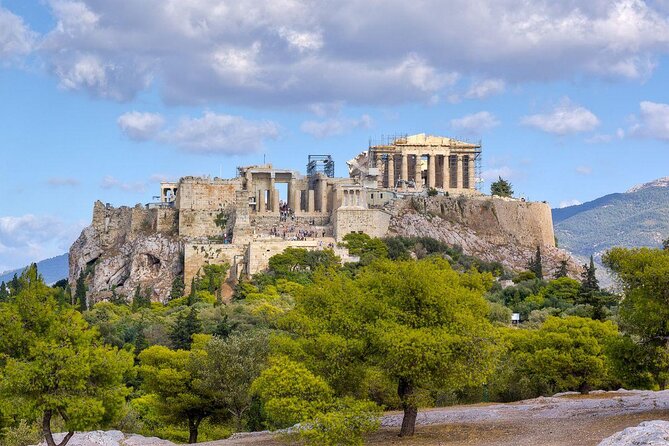
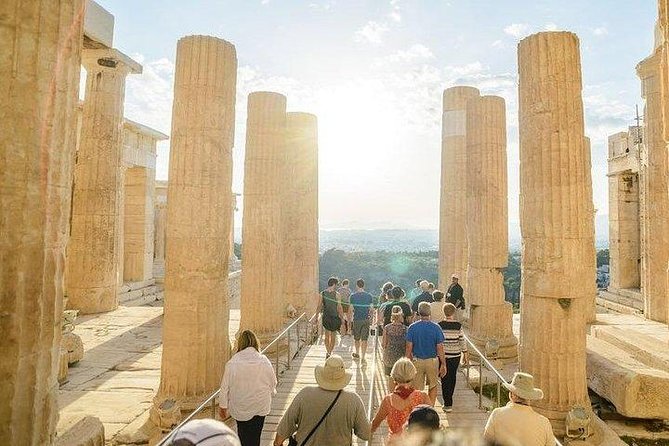
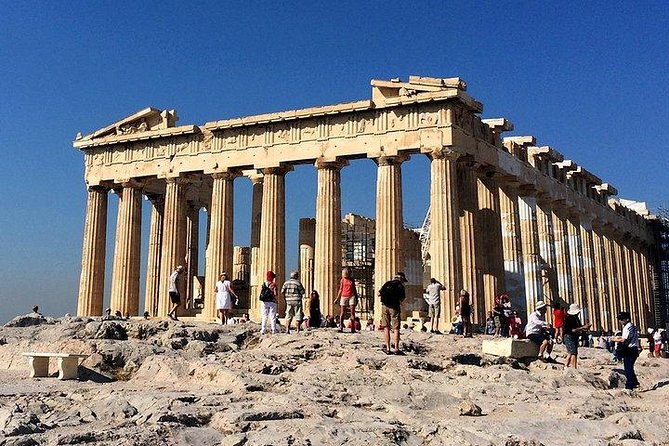
Spending time on the Acropolis with a guide changes what you notice. From ground level, it can feel like a single monumental hill. From up there, you start to see how it works as a designed space: entrances, sacred buildings, theater space, and viewpoints that were intentional.
The tour starts with about two hours on the Acropolis. That’s enough time to slow down and actually connect shapes and locations. You’re not just looking at the Parthenon like a postcard. You learn how the different structures relate to each other and what their layout meant in ancient Athens.
This part is also where you’ll feel the physical side of the day. Even if you’re not “sporty,” you do need moderate physical fitness for stairs, uneven stone, and sun. Reviews also call out slippery rock spots, so shoes with grip really matter. If you’re prone to foot issues, consider bringing walking sticks or at least taking the tight turns slowly.
Parthenon stops, but with the why behind the marble
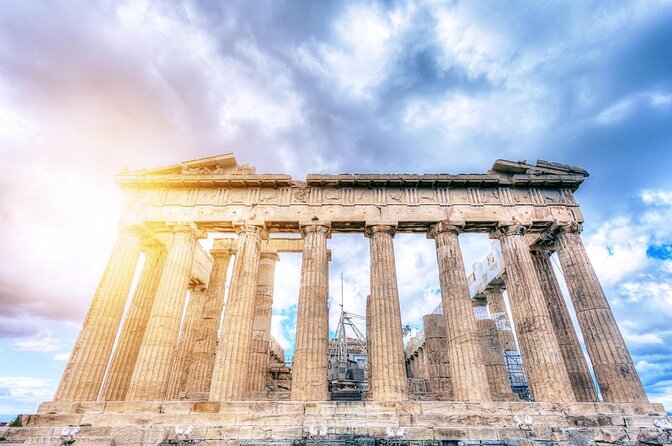
The Parthenon gets its moment in the right way—short enough that you can keep moving, long enough that you don’t just glance and go. You’ll likely spend only around 10 minutes at the Parthenon area, but the guide’s explanations are the point: not a lecture, but practical context that helps you interpret what you’re seeing.
Here’s what I find most valuable: the guide helps you notice details you’d usually miss at speed. The Parthenon isn’t just beautiful; it’s part of a larger sacred and political statement. When you understand that, the building feels less like a monument and more like a message written in stone.
This is also where the crowd management matters. On the Acropolis, “crowded” doesn’t mean annoying—it can mean you can’t see. A good guide finds spots where your eyes can lock onto the right lines and angles, so you’re not standing in the middle of everyone else’s selfie.
Theatre of Dionysus, Odeon, and the sound of public life
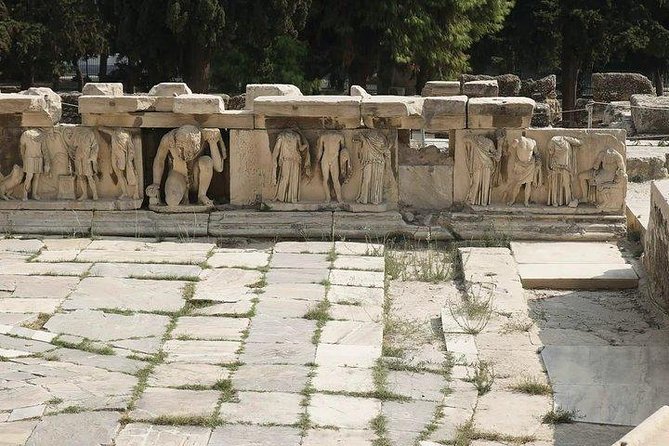
One of the best parts of this tour is that it doesn’t treat the Acropolis like a museum outside. It includes performance spaces—places where public life happened.
You’ll get time at the Theatre of Dionysus, one of the most important ancient theaters. Even if you don’t fully picture performances yet, standing in the space helps. You start to understand why the Greeks built drama into civic identity—this wasn’t private entertainment; it was social glue.
The tour also includes Herod Atticus Odeon, a Roman-era structure still in use. That contrast—Greek theater space tied to Greek identity, then a Roman layer that continued the idea of public performance—helps you see the Acropolis as a living palimpsest rather than a frozen moment.
If you’re a visual learner, this portion can feel like the Acropolis turns three-dimensional. You stop thinking only in monuments and start thinking in gatherings.




Propylaea and Erectheion: where the details reward your effort
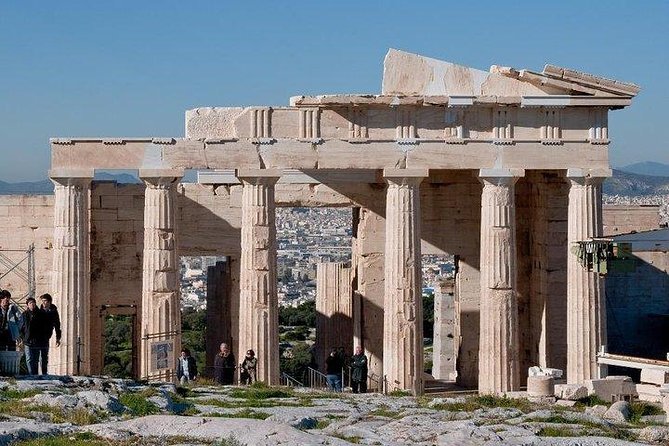
The route includes the Propylaea, the grand gates to the Acropolis. Even without deep technical knowledge, you can feel why this matters: entrances are where the experience begins. The guide’s commentary here helps you orient yourself so later stops make more sense.
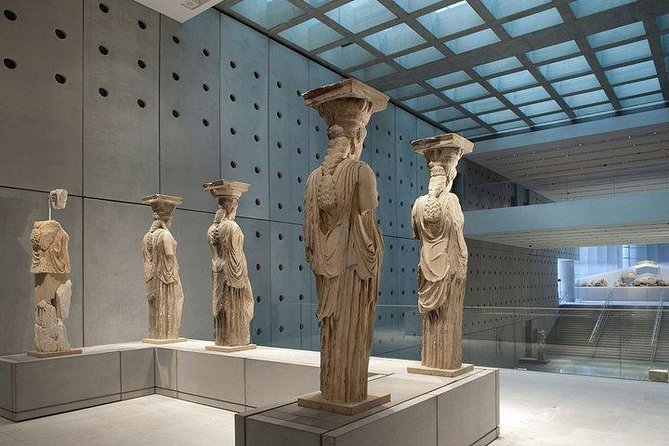
Then comes Erectheion, home of the famous Caryatids—those sculpted female figures that have become symbols far beyond Athens. You’ll have brief time (around 10 minutes) here, but it’s enough to study the mood and craftsmanship up close if you focus.
Caryatids can seem like just another famous sculpture until someone explains the design logic and what these figures signaled. Once you connect them to the building’s identity, the statues feel less like decorative flourishes and more like architectural storytelling.
Practical tip: this is also one of the spots where the ground can feel more uneven or slick. Slow down. Look at what you can, and don’t race to the next photo angle just because everyone else is moving.
Acropolis Museum: the moment things click
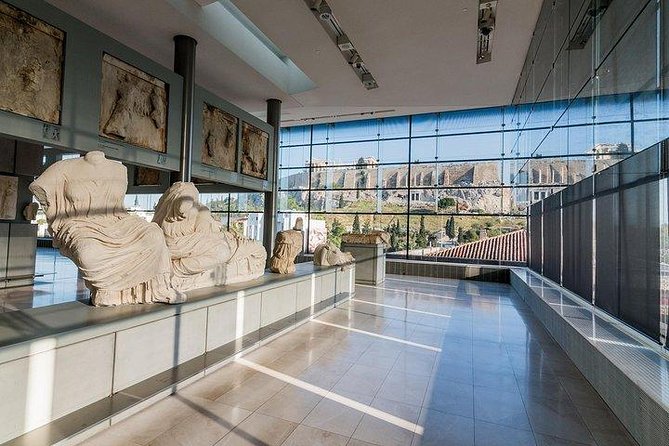
If the Acropolis gives you the view, the Acropolis Museum gives you the meaning. This museum is built to house artifacts found on the rock and surrounding slopes, spanning from the Greek Bronze Age through Roman and Byzantine Greece. It also sits over parts of Roman and early Byzantine Athens, which is a mind-bender in the best way: you’re literally walking through layers of history.
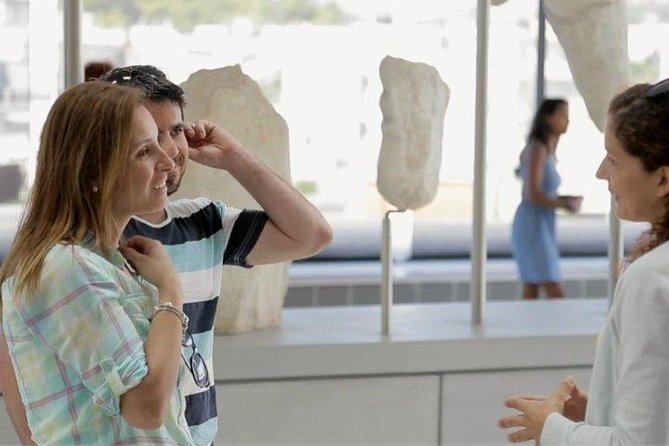
The museum portion is about one hour, with admission included in the tour schedule you’re considering. You’ll start with a guided walkthrough, then you can continue at your own pace afterward. That balance is great because it prevents information overload while still giving you direction.
What I like here is how the museum handles interpretation. Outdoors, stone fragments can feel disconnected. Indoors, the same elements you saw on the Acropolis become understandable as objects—carvings, architectural parts, and artifacts in context. Even if you’re not into art history labels, the design and layout make it easier to connect the dots.
This is also where you’ll likely appreciate the tour’s structure. If you only visit the ruins, you might leave with impressive images but shallow understanding. If you only visit the museum, you might miss the scale and setting that make the artifacts feel alive.
What makes the guide matter on this route
Because you’re moving through crowded spaces and multiple monuments in a short window, the guide is the difference between a smooth day and a confusing one.
In past runs, guides have included names like Giannas, Selena, Afrofithi, Michael G, Bernardos, Efie, Alexia, Lydia, Demos, George, and John. Not every guide will teach in the same style, but the consistent theme is clear: people report that the explanations are specific, the pacing is controlled, and the guide helps the group stay comfortable—especially with shade and water breaks during hot periods.
If you’re the type who hates waiting around for a speaker, you’ll still likely enjoy this. The stops are short, and the guide guides you to spots where you can actually see and understand.
Practical tips that improve the whole day
The Acropolis is an outdoor experience, which means Athens weather is part of the deal. A few practical moves can upgrade your comfort fast:
- Bring water and sunscreen. The tour provides bottled drinking water, but it’s still your job to sip often.
- Wear grippy shoes. Some parts can feel slick.
- If you have trouble hearing in crowds, consider bringing wired headphones as a backup. Some people found the microphone/ear-piece setup helpful, but sound can vary in busy areas.
- Go into it with the right mindset: this is a guided circuit of key anchors, not an all-day sit-down at every monument.
Also, you’ll end back at the meeting point, so you’re not stuck guessing how to leave.
Who this tour is best for (and who might want a different plan)
This is ideal if you want your Athens highlights done with real context and minimal guesswork. You’ll likely enjoy it if:
- you want the Acropolis explained beyond myth-by-myth slogans
- you prefer a small group over a large crowd crush
- you like the idea of pairing ruins with the museum collection that supports them
- you’re okay with moderate walking and stairs
It may be less ideal if you need long independent time at each site. Some people wish they had more free time up on the Acropolis after the guided elements. If you’re that kind of visitor, treat this tour as your orientation launch—then plan your extra wandering afterward.
Also keep your expectations aligned with the pace. Short stop durations mean the guide hits the big ideas, not every micro-detail.
Should you book this Ancient Athens Acropolis + Museum tour?
I’d book it if you want the best bang-for-your-time ratio: major monuments plus the museum that explains them, all wrapped into a controlled 4-hour plan led by a licensed guide. The small-group size, the inclusion of the museum experience, and the practical comfort touches like water make it feel thoughtfully designed.
I would think twice only if entrance-ticket costs would be a problem for you or if you need a slower, more open-ended climb with lots of solo time. Otherwise, this is one of those Athens combinations that saves you from the most common mistake: seeing amazing ruins and still not quite knowing what you’re looking at.
FAQ
What time does the tour start?
The tour starts at 9:00 am.
How long is the tour?
The duration is about 4 hours.
Is this tour offered in English?
Yes, the tour is offered in English.
Are entrance tickets included in the price?
Entrance fees are not included unless you booked the option with entrance tickets. If you do not have tickets, you can buy them in cash from your guide at the meeting point (unless you booked the entrance-ticket option).
Where is the meeting point?
The meeting point is Porinou 5, Athina 117 42, Greece.
Does the tour include the Acropolis Museum?
Yes. The tour includes time at the Acropolis Museum, and the museum admission is shown as included in the tour schedule.
What if I need a refund?
There is free cancellation up to 24 hours before the experience start time for a full refund.