REVIEW · NEW YORK CITY
American Museum of Natural History Admission Ticket
Book on Viator →Operated by American Museum of Natural History · Bookable on Viator
Big museum, big wow. The American Museum of Natural History is a one-ticket way into 40+ exhibition halls that stretch from the 13-billion-year story of the universe to animals you can almost smell. I love the scale of the collections and how quickly you hit iconic highlights like the Tyrannosaurus Rex in the dinosaur halls.
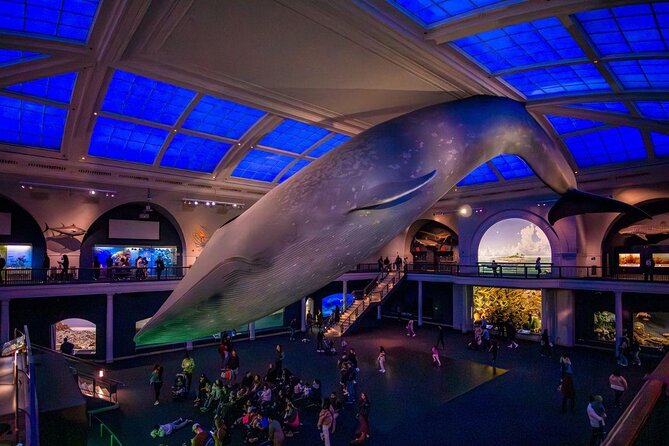
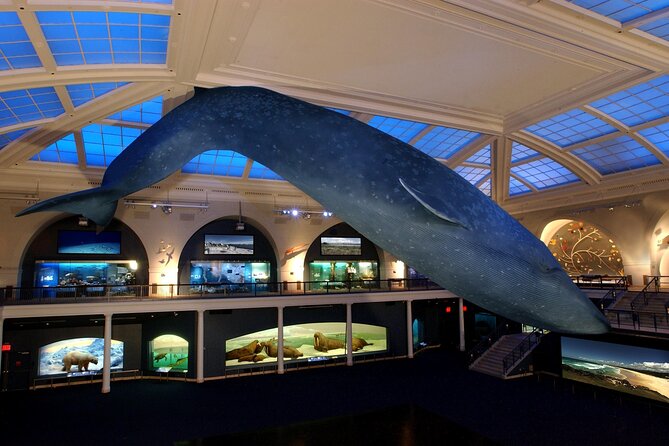
I also like the “go at your pace” setup. With a full-day pass, you can linger over the Milstein Hall of Ocean Life centerpiece, including the massive 94-foot blue whale model, without feeling you must sprint.
One consideration: your voucher can mean an extra step at the ticketing area. A few people report waiting to convert voucher/QR info into an actual museum ticket, so I’d plan buffer time when you arrive—especially if you’re traveling with kids or on a tight schedule.
In This Review
- Key highlights you’ll feel fast
- American Museum of Natural History: Why This Museum Fits a Short Visit
- Price and what $37 really buys you
- Getting in: vouchers, QR codes, and grabbing your paper map
- Your best order of play: dinosaurs, mammals, then the blue whale
- Hall of Saurischian Dinosaurs: start with T. rex
- Akeley Hall of African Mammals: Asian elephants and the animal scale
- Milstein Hall of Ocean Life: the 94-foot blue whale
- Rose Center for Earth and Space + Richard Gilder Center: science you can touch
- What’s included vs what costs extra: don’t get surprised
- How long to plan: 3–4 hours works, but all-day is realistic
- Food, comfort, and stroller-friendly details that matter
- Who should book this AMNH admission ticket
- Should you book this AMNH ticket?
- FAQ
- FAQ
- How long should I plan to visit American Museum of Natural History with this ticket?
- What does general admission include?
- Are the planetarium show and giant-screen film included?
- Do I need to exchange a voucher for an entry ticket?
- Is there a paper map available?
- Is the museum accessible and stroller-friendly?
- Are service animals allowed?
- Can I cancel for free?
Key highlights you’ll feel fast

- 40+ permanent galleries across the natural world and the universe
- T. rex and dinosaur halls that make the museum feel real, not textbook
- 94-foot blue whale model in Milstein Hall of Ocean Life
- Akeley Hall of African Mammals with Asian elephant highlights
- Rose Center for Earth and Space plus the Richard Gilder Center for science learning
- Not everything is included (planetarium shows and some special experiences cost extra)
American Museum of Natural History: Why This Museum Fits a Short Visit
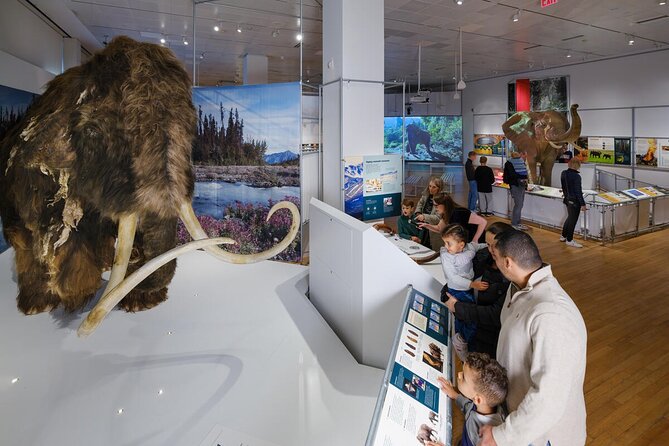
AMNH is the kind of place that looks intimidating from the outside and then instantly clicks once you start walking. The museum is built for wandering, but it also helps you aim your time. You’ll see dinosaurs, elephants, deep-ocean life, and space-and-earth science in a way that feels connected instead of random.
What makes this experience especially useful is the pacing. A 3 to 4 hour visit is a realistic baseline for a focused day, but you’re not trapped in a rigid schedule. If you go slower—because your kid wants to read every label or you get stuck staring at bones and fossils—your admission still works.
The museum sits on the Upper West Side, so it also pairs nicely with other Manhattan days. You can plan an AMNH morning, then shift to Central Park or nearby neighborhoods without needing a full travel day.
A few more New York City tours and experiences worth a look



Price and what $37 really buys you
At $37 per person, this ticket is mostly about one thing: priority access to a large chunk of AMNH for a set entry day, without having to choose a lot of add-ons upfront.
Here’s what you get value-wise:
- Entry to more than 40 permanent exhibition galleries
- Access to the Rose Center for Earth and Space
- Access to the Richard Gilder Center for Science, Education, and Innovation
- Time flexibility to stay as long as you want within your admission
So yes, the ticket price feels like a museum day fee, but you’re paying for access to a major institution. The math gets better if you’re going with kids, because their time at AMNH often turns into an all-weather activity that would otherwise take multiple separate stops to recreate.
The only real “watch-out” on value is that general admission doesn’t cover every big-name show in the building. If planetarium or special experiences are high on your list, you may pay more later.
Getting in: vouchers, QR codes, and grabbing your paper map
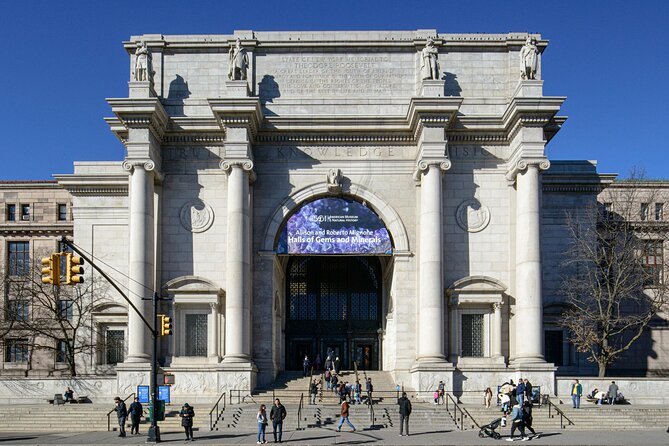
Most of your time will be spent inside the museum. Still, the first 20 to 40 minutes matter because AMNH is huge and your morning mood sets the tone.
This ticket works like this in practice: your voucher gets converted into an admission ticket at the museum. Some people report a smooth conversion with QR code scanning that feels quick. Others report that they had to queue at a ticketing line and wait longer than expected.
My practical advice:
- Arrive a bit early. Even if entry is usually fine, allow time for the voucher-to-ticket step.
- Have your confirmation details ready on your phone screen.
- Use the museum’s paper map right away. You can grab one at museum entrances, information desks, and membership desks.
A few visitors also note that the museum can be confusing to navigate, with signage that isn’t always obvious. That’s why your map matters. Pick 3 must-see areas, circle them on the map, then let the rest be bonus.
Your best order of play: dinosaurs, mammals, then the blue whale
If you want the most satisfying flow, front-load the biggest “wow” moments. That reduces stress later when crowds rise and feet start to feel it.
Hall of Saurischian Dinosaurs: start with T. rex
In the Hall of Saurischian Dinosaurs, you’ll find the famous Tyrannosaurus Rex skeleton. This is one of those moments where you immediately understand why people come to AMNH again and again. It’s not just a display—it’s a physical reference point for the entire dinosaur story.
If you’re with kids, start here. You’ll often get the highest attention early in the day, before energy dips.





Akeley Hall of African Mammals: Asian elephants and the animal scale
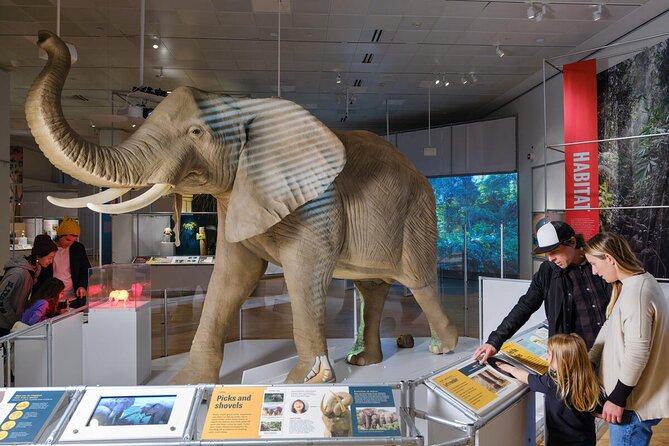
Next, head toward the Akeley Hall of African Mammals. This is where the museum’s collections feel less like “stuff in rooms” and more like living ecosystems. You’ll also find Asian elephants highlighted here, which makes it a strong stop even if dinosaurs aren’t your main interest.
This hall is a good break from the fossil-heavy sections. You’ll spend time on behavior, habitat, and the reality of animal bodies and scale.
Milstein Hall of Ocean Life: the 94-foot blue whale
Then go to the Milstein Hall of Ocean Life for one of the museum’s most memorable visuals: a 94-foot (29-meter-long) blue whale model. Even if you’re not a “marine life person,” the sheer length does the work for you.
Try to give yourself time here rather than rushing. This is where your attention can actually expand: not just at the whale, but across the idea of ocean life and how the museum connects it to geology and evolution.
Rose Center for Earth and Space + Richard Gilder Center: science you can touch
AMNH doesn’t stop at animals and fossils. If you want the museum to feel like education you don’t resent, aim for the Rose Center for Earth and Space and the Richard Gilder Center for Science, Education, and Innovation.
The practical win: these areas keep the day from turning into a single-theme sprint. Dinosaurs and animals are big hooks, but the space-and-science sections bring context. They help explain how the museum thinks—how the universe, the planet, and living creatures connect.
If you like shows and interactive learning, you might also want to plan extra time for the spaces that can include special experiences. Just remember: not every major show is covered by general admission.
What’s included vs what costs extra: don’t get surprised
General admission covers more than 40 permanent galleries plus the Rose Center and the Gilder Center. But a few headline experiences are not included in standard general entry. These can be ticketed separately, including:
- Invisible Worlds
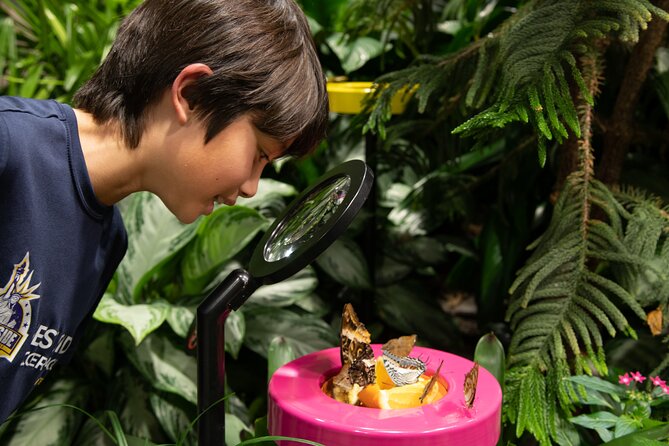
- The butterfly vivarium
- The giant-screen film
- Hayden Planetarium Space Show
This is important for planning. Some people are thrilled to add these, while others are disappointed when they thought they were included.
My approach:
- Decide in advance whether you care about planetarium-style learning or butterfly viewing.
- If yes, expect extra ticket time and cost.
- If no, stick with what’s included and enjoy a calmer day.
Also, note that some exhibits can be closed or partially closed for refurbishment. That’s not something you can predict far ahead with the details provided here, so build flexibility into your route. Your top 3 stops should still be possible.
How long to plan: 3–4 hours works, but all-day is realistic
Most people can get a strong museum day in 3 to 4 hours if they plan a route. Many visitors suggest around 3 hours as a realistic baseline, especially if you’re seeing key highlights across multiple floors.
But AMNH is also the kind of place where “3 hours” can quietly turn into more. The museum is large, spread over multiple levels, and easy to lose time in if you stop for extra reading or kids want to explore at their speed.
If you want a simple rule:
- If you’re doing only the major highlights: plan closer to 3 hours
- If you want a more relaxed loop with extra halls: give it half a day to most of a day
Crowds can build quickly, even early in the day. If you’re sensitive to busy rooms, start with your must-sees first, then move on to secondary galleries after you’ve banked the highlights.
Food, comfort, and stroller-friendly details that matter

AMNH can involve a lot of walking, including hard floors. Comfort matters more than you’d think once you’re carrying a bag, wrangling kids, or trying to keep everyone moving.
For families, it’s a solid choice. There’s strollers-friendly navigation and ADA considerations called out by visitors, and that makes a difference with young kids who can’t do long stretches on their own legs.
Food-wise, there’s a food court on site. One helpful detail from visitor feedback: you may find gluten-free options, including items like gluten-free pizza and brownies. If dietary needs are part of your planning, AMNH gives you a convenient fallback without needing to leave the building mid-museum day.
Who should book this AMNH admission ticket
This ticket is a good fit if you want:
- A major New York museum day without committing to a guided route
- Iconic highlights like dinosaurs and marine life
- A family-friendly activity that can flex with kids’ energy levels
It’s also a smart option if you prefer to explore at your pace. You can spend time in the permanent galleries, then decide on the fly whether you want additional ticketed experiences like the planetarium show or the butterfly vivarium.
If you’re short on time, you’ll still get value, but you’ll want a tight plan. The museum is big; your feet will notice if you wing it.
Should you book this AMNH ticket?
Yes, if your priority is a flexible, high-value day at one of New York’s biggest science-and-natural-history museums. The $37 price makes sense for the amount of permanent gallery access you’re getting—especially if your group includes kids or you’re aiming to see dinosaurs, mammals, and ocean life in one outing.
I’d book with a clear mindset: allow a little buffer time for the voucher-to-ticket step, grab your paper map, and focus first on the highlights you care about most. If you also want planetarium shows or the butterfly vivarium, plan to add those separately rather than expecting them to be included.
FAQ
FAQ
How long should I plan to visit American Museum of Natural History with this ticket?
The duration is listed at about 3 to 4 hours, and many people plan around at least three hours to see and enjoy the museum.
What does general admission include?
It includes access to more than 40 permanent exhibition halls, plus the Rose Center for Earth and Space and the Richard Gilder Center for Science, Education, and Innovation.
Are the planetarium show and giant-screen film included?
No. General admission does not include ticketed exhibitions such as the Invisible Worlds experience, the butterfly vivarium, the giant-screen film, and the Hayden Planetarium Space Show.
Do I need to exchange a voucher for an entry ticket?
Yes. Your voucher is converted into an admission ticket when you arrive.
Is there a paper map available?
Yes. You can get a paper map at the museum entrances, information desks, and membership desks.
Is the museum accessible and stroller-friendly?
Most travelers can participate, and the museum is described as workable with strollers and ADA needs.
Are service animals allowed?
Yes. Service animals are allowed.
Can I cancel for free?
Free cancellation is available up to 24 hours in advance for a full refund. If you cancel less than 24 hours before the start time, the amount paid is not refunded.
If you want, tell me your group (adults/kids + their ages) and how many days you have in NYC. I’ll help you pick the tightest route so you hit dinosaurs, elephants, and the blue whale without feeling like you’re sprinting.