REVIEW · BOSTON TEA PARTY SHIPS AND MUSEUM
Boston: Boston Tea Party Ships and Museum Interactive Tour
Book on GetYourGuide →Operated by Historic Tours of America** - Boston · Bookable on GetYourGuide
Tea ships, mohawks, and holograms for one hour. I love the live-actor storytelling that hands you a role to play, then puts you in the action during the march to Griffin’s Wharf and the tea-toss moment. I also like the museum’s 3D holographic characters, where arguments between British soldiers and colonial patriots happen right in front of you. One drawback to consider: the experience is not suitable for wheelchair users, and the pacing is scripted tightly enough that you may feel time pressure if you want to linger over every exhibit.
At Congress Street Bridge, you start with timed museum entry and a skip-the-ticket-line setup, which matters in a city where popular history stops fill up fast. This is a smart-value hour because you’re not just watching panels—you’re using props, moving through spaces, and watching the big-screen wraparound battle scene that turns what you read into something you can picture.
In This Review
- Key highlights to know before you go
- Entering Boston Tea Party Ships and Museum through the Congress Street Bridge entrance
- Handbills, mohawk disguises, and the role you play in December 16, 1773
- Tea-tossing at Griffin’s Wharf: what you do and what to expect
- Ship replicas you can actually walk through (and why that matters)
- Inside the museum: 3D holograms, arguments, and the wraparound theater battle scene
- Actors in character: the performance quality that makes the history stick
- Price, timing, and whether $35 is a fair deal for an hour
- What to do before and after the tour for best results
- Practical notes: food, extra tea tasting, and how to plan your day
- Should you book the Boston Tea Party Ships and Museum Interactive Tour?
- FAQ
- How much does the Boston Tea Party Ships and Museum Interactive Tour cost?
- How long is the experience?
- Where do I start the tour?
- Does this include museum admission?
- Is food included?
- Are there guides in other languages?
- Can I skip the ticket line?
- Is the tour suitable for wheelchair users?
- Can I get a refund if my plans change?
Key highlights to know before you go
- You’re given a handbill and a mohawk disguise before you march toward Griffin’s Wharf
- The tea-tossing is hands-on (it’s staged with covered milk crates, not loose tea leaves)
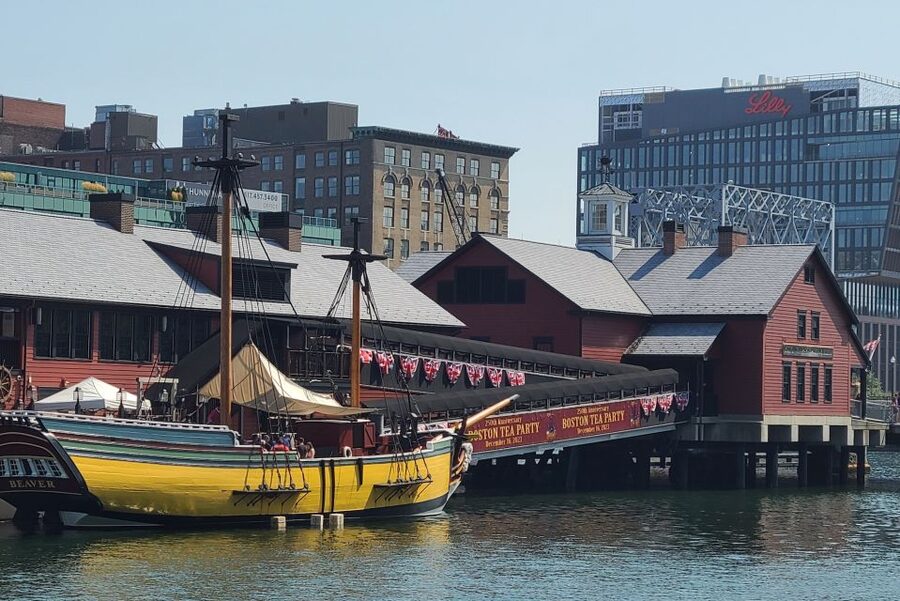
- You can explore faithfully recreated ship replicas from the 18th century
- 3D holograms put characters in your path as British and colonial sides argue in real time
- A wraparound theater scene completes the story in a high-impact way
- Printed guides are available in 14 languages if you ask for them or print them from your voucher link
Entering Boston Tea Party Ships and Museum through the Congress Street Bridge entrance

This is one of those Boston attractions where location and setup do half the work for you. Your tour begins at the Boston Tea Party Ships & Museum on the Congress Street Bridge, and you present your timed ticket on arrival. That timing matters. When you arrive with a set slot, you avoid the worst of the crowd crush and you can settle into the performance rhythm instead of waiting around.
Inside, the tone is clear from the start: you’re not here to passively read. You’re here to act out the history story. The experience hands you a role and expects you to lean in. That means the first few minutes feel like being pulled into a scene rather than entering a typical museum lobby.
I also appreciate that the museum supports language needs. The tour is in English, but you can access printed foreign language guides for the museum experience in 14 languages. If you’re traveling with someone who reads better in another language, this is a genuine help, not a last-minute workaround.
Practical note: This attraction isn’t suitable for wheelchair users. If mobility is a concern, plan on choosing another Freedom Trail-style stop instead of expecting step-free access here.
Handbills, mohawk disguises, and the role you play in December 16, 1773
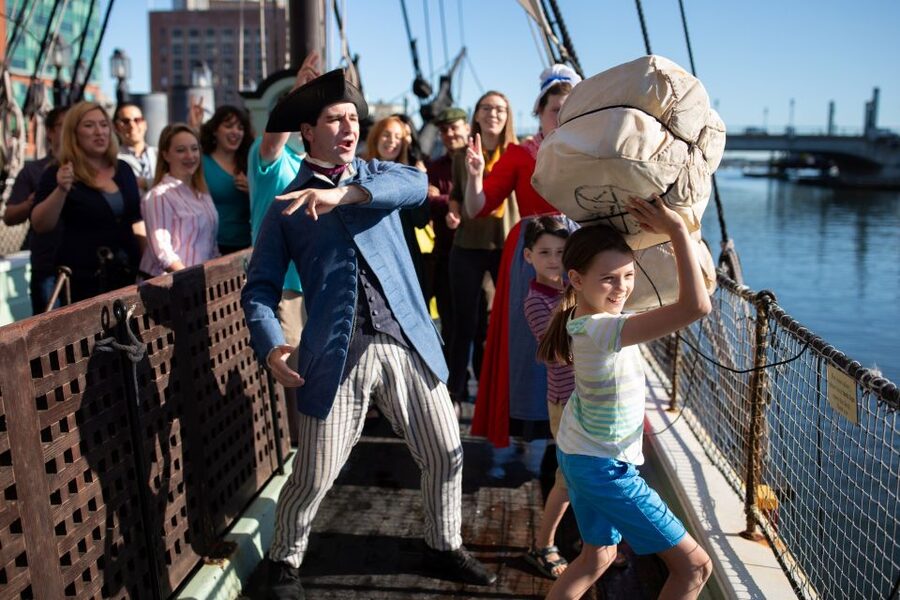
The tour’s strongest trick is how it turns “event history” into personal participation. You start by taking a handbill from one of the colonists, and soon you receive your own mohawk disguise. That isn’t just costuming for fun—it’s the way the show gets you thinking like someone who is part of a movement rather than a spectator after the fact.
Then comes the march toward Griffin’s Wharf. You’ll feel the shift from museum-like quiet to street-level urgency. The script is designed to keep you oriented in the story as it moves: what’s happening, who’s involved, and why this night matters.
One detail I especially like is the way the program uses a performance-style delivery, including older verse-style speech. That approach can feel playful, but it also gives you a better sense of how people communicated at the time. It’s easier to remember the facts when they’re attached to a tone and a moment.
If you’ve been walking Boston’s Freedom Trail the day before, this tour can snap into place nicely. The Tea Party is one of the most famous dominoes leading into the American Revolution, and doing it right after you’ve seen the larger trail connections makes the whole chain feel more complete.
Tea-tossing at Griffin’s Wharf: what you do and what to expect
Now for the part everyone talks about: throwing tea overboard. You’ll get the chance to toss a crate into the sea as part of the staged reenactment tied to the Sons of Liberty resistance.
Here’s a useful heads-up. The tea isn’t loose in your hands like a kitchen mishap. It’s staged using covered milk crates that would resemble how tea was carried. That makes the moment safer, cleaner, and more historically grounded than picturing somebody hurling random bags into the water.
You should go in expecting a laugh-and-learn experience. The show uses audience involvement as a teaching tool: your body is part of the story. That’s why it works even if you’re not the type who reads every timeline panel. When you throw, you remember why the tea mattered—tax protest, defiance, and the escalation toward open conflict.
One more tip for maximizing the moment: pay attention to what the actors say right before you participate. The show gives context so your action isn’t random. You’ll get more out of it if you treat the participation as a role, not just a photo opportunity.
Ship replicas you can actually walk through (and why that matters)
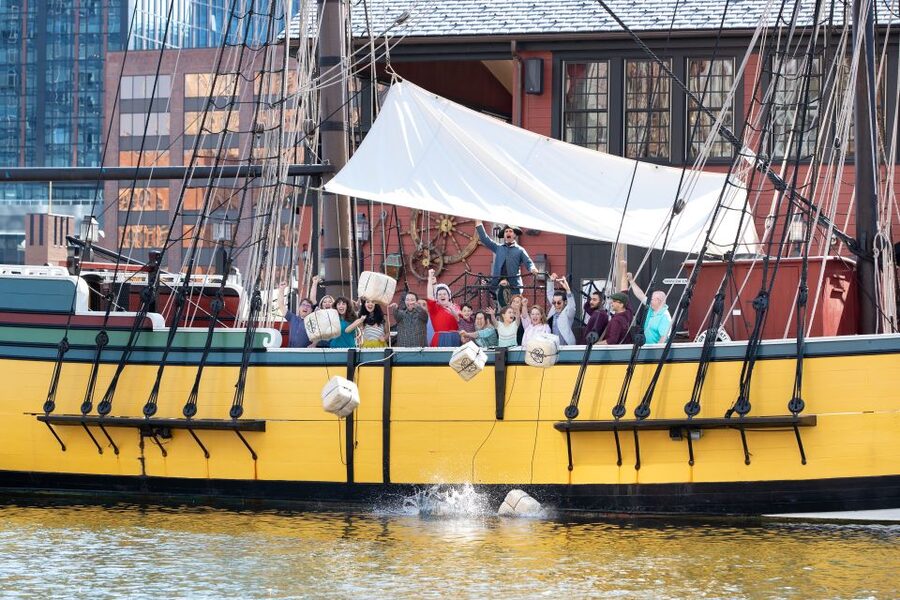
After the tea-toss moment, you’re sent to explore faithfully recreated replicas of two of the tea party ships. This is where the attraction earns its name. You don’t just watch a video and call it done. You get physical space—planks, railings, ship structures—so you can understand what people were dealing with that night.
Ship replicas help with a problem most history sites have: visitors struggle to visualize the setting. A boat in a picture is flat. A boat you can walk around gives you scale and angles. It also makes the next museum portion easier to follow because your brain already has the visual framework.
If you’re the type who likes to take photos, this is one of the best stretches for it. If you’re the type who likes to read quietly, it’s still worth it, but keep an eye on time. Some visitors note they wished they had more time to fully explore additional exhibit areas, including artifact spaces that can be easy to miss when the group keeps moving.
Inside the museum: 3D holograms, arguments, and the wraparound theater battle scene

The museum portion is where the attraction upgrades from reenactment to cinematic teaching.
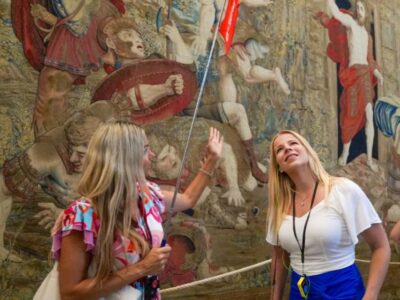
You’ll encounter 3D holographic characters who appear and speak before your eyes. The key detail here is not just the technology. It’s the content: British soldiers and colonial patriots argue right in the space around you. That back-and-forth is presented as a real conflict of ideas, not just a one-sided lecture. It helps you understand why tensions boiled over instead of presenting revolution as a sudden plot twist.
Then the story keeps building toward the wraparound theater. This is the “big scene” moment: a battle setup presented in a giant theater format designed to land the full context of how events escalated. If you like history that feels like a dramatic narrative (with stakes), this section is satisfying. If you prefer quiet museum time, you might find this part a bit louder and more action-forward—but it’s also the part most likely to make the timeline click.
Also worth noting: a short film appears near the end of the museum experience. Even if you’re not expecting a movie-style finish, it functions like a story cap—helping wrap everything into a final, clearer takeaway.
Actors in character: the performance quality that makes the history stick

The star of the whole experience is the cast. The tour is built so that actors stay in character throughout, and that choice matters more than you might think. When performers remain “in world,” you don’t feel like history is being explained to you. You feel like you’re watching history happen with you inside it.
I’ve seen the names of standout performers pop up in the feedback, including guides like Mrs. Grant for pacing and dedication and an actor credited as Ebeneezer McIntosh for a top-tier performance. There’s also mention of a young man playing Chase and being especially engaging. Even without meeting these exact performers, the point is useful: the show invests in performance quality, not just museum scripts.
Why does that help you as a visitor? Because the most common failure point in interactive history is when the “interaction” becomes chaotic or disjointed. Here, the acting appears to keep structure intact, so participation feels purposeful.
Price, timing, and whether $35 is a fair deal for an hour
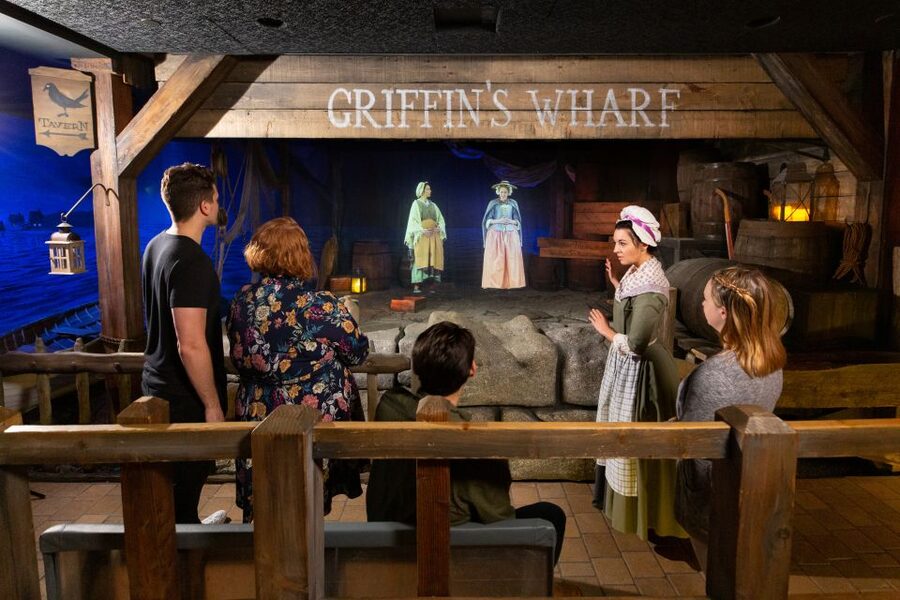
At $35 per person for about 1 hour, the price looks simple on paper. The better way to judge value is what you’re getting for that hour: a full guided experience, timed museum entry, and multiple learning formats. You’re combining roleplay (handbill, mohawk disguise), a hands-on tea-toss action, ship replica walking time, museum holograms, and a wraparound theater finish.
If you’ve ever paid museum admission and left feeling like you barely moved, this is the opposite. You’re moving through scenes, and the hour is packed in a way that keeps you engaged. It’s also structured enough that you don’t have to plan your own route inside the attraction. The show does it for you.
One thing to remember: the museum is guided and scripted. If your idea of a perfect museum is reading every label slowly, you might not get that pacing. Some visitors specifically wished they had more time to explore certain exhibit areas. For most people, though, the tight schedule is part of the charm: you leave with a full story, not just scattered facts.
What to do before and after the tour for best results

You’ll get the most if you connect this stop to the rest of your Boston plan.
- If you’re doing the Freedom Trail, treat this as a keystone experience for the Tea Party night. It helps the overall route feel more meaningful.
- If you’re trying to see multiple stops in one day, plan around this being a guided, time-bound block. It’s not the kind of place where you can wander for extra hours at your own pace.
- If you’re traveling with kids, the hands-on tea-toss moment and the hologram/museum storytelling style are often the parts that keep attention. This tour is short, so it can work well for families who don’t want a long museum crawl.
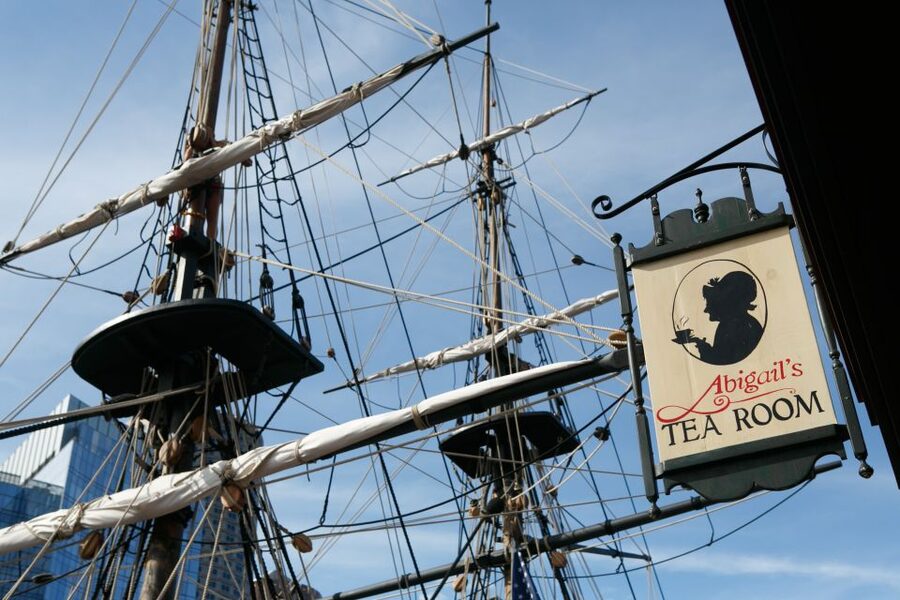
Afterward, check the museum spaces you might have missed during the rush. Some visitors also mention a gift shop and an on-site tea room area (including references to Abigail’s tea room). Those are the kinds of extras that make a history stop feel like a themed day out, not just a lesson.
Practical notes: food, extra tea tasting, and how to plan your day

Food and beverages aren’t included. That’s normal for a one-hour experience, but it does affect how you plan your timing. If you’re hungry before or after, grab a snack elsewhere near your next stop.
Some visitors also mention opportunities to try tea types thrown overboard for an additional cost. That’s an optional extra, not part of the core interactive package. If you’re curious about the flavor angle, keep that in mind. If you’re trying to travel budget-tight, you can skip it and still get a complete experience.
Should you book the Boston Tea Party Ships and Museum Interactive Tour?
Book it if you want more than dates and flags. This is a one-hour history lesson built around participation: mohawk disguises, a role in the night’s action, ship replicas you can walk through, and 3D holograms and theater that turn arguments and escalation into something you can picture.
Skip it or choose something else if you need step-free wheelchair-friendly access, or if you hate being guided through timed moments. Also, if you’re the kind of museum visitor who wants to read every label slowly, you may feel the schedule moving before you’re done.
For most first-timers, the value hits because the hour blends hands-on action with multiple learning styles—and it stays entertaining without losing the core story of how the Boston Tea Party helped drive the push toward revolution.
FAQ
How much does the Boston Tea Party Ships and Museum Interactive Tour cost?
The price is $35 per person.
How long is the experience?
The tour lasts about 1 hour.
Where do I start the tour?
Start at the Boston Tea Party Ships & Museum on the Congress Street Bridge. You’ll present your timed ticket upon arrival.
Does this include museum admission?
Yes. It includes timed museum admission along with the interactive tour.
Is food included?
No. Food and beverages aren’t included.
Are there guides in other languages?
Yes. Printed foreign language guides for the museum experience are available in 14 languages. You can request them at the museum or print them using the link on your voucher.
Can I skip the ticket line?
Yes. The experience includes skip-the-ticket-line entry.
Is the tour suitable for wheelchair users?
No. It is not suitable for wheelchair users.
Can I get a refund if my plans change?
Yes. Free cancellation is available up to 24 hours in advance for a full refund.