REVIEW · SPLIT
SPLIT-PREMIUM Emperor’s Walking Tour for History Lovers + Museum
Book on Viator →Operated by Walking Tour of SPLIT · Bookable on Viator
Diocletian’s walls still shape Split. On this 2-hour Emperor’s Walking Tour for history lovers, you walk with a licensed resident guide through UNESCO Roman walls and medieval lanes, with most sights having free admission. It’s built for people who like real places, not just photo stops.
I love the small-group size (max 15) because it stays relaxed and personal. I also like how the tour turns the palace from a monument into a lived-in place, linking Roman planning to later Old Town life.
One thing to consider: this is a straight history focus. If you came hoping for Game of Thrones chat, you’ll likely have to rely on your own spotting rather than a TV-style commentary.
In This Review
- Key highlights at a glance
- Why Diocletian’s Palace Works So Well as a Walking Tour
- Meeting by the Water: Riva Promenade First
- Palazzo di Diocleziano: The Palace’s Main Entrance and Big Setup
- Golden Gate and the Palace Mindset: Where You Understand the Layout
- The Peristyle and Emperor’s Square: The Heartbeat of Old Split
- Old Split Medieval Lanes and Major Squares You’ll Actually Remember
- Cathedrals and Roman Temples: What You See vs. What You Don’t
- 24-Hour City Clock and Palace Substructures: Two Stops That Add Context
- Diocletian’s Cellars Museum: The €10 Add-On You Should Consider
- The Guide Makes This Tour Feel Personal (and Usually Funny)
- Price and Value: Why $30 Holds Up
- Timing Tips: Book Ahead and Hit It Earlier in Hot Weather
- Who This Tour Is Best For (and Who Might Want Something Else)
- Should You Book This Split Emperor’s Walking Tour?
Key highlights at a glance
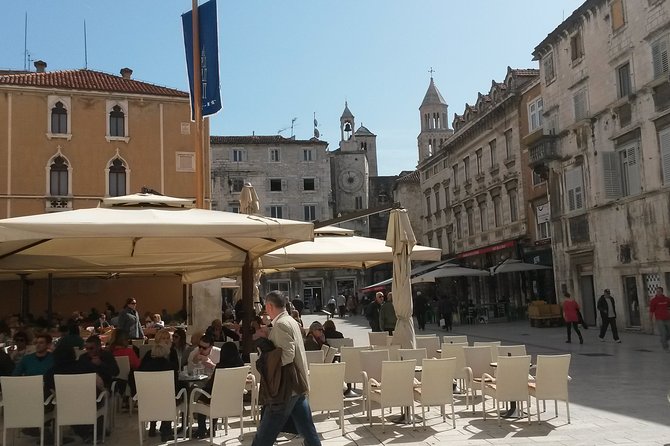
- UNESCO Diocletian’s Palace built in 305 AD, explained in plain language
- Small-group format (max 15) for questions, pace control, and better photos
- Old Split medieval streets and major squares in about two hours
- Iconic palace landmarks like the Golden Gate and the Peristyle
- Practical value: many stops are free; paid museum options are clearly marked
- Local guide energy, including humor and thoughtful help when people need it
Why Diocletian’s Palace Works So Well as a Walking Tour
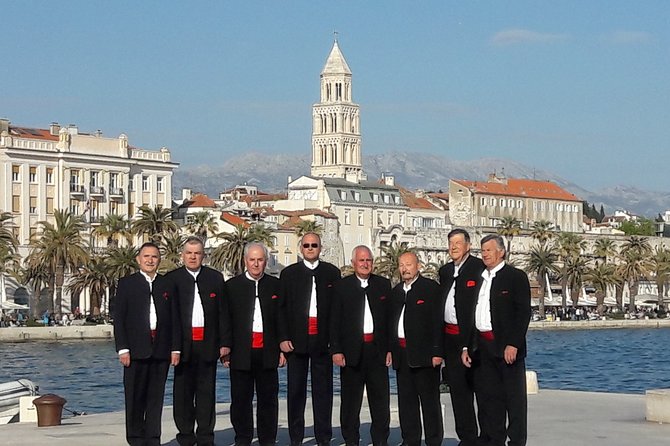
Split can feel like it’s all one big “old” blur until someone gives you a mental map. That’s exactly what this walk does. You start at the palace core and keep moving so the city’s story builds as you go, not all at once.
The centerpiece is Diocletian’s Palace, a UNESCO World Heritage site built in 305 AD. Your guide doesn’t just name walls and arches. They connect what you’re seeing to why it was built, and how the palace became the framework for later Split life.
Most stops on the route are free to see, which matters. You’re not paying just to walk past things you could see alone. Instead, you’re paying for interpretation: the “why” behind the stones.
Also, this is offered in English and typically runs about 2 hours. It’s a good length for first-time visitors who want something substantial but don’t want to eat an entire morning or afternoon.
You can also read our reviews of more walking tours in Split
Meeting by the Water: Riva Promenade First
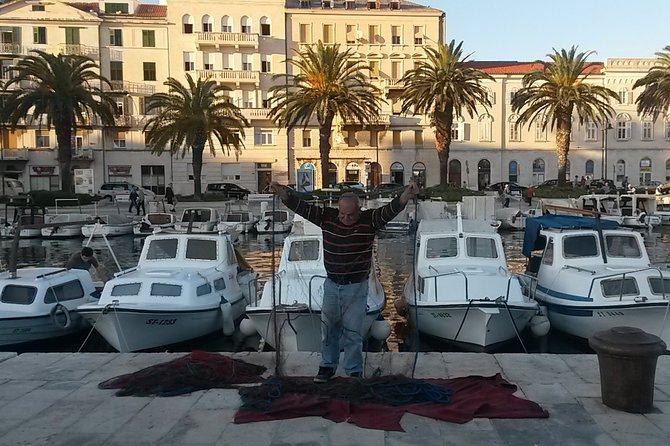
The tour kicks off at Obala Hrvatskog narodnog preporoda 22, then your route lines up with the waterfront energy of Split. You’ll come back toward the Riva area at the end, so the walk feels like a loop rather than a one-way hike.
Riva matters because it’s where Split’s everyday life meets the tourist story. Before you head deep into the palace, you get your bearings along the promenade. It’s also a practical start: you’re near public transportation, so you’re not stuck guessing how to get back.
Do wear real walking shoes. Even though it’s only about two hours, you’ll be on uneven old-city surfaces and in tight spaces around the palace entrances. In hot months, shade is limited, so treat water like it’s non-negotiable.
Palazzo di Diocleziano: The Palace’s Main Entrance and Big Setup
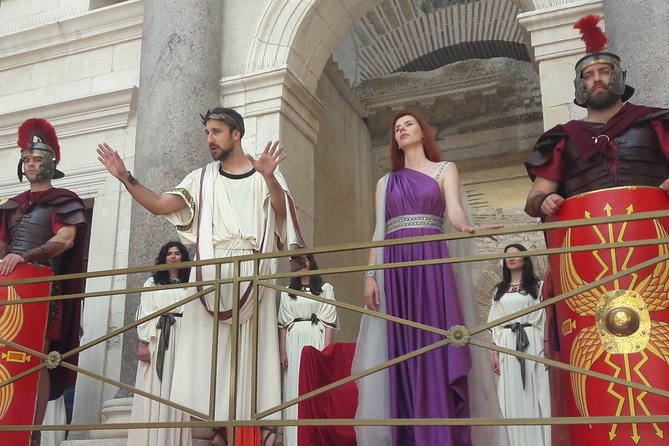
The first major moment is your look at the palace itself. You begin in the zone tied to the emperor’s world—Palazzo di Diocleziano—built in 305 AD. This is where the tour earns its title for history lovers.
Here’s the clever part: you don’t just walk through one impressive doorway and move on. You’re guided to understand how the palace was designed as a complete system, not a single temple or monument. Once you get that, every next stop makes more sense.
This stop also sets expectations for your entire visit. From this point onward, you’ll keep noticing thresholds—gates, courtyards, corridors, and small exterior views—that explain how people moved between public and private space.
Golden Gate and the Palace Mindset: Where You Understand the Layout
One of the palace highlights you’ll see is the Golden Gate, the main and most beautiful entrance into Diocletian’s Palace. Standing here with a guide changes the experience. You start thinking in terms of access and control: who could enter, where movement funneled, and how the design focused people’s attention.
You’ll also get a peek at the Vestibulum of Diocletian’s Palace, which connects you to the main entrance of the emperor’s private residence. Even if you only view certain parts from outside, the guide helps you visualize the relationships between rooms, passages, and courtyards.
This is one of those tours where listening matters as much as looking. Your guide keeps tying each visible feature back to the larger palace plan, so your brain stops treating it like random Roman bits and starts treating it like a functioning city structure.
The Peristyle and Emperor’s Square: The Heartbeat of Old Split
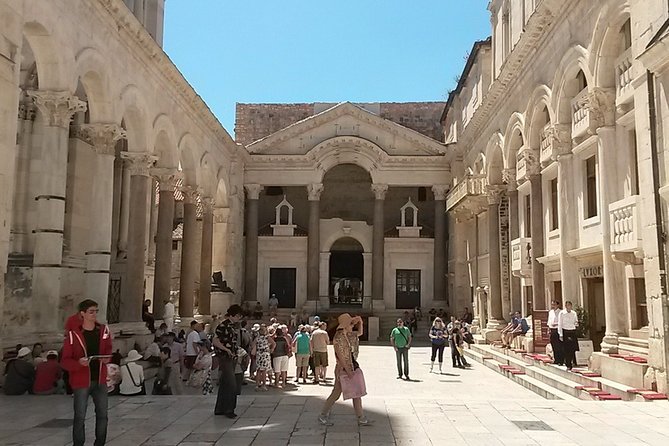
Then you move toward the most central, human-scale space inside the palace complex: the Peristyle, often described as the heart and soul of town. This is where the palace feels less like an archaeological site and more like the room people still use.
The route is paced so you’re not rushed through the biggest spaces. You get a chance to pause and absorb the sense of “public square” that later life assigned to palace architecture.
If you’ve ever visited a ruin and felt lost, this part fixes it. The Peristyle area helps you feel the palace’s rhythm—open spaces, movement lines, and how everyday life reactivated Roman form.



Old Split Medieval Lanes and Major Squares You’ll Actually Remember

After the palace core, you get pulled into Old Split, the medieval streets that grew around the Roman shell. You’ll see the kind of lanes that are beautiful in photos, sure—but they’re also practical for orientation. By the time you exit the palace area back into town, you know where you are in relation to the landmarks.
The tour then threads through several notable squares, each with a different vibe:
- Fruit’s Square (Trg Brace Radic) is the one tied to Marul, the father of Croatian literature. The point here is cultural, not just decorative. The guide helps you connect a statue to identity and memory in the city.
- Narodni Trg (People’s Square) gives you the biggest, liveliest Old Town piazza feel. It’s a good contrast after the more controlled palace geometry.
- Grgur Ninski Statue is another meaningful stop. Your guide focuses on who he was and why he matters in Croatia. Even if your historical knowledge is basic, you’ll walk away with a clearer picture.
These stops work because they break the day into digestible segments. You’re not stuck in one zone for the whole walk.
Cathedrals and Roman Temples: What You See vs. What You Don’t
You’ll also catch the Cathedral of Saint Domnius from outside. That’s important to note up front: the tour includes exterior views here, not an interior ticket included in the core experience.
From there, you’ll reach the Temple of Jupiter area. You’ll see it from outside, with an optional inside visit. The optional nature is part of the tour’s balance: you get the big visual takeaway on schedule, and you can decide if you want extra time and tickets.
This “outside first” approach is why the walk stays around two hours. You’re not trapped waiting in lines for optional interiors that might not be your priority.
24-Hour City Clock and Palace Substructures: Two Stops That Add Context
A very memorable stop is the City Clock, described as about 500 years old and tied to a 24-hour time system. It’s the kind of object that sounds like trivia until a guide explains how timekeeping shows up in daily city life.
You’ll also learn about the Diocletian Palace Substructures, described as the best-preserved part of the palace. These are not included with admission, so you’ll likely treat them as a “if you want the extra layers, consider it” moment.
If you like archaeology that feels connected to real urban life, substructures are worth your attention. They help you understand how the palace functioned beneath the surface—literally.
Diocletian’s Cellars Museum: The €10 Add-On You Should Consider
There’s also an optional ticket you might plan for: the Museum of Diocletian’s Cellars, noted at €10 per person. This is not included in the base price, but the fact it’s specifically listed means it’s an intended add-on for people who want the full “underground” angle.
One practical tip: don’t assume you’ll automatically have time or tickets for every paid option. If your goal is to see inside as much as possible, budget the extra euros and be ready for your guide to manage the schedule around your group.
The Guide Makes This Tour Feel Personal (and Usually Funny)
The biggest reason this walk earns a top rating is the human factor. Licensed resident guides—often with names like Joško or Daniela—bring the palace to life with stories, local context, and humor that keeps the pace lively.
What stands out in how people describe these guides is not just facts, but teaching style. The walk doesn’t feel like a script read at you. It’s more like a local walking you through the city with a sense of pacing and humor.
You’ll also appreciate that the guide approach can be considerate. For example, one guide was praised for handling mobility needs sensitively and adjusting the walk length to fit the group. That kind of flexibility turns “a history lecture” into an experience you can actually enjoy.
And yes, guides often share practical help beyond the stones—like restaurant recommendations after the tour. That’s small, but it turns the tour into a better first day in Split.
Price and Value: Why $30 Holds Up
At $30 per person, this tour sits in the “serious bargain” range for a guided UNESCO experience. Most stops are free to enter, including key palace exterior areas and the Old Town squares, so you’re paying for guidance and interpretation rather than admission fees.
Here’s the value math you should do before booking:
- Base tour includes the licensed guide service and a structured route through major sites.
- Some highlights have no included admission, like areas where ticketed entries may apply.
- The Museum of Diocletian’s Cellars is listed separately at €10 per person.
- Gratuities are not included, so you’ll want a little cash or a plan for tipping.
Even with the possible €10 add-on, you’re still likely spending less than you would on a day of multiple stand-alone attractions with audio guides and entry tickets.
One more point: the walk is offered as adults only for the group version, and it keeps the group size capped at 15. That’s a pricing and quality trade-off: lower crowd density means the guide can keep the story clear.
Timing Tips: Book Ahead and Hit It Earlier in Hot Weather
This tour has strong demand, with people often booking around 47 days in advance. If you’re aiming for a specific day or time, I’d treat booking early as smart, not obsessive.
It also requires good weather. Since the tour is a walking route through outdoor areas, you’ll feel it if rain or poor conditions disrupt the plan. When that happens, you’re typically offered a different date or a full refund.
If you’re traveling in summer, plan for heat. One of the recurring pieces of advice from real-world experience is that later in the day gets hot fast in Split. Going earlier helps you enjoy the walk instead of battling the sun.
Who This Tour Is Best For (and Who Might Want Something Else)
This is a great pick if:
- You like history that connects architecture to how people lived.
- You want an efficient way to get oriented in Split Old Town.
- You’re doing your first pass at Diocletian’s Palace and want the main story line.
This is not the best pick if:
- You want a pop-culture tour focused on TV scenes. The tour is history-first, even though you may notice filming locations on your own.
- You need a fully ticket-based museum day. Some interiors are optional or not included, like the temple interior and substructures, and the cellars museum is ticketed.
For families, the group option is adults only, but the company also offers a private tour for all ages, which can be a better fit if you’re traveling with kids or teens.
Should You Book This Split Emperor’s Walking Tour?
If you want a smart, efficient, and story-driven introduction to Split, I’d book it. The blend of UNESCO Diocletian’s Palace, major Old Town squares, and exterior views of big religious and Roman landmarks is exactly how you earn “I get this city now” feelings.
The decision comes down to your style:
- If you love real historical context, you’ll get your money’s worth from the guide and the route.
- If you’re chasing a Game of Thrones vibe only, you may get less than you expect and should look for a different themed tour.
For everyone else, especially first-timers who like small groups and good guidance, this one is a confident choice.