REVIEW · SPLIT
SPLIT-PRIVATE Walking Tour of Diocletian’s Palace & Old Town
Book on Viator →Operated by Walking Tour of SPLIT · Bookable on Viator
History here feels like it has a heartbeat. This private walk turns Diocletian’s Palace into a clear story, and you also get bearings through Split Old Town with a local guide who stays focused on what matters. One drawback: it’s a fast-paced history route, not a slow wander with long café stops.
I like that it’s timed well for first-timers. You’ll move through the palace courts, squares, and Roman touchpoints in about 2 hours, and you’ll get a mobile ticket for easy entry. Plan on a little extra for optional interiors like the Cathedral of Saint Domnius and the Temple of Jupiter, plus the Museum of Diocletian’s Cellars if you choose to add it.
In This Review
- Key highlights worth knowing before you go
- Riva Promenade start: a tour that’s easy to plug into your day
- Diocletian’s Palace: from AD 305 to real-life streets
- Old Split orientation: medieval streets with Roman fingerprints
- Cathedral of Saint Domnius area: see it outside, choose to go in
- Peristyle and Emperor’s Square: the palace heart you’ll remember
- Grgur Ninski, Fruit’s Square, and Narodni Trg: named spots that teach you the city
- Temple of Jupiter and the 24-hour City Clock: Roman tech meets everyday time
- Golden Gate and the palace entrances: where power and movement intersect
- Diocletian’s Palace substructures: the part that makes the story click
- Price and value: $240 per group for up to 12 people
- Who this tour fits best (and who should pick another style)
- Tips to get more out of a 2-hour palace-and-old-town walk
- Should you book this Split private Diocletian’s Palace walk?
- FAQ
- How long is the walking tour?
- Is this tour private?
- What language is the tour offered in?
- Where does the tour start and end?
- What admission fees might I need to pay?
- What is included in the price?
- What happens if weather is bad or I need to cancel?
Key highlights worth knowing before you go
- You get the palace story from street level to the preserved substructures without getting lost in facts.
- Emperor’s Square and the Peristyle give you a mental map of how Split grew inside Roman walls.
- Short, targeted stops (statues, squares, gates, and clocks) help you notice details you’d miss alone.
- Optional cathedral and temple interiors are clearly marked with small entry fees.
- Private group format (up to 12) means your guide can slow down for questions.
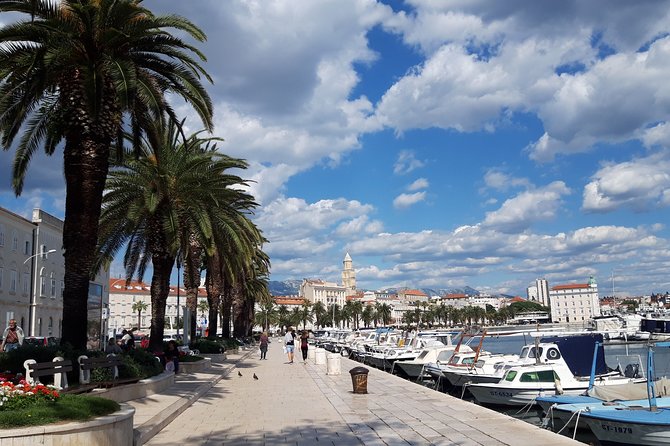
- Start and finish on the Riva makes it easy to plug into the rest of your day in Split.
Riva Promenade start: a tour that’s easy to plug into your day
This tour begins at the main Riva promenade area (Obala Hrvatskog narodnog preporoda 22). That’s smart. You’re meeting in the most obvious, easiest-to-find public landmark zone in town, and you’re not scrambling to reach some hidden alley for the first explanation.
It also ends back near the same spot. In practice, that means you can keep the rest of your day simple: lunch, a gelato break, or a second stroll once you know where you are. The itinerary is designed like an orientation walk with real depth, not a random hit list.
Because it’s private, it’s not competing with other groups for attention. That matters here, since the palace can feel like a maze when you’re on your own. With your guide pacing you, you’ll walk away with a much better sense of what you saw and why it’s there.
You can also read our reviews of more walking tours in Split
Diocletian’s Palace: from AD 305 to real-life streets
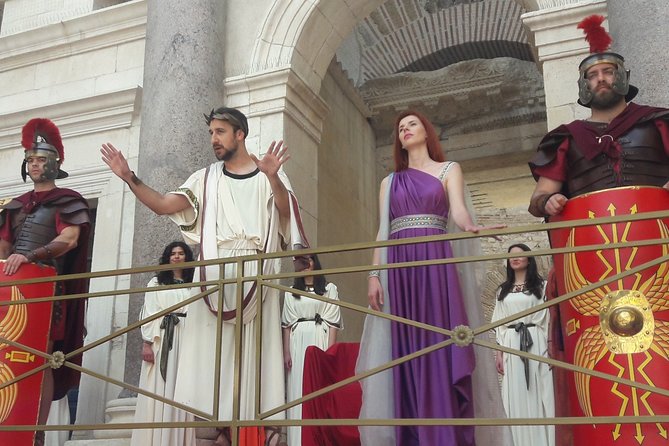
Your first big block is a guided look at Diocletian’s Palace, built under Roman Emperor Diocletian and tied to AD 305. Even if you’ve seen photos of the palace before, the guided approach changes the feeling. Instead of staring at walls, you start connecting walls to purpose—space designed for power, defense, and daily life.
You’ll spend about 25 minutes here, with admission included for the palace portion in the tour flow. The time is brief by design. The goal is not to turn this into a day-long museum visit. It’s to give you the right framework, so the rest of Old Town clicks as you move through it.
One reason this works so well is that the palace isn’t frozen in time. Split residents built a city inside the Roman shell, and the tour helps you spot those layers as you walk. That’s the difference between viewing ruins and understanding a living historic site.
Old Split orientation: medieval streets with Roman fingerprints
After the palace introduction, you shift into Old Split for another guided segment of about 25 minutes. This part is about getting your bearings. You’ll see the medieval town shape that grew around the palace, and you’ll learn how the Roman geometry influenced what came after.
I like this sequencing. Starting with the palace first gives you a reference point, so Old Split isn’t just pretty streets—it becomes a system. You’ll start noticing how squares and lanes line up with what Diocletian built.
This section is also a chance for practical questions. If you’re wondering where to go next—cathedral area, viewpoints, or where the best photo angles are—you can ask early and benefit later. With a private setup, your guide can tailor explanations to your pace.
Cathedral of Saint Domnius area: see it outside, choose to go in
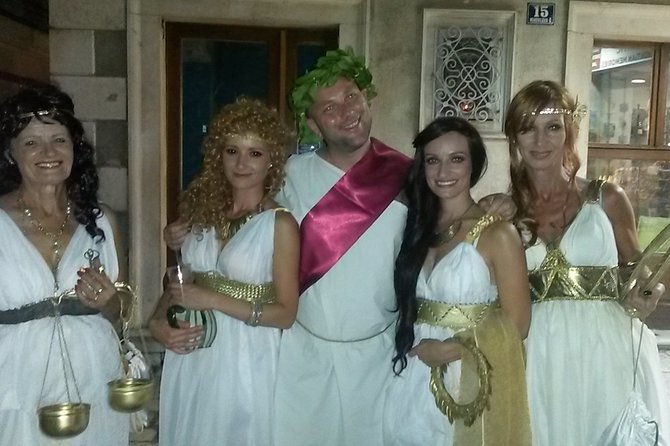
Next comes the Cathedral of Saint Domnius area. You’ll view the cathedral from the outside with an option to step inside. The interior entry is listed at €3.50 per person, so you’re in control of how much you want to pay for additional time in one place.
Even if you skip the interior, the outside stop is useful. It anchors the city’s religious importance next to the Roman palace story. Split’s skyline and street rhythm make more sense once you understand how the city’s identity moved from emperor-centered power to community-centered spiritual life.
If you do choose the interior, remember it’s an optional add-on. That keeps the tour flexible, but it also means you should plan your timing. If you’re short on time later in Split, I’d lean toward choosing one optional interior and saving the rest for another day.
Peristyle and Emperor’s Square: the palace heart you’ll remember
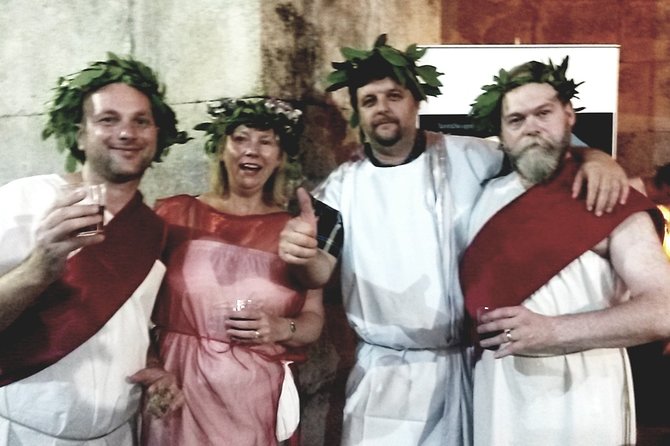
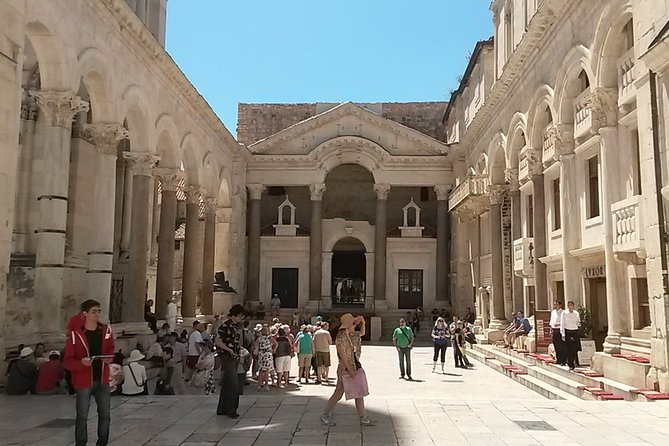
Then you hit a fast but meaningful series of highlights inside the palace complex. The Peristyle and Emperor’s Square are essentially the beating heart of Split’s palace core. The tour gives you about 5 minutes here, which sounds short, but it works because your guide explains the logic of the space while you’re standing in it.
This is where the palace stops being abstract. You’ll understand why certain rooms and corridors mattered, and how the layout connects to public life. It’s also a place where you naturally pause for photos because the scale pulls your attention.
Think of this stop as your mental reset button. After this, the statues and gates you see later will feel less random. You’ll start placing them on a map in your head.


Grgur Ninski, Fruit’s Square, and Narodni Trg: named spots that teach you the city
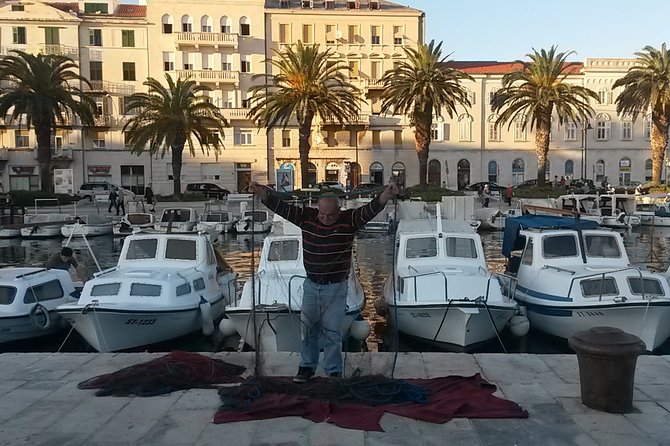
Split’s Old Town is full of statues and squares, and this tour uses them well. You’ll pass the Grgur Ninski statue, a quick lesson about an important historical figure in Croatia. Then you’ll visit Fruit’s Square (Trg Brace Radic), known as a former Green Market area, with the Marul statue—described as the father of Croatian literature.
These stops are brief—around 5 minutes each—but they add personality. They also help you practice a travel skill: noticing who a city honors. A statue isn’t just decoration. It tells you what a place values, and it connects history to modern identity.
You’ll also move through Narodni Trg, the People’s Square, noted as the largest and liveliest piazza in Old Town. If you’re picturing Split as only beaches and boats, this stop corrects that. You get the town square energy—people, chatter, and day-to-day life—right in the middle of layered history.
Temple of Jupiter and the 24-hour City Clock: Roman tech meets everyday time
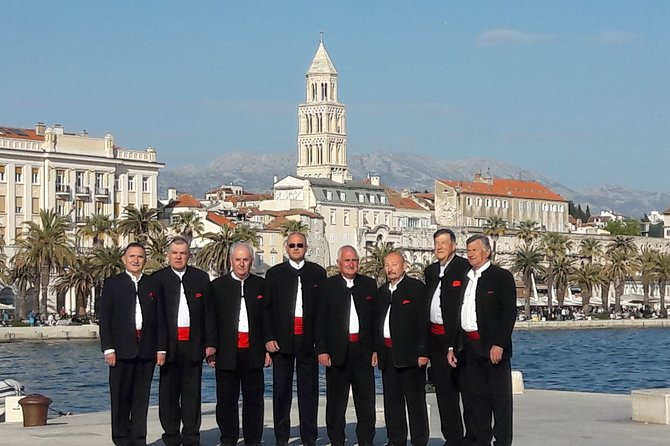
Two of the most fun stops are also two of the easiest to overlook when you’re walking alone: the Temple of Jupiter (outside view, with optional interior) and the City Clock.
The Temple of Jupiter is shown from the outside, with an optional interior entrance fee listed at €1.50 per person. Even without going in, the guided explanation helps you connect the temple’s position to the Roman civic order of the area.
Then you’ll see the City Clock, described as 500 years old and a 24-hour clock. This is one of those details that makes you feel like you’re standing on the same timeline as people centuries ago. It’s also an easy way to break up the heavier palace story. After the clock, the rest of the walk feels lighter, even when the history gets deeper again.
Golden Gate and the palace entrances: where power and movement intersect
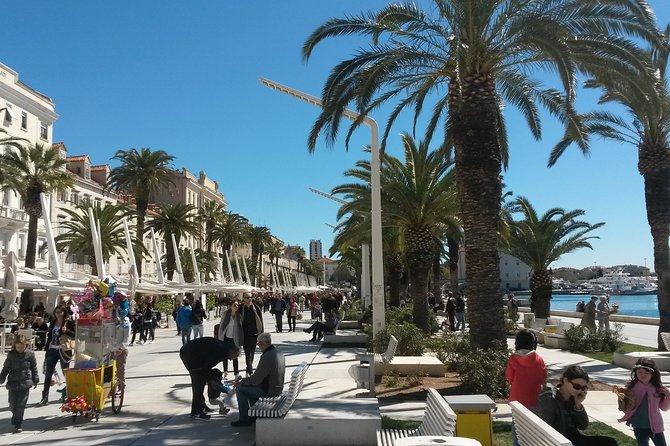
You’ll also see the Golden Gate, described as the main and most beautiful entrance into Diocletian’s Palace. This kind of stop matters because gates are more than architecture. They are how movement was controlled.
The tour also includes a look at the palace’s Vestibulum, described as the main entrance to the emperor’s private residence. Even though you’re only there briefly (around 5 minutes), the explanation gives you a sense of hierarchy: where public life would flow versus where the ruler’s world sat behind walls.
In a city like Split, entrances are everywhere. A guided walk helps you understand which ones were designed to impress and which ones were designed to control. That difference is hard to spot on your own unless you know what to look for.
Diocletian’s Palace substructures: the part that makes the story click
This is the section where the tour spends real time—about 20 minutes—at the Diocletian Palace Substructures, described as the best preserved part of the palace. The itinerary notes that the admission fee for the Museum of Diocletian’s Cellars is €10.00 per person and is not included, so you may face a choice depending on what your guide offers during the visit.
This is the stop that many history fans get most excited about, because it moves from surface views to the preserved underneath spaces tied to Diocletian’s complex. Even if you don’t add the museum ticket, the substructures help you grasp why the palace endured and how it was built to function.
Practical note: since this area is part of an older preserved site, bring shoes that you’re comfortable walking in for short periods of time. And if you’re deciding on the museum add-on, ask your guide how much extra time it’ll take before you commit.
Price and value: $240 per group for up to 12 people
At $240 per group (up to 12 people), you should think of this as a buy-in to shared local storytelling. It’s not priced like a low-cost group bus tour, but private tours in historic centers often make sense when you’re splitting the cost with family or friends.
Here’s how I’d judge value for you:
- If you can fill most of the group size, the per-person cost drops fast.
- If you’re a small family, you’re paying more per person—but you gain flexibility, question time, and a guide who can adjust the pace.
Also, the tour includes the big palace components and outdoor stops. The optional interior fees are modest: €3.50 for the Cathedral interior, €1.50 for the Temple of Jupiter interior, and €10 if you choose the Museum of Diocletian’s Cellars. Those are easy to budget because you’ll know them upfront.
Timing helps too. This is about 2 hours, which is perfect for a first day when you still need orientation. With a good guide, you’ll stop seeing Split as a blur and start seeing it as a map.
Who this tour fits best (and who should pick another style)
This tour is a strong match if you want:
- a clear introduction to Diocletian’s Palace and how it shaped Split
- short stops that still teach you names, symbols, and layout
- a private walking format where you can ask questions
It can feel less ideal if you’re hoping for:
- long, free time to linger in one place
- a pure photo stroll with minimal talking
- a day that centers on beaches or food alone
If you’re traveling with kids or teens, this kind of structure often works because it keeps moving between concrete stops: statues, squares, gates, and clocks. The story has obvious anchors to grab onto.
Tips to get more out of a 2-hour palace-and-old-town walk
First, go in with comfortable expectations. You’ll cover a lot of ground, but each stop is short, and the guide ties it together. Wear shoes that handle old streets and palace surfaces without complaint.
Second, decide early whether you want optional interiors. If you want both, you may need to be okay with slightly tighter pacing. If you want less cost and less time inside, you can still enjoy the outside views and keep your day open.
Third, if you’re someone who loves details, bring questions. This tour works especially well when you ask things like how the palace functions, why certain landmarks matter, or what changed as Split developed. A private guide can adjust explanations in real time.
Finally, because this experience is offered in English and requires good weather, check the forecast. If rain comes down hard, you’ll want to be ready for a change of plan.
Should you book this Split private Diocletian’s Palace walk?
I’d book it if you want a smart, time-efficient way to understand Split’s core. The mix of Diocletian’s Palace, Old Town bearings, and specific landmarks like the Golden Gate, the 24-hour City Clock, and Marul’s statue gives you context you can’t easily pick up from signage.
Pass or consider another style if you want a long, relaxed stroll with minimal history talk. This is a history-forward route, and it rewards curiosity.
If you can, book ahead. It’s commonly reserved about a month in advance, which usually means the best tour times go first.
FAQ
How long is the walking tour?
The tour is approximately 2 hours.
Is this tour private?
Yes. It’s a private tour, and only your group participates. The group size is up to 12.
What language is the tour offered in?
The tour is offered in English.
Where does the tour start and end?
It starts at Obala Hrvatskog narodnog preporoda 22, 21000, Split, Croatia, and ends back at the same meeting point.
What admission fees might I need to pay?
The tour includes admission for Diocletian’s Palace parts listed as free. Optional interior visits include Saint Domnius Cathedral for €3.50 per person, and the Temple of Jupiter for €1.50 per person. The Museum of Diocletian’s Cellars is €10.00 per person and is not included.
What is included in the price?
You get a private licensed resident guide and custom-designed itinerary and tour organization. You also receive a mobile ticket.
What happens if weather is bad or I need to cancel?
This experience requires good weather. If it’s canceled due to poor weather, you’ll be offered a different date or a full refund. You can cancel for a full refund if you cancel at least 24 hours in advance.